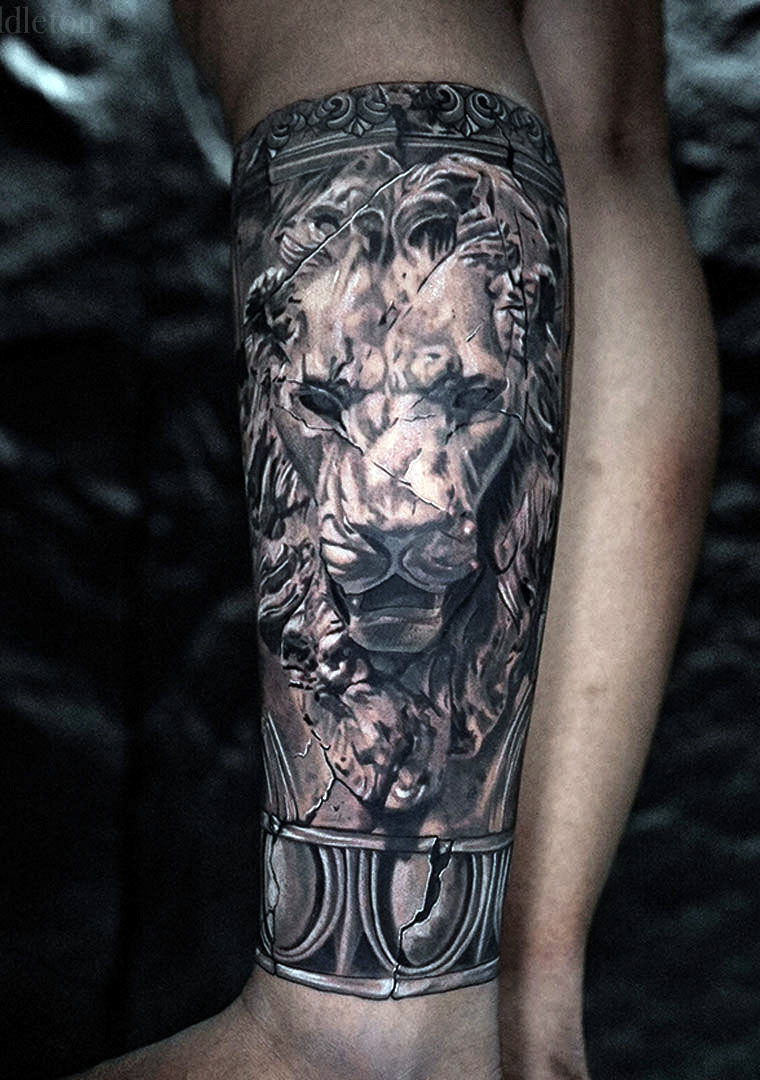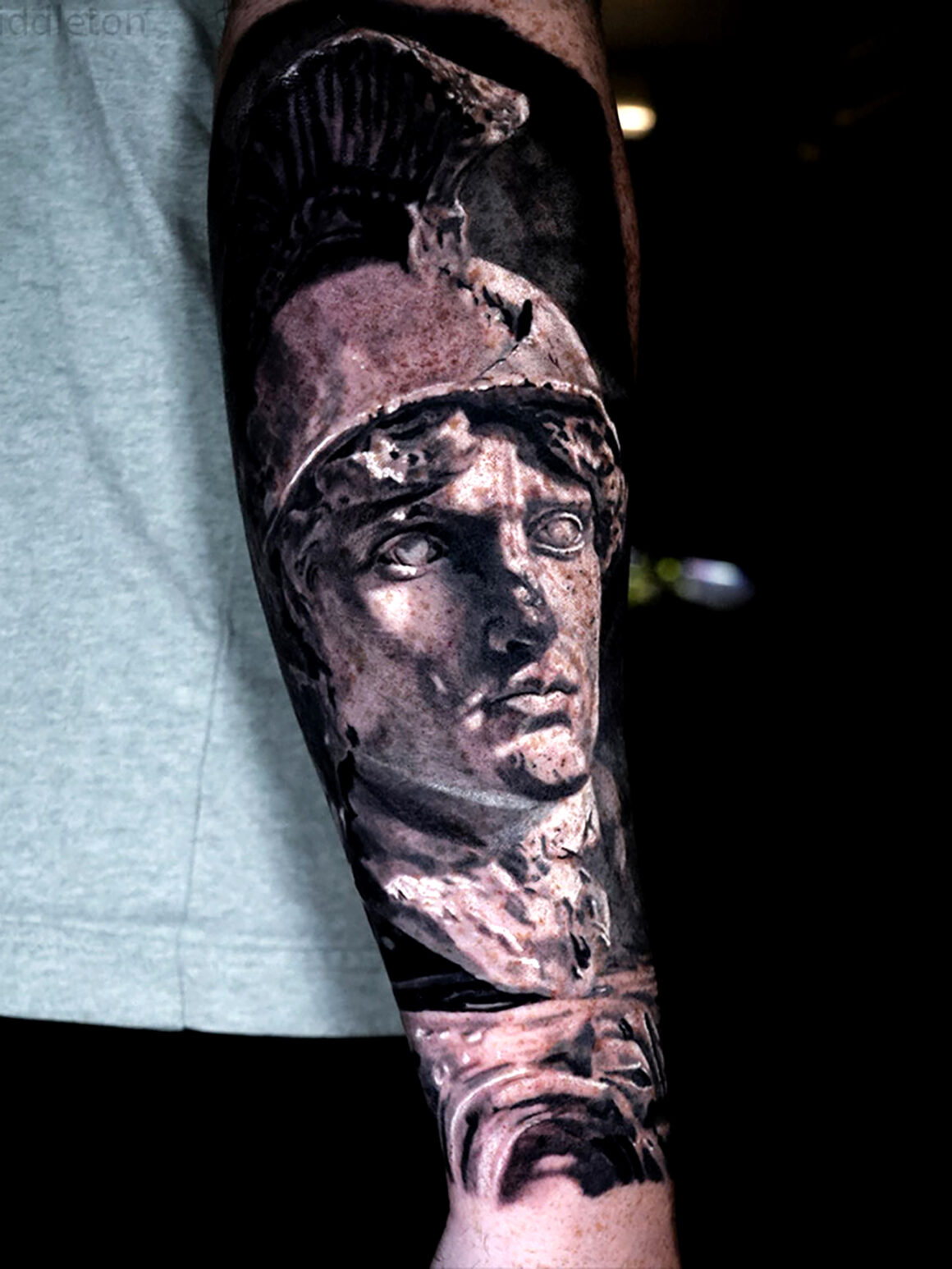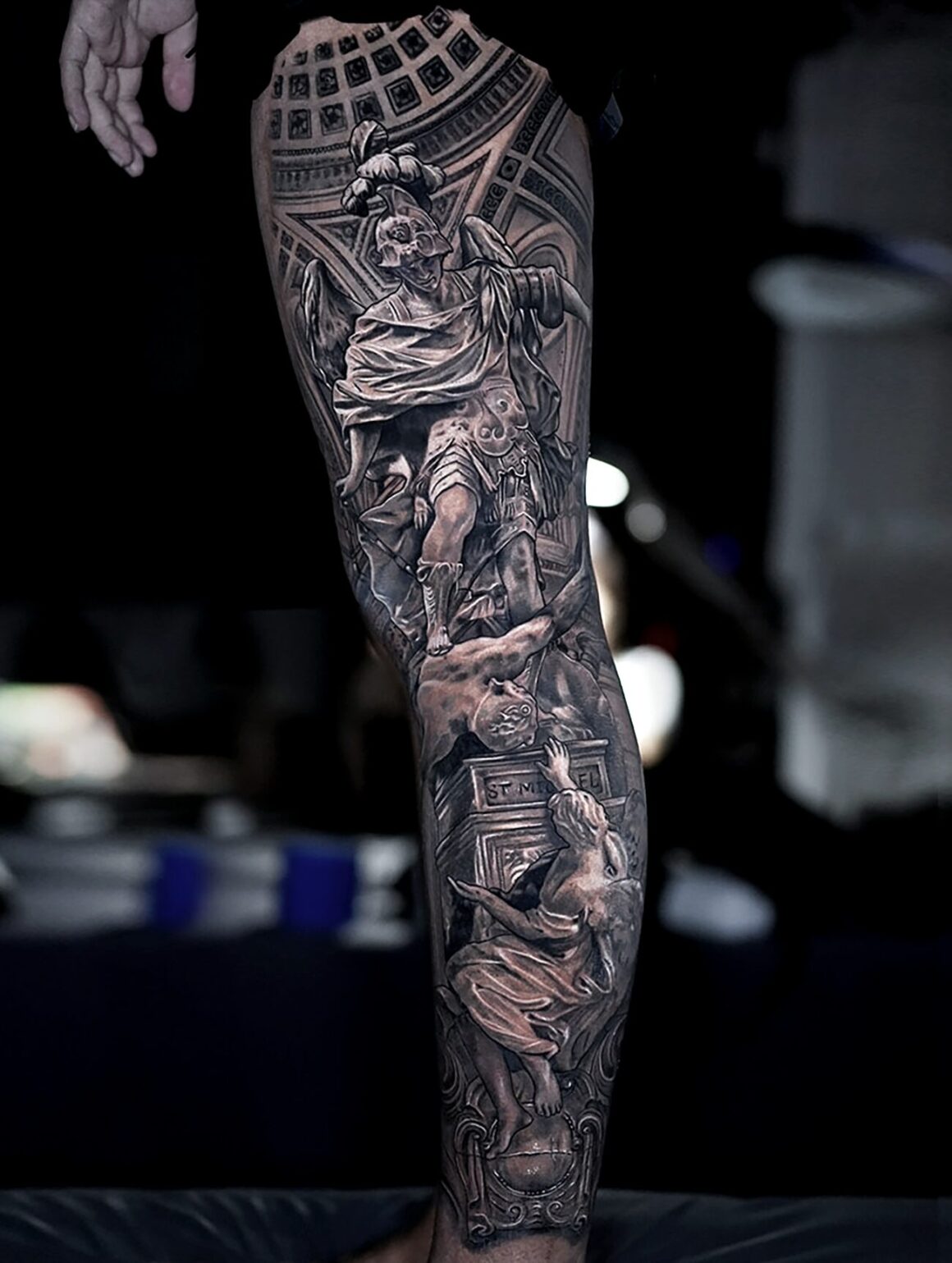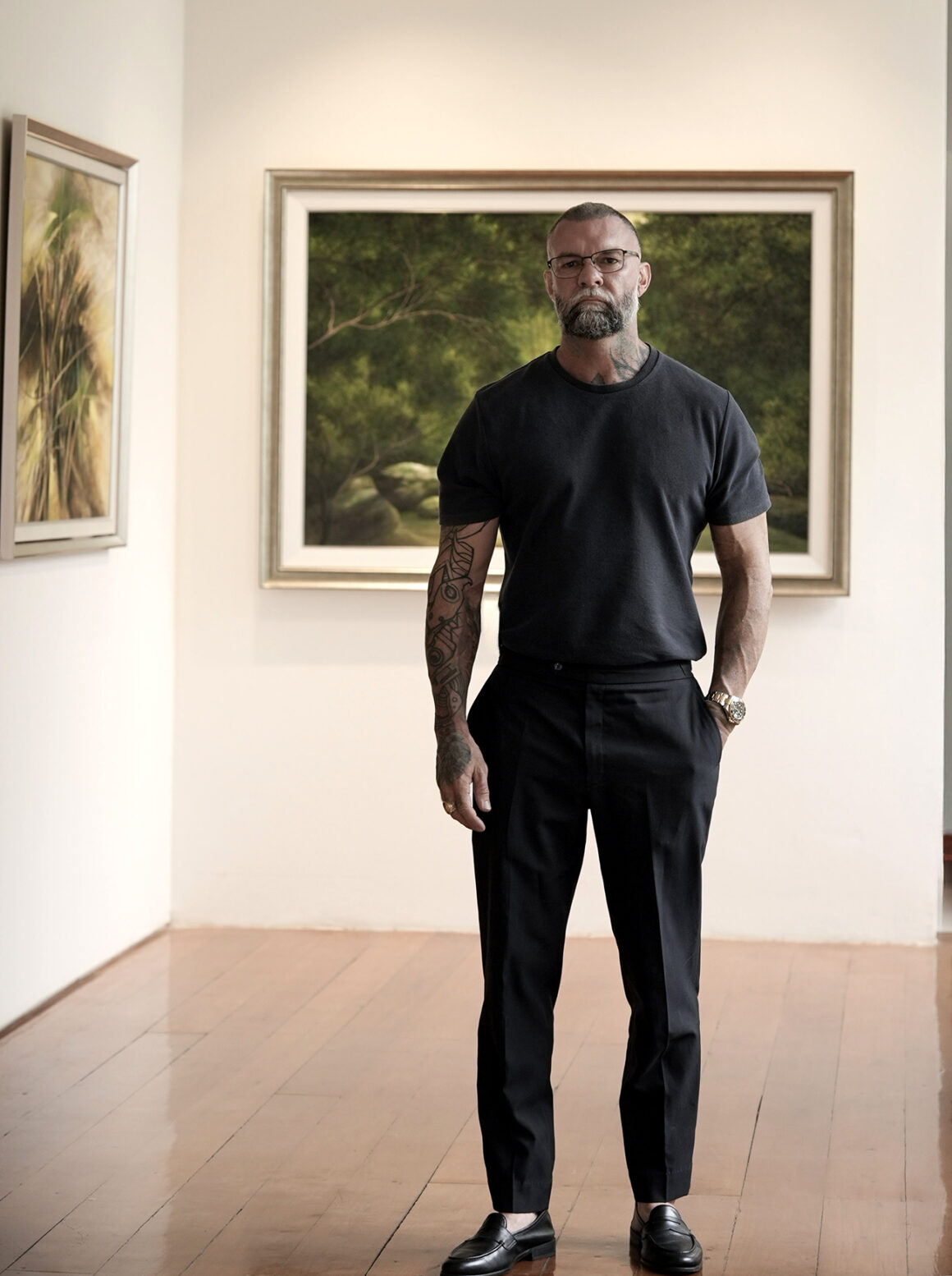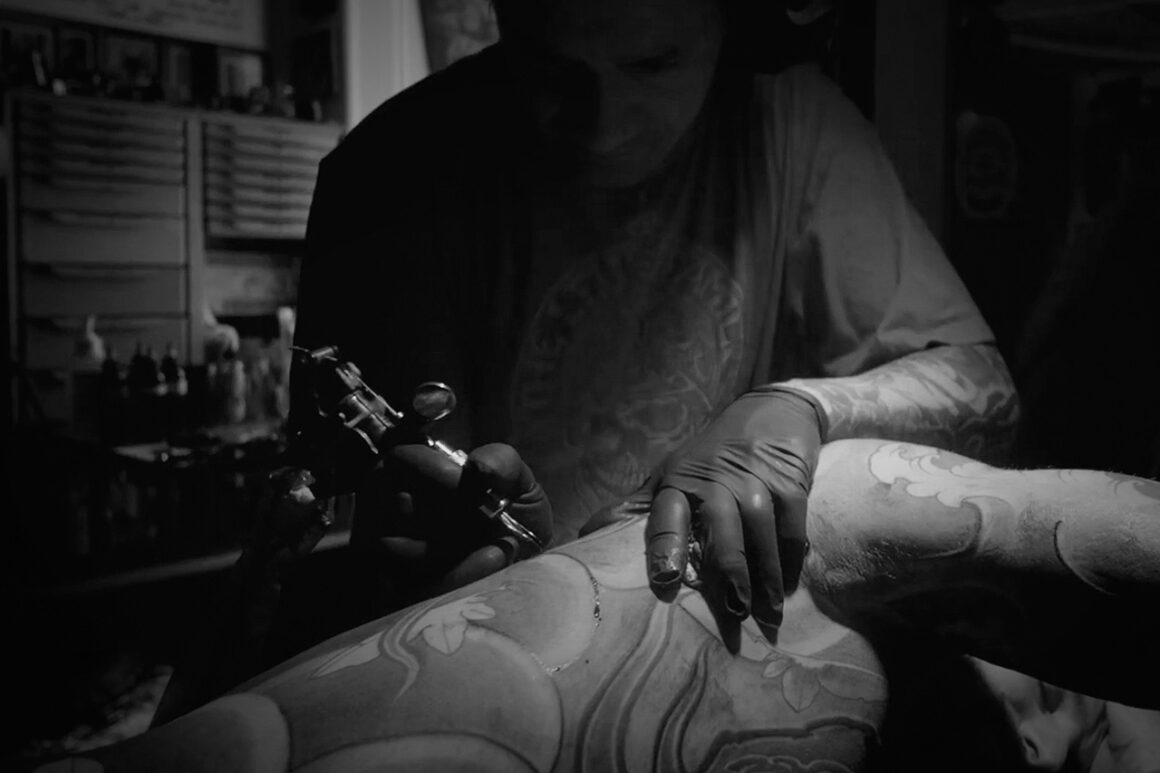


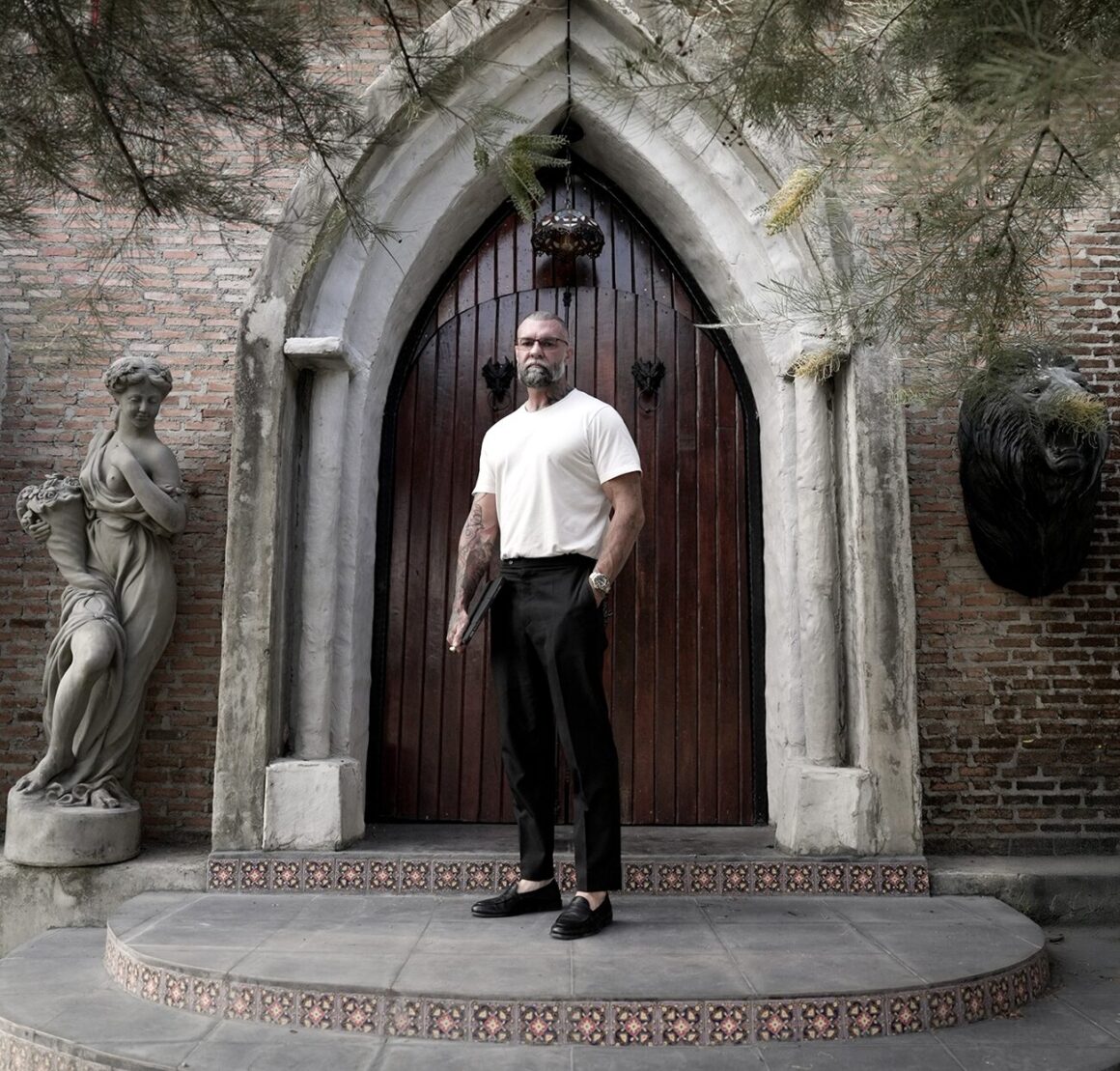
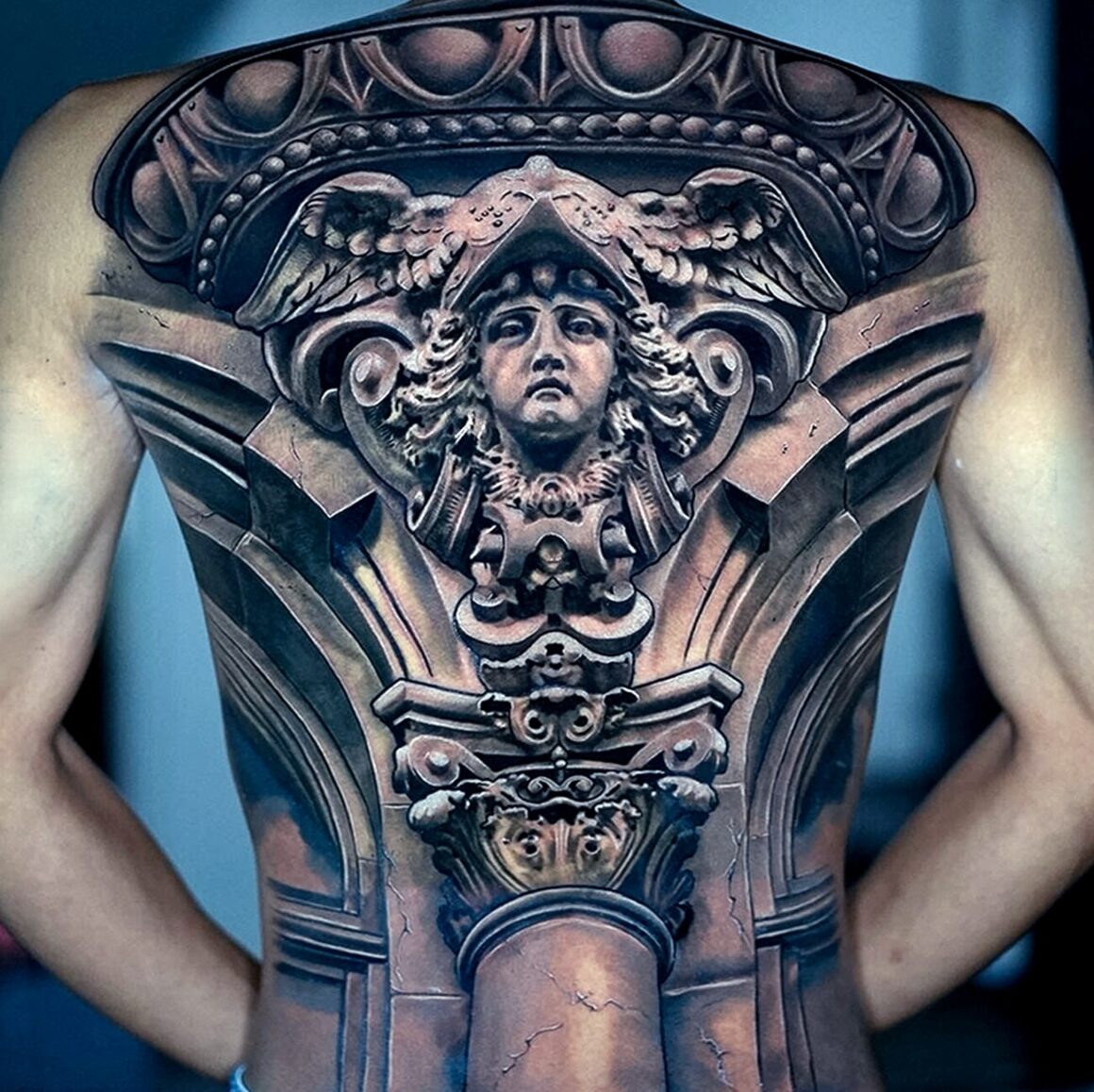
In this article, we introduce Australian tattoo artist Glen Middleton. Born in Sydney, he currently works between Sydney and New York, focusing on a limited number of large-scale projects for private clients. His style is rooted in black and grey, with subjects inspired by classical sculpture, approached with a distinctly sculptural sensibility shaped by architecture and religious marble work. He prefers working in a private setting, concentrating on long-form pieces rather than high volume.
Glen, when did you first encounter tattooing?
I was exposed to tattooing early on, but it became more serious over time. What drew me in was the permanence and the level of responsibility involved. It’s not something you can approach casually, and that’s what held my attention.
Did your career as a tattoo artist grow out of your passion for tattooing, or did you have a background in classical art?
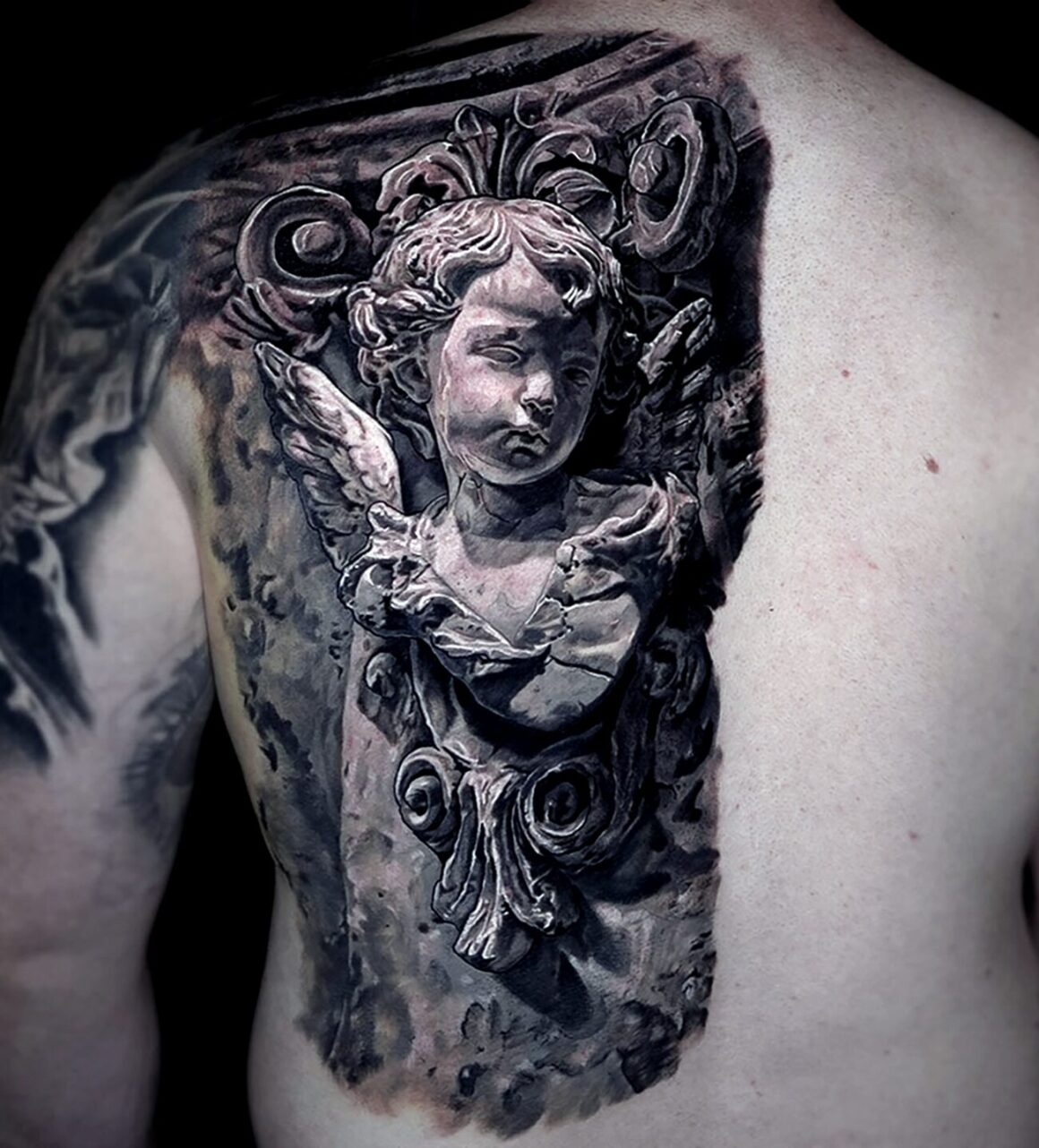
I didn’t come from a formal classical art background. My approach developed through independent study, focusing on sculpture, architecture, and religious works. I was particularly interested in how light defines form in marble, and that became the foundation for how I approach tattooing.
It’s less about illustration and more about translating structure, depth, and weight onto the body.
Is that why you chose the black and grey style for sculptural subjects?
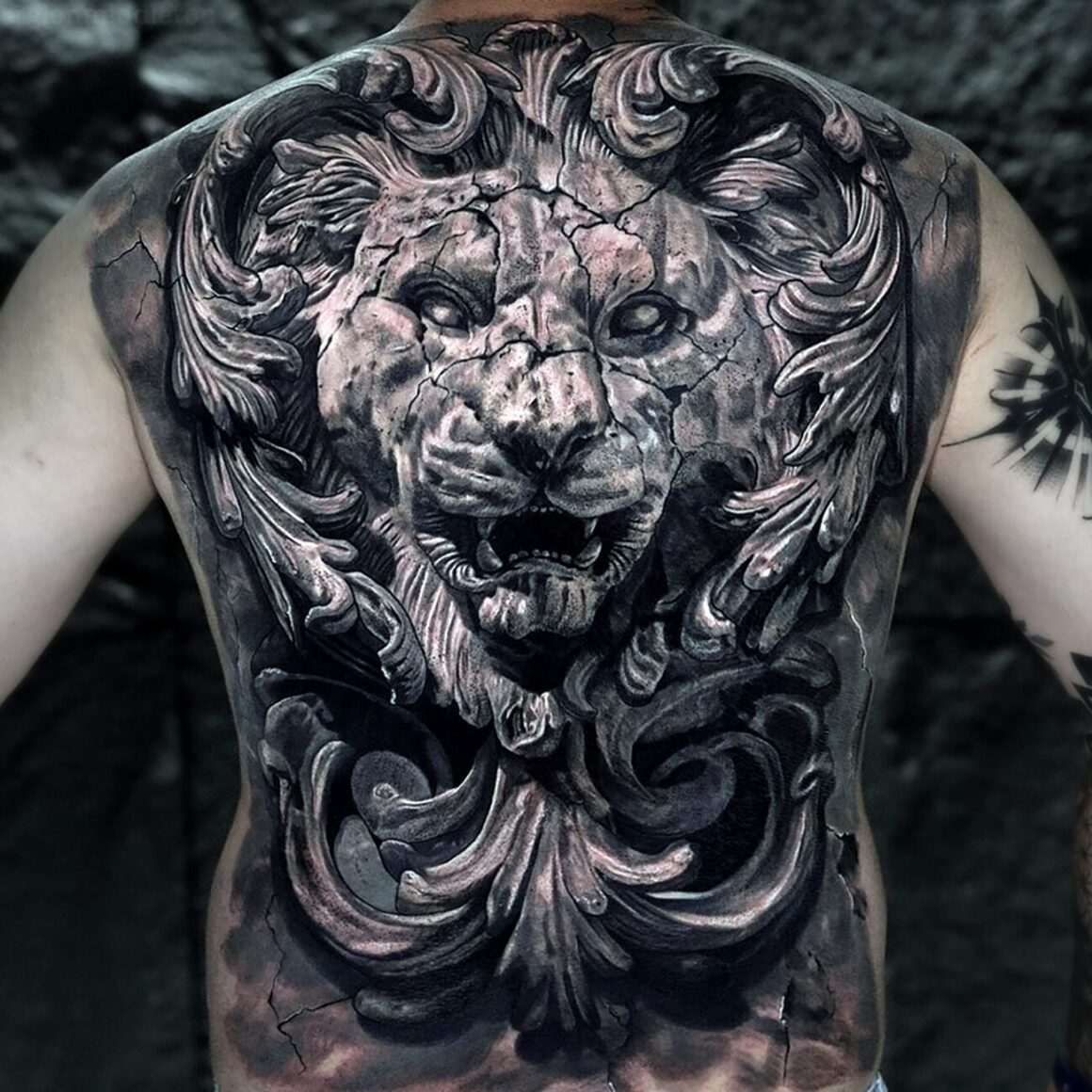
Yes. Black and grey allows for a level of control that closely aligns with sculpture. It lets you build depth and contrast in a way that feels more natural on the body. The subject matter follows that direction—classical forms already carry weight, so they translate well when handled with restraint.
Are there specific sculptures or works of art that you love most?
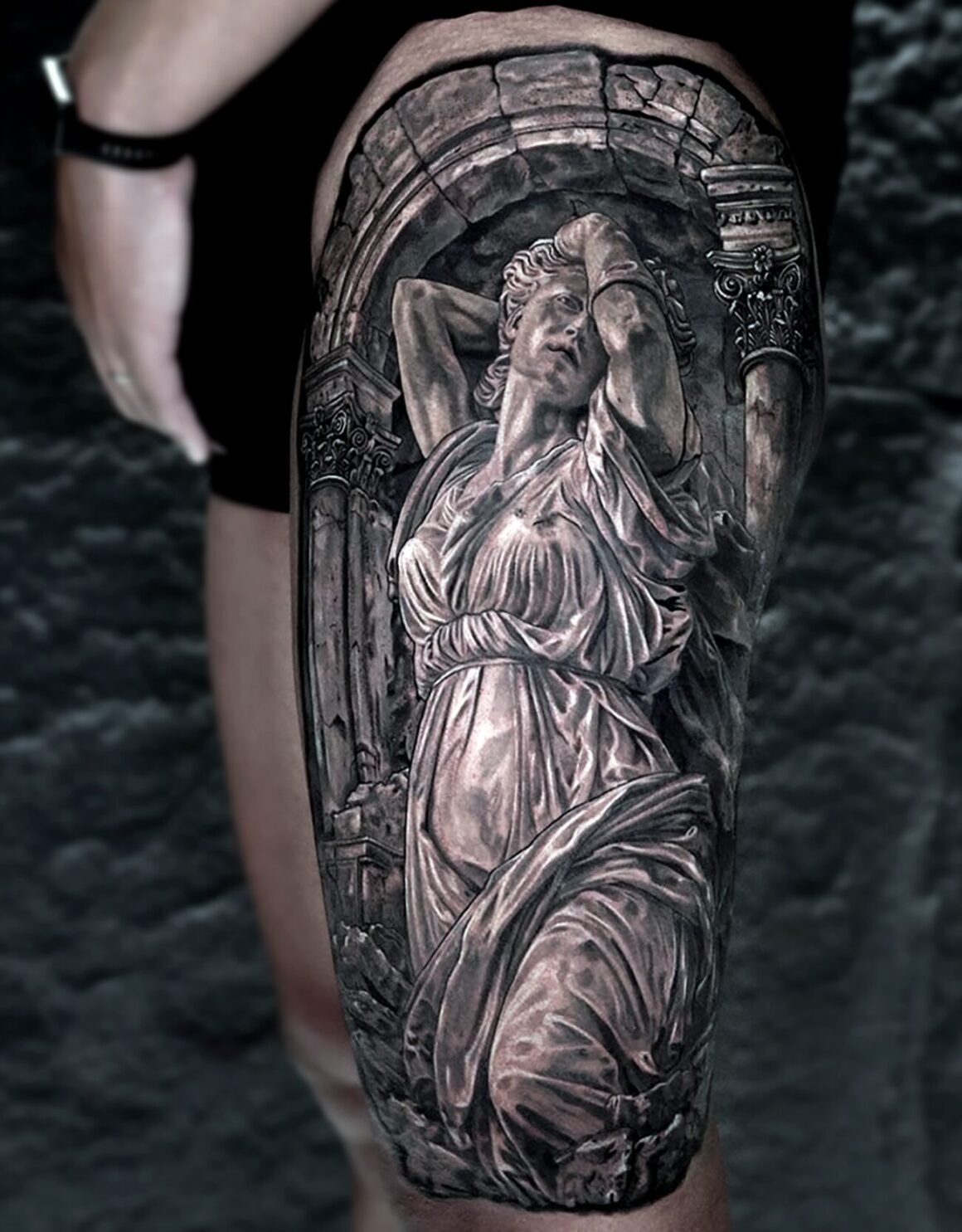
I tend to look at entire bodies of work rather than individual pieces. Artists like Gian Lorenzo Bernini and Michelangelo have had a strong influence, especially in how they handled anatomy, tension, and movement in stone. That level of control is something I aim to bring into tattooing.
Lions often appear as subjects in your tattoos. What are your references and where do they come from?
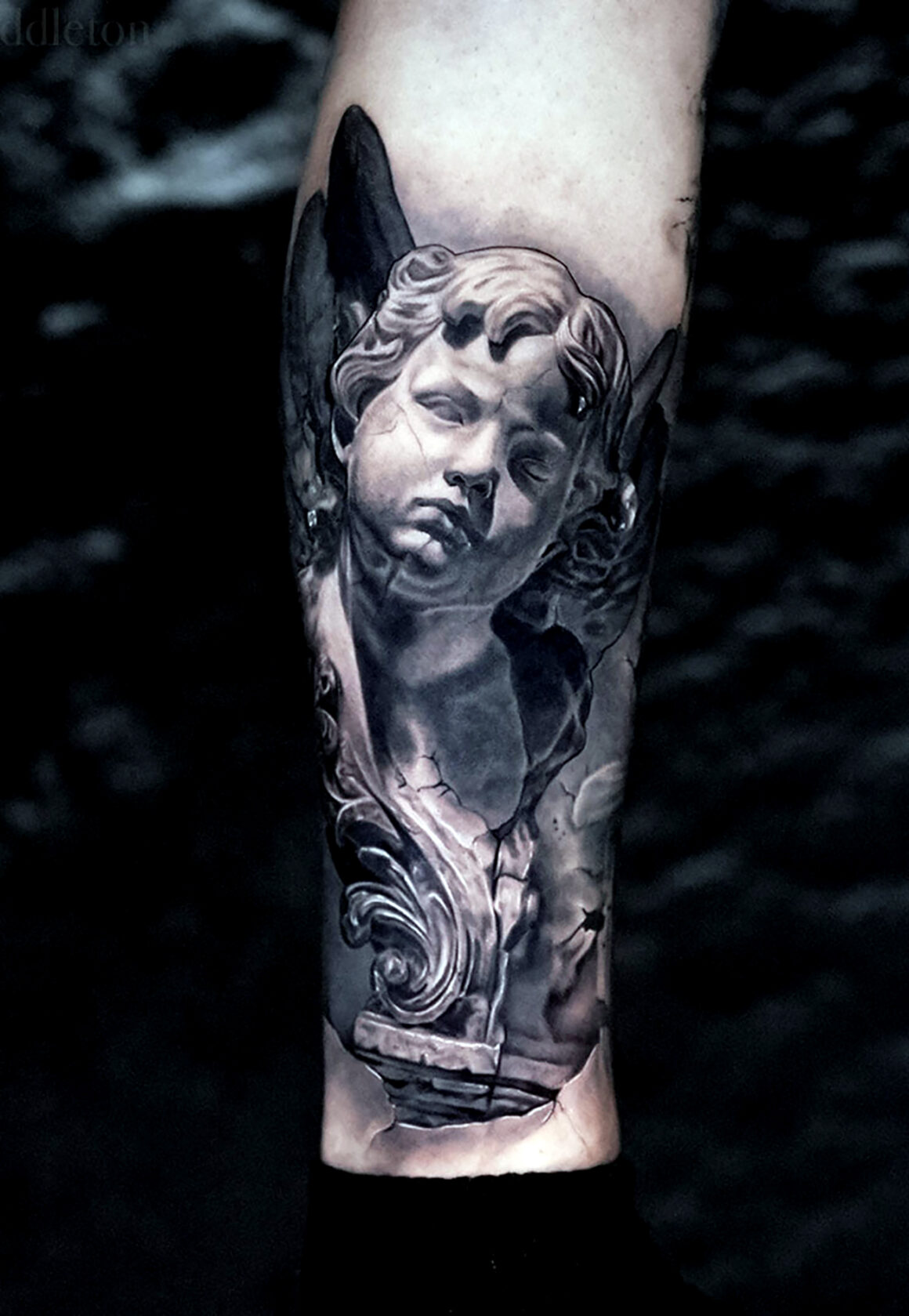
My references come more from sculpture and architectural detail than from other tattoos. Lions have a strong presence, but I’m more interested in how they’ve been represented in stone and classical design.
This allows me to interpret them in a way that fits the sculptural direction of my work.
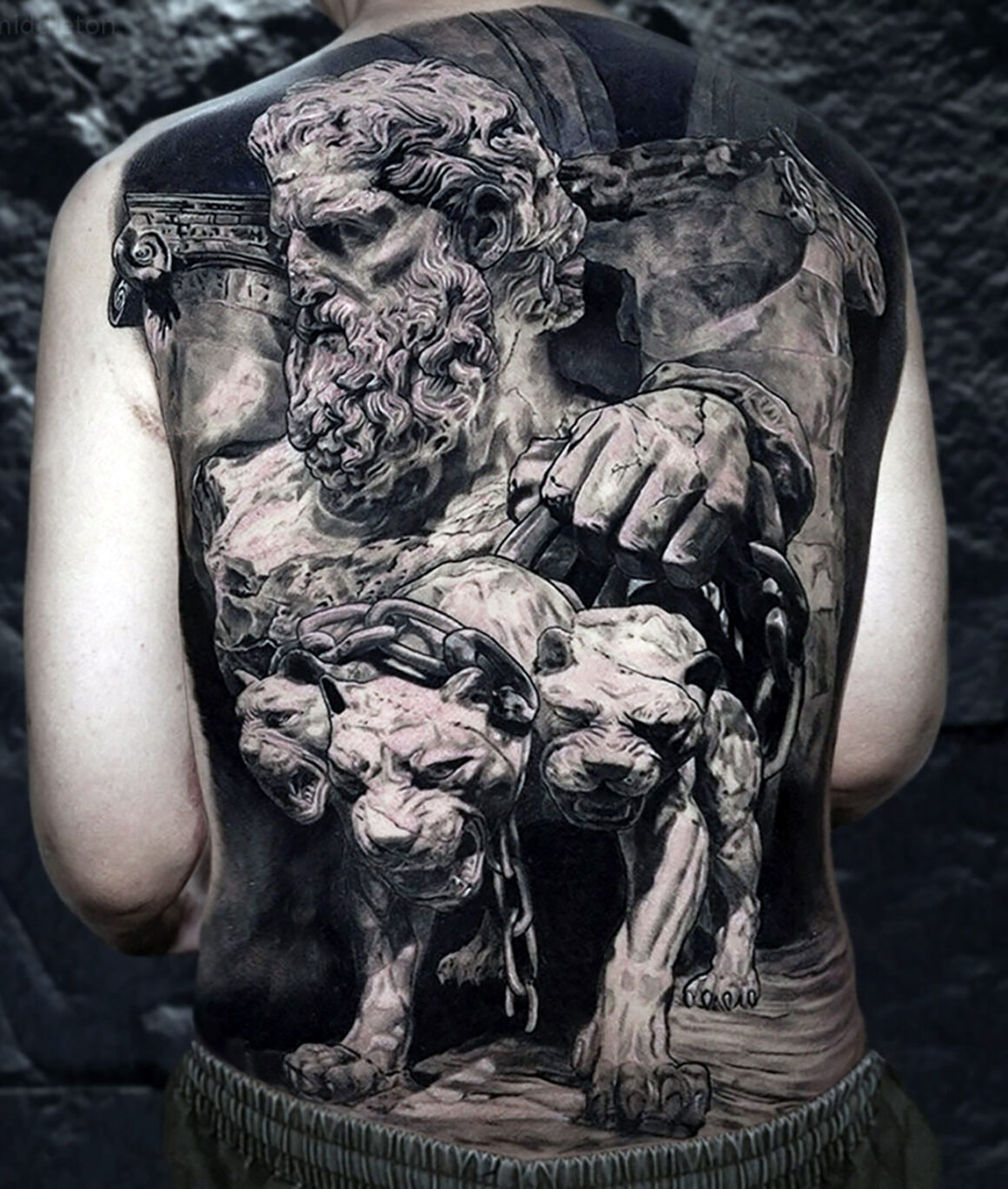
You are based in Sydney, and you mention on your Instagram page that you work with private collectors. Would you like to tell us more about that?
Most of my work consists of large-scale, multi-day projects. I limit how much I take on so I can maintain control over each piece. Working with private clients allows for a more considered process, where the focus is on building something properly over time rather than producing quick, isolated tattoos.
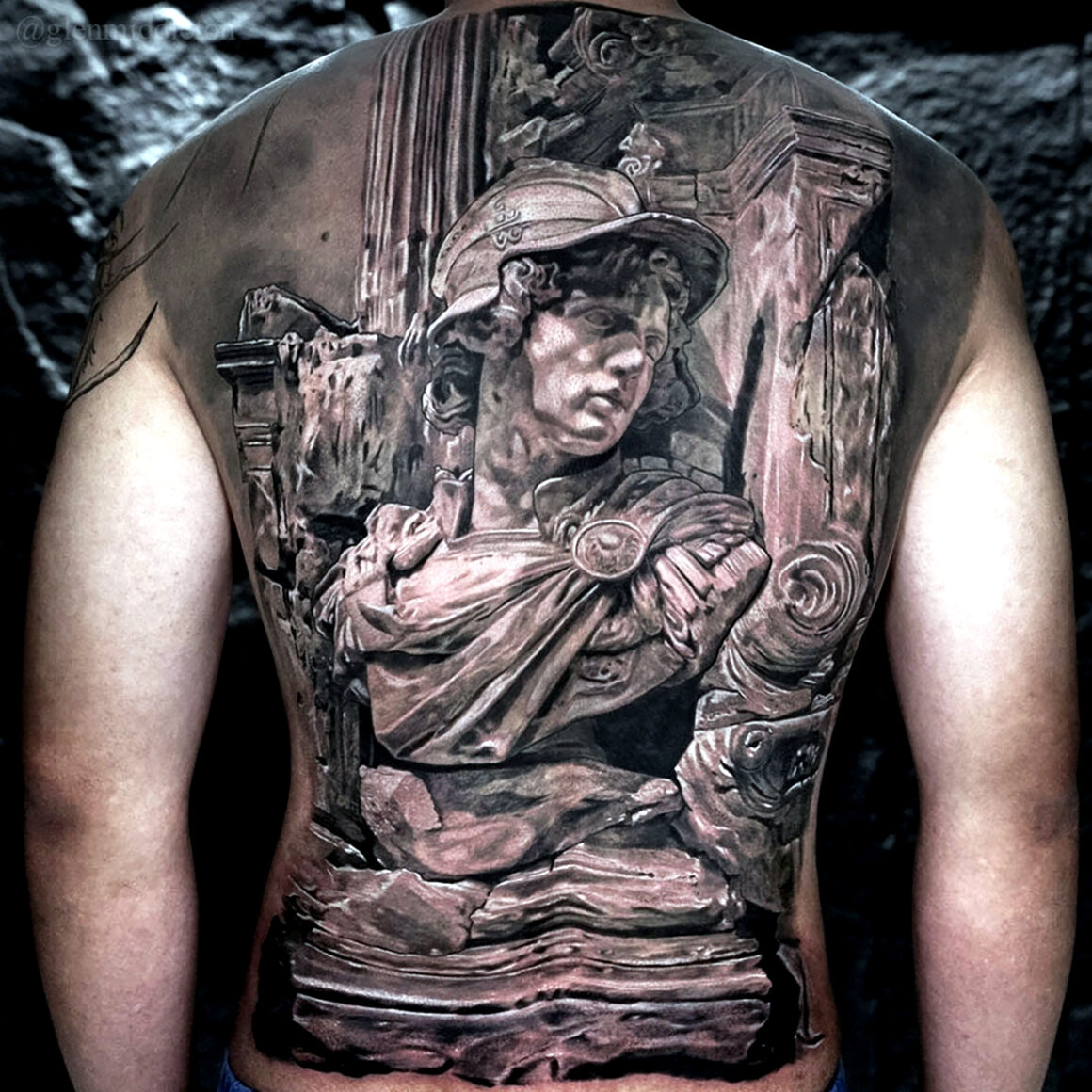
What are your ambitions for the future?
My focus is on continuing to refine my work and expanding further into international markets, particularly New York. Long term, I want my work to sit closer to traditional art than conventional tattooing.
That comes down to consistency, restraint, and building a body of work that holds up over time.
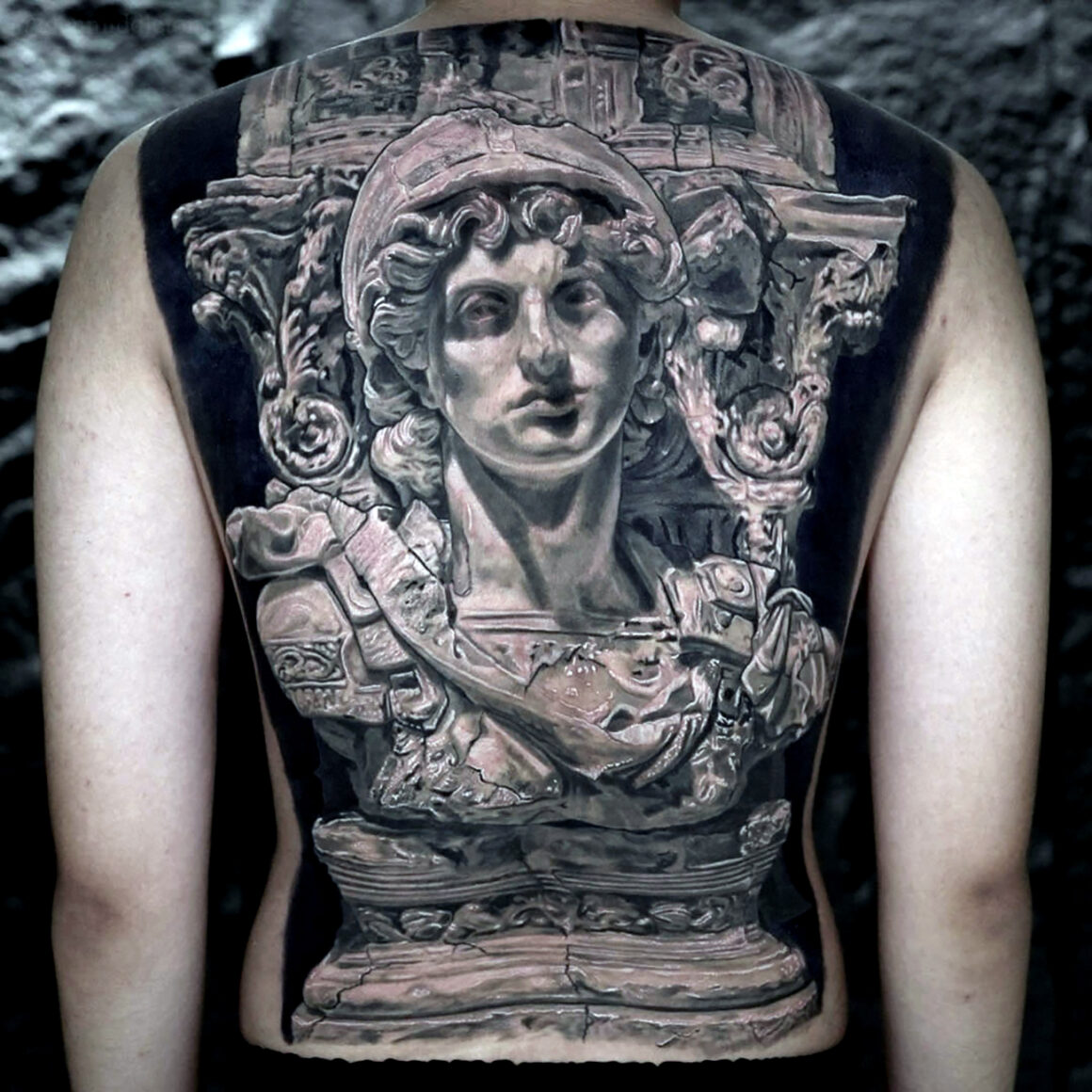
Is there anything you would like to add to close this interview?
Tattooing at a high level comes down to restraint and intent. The goal is not to do more, but to do things properly and in a way that lasts. That’s something I try to carry through in every piece.