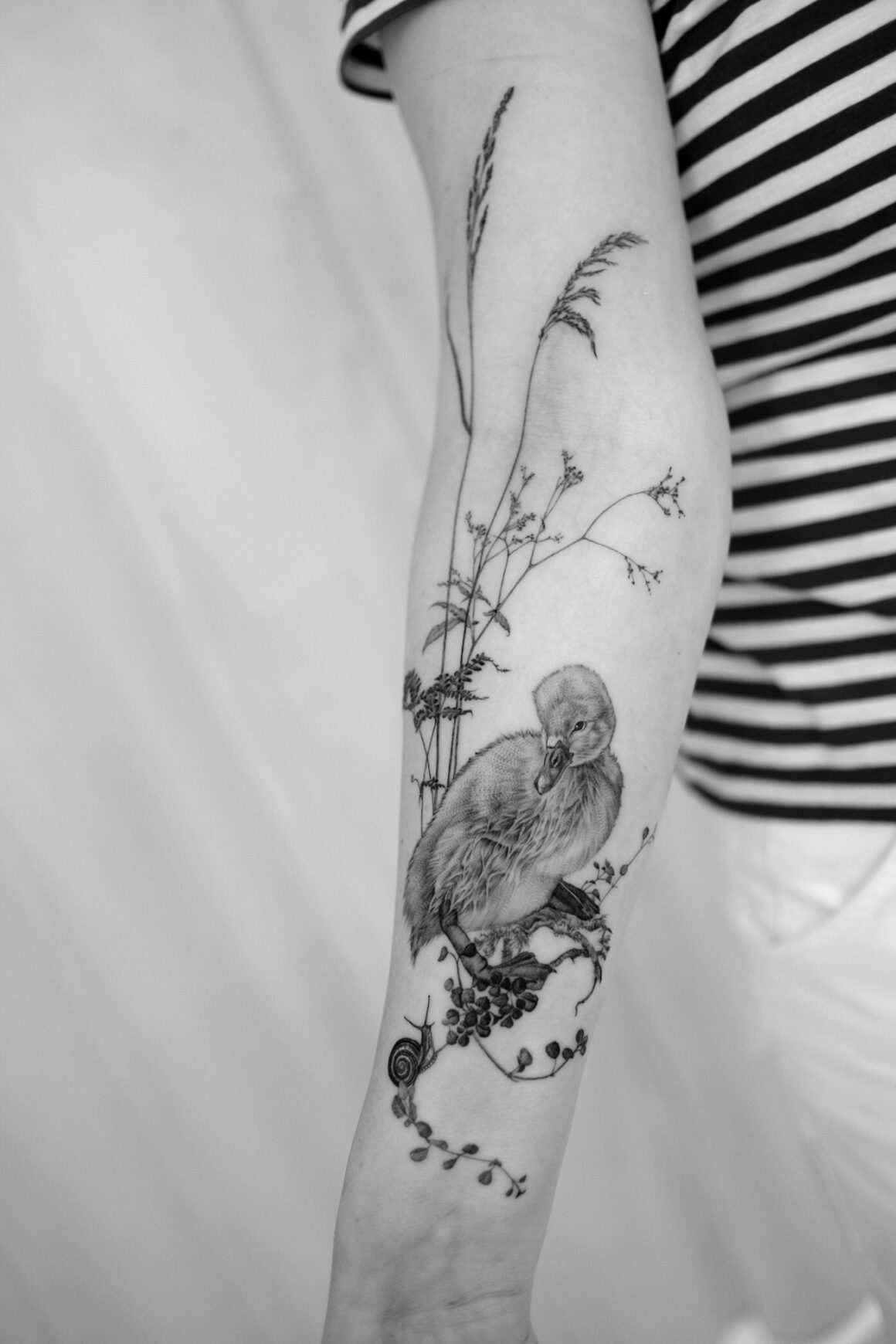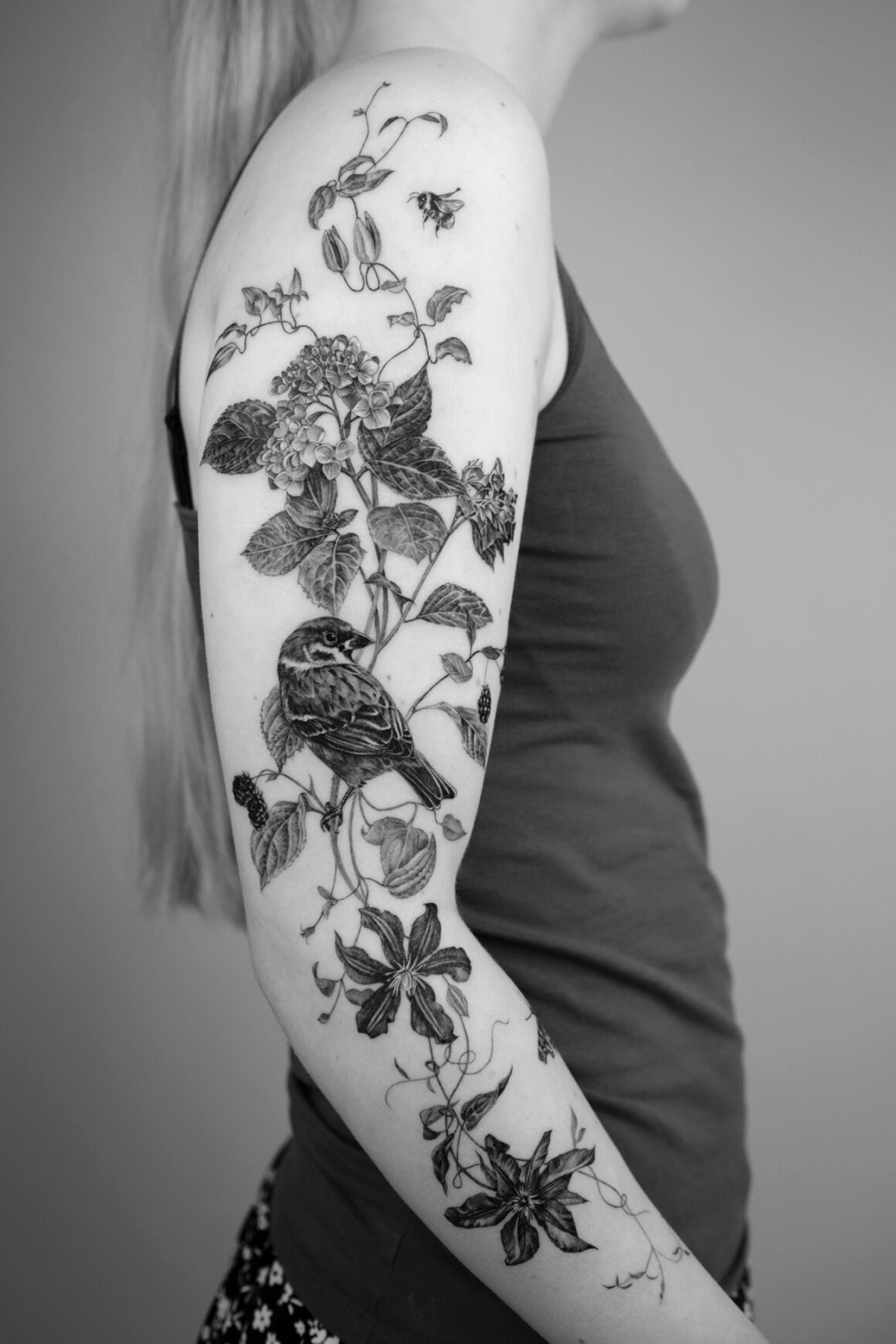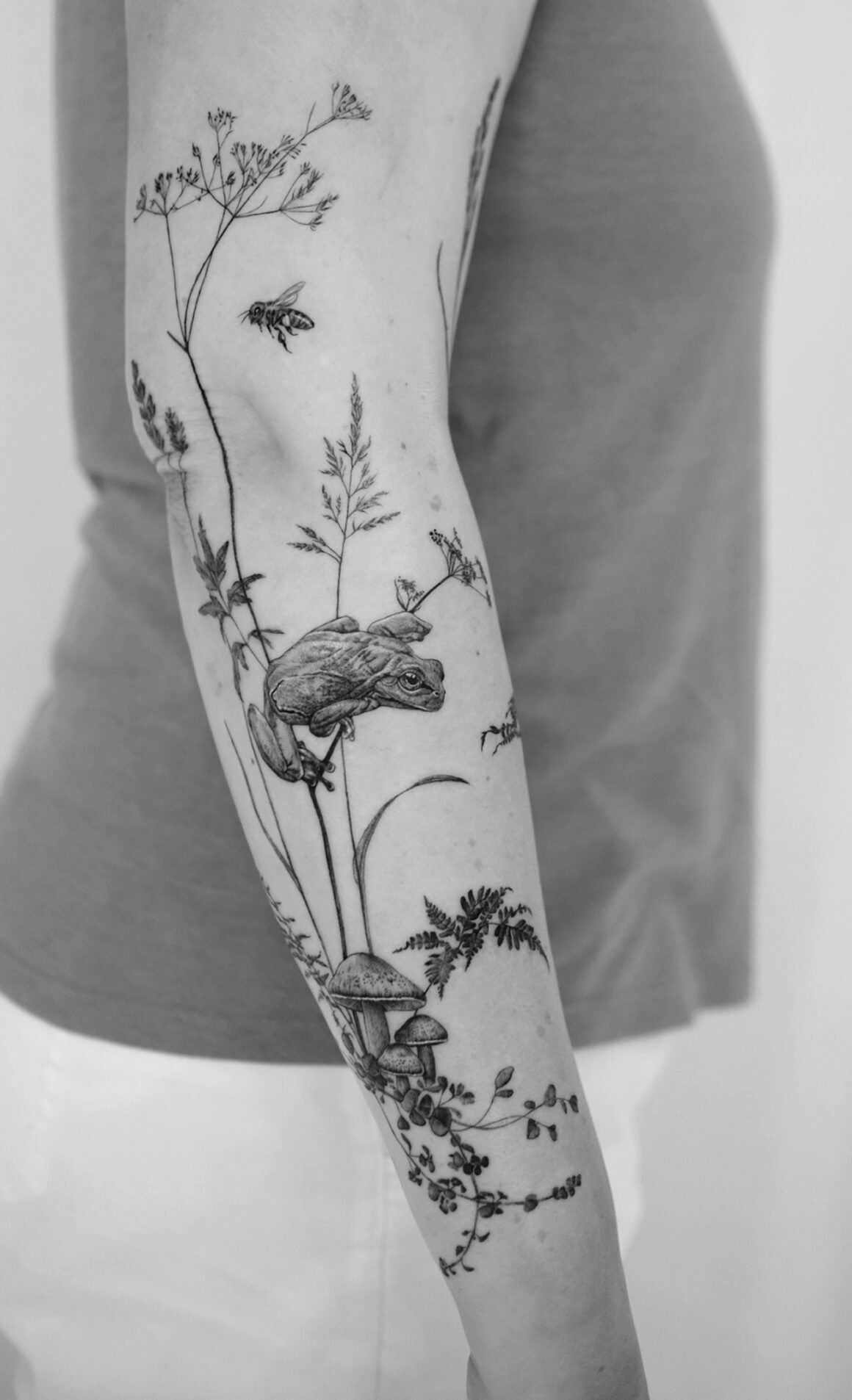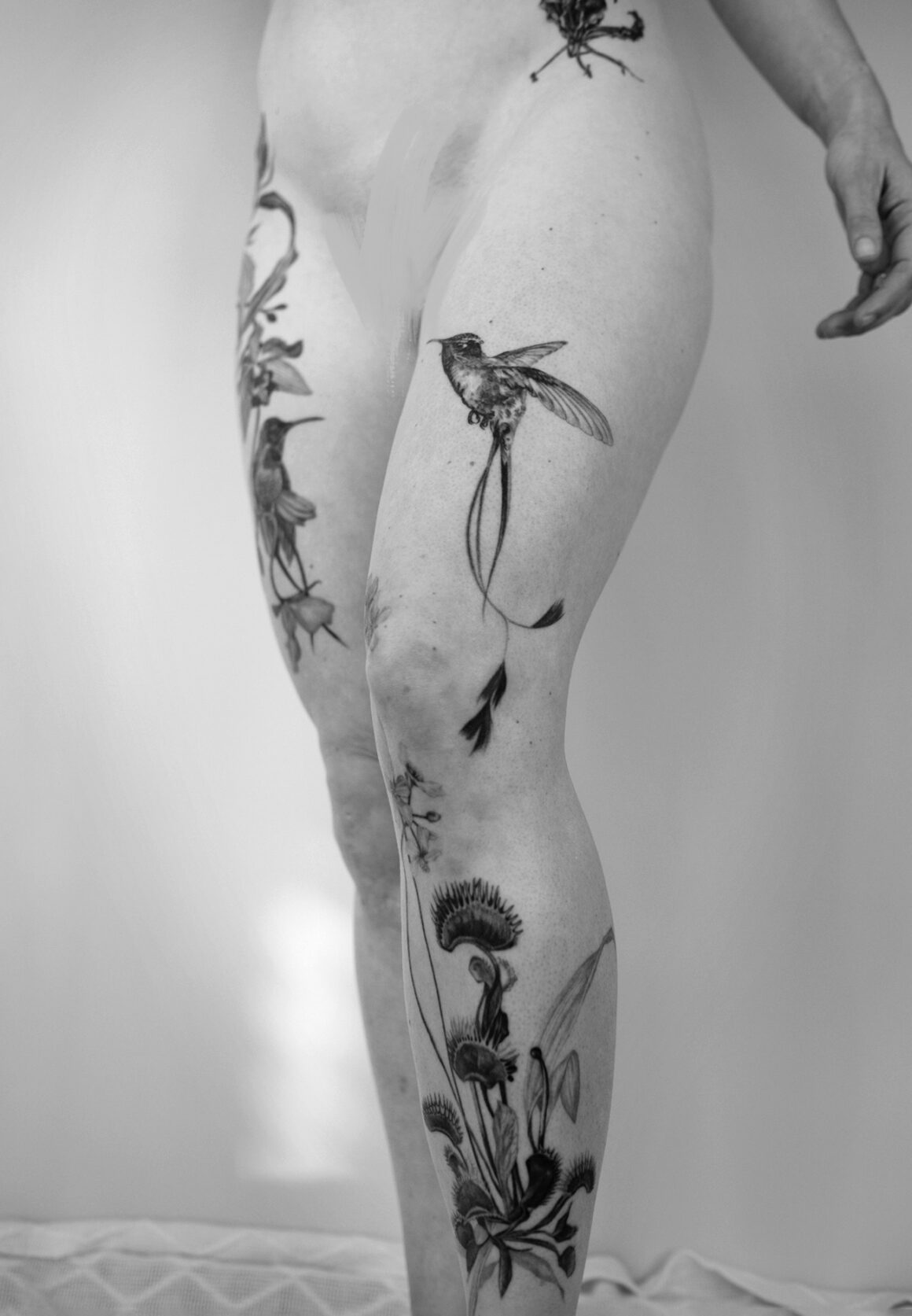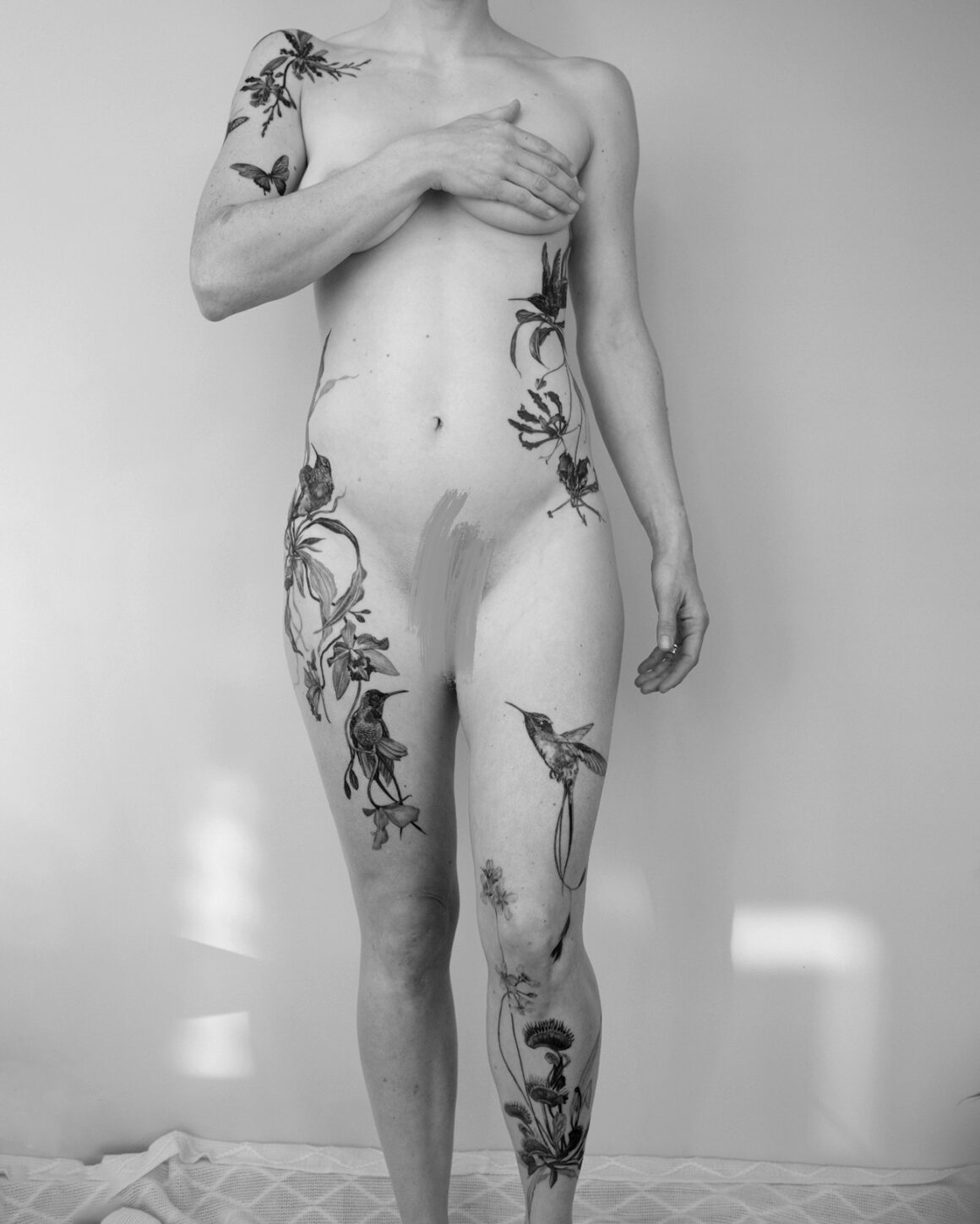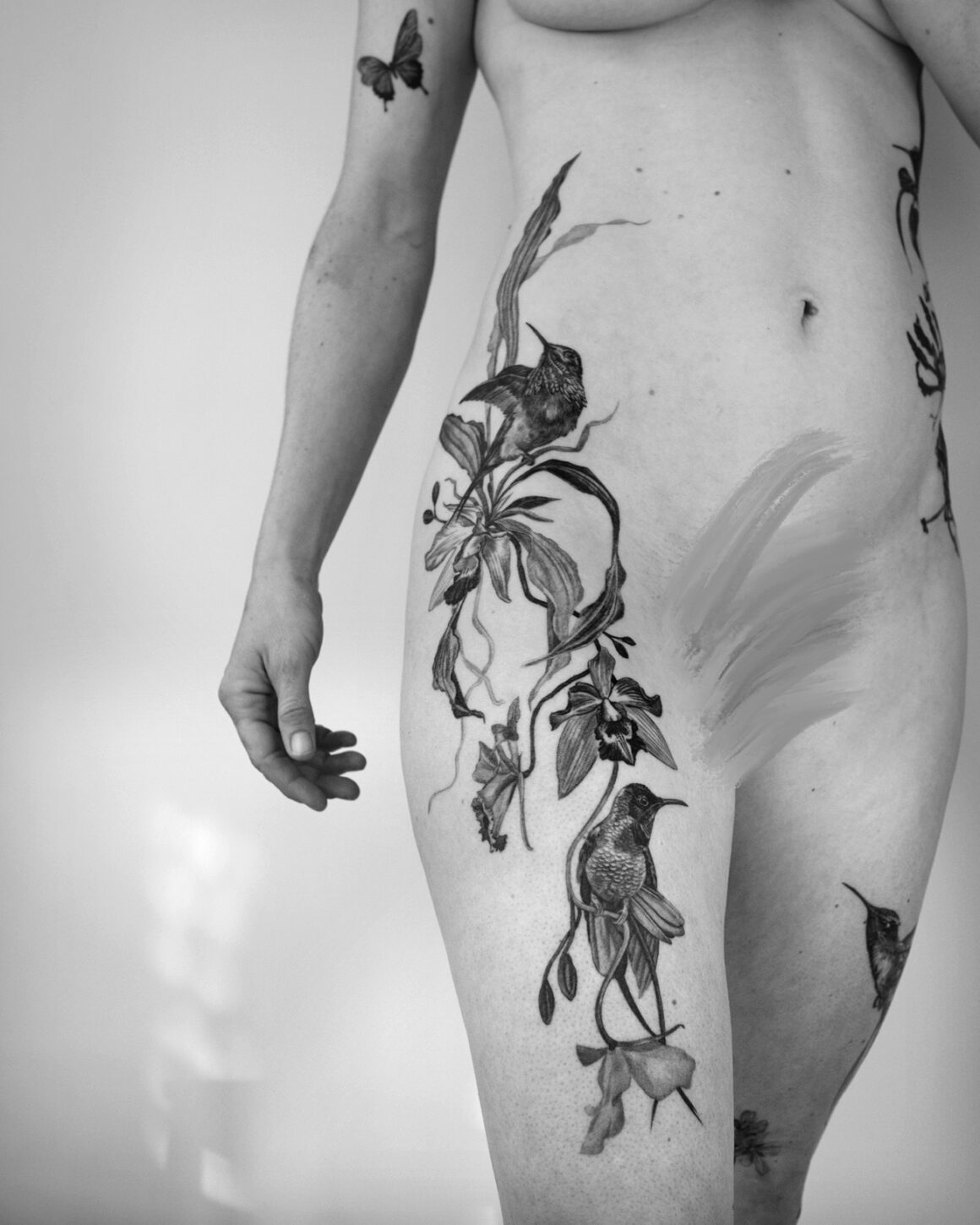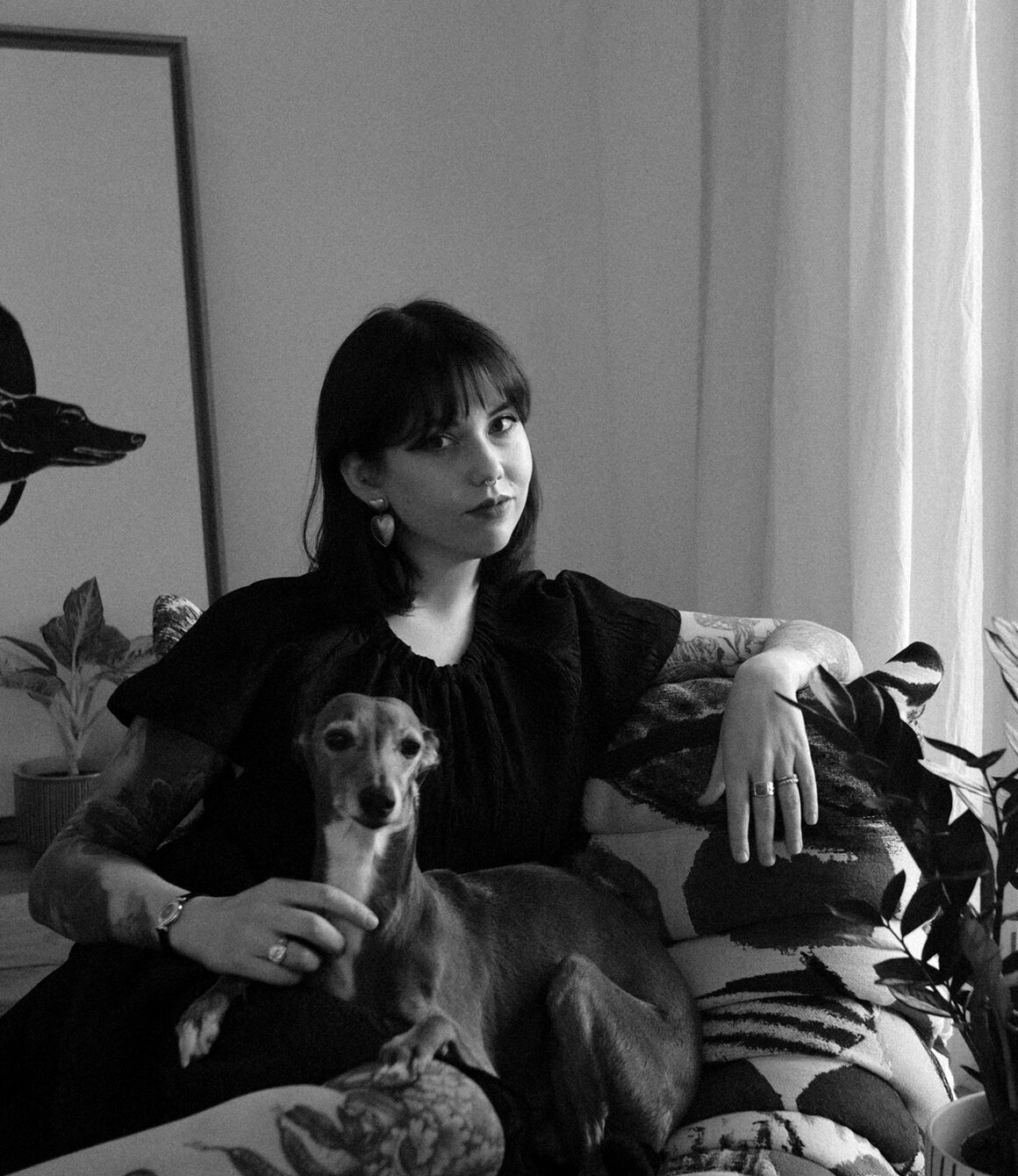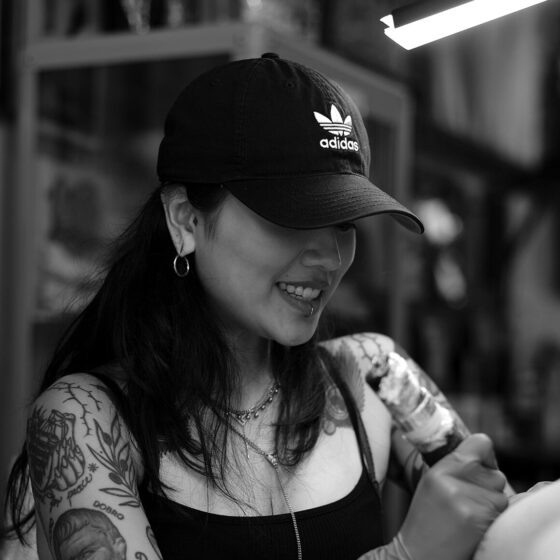

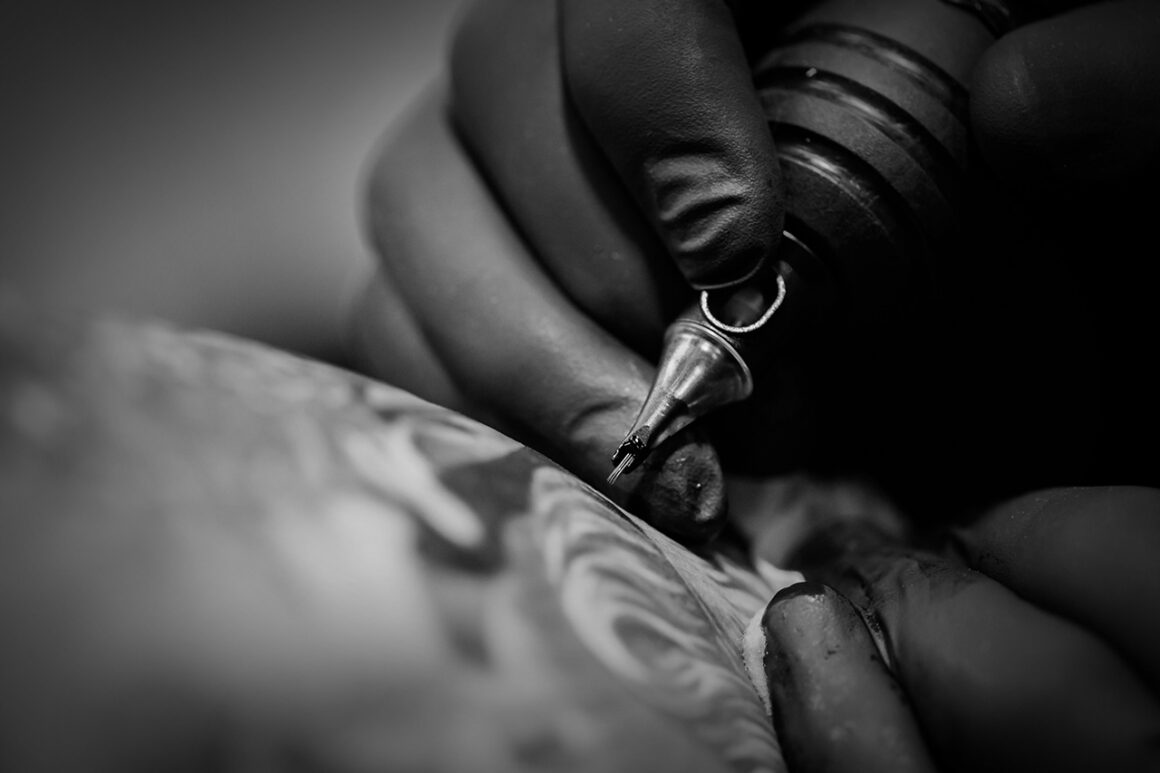

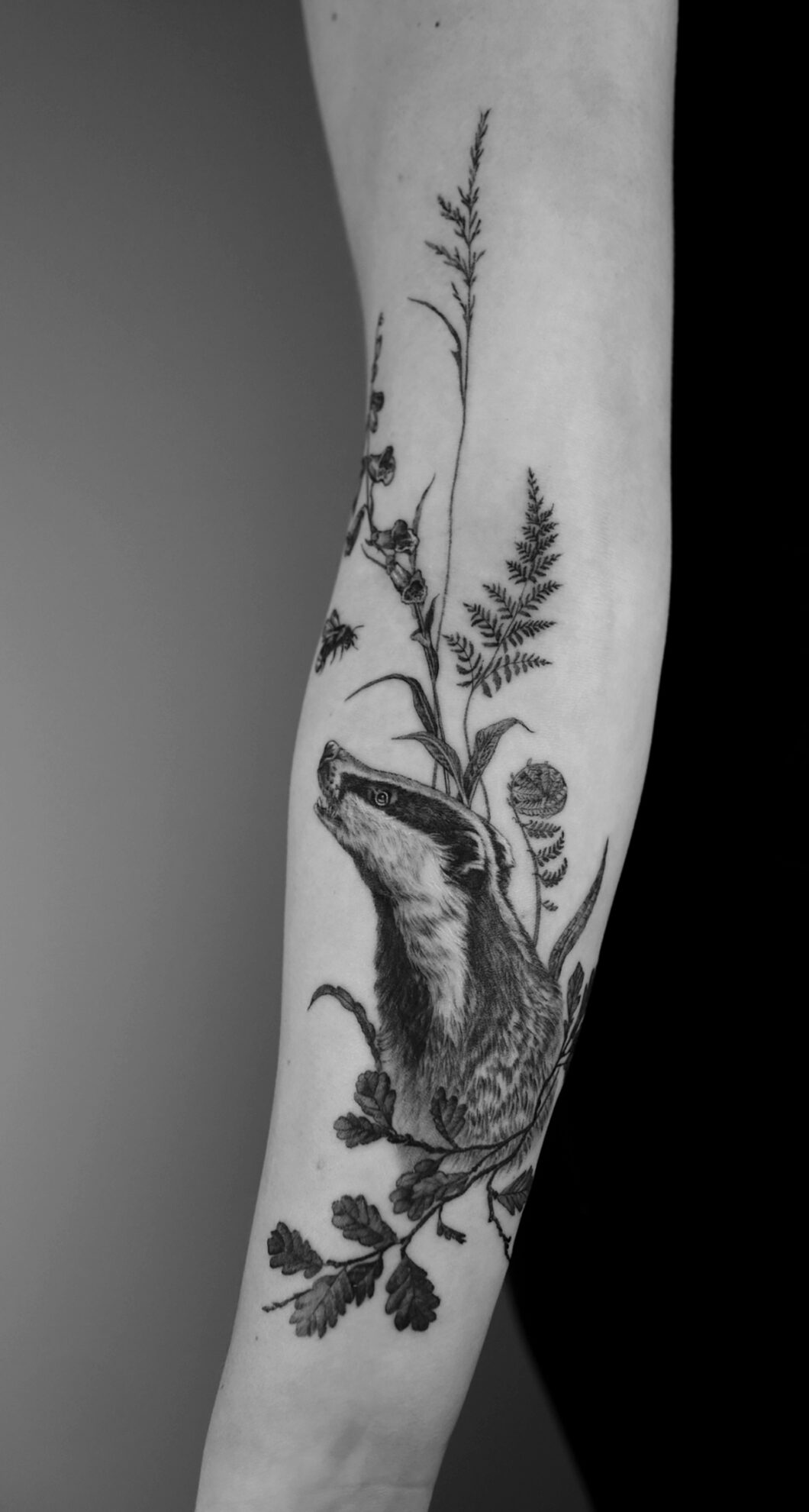
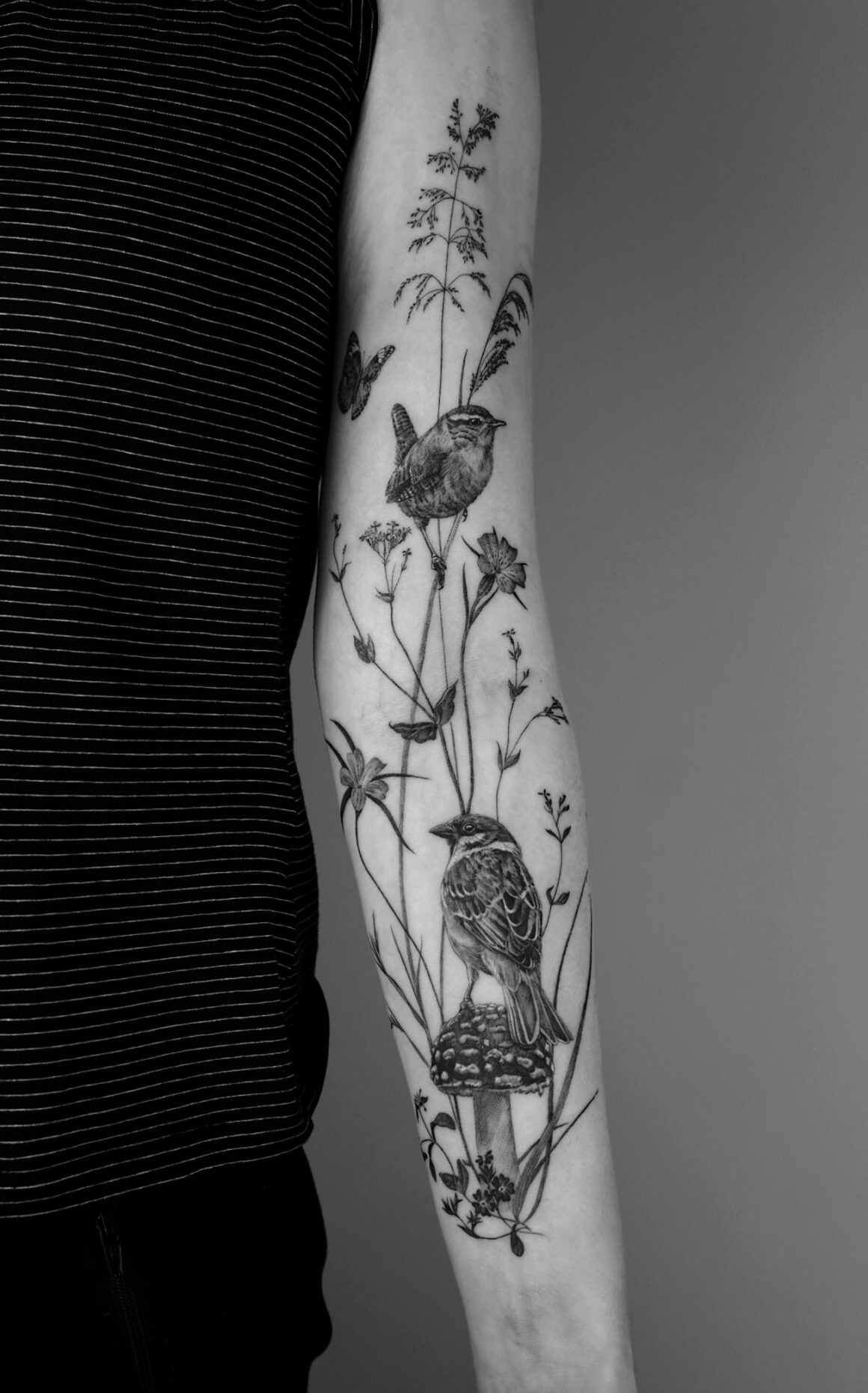
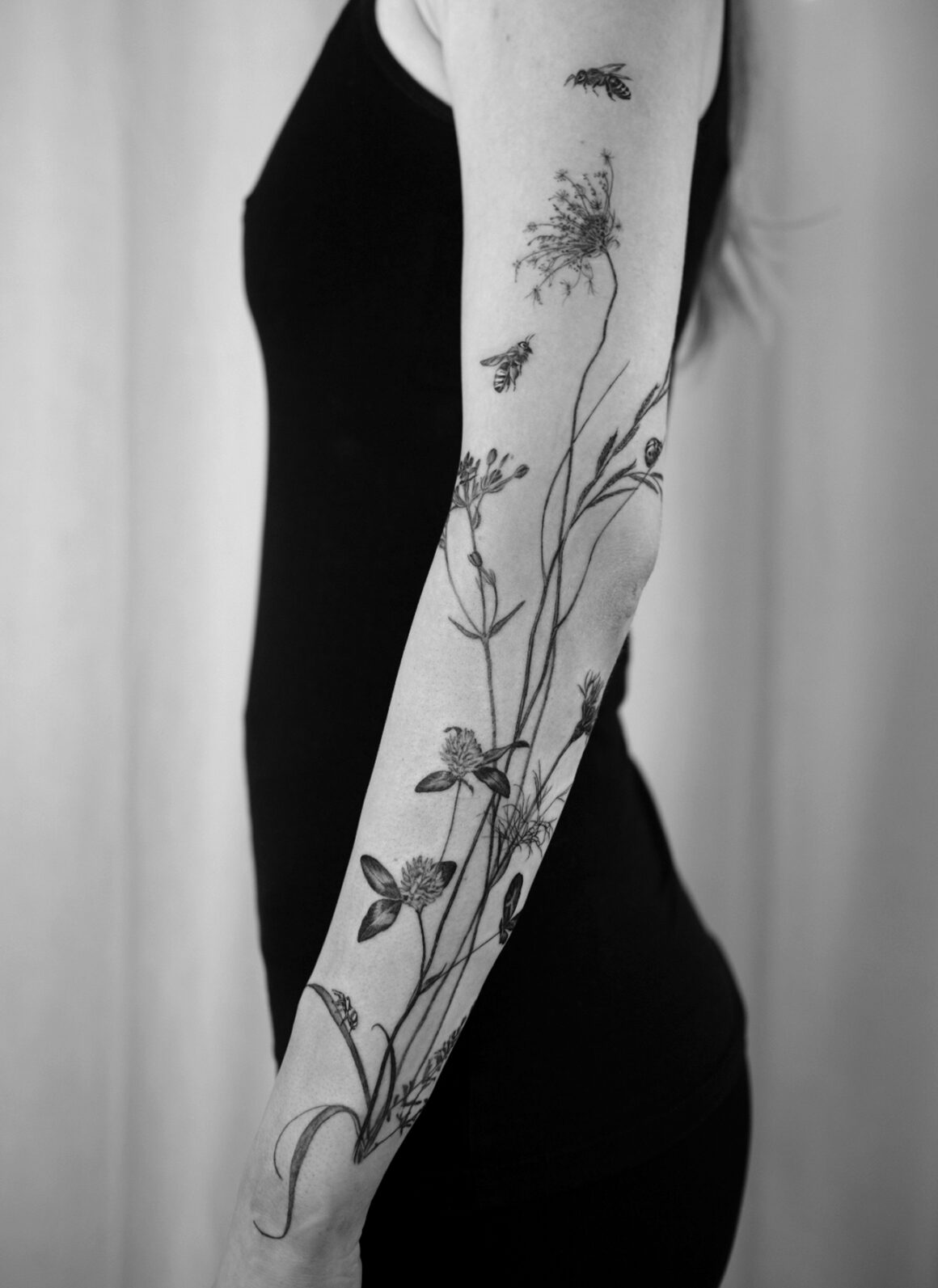
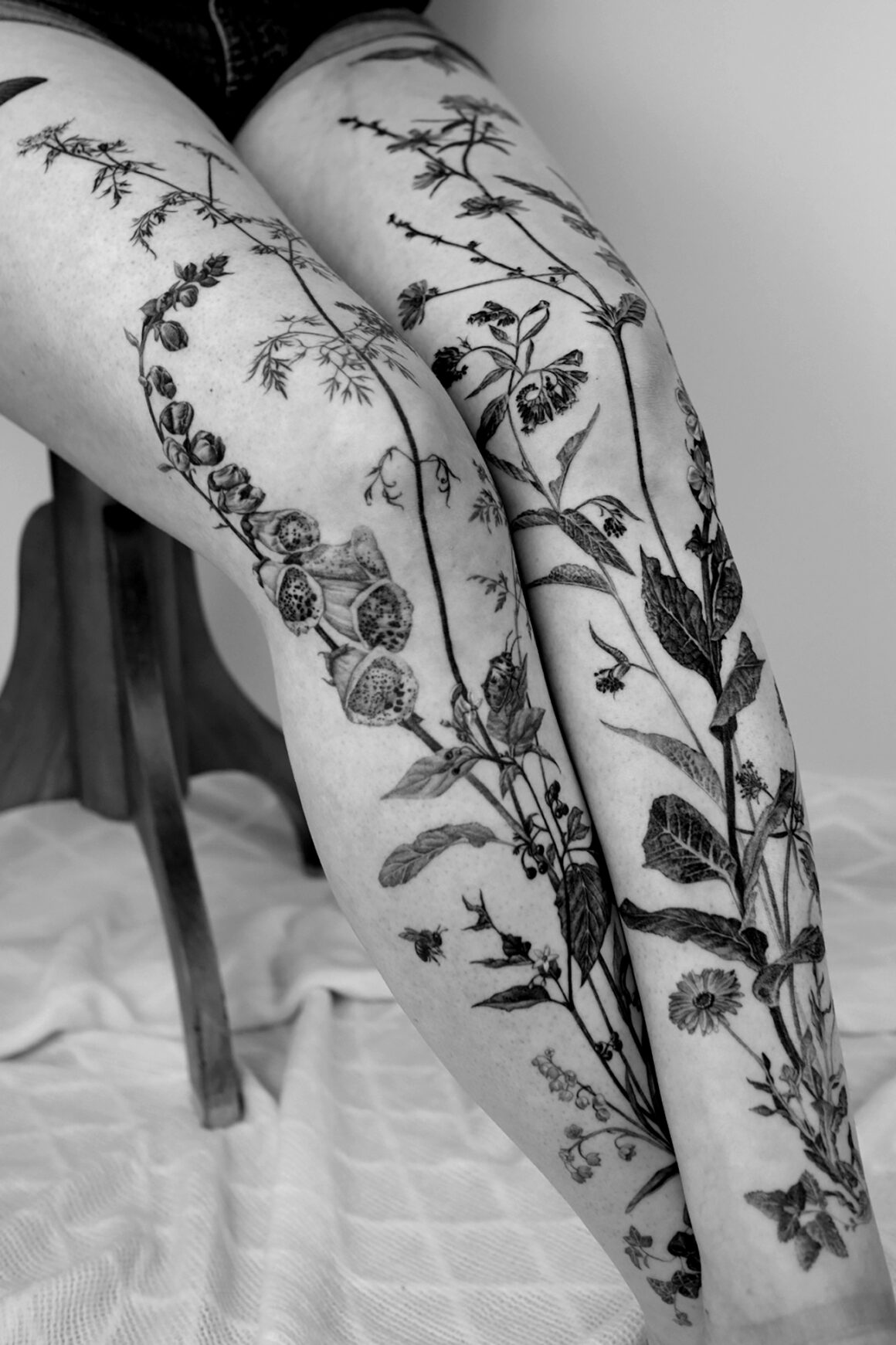
A journey into the world of tattoos, taking shape in Leipzig with strong references to nature, Black-and-Grey, and delicacy. Almost as if it were “artistic biology”.
Madlyne, I know you’ve studied both art history and theater. Your art studies have certainly served you well, but do you think theater has also helped you understand the imaginative world of tattoo art?
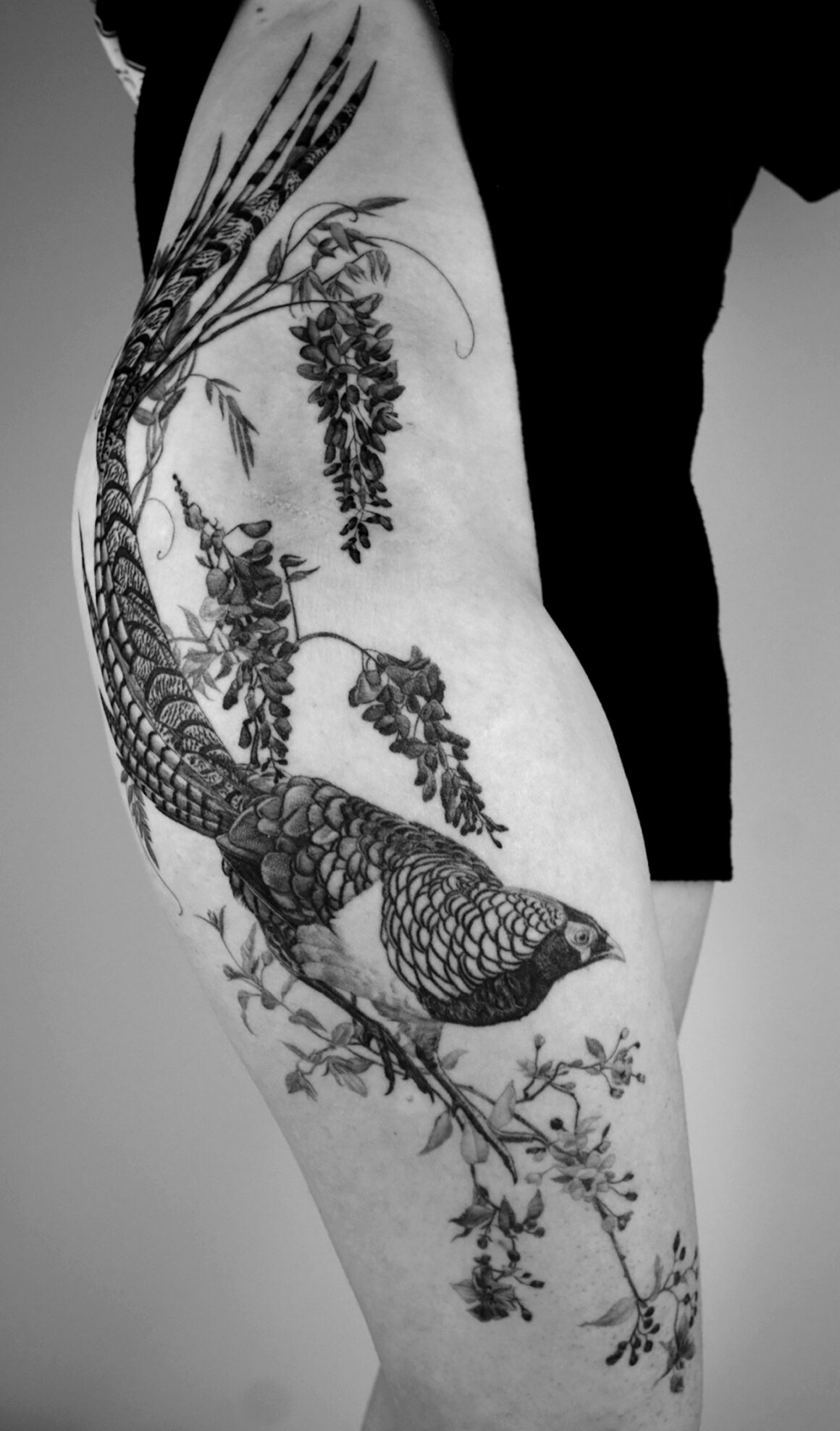
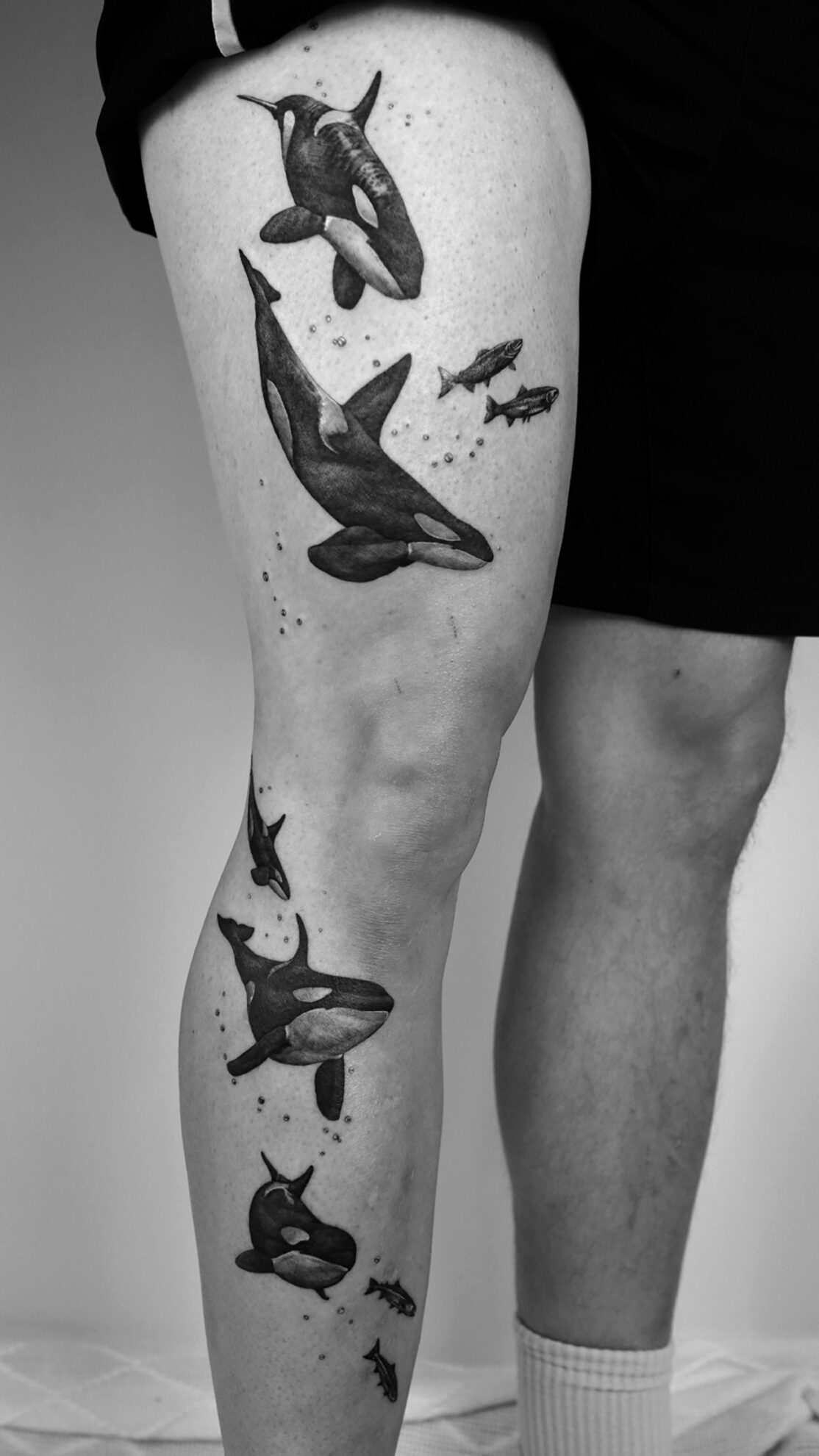
In theater, everything is about tension, gesture. It’s not just words, but also the movement of the body. I think tattooing works in a similar way. A tattoo is never just an image – it lives on a body, it moves, it breathes. I very much like to integrate a certain flow into my designs, so it works with the individual muscles and shape of the body. I want to create movement and harmony.
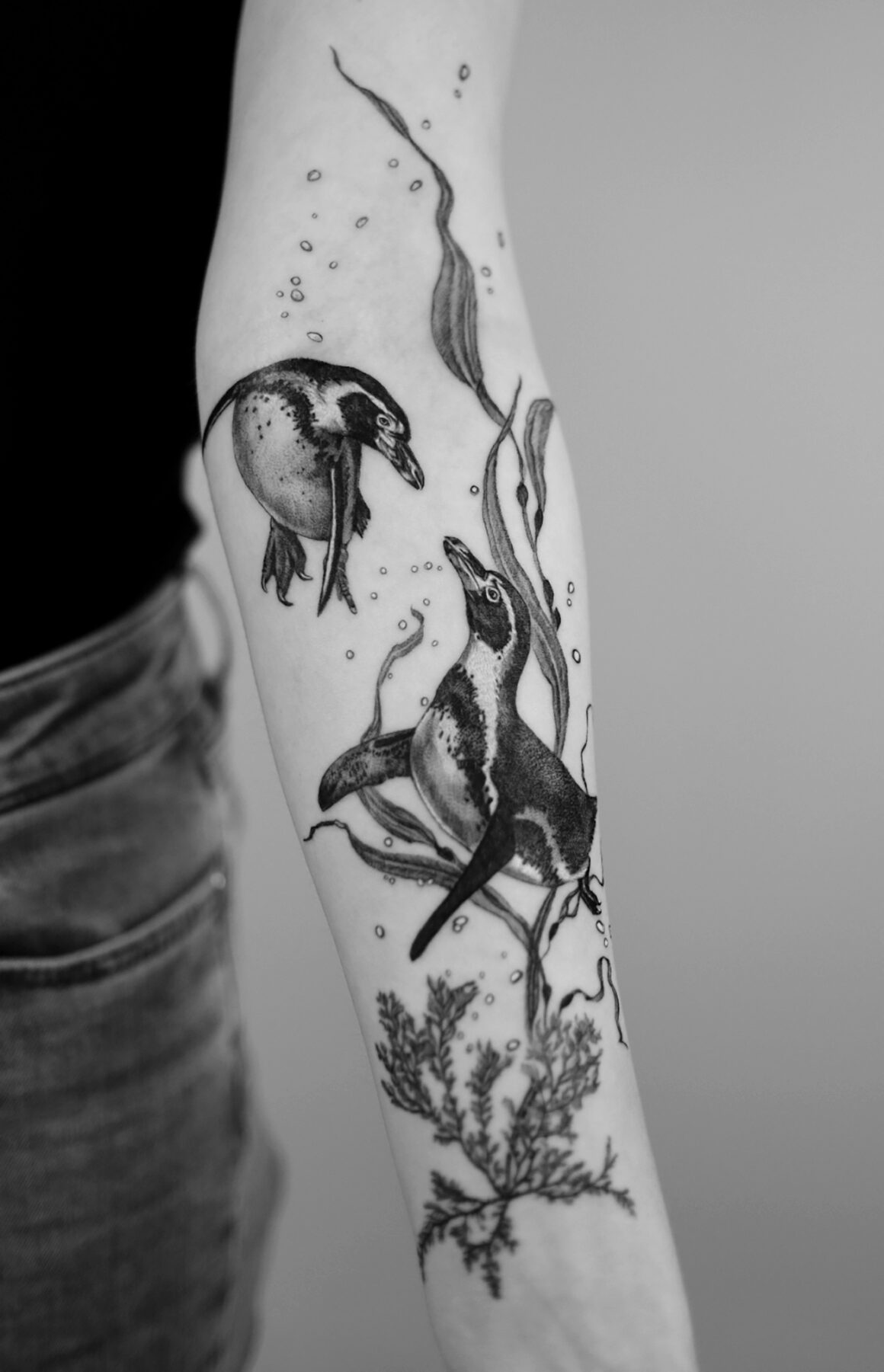
You’ve defined your tattoos using three concepts: Nature, Black-and-Grey, and Delicacy. Do you think that’s all, or does your art require further explanation?
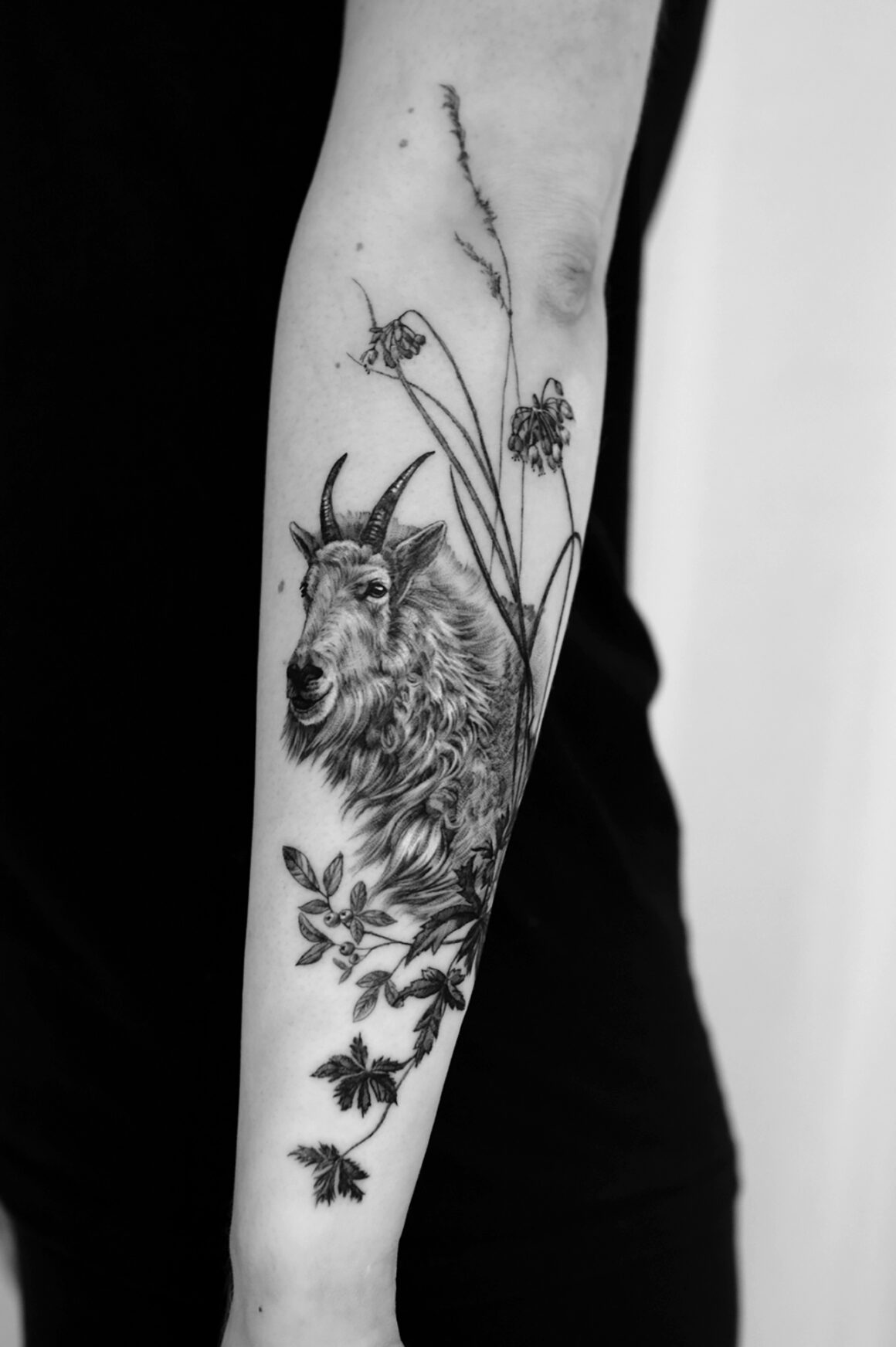
I’m interested in what happens when you don’t overwhelm the skin. I’m drawn to the tension between strength and softness, between empty space and ink. I don’t want my tattoos to shout. I want them to feel as though they belong there, as if they have always been part of the person.
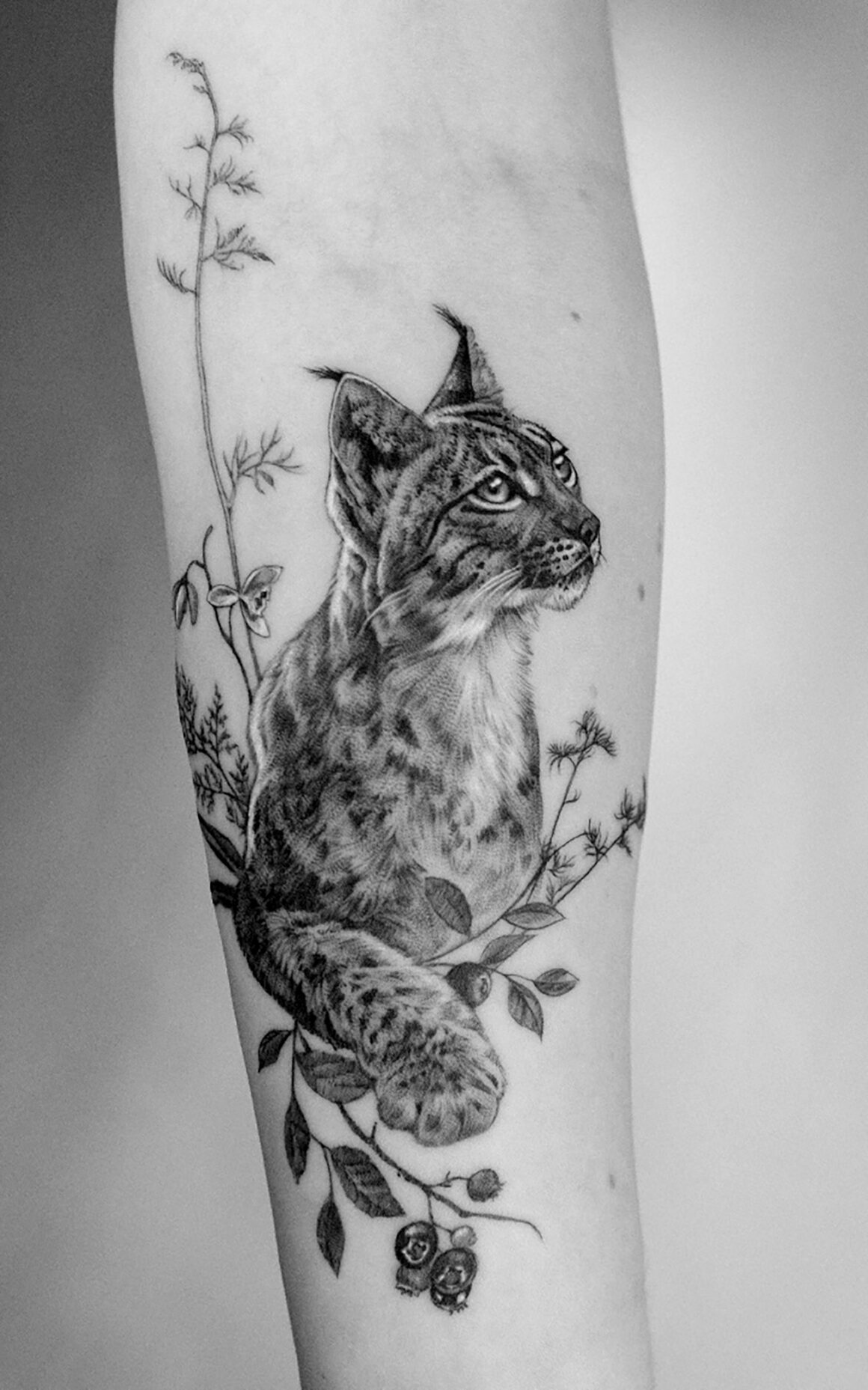
What is important for creating a good tattoo?
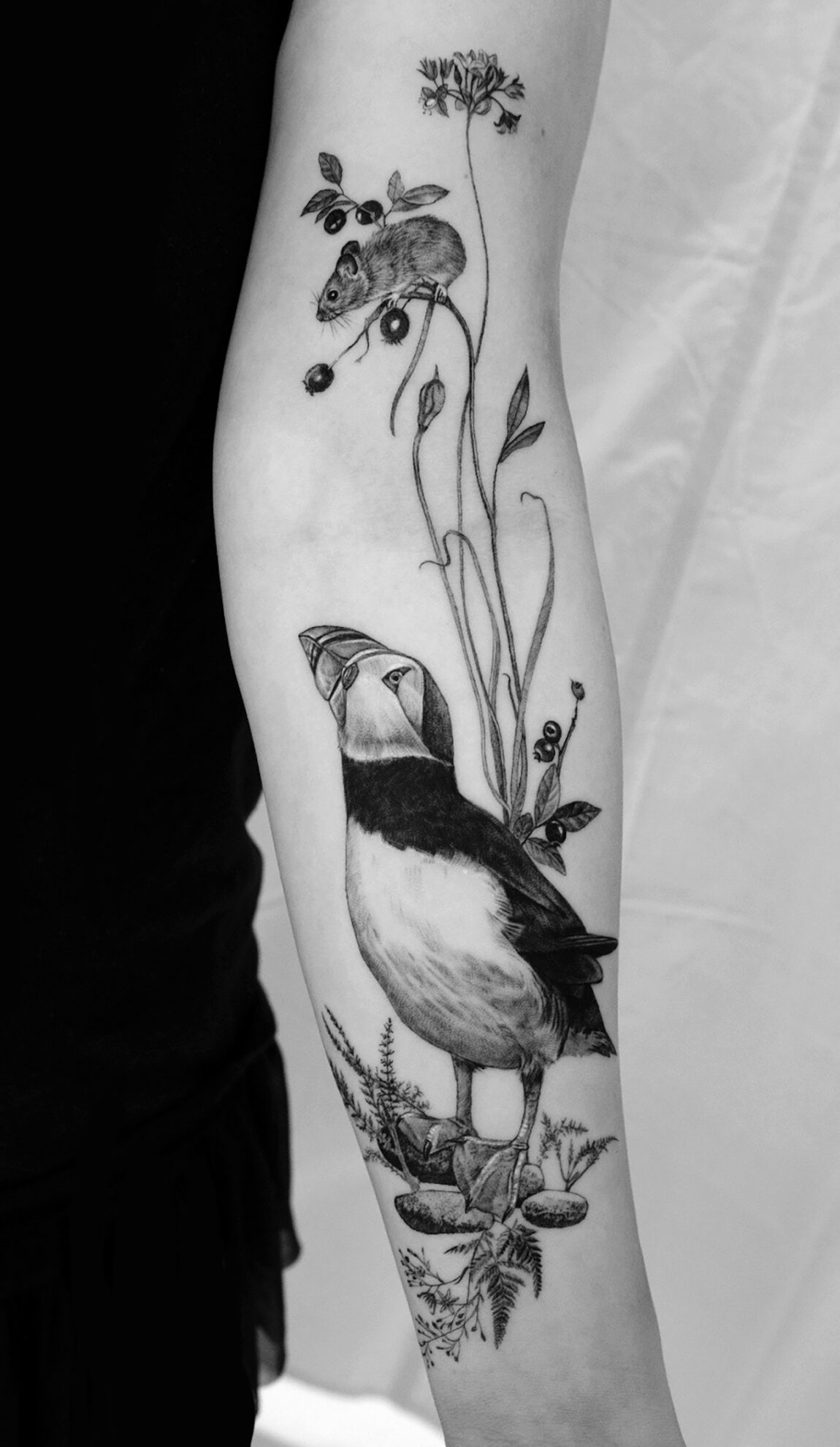
Movement and flow are essential to me. What I create is deeply connected to what I love: the immersion of nature onto the body. I dive into research: into biology, into ecosystems. I ask myself which plants belong with which animals, whether they share a natural habitat, whether the composition feels authentic.
It’s a lot of research – and I genuinely love that process.
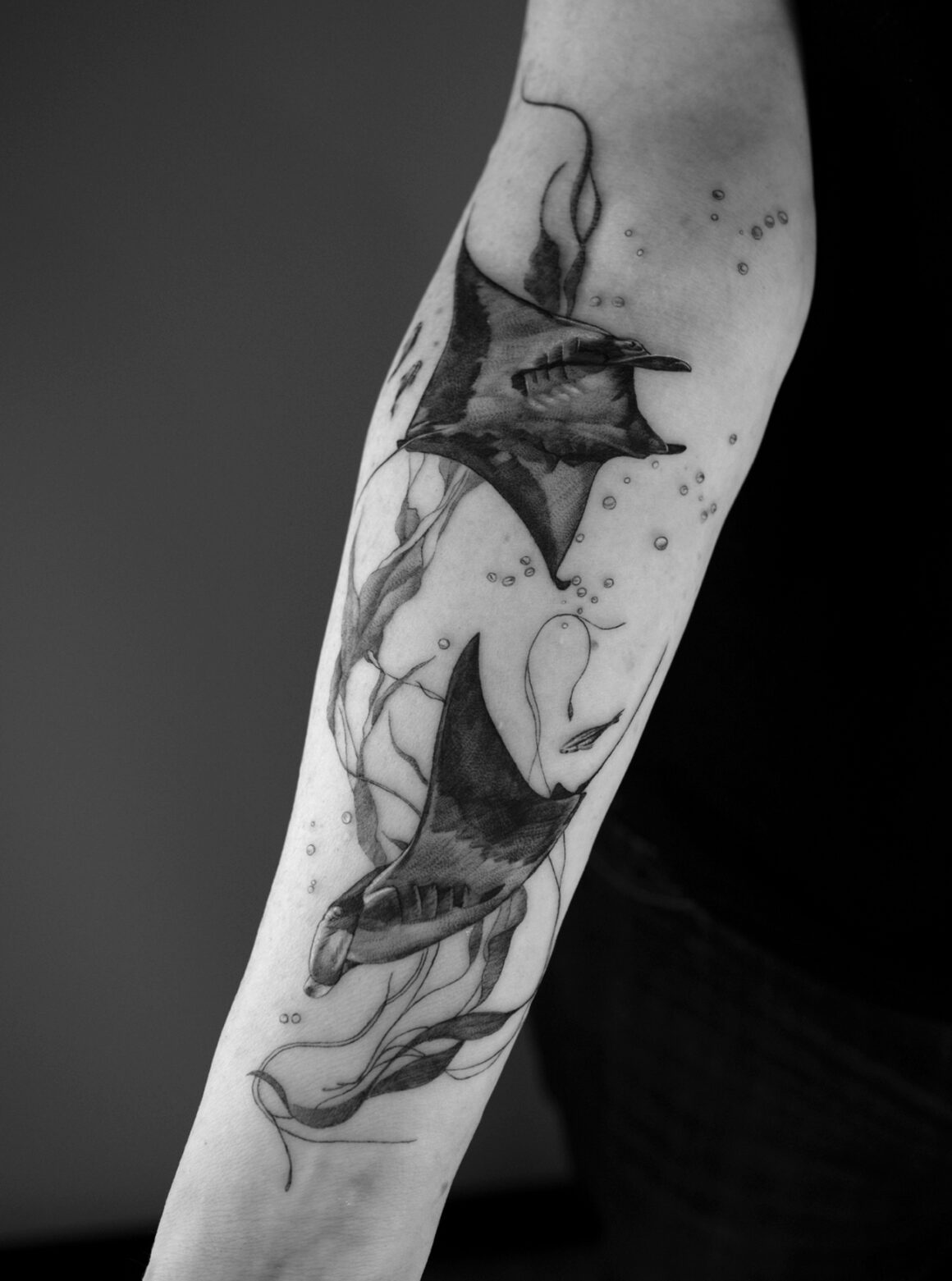
You’re practically self-taught, and in the beginning, you practiced exclusively on friends, your husband, or yourself. When does a truly capable artist become good and effective?
That’s a hard question. I’m a perfectionist with a background in oil painting. With oil, you can work on a piece for weeks, adjusting and refining endlessly. Tattooing is different – at some point, you have to stop and let it go. It’s essential to analyze the tattoo in front of you and ask yourself what is truly necessary – and to have the discipline to stop when it feels complete, not when it feels exhausted. In the end, it’s not about pushing it further for myself. It’s about what serves the person wearing it. The client always comes first.
Do you always need to take long walks in nature or watch documentaries to find the spark of inspiration?
The spark comes from within. I’ve always been deeply interested in biology and drawn to nature, so inspiration can emerge from almost anything: a shape, a certain flow, a bird passing by the window etc. Simply observing the world around me is often enough. Books are a constant source, of course, but the internet can be a rabbit hole in the best possible way. I can’t count how many times I began researching one specific project and ended up discovering ideas for countless others.
Research rarely stays contained. It opens new doors faster than I can close them. My curiosity is both compass and distraction.
Is your clientele 90% female or have men increasingly appreciated your subjects as well?
It’s still predominantly women, yes. Delicacy is often culturally coded as feminine. But that perception is slowly shifting. More and more people are drawn to the idea that strength doesn’t have to appear aggressive. There is strength in subtlety. There is confidence in softness. I’m happy to work with anyone who connects with my work – regardless of gender. What matters to me is openness, respect, and a shared appreciation for the aesthetic.
Can you tell me something about the ‘Black Dot Tattoo’ in Leipzig where you currently work?
The studio is owned by Sandra Dot (IG: @sandra_dot), a wonderful tattoo artist and colleague who loves dogs and coffee as much as I do. It’s just the two of us (me and Sandra) working there. No walk-ins, by appointment only. The space has a very calm, relaxed atmosphere. I especially love the huge windows and the natural light that fills the studio.
There are plants, quiet corners, and we do our best to make everyone feel comfortable from the moment they walk in. It’s not loud, and it’s not chaotic. It’s focused and intentional. We care deeply about details – not only in our work, but in how we treat the people who trust us with their skin. There’s a strong sense of professionalism, but also warmth. For me, that balance is essential.
Is it true that your waiting list is quite long?
I don’t keep a waiting list or contact people when spots open up. Instead, I open my books twice a year and release appointments for the following six months. In the past, I only opened my books once a year, which naturally led to much longer waiting times. Over time, I realized that this system felt too inflexible – both for my clients and for myself – so I adjusted it.
When will the new dates be released?
The dates are announced through my newsletter – the next opening will be in mid-March for the period from July to December. I usually receive more requests than I can accommodate. Since I only take one client per working day, it’s important for me to plan carefully. This allows me to give each project the time and focus it deserves, without working under time pressure.
Last question: do you like listening to music while you work? Does all that delicacy on skin also require equally soft and delicate listening?
I always listen to music while tattooing; silence makes me uncomfortable. At the same time, I don’t enjoy overly heavy or dominant beats. The atmosphere in the room matters a lot to me.
I like music that isn’t the center of attention, but can comfortably exist in the background. Something atmospheric and textured. Artists like Michael Kiwanuka, Placebo, Florence + The Machine, Asaf Avidan, or classics like Pink Floyd and Talking Heads. It should create a mood without taking over the space. Some clients like to talk during the process, and I want the music to allow that to support the moment, not compete with it.