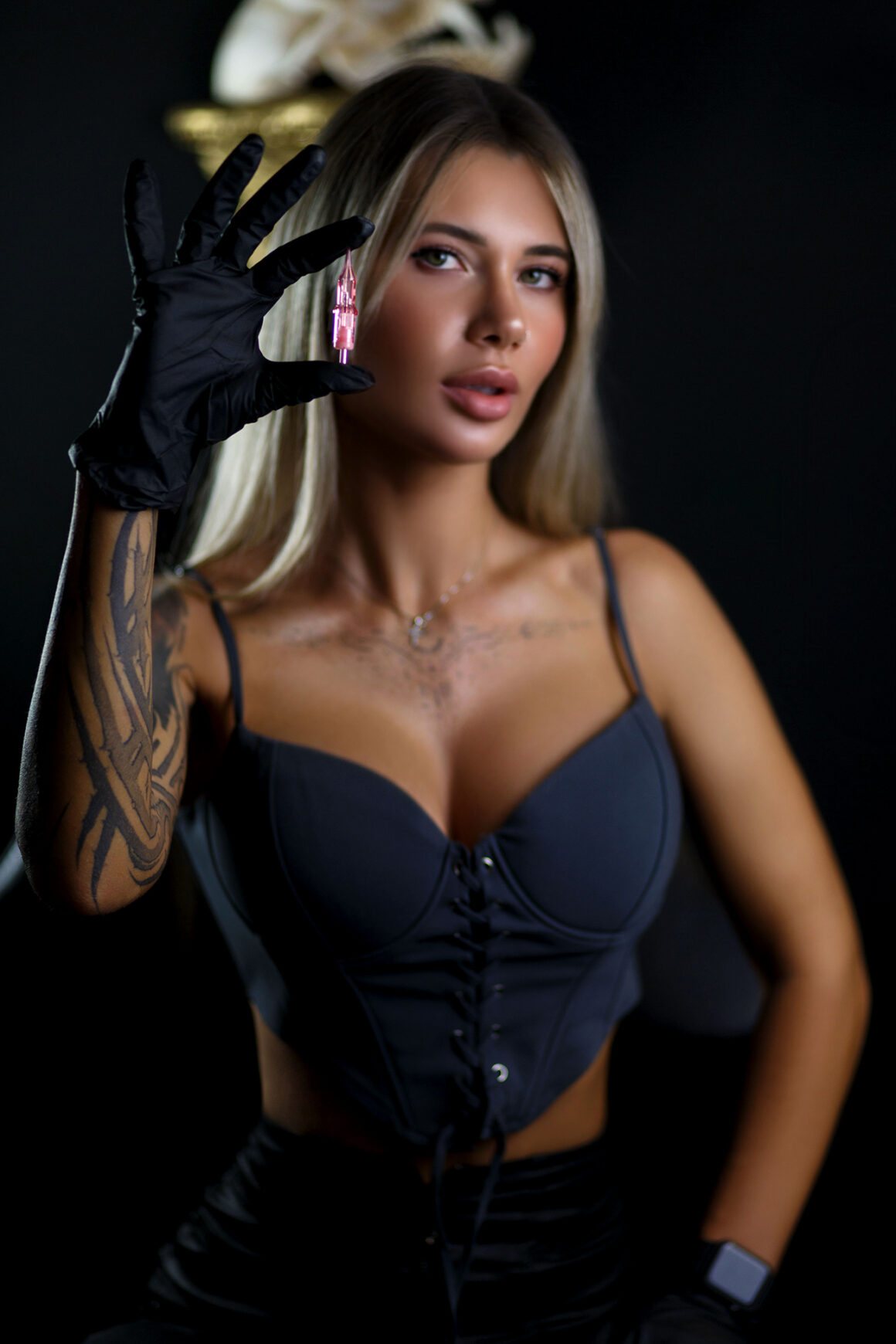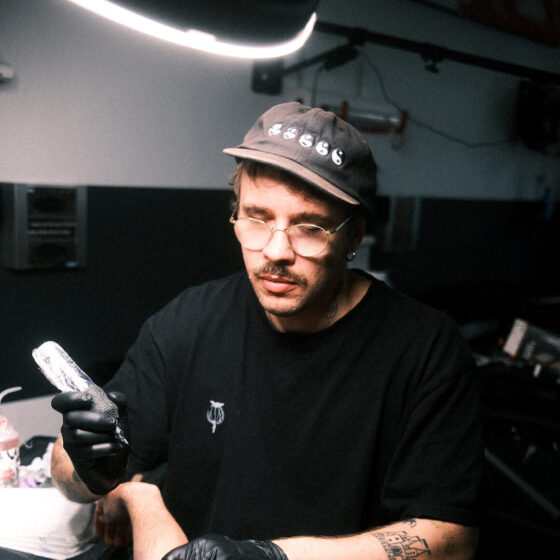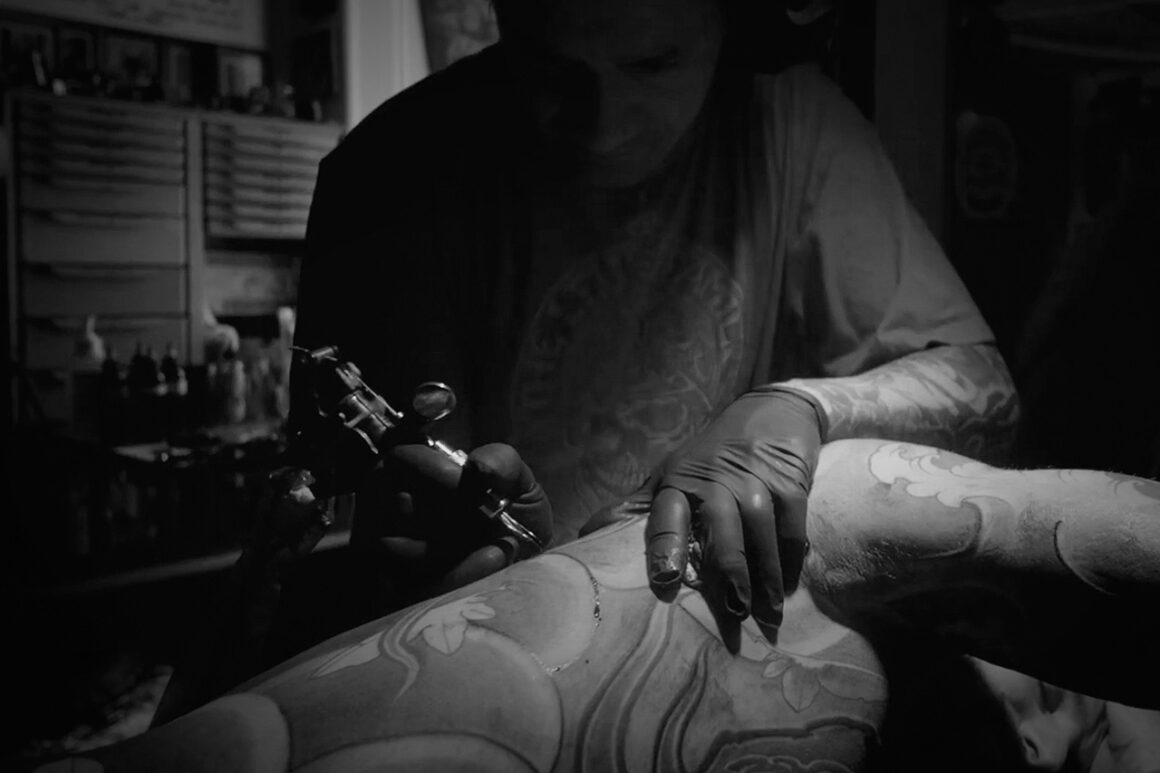

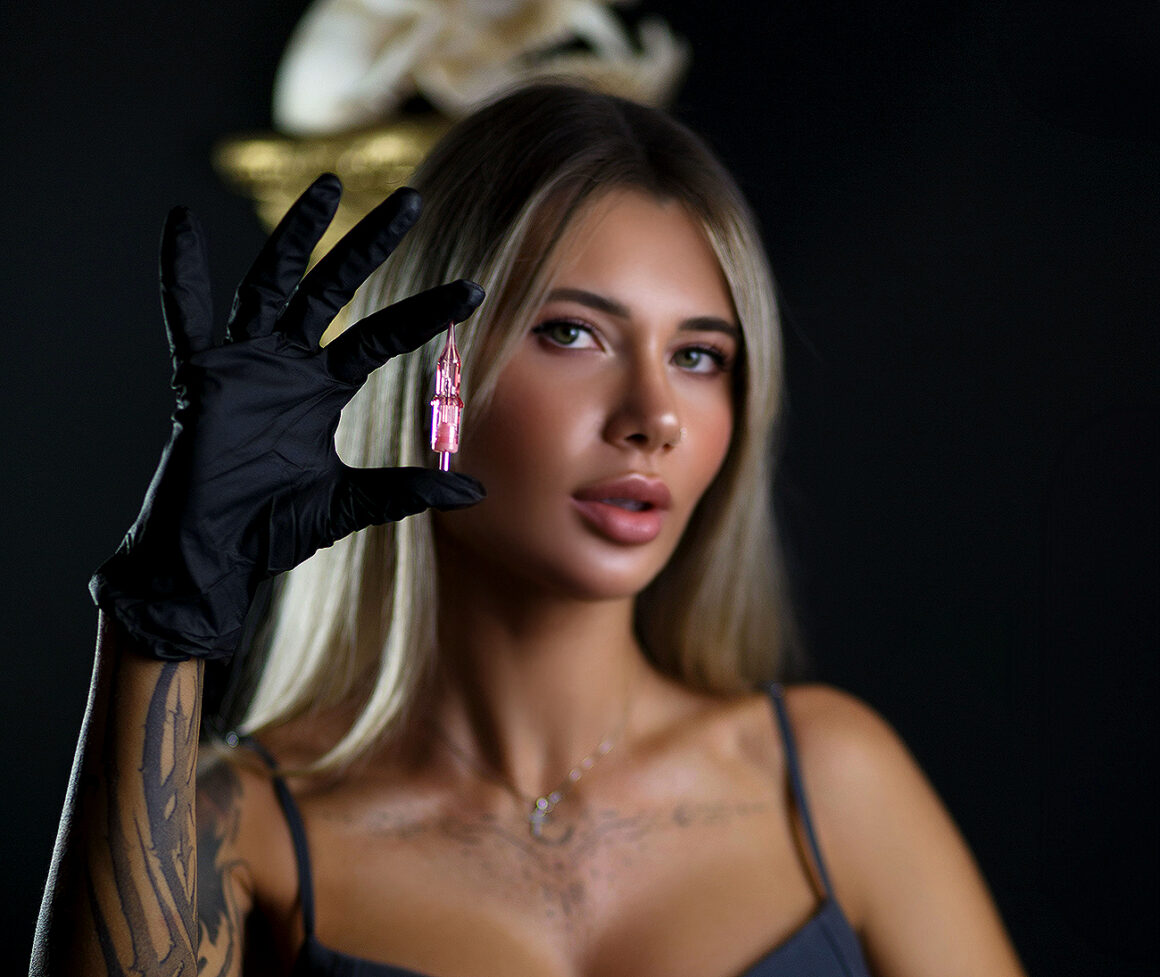
Yuliia Zahnybida is an artist specializing in fine line black and grey realism. The defining feature of her work lies in its soft gradients, precise detailing, and highly controlled pigment application. Originally from Ukraine and now based in Orlando, USA, Yuliia has developed the JZ Optima Needle Technique, a method that adapts ultra-fine needles originally designed for Permanent Make Up to the demands of fine line black and grey realism. The result is a style marked by exceptional precision and a refined sense of tonal subtlety.
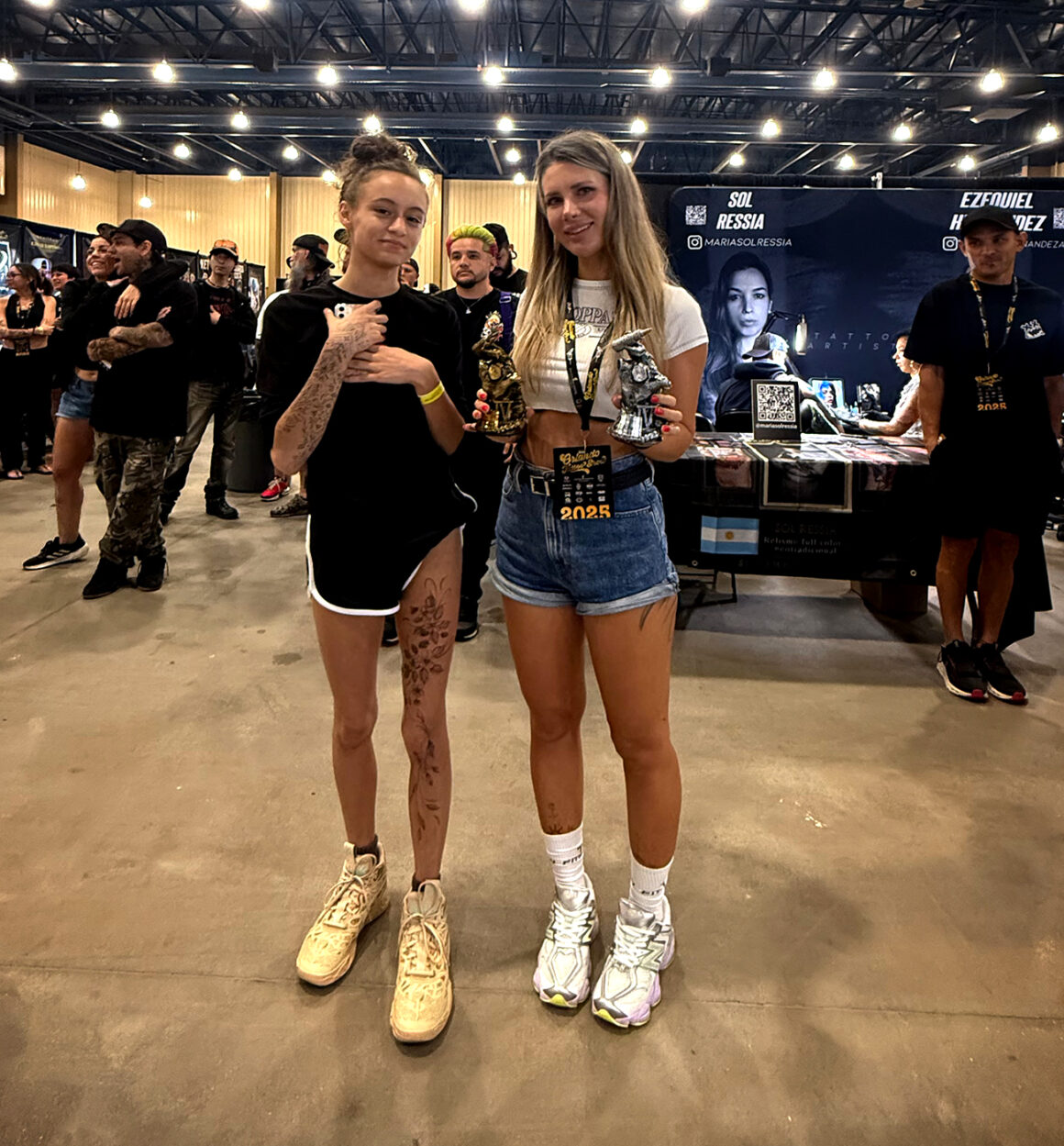
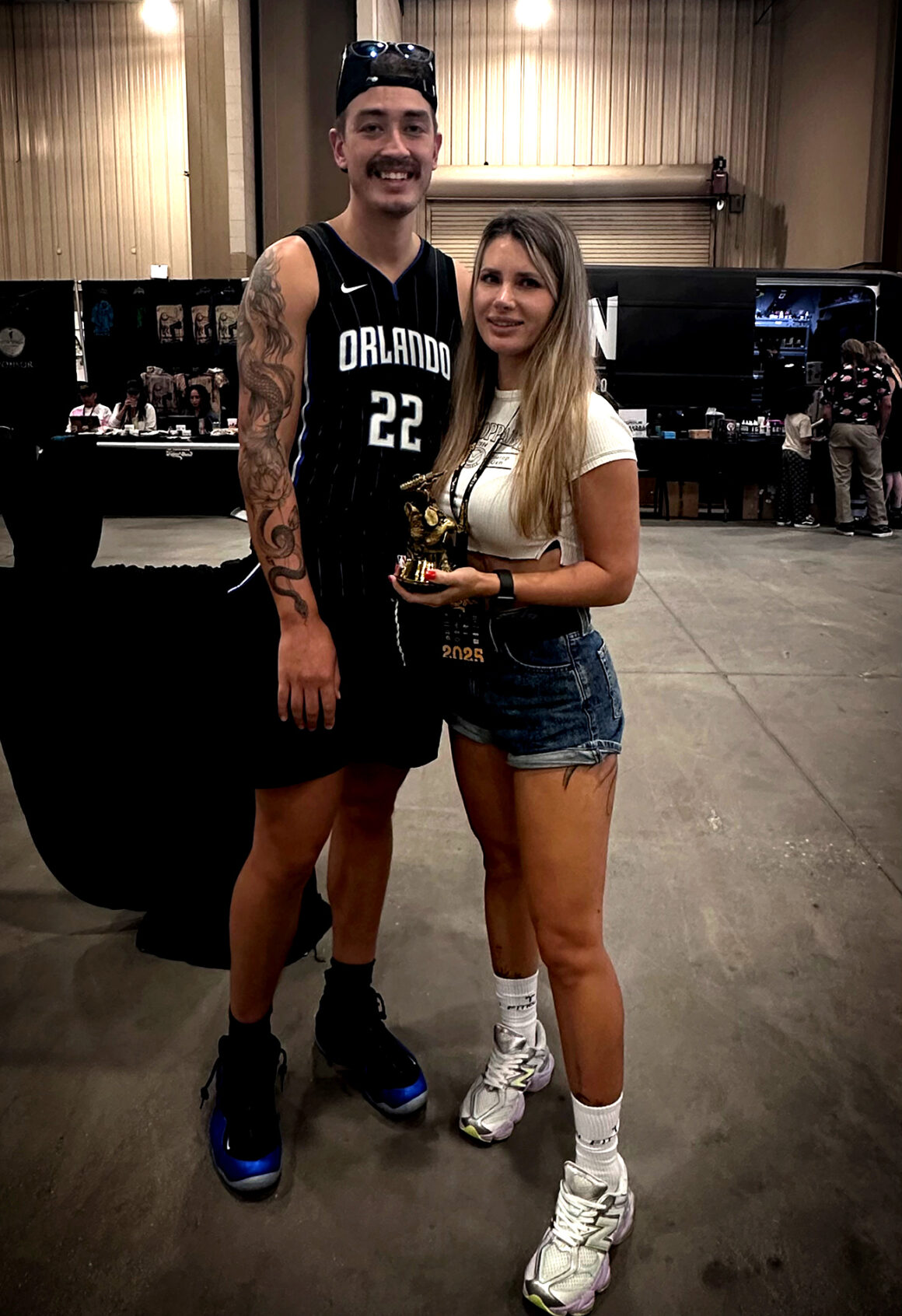
Winner of first place at the Miami convention in 2024 in the fine line category, and later awarded both first and second place at the Orlando Convention 2025 in the Fresh and Healed Fine Line categories, she has also served as a judge at the Villain Arts Tattoo Convention in Orlando and the Orlando Tattoo Show—milestones in her career that she values deeply, as she shares in this interview.
Hi Yuliia, shall we start by telling our readers about the approach you follow in your work?
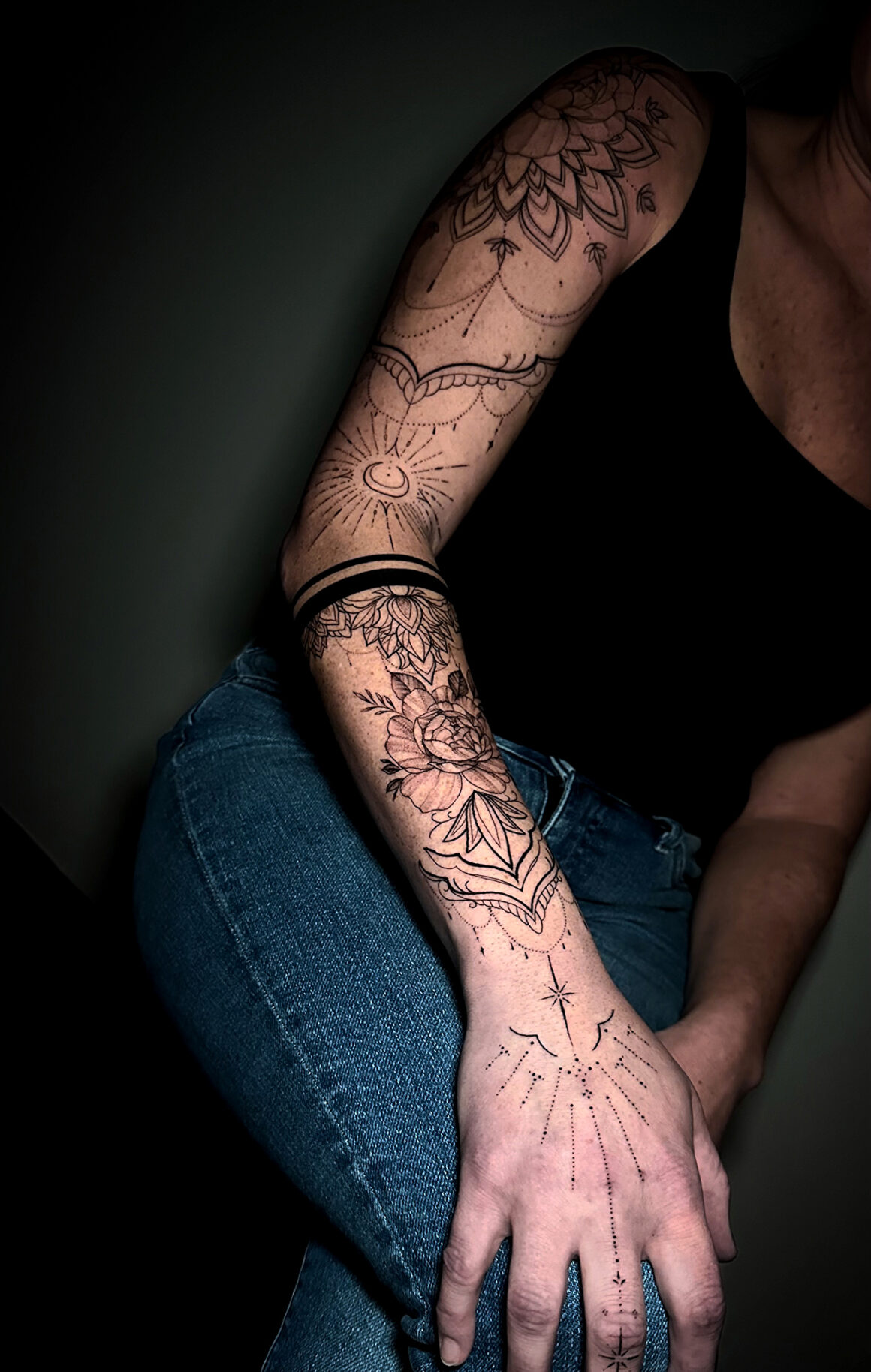
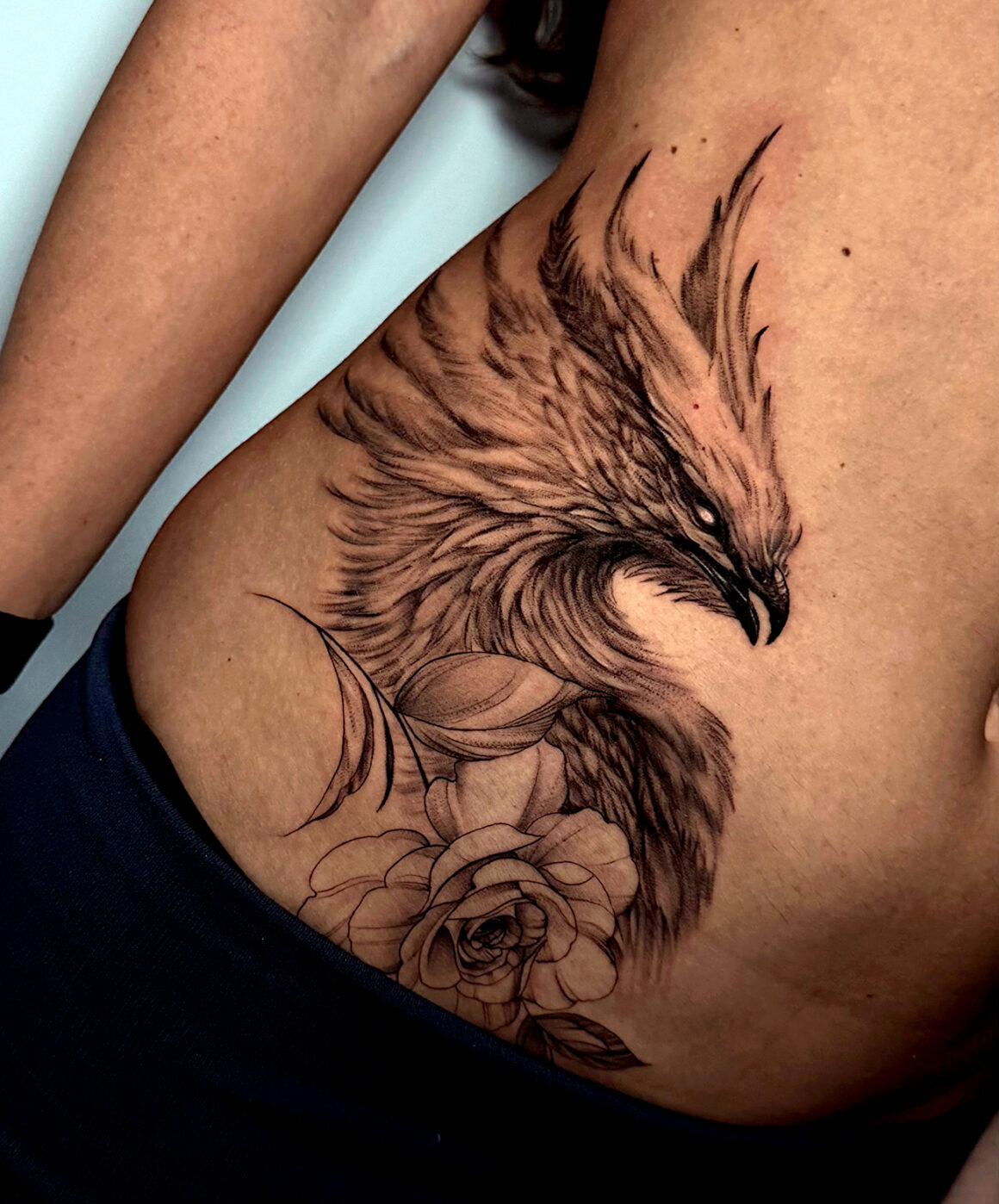
My practice is defined by a fully custom approach, where each piece is created as an original artwork rather than adapted from existing designs. My work spans portraiture, animal subjects, and complex compositions within the fine line and black-and-grey realism style.
Are there specific subjects or themes you feel closer to in your artistic sensitivity?
In my artistic practice, I feel a strong connection to themes that explore human emotion, identity, and the subtle relationship between the individual and their surrounding environment. I am particularly drawn to capturing inner psychological states — moments of introspection, vulnerability, and quiet strength that are often not immediately visible but deeply felt.
My work often reflects a sensitivity to atmosphere and mood, where light, composition, and minimalism play an essential role in conveying meaning.
I am interested in creating visual narratives that evoke a sense of intimacy and emotional resonance, allowing viewers to project their own experiences and interpretations onto the work. Additionally, I am inspired by contrasts — between presence and absence, stillness and movement, isolation and connection. Through these themes, I aim to explore universal human experiences in a way that feels both personal and timeless.
You have developed your own technique in fine line black and grey. Can you tell us about the key aspects of your JZ Optima Needle Technique?
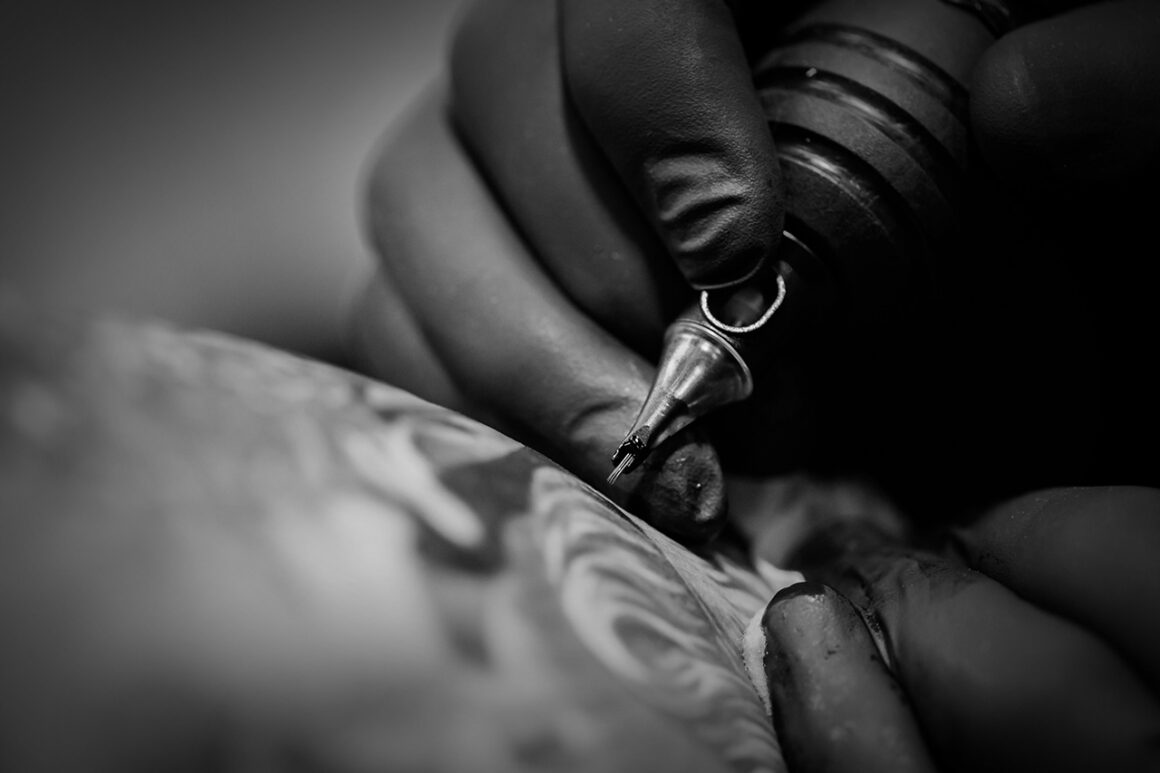
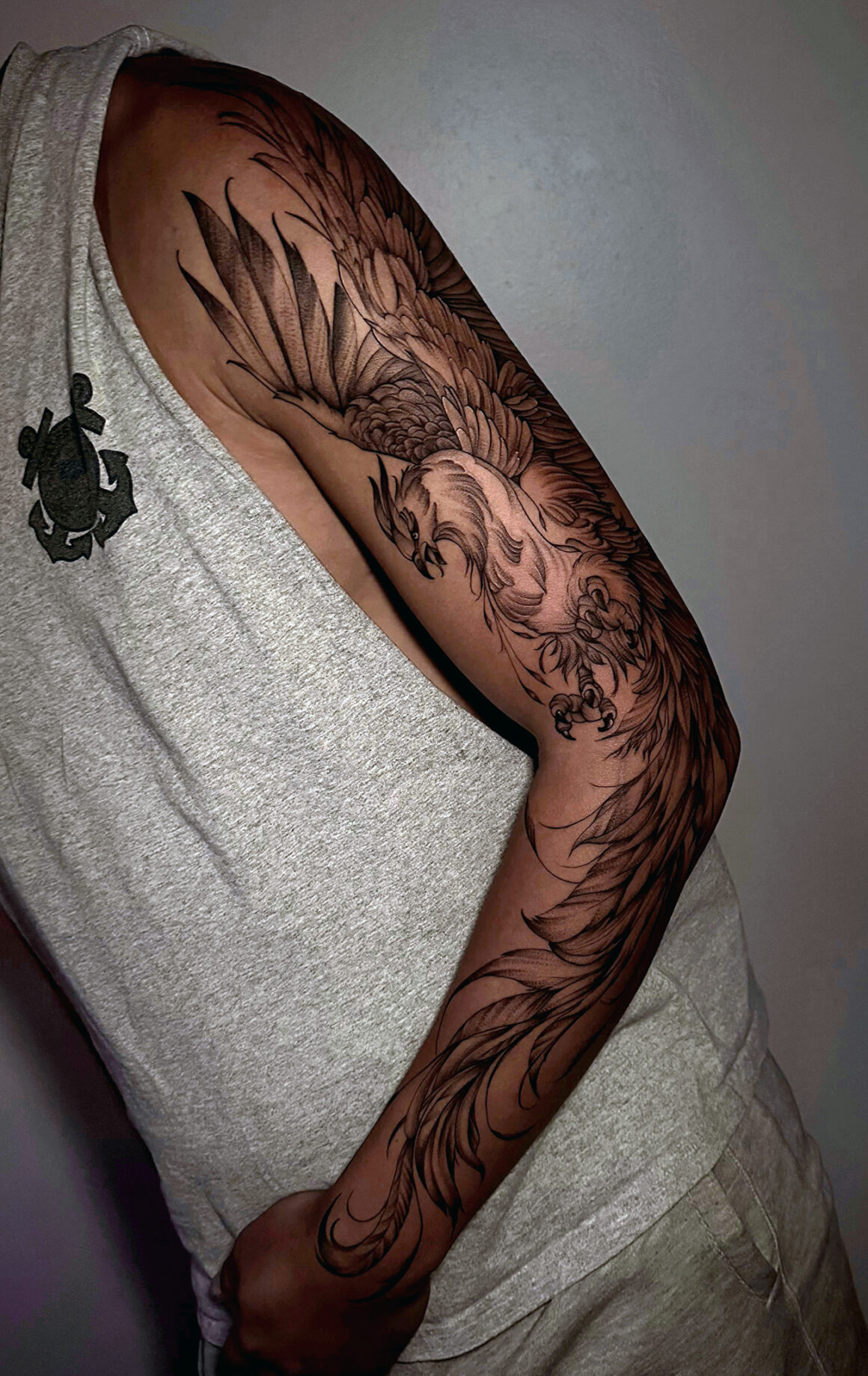
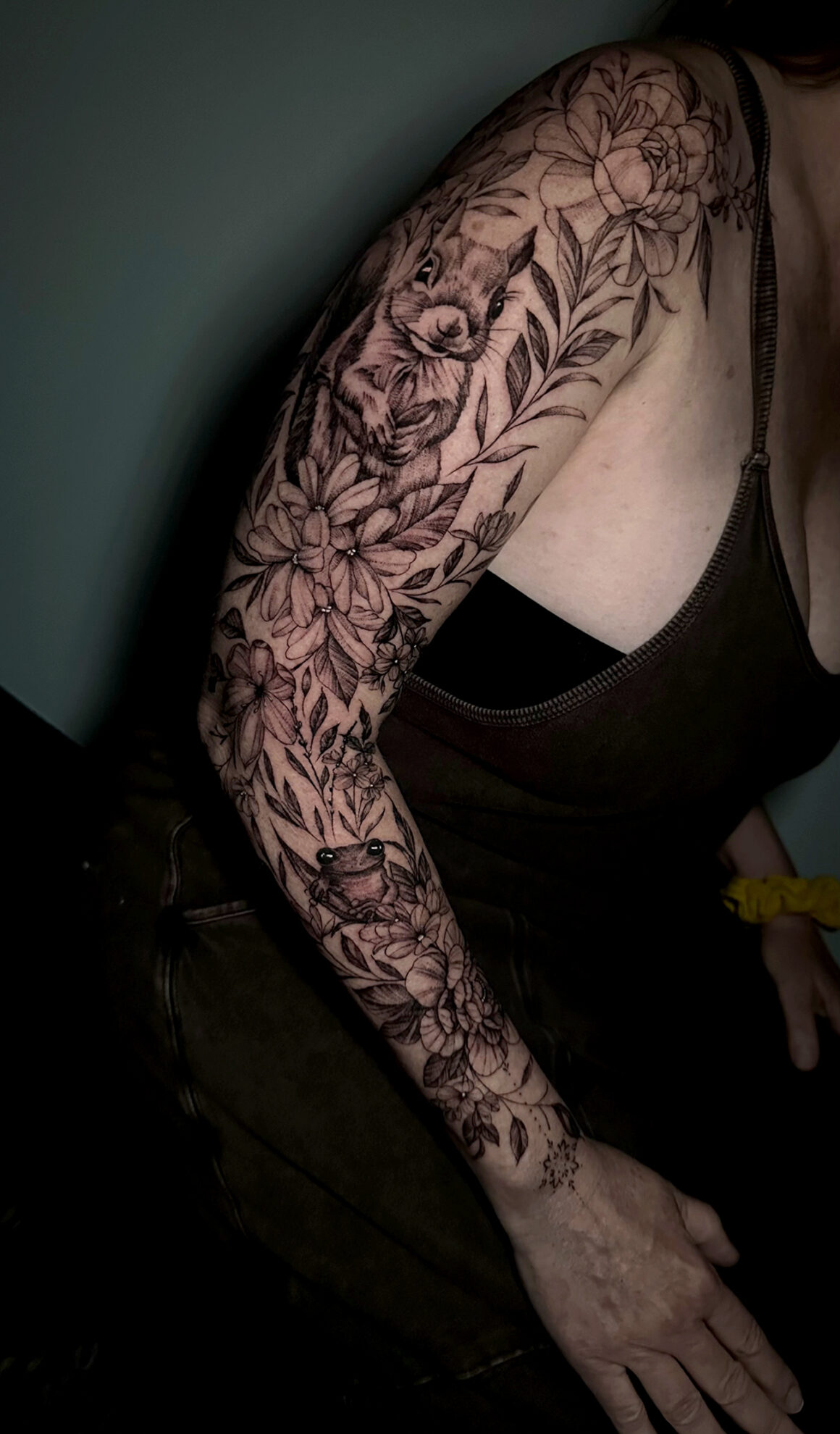
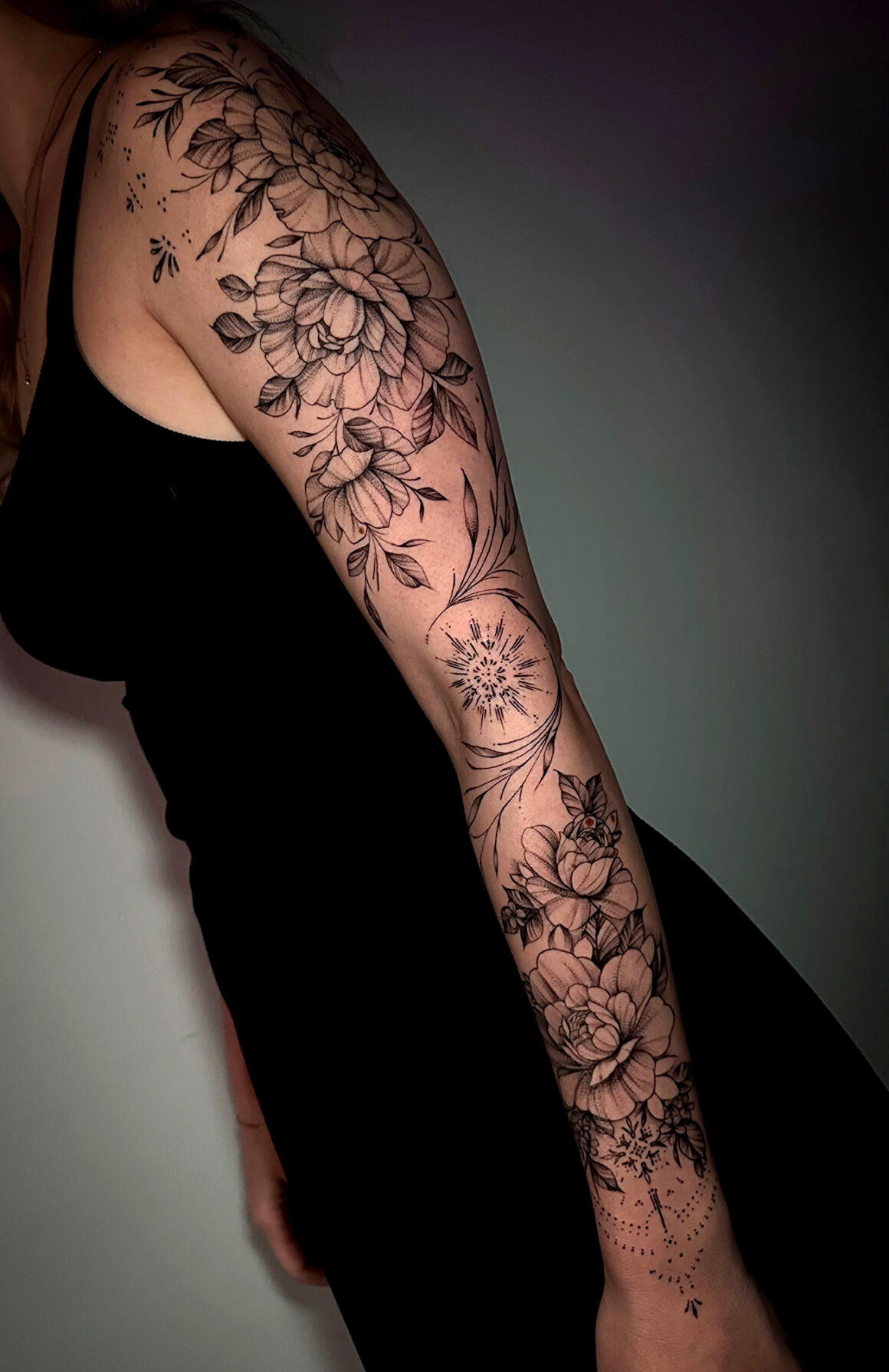
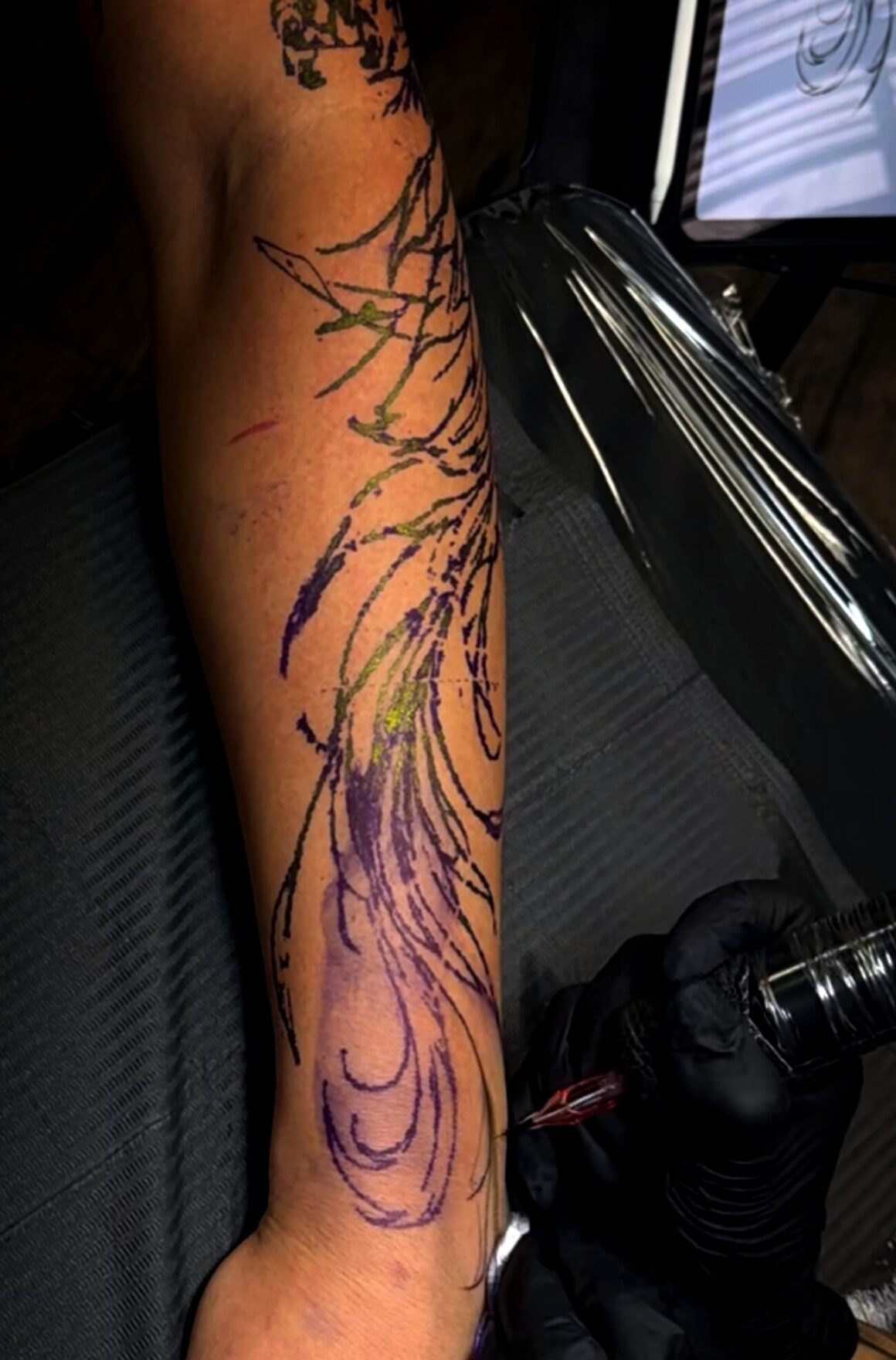
My technique focuses on controlled layering, allowing for micro-detail, smoother transitions, and results that resemble graphite or charcoal drawings. Traditional tattooing relies heavily on saturation and larger needle groupings. I developed the JZ Optima Needle Technique by adapting PMU needle technology specifically for body tattooing, addressing a technical limitation in traditional tools when it comes to high-precision tonal work. By using PMU needles, which have a significantly smaller diameter than standard tattoo needles, I can achieve a level of precision that traditional configurations often cannot deliver.
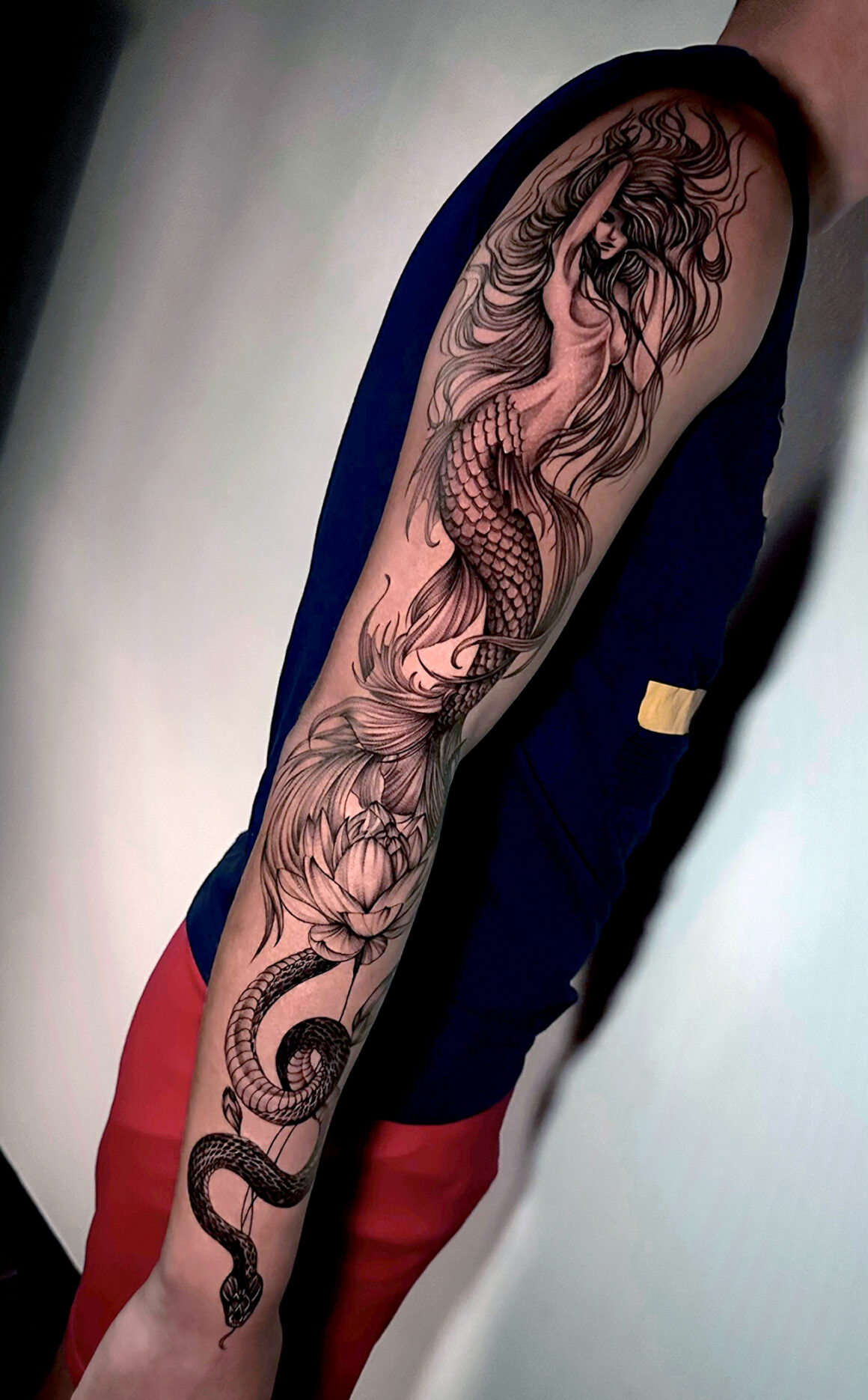
In conventional tattooing, needle selection depends on the style—larger groupings for saturation, smaller ones for fine lines—but even the finest setups have limitations when it comes to ultra-soft gradients and micro-detail in realism. This approach allows me to deposit pigment more gradually, in thinner layers, with less mechanical trauma to the skin and greater control over tonal transitions. Instead of relying on heavy saturation, I build shading through multiple soft passes, creating smooth gradients that resemble pencil or charcoal rendering.
How does your technique positively affect the skin and the healing process?
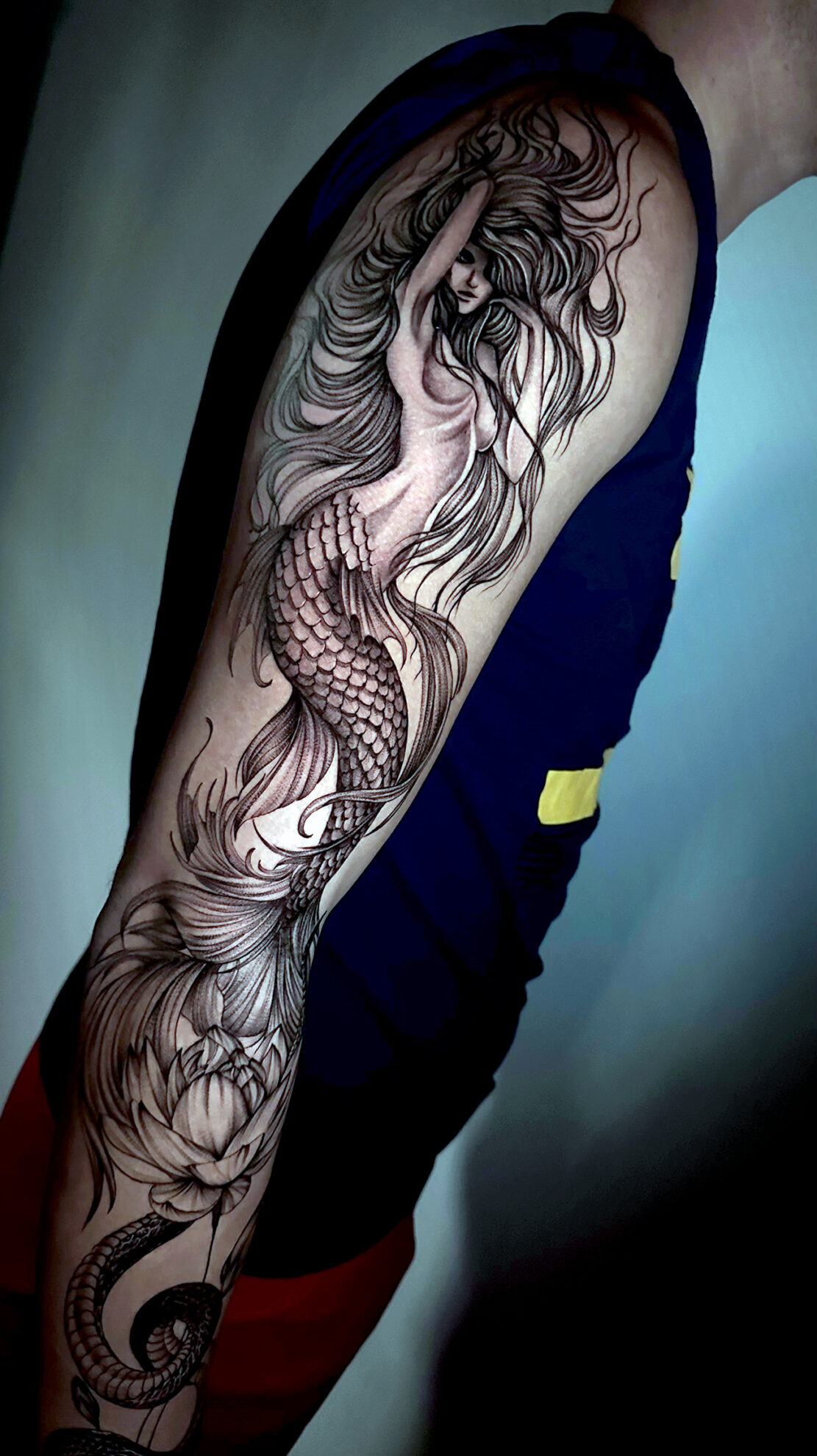
Beyond visual quality, my method offers a clear functional advantage. Because I use finer needles and apply pigment in a more controlled way, I can significantly reduce mechanical trauma to the skin during the process. In practice, this means the surrounding tissue experiences less irritation throughout the session, leading to a smoother healing phase and cleaner healed results. This is especially important in fine line and black-and-grey realism, where the integrity of healed lines and subtle tonal transitions defines how well a tattoo holds over time.
Aggressive needle work can often lead to issues such as scaring or blowouts, compromising delicate details.
Why is your technique considered a cross-industry innovation?
What makes the JZ Optima Needle Technique particularly interesting is that it represents a deliberate cross-pollination between two related but largely separate professional fields. Permanent Make Up and tattooing share fundamental principles—both involve depositing pigment under the skin—but they have historically developed their own tools, techniques, and professional communities with relatively little overlap. I recognized a connection that others had not yet acted upon: tools designed for the precision demands of cosmetic work on the face can be adapted to expand what’s possible in artistic tattooing on the body. My approach demonstrates how techniques from adjacent fields can open new creative possibilities when an artist is willing to experiment beyond established conventions.
What are your future goals?
My future goals are focused on further developing and expanding the JZ Optima Needle Technique and establishing it as a recognized standard within fine line and black and grey realism tattooing. I plan to continue refining this method through advanced practice and research, with the objective of improving precision, reducing skin trauma, and elevating overall tattoo quality within the industry. I also aim to actively participate in major tattoo conventions across the United States and internationally, where I will continue contributing as both an artist and a judge.
Through these roles, I aim to share my technique with a broader professional audience and influence evolving technical standards in contemporary tattooing.
In the long term, I plan to establish a network of studios and educational platforms dedicated to training artists in advanced techniques, including the JZ Optima Needle Technique. By mentoring other professionals and promoting higher technical standards, I aim to create a lasting impact on the field and contribute to the continued evolution of modern tattoo artistry on both a national and international level.
You have already been invited as a judge at international conventions—what did that mean to you?
Being invited to serve as a judge at tattoo competitions marked an important step in my professional development. In the tattoo industry, unlike fields with formal academic credentialing, authority is earned through demonstrated skill and recognition from peers. When an artist is asked to judge, it reflects a level of trust in their technical knowledge, artistic vision, and professional judgment from both event organizers and fellow artists. For me, this represents a transition from competing to evaluating—from proving my own ability to being recognized as someone qualified to assess the work of others. It is a level of professional standing that reflects a degree of respect within the community that goes beyond commercial success or social media presence.