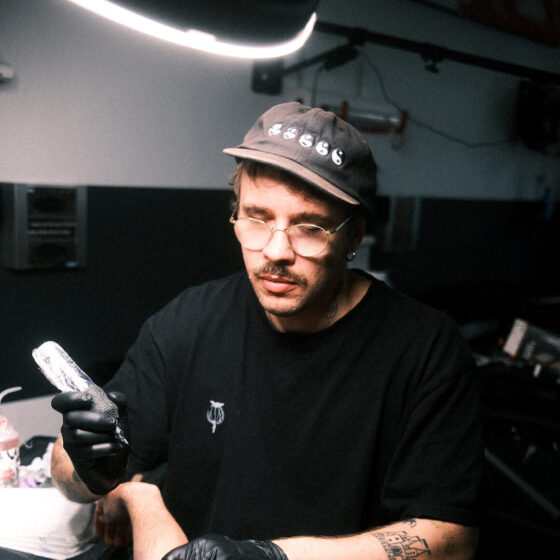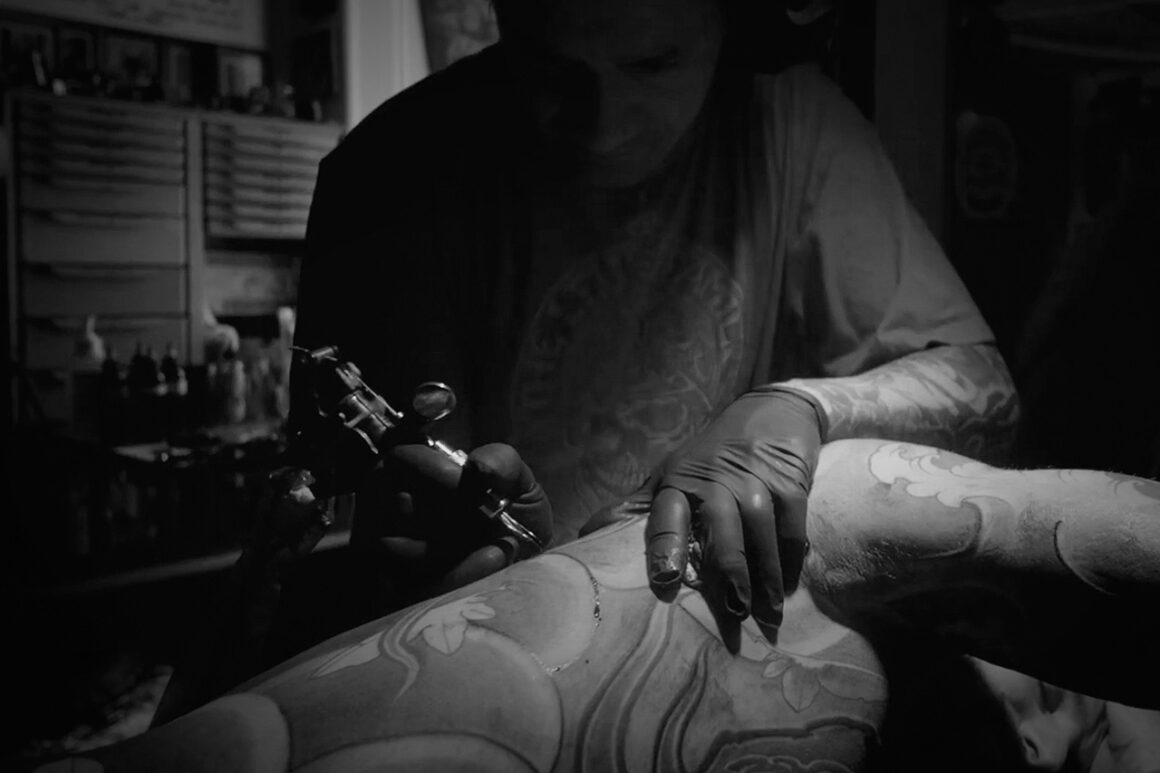


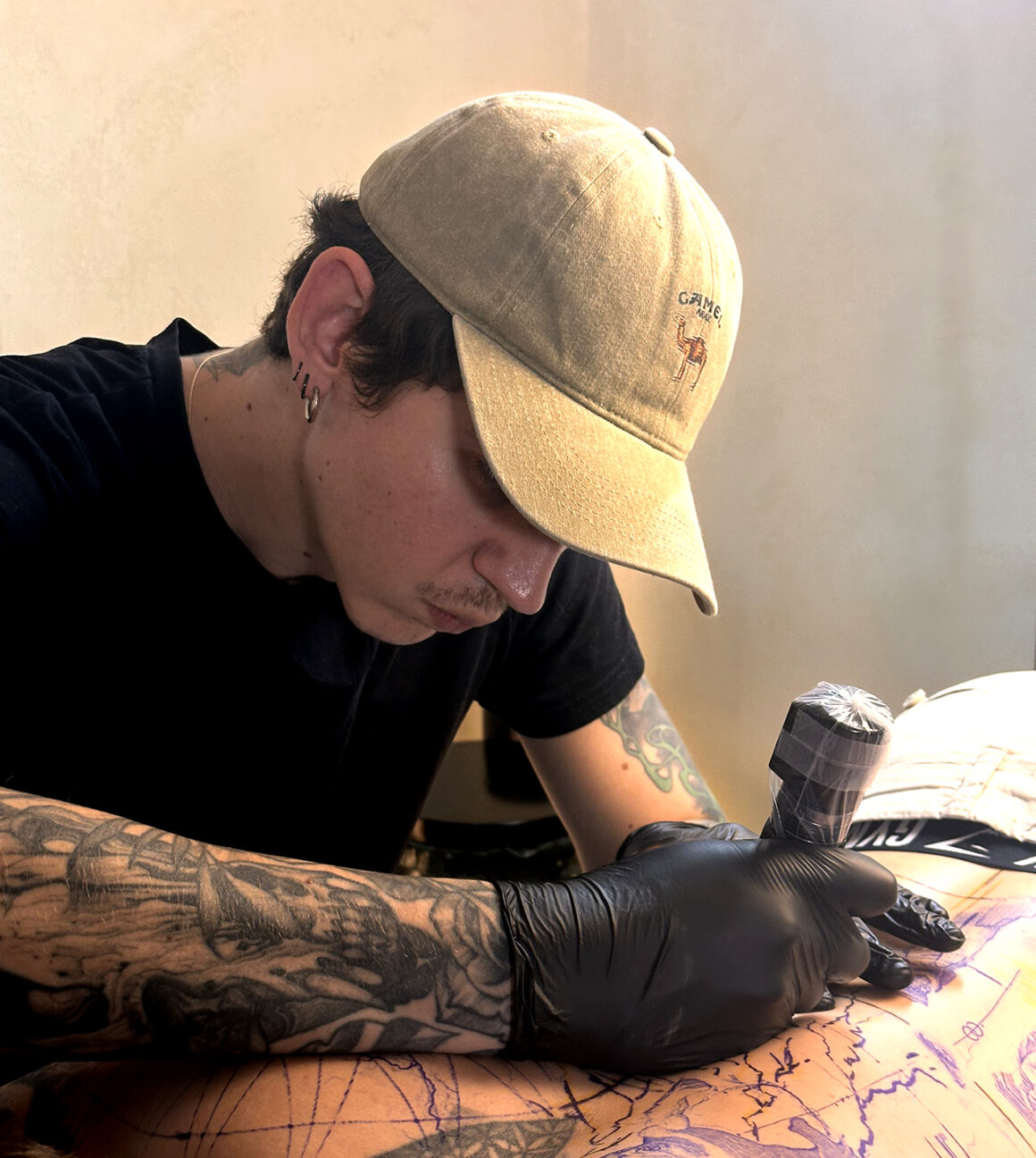
Originally from Minas Gerais, Brazil, and now based in Paris, Leandro Muniz developed his tattooing through independent study, studio experience and constant experimentation. After exploring Old School, Neo-Traditional, Blackwork and other approaches, his work gradually moved towards Black & Grey, driven by an interest in contrast, volume, light and texture.
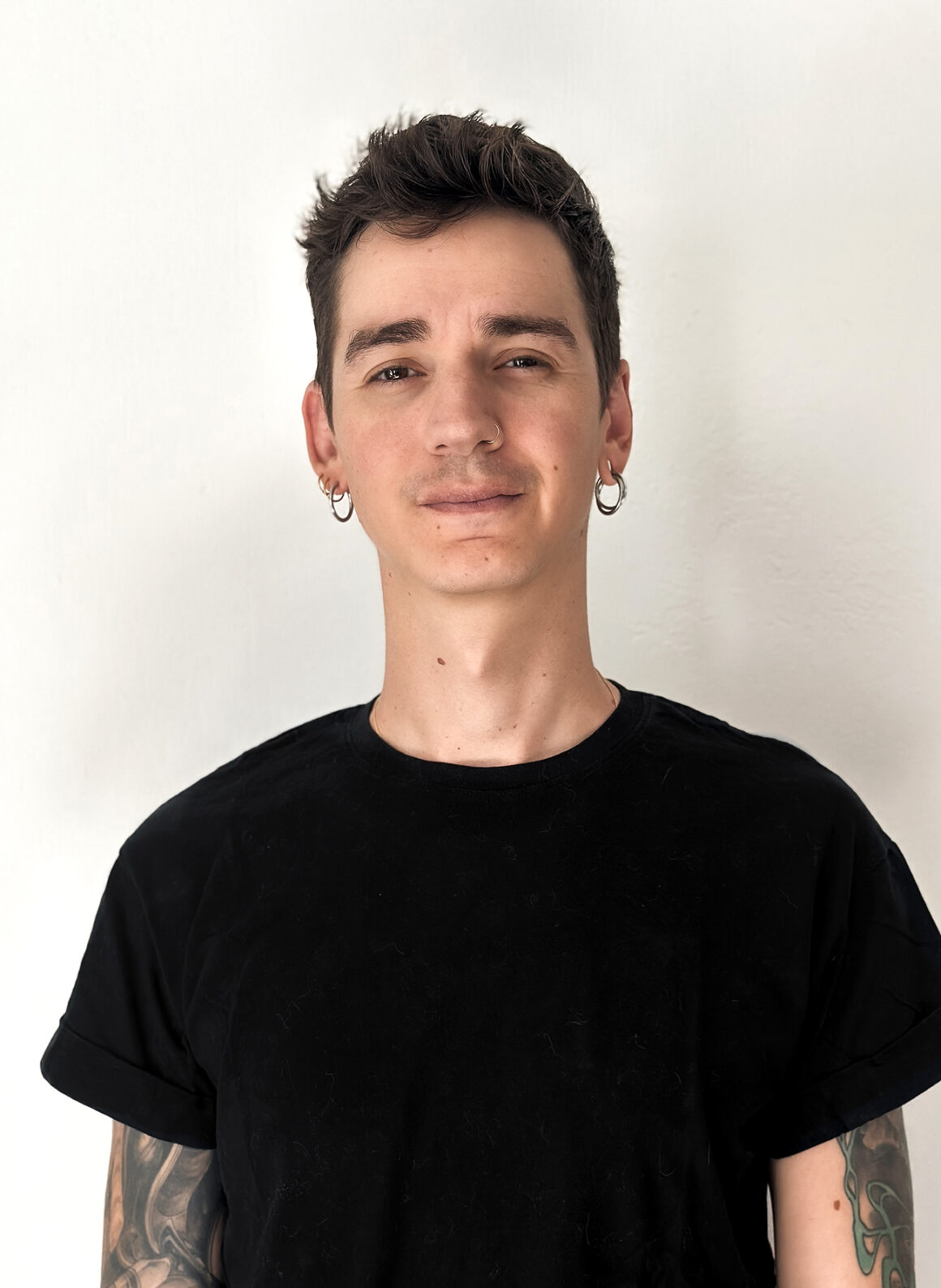
Human figures, mythology, religious iconography, classical sculpture, warriors, animals and ornamental influences come together in a visual language still in evolution. His research draws on both tattoo artists and the great masters of painting and engraving, from Caravaggio and Leonardo da Vinci to Michelangelo and Gustave Doré. At his Paris studio INK29, Muniz continues to explore the relationship between classical and Eastern references, ornamental work and the anatomy of the body.
Hi Leonardo, would you like to introduce yourself to our Tattoo Life readers? Where are you from, where are you currently based, and how did you get into tattooing?
My name is Leandro Muniz. I am Brazilian, originally from Minas Gerais, and I currently live and work in Paris. I came into tattooing at a time of change in my life. In 2016, I decided to leave university because I realised that it was not a path in which I could see myself building my future. Around that time, a tattoo artist friend encouraged me to try tattooing. For approximately a year, I tattooed on my own, watching videos by other tattoo artists, researching and practising independently.
I then joined my first studio, where I really began to understand the craft through the daily routine and by observing more experienced tattoo artists.
Before trying to develop a language of my own, I worked in old school, which gave me a solid foundation in linework, colour and saturation, all essential fundamentals in tattooing. From there, I explored different styles because I was interested in the entire world of tattooing, rather than in one particular aesthetic. I worked with old school, neo-traditional, blackwork and other approaches. That period of experimentation and learning was fundamental to my development and to the work I create today.
Looking at your style, my first question is about your artistic background. Did you study art or illustration? Or did you develop your artistic skills through a different path?
I did not have any formal academic training in art or illustration. In fact, before tattooing, I had never had much contact with the art world. I had always been interested in drawing, but for a long time I never truly explored it. My journey with drawing began only about a month before I started tattooing. That was when I began researching, practising and looking for references more seriously. I remember that my first major reference was the work of @fredao_oliveira. He was the first tattoo artist whose work I genuinely followed and admired.
From the beginning, I always wanted to develop a style of my own, but that was not my main concern at the time. Before building an artistic signature, I needed to learn the craft properly and master its fundamentals. My education took place essentially inside tattoo studios and through personal research, which continues to this day. Over time, my studies naturally expanded beyond tattooing. I began paying closer attention to painting, sculpture, photography, architecture, anatomy, composition, light and contrast. I believe we are eternal students. The more we learn, the more we realise how much we still do not know. For that reason, I continue studying and constantly searching for new references, without ever considering my education to be complete.
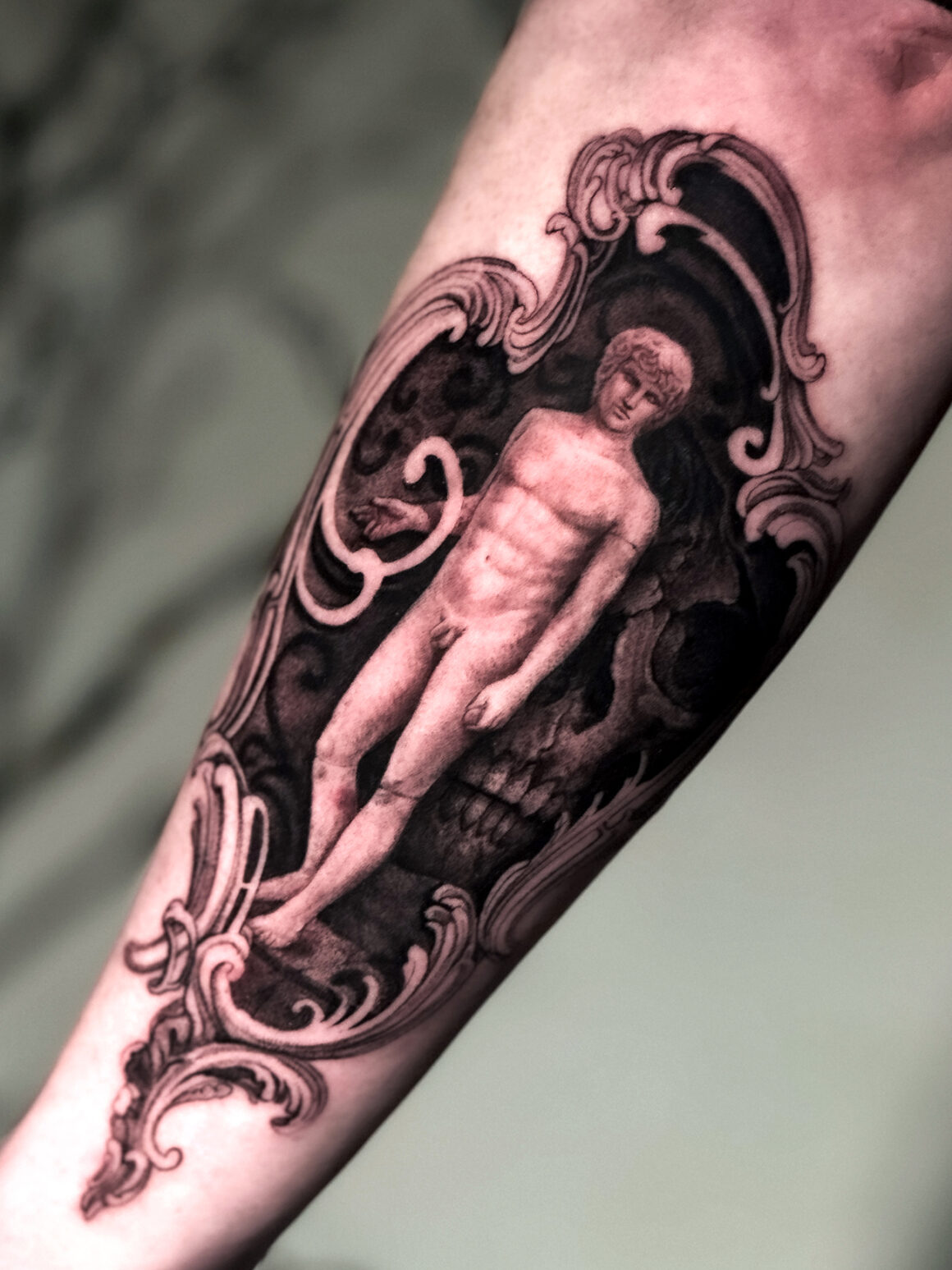
Why did you choose to focus exclusively on Black and Grey? And who were your main points of reference when you were studying and developing your approach to this style?
My transition towards Black and Grey did not happen overnight. In the beginning, I worked extensively with dotwork and illustration, particularly with an approach closer to sketch-style work. Later, I began experimenting with other techniques and combining those references with watercolour.
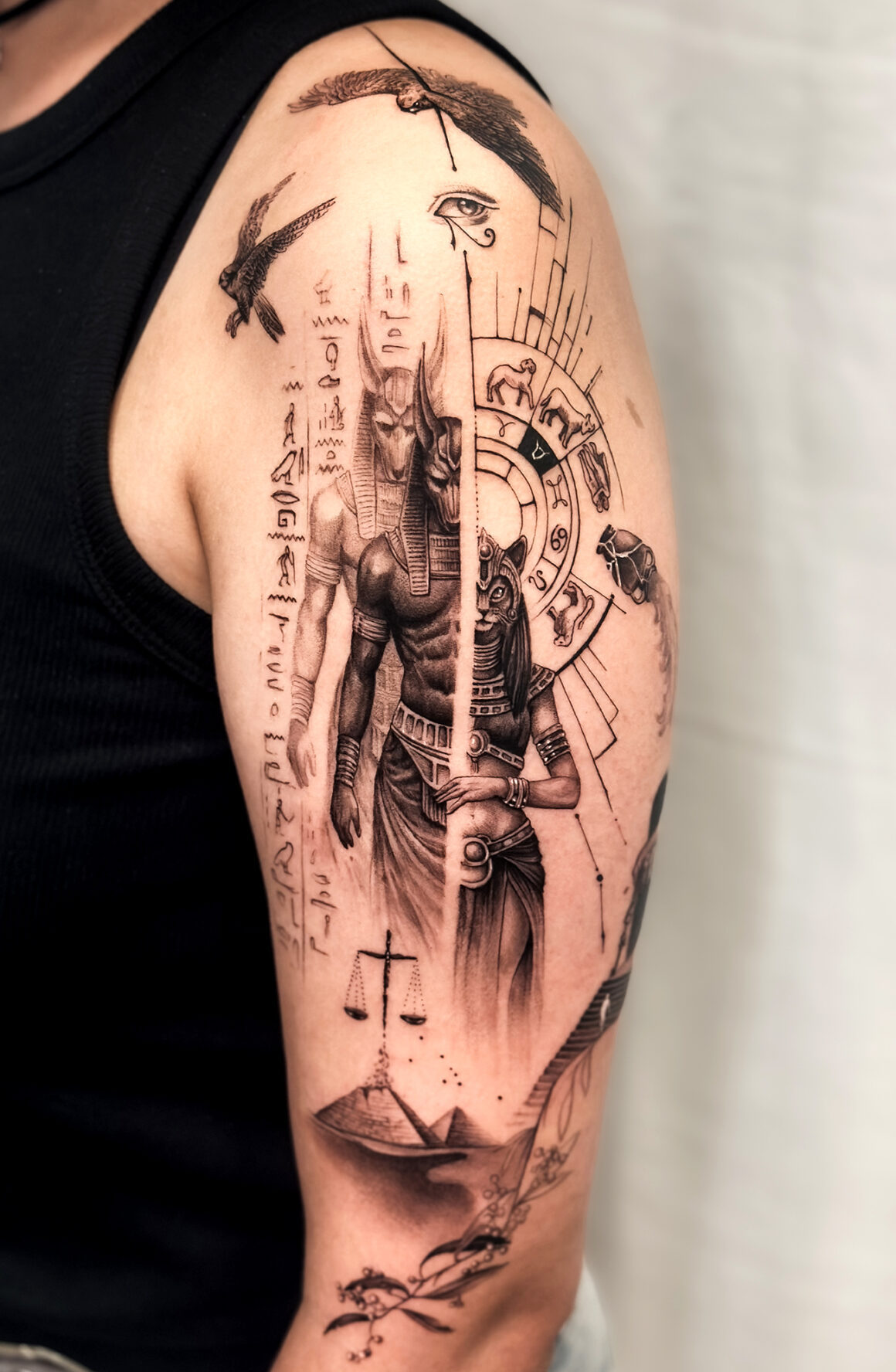
Over time, I became increasingly interested in more intricate work, introducing more detail and texture, including in larger compositions. It was a very organic evolution. One technique gradually led me to another and, little by little, my work naturally moved towards Black and Grey.
I realised that what truly interested me was the possibility of constructing an image through contrast, volume and light.
Within tattooing, some of my main references have been @fredao_oliveira, @grindesign_tattoo, @brunosantostattoo, @pawelindulski, @pauloraphaeltattoo and @wilsonkahwage. Outside tattooing, I found fundamental references in painting and engraving, particularly in the works of Caravaggio, Gustave Doré, Leonardo da Vinci and Michelangelo. I still consider my visual language to be in a process of discovery and maturation. It continues to transform as I study, experiment and find new ways of bringing all these influences together through my own perspective.
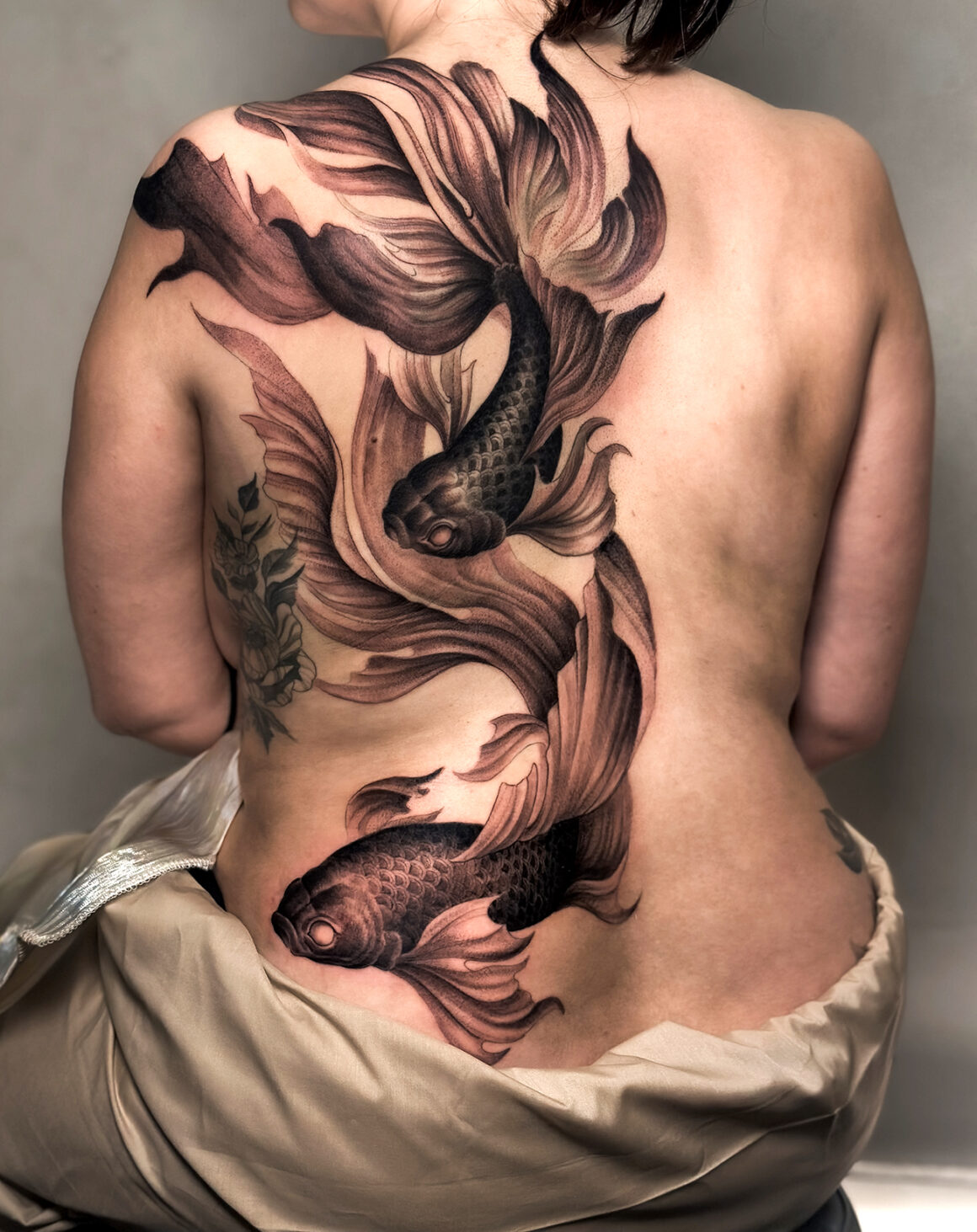
When it comes to subject matter, you seem to be very eclectic, wouldn’t you say? Could you give us an overview of the things you enjoy tattooing, and perhaps tell us which subjects you find yourself working on most often?
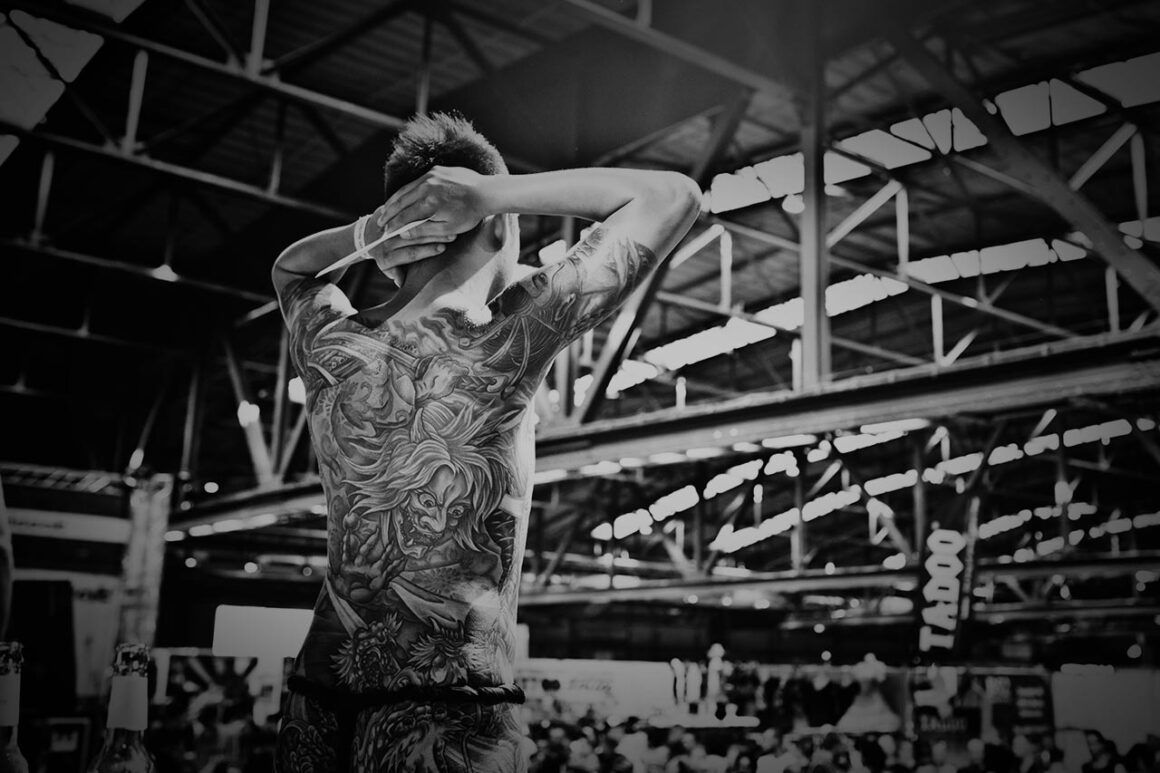
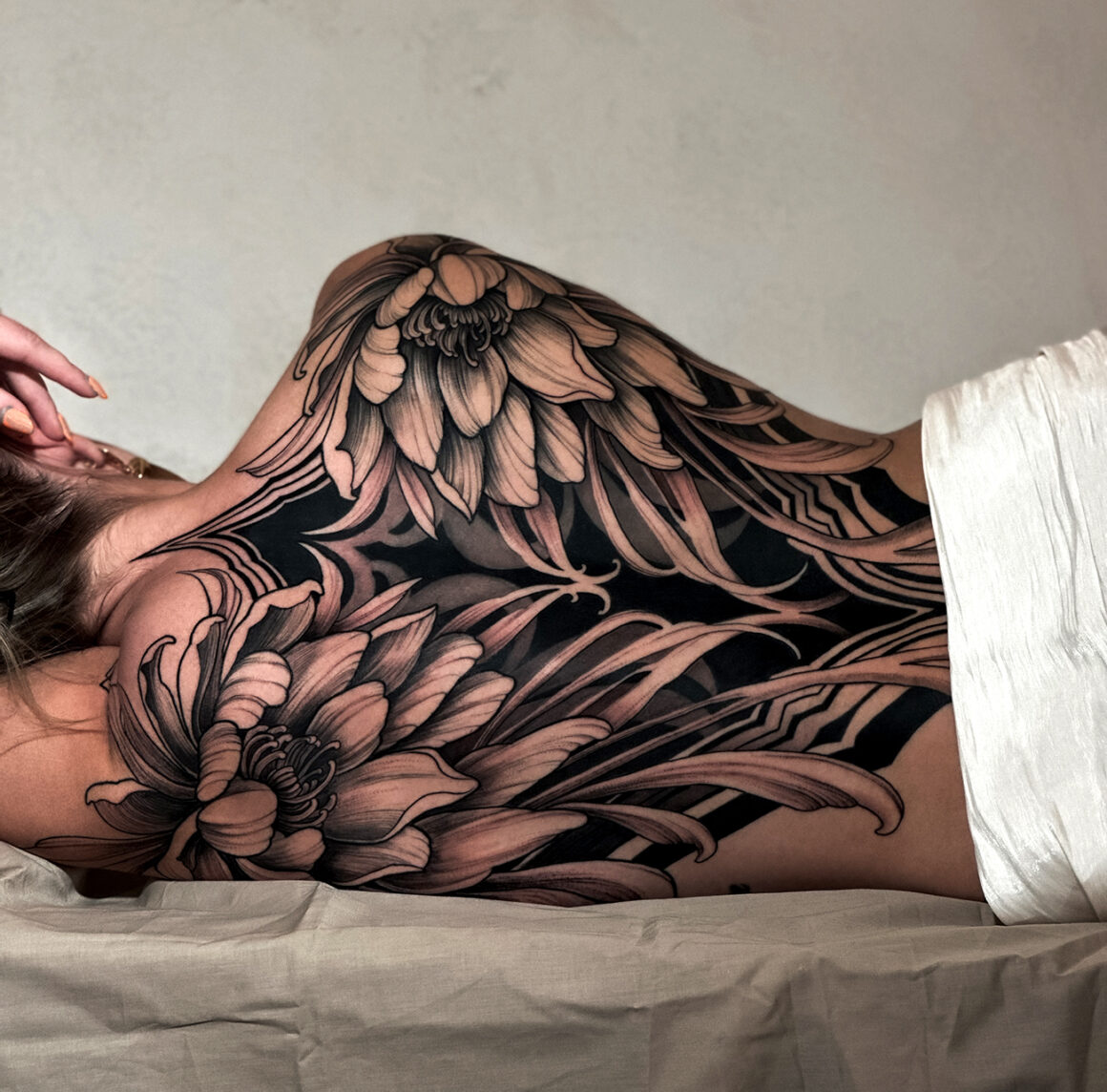
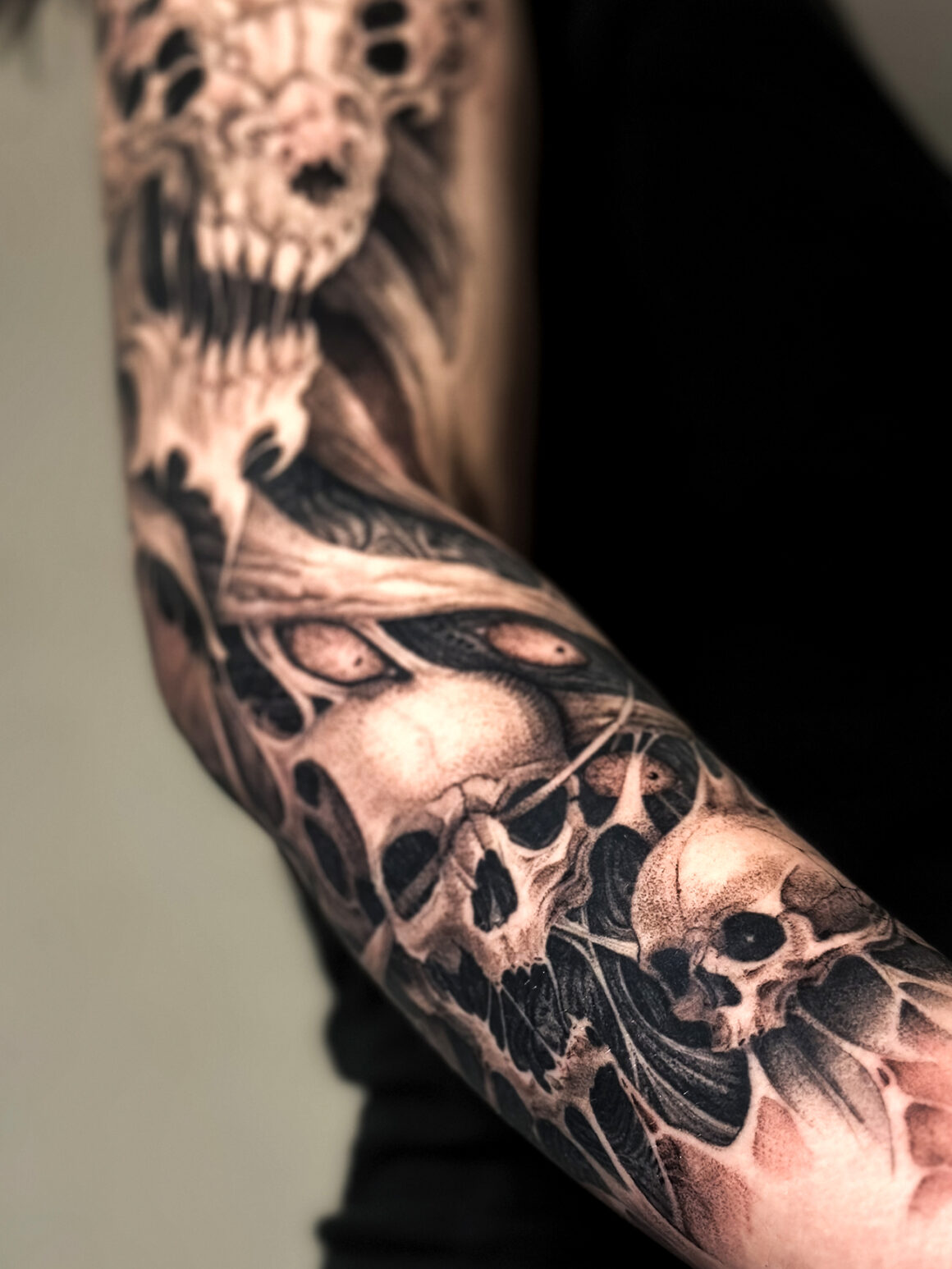
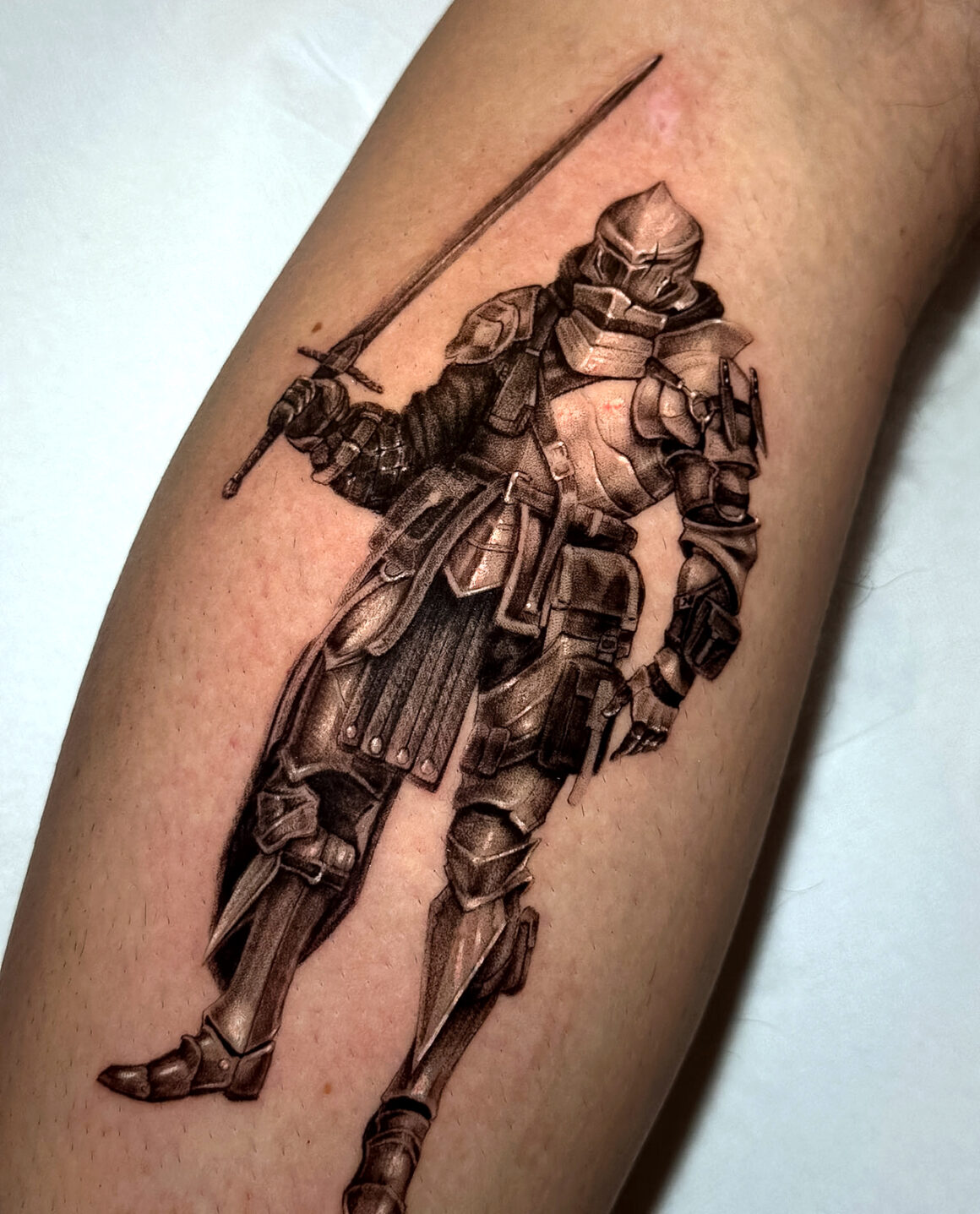
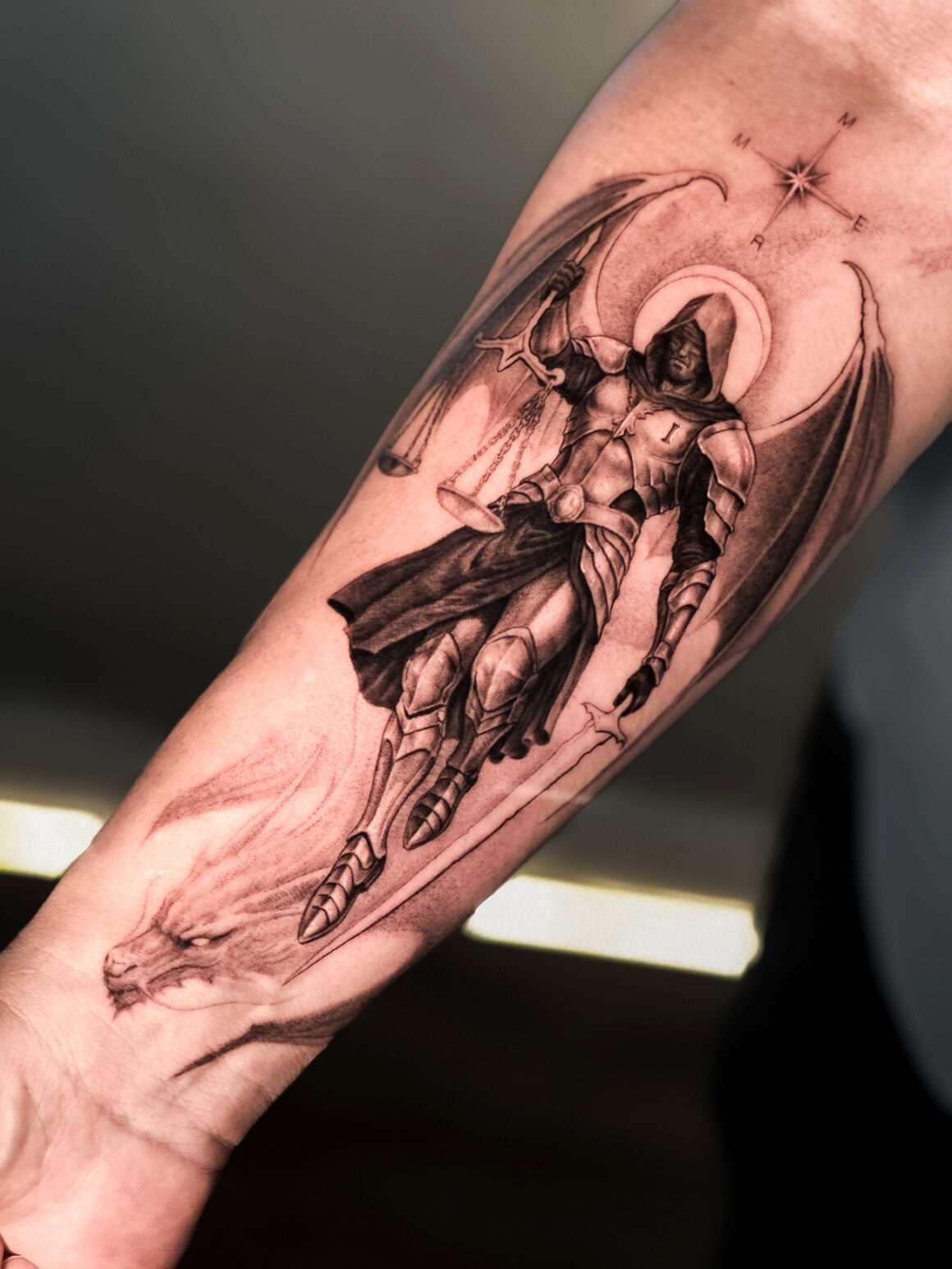
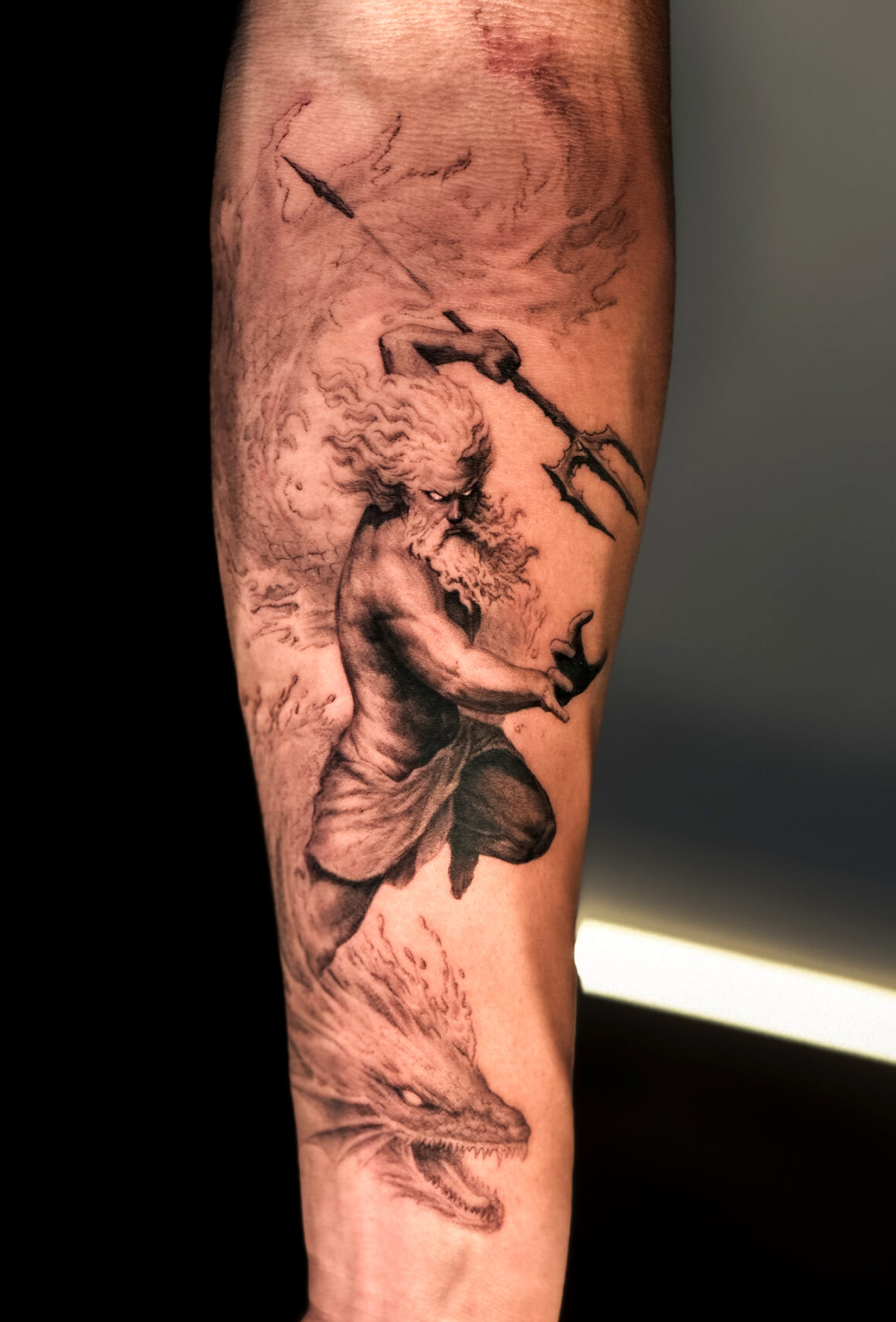
I would describe myself as eclectic when it comes to choosing subjects, but quite consistent in the way I construct images. I enjoy working with human figures, mythology, religious iconography, classical sculpture, warriors, animals and darker or more symbolic elements. At the same time, Eastern and ornamental influences also hold a very important place in my work. Eastern tattooing has always interested me because of the way it creates movement, rhythm and composition across the body. Ornamental work, on the other hand, is a language I have been exploring more intensively in recent years, particularly because of its ability to follow the anatomy, connect different elements and bring unity to larger projects.
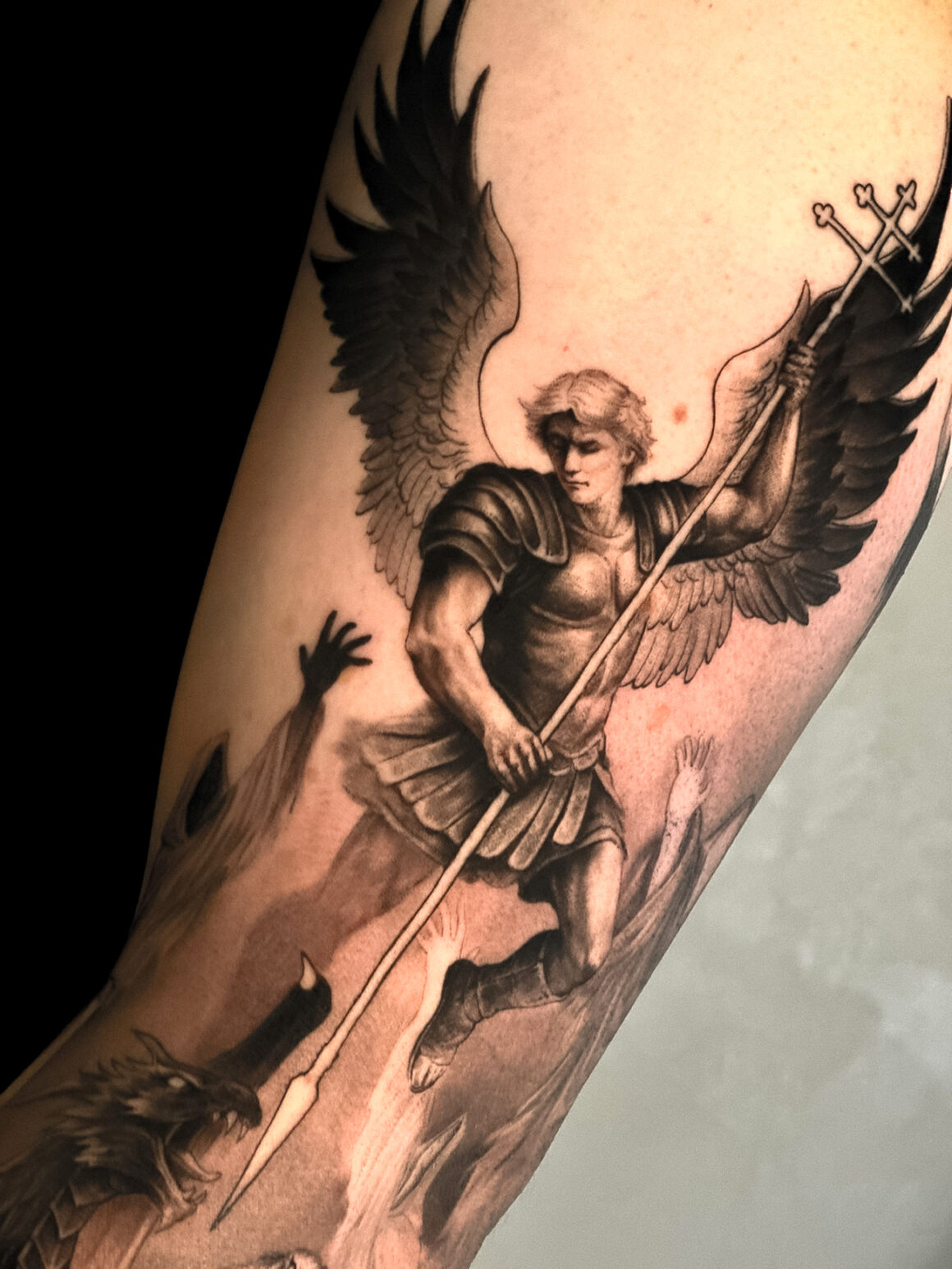
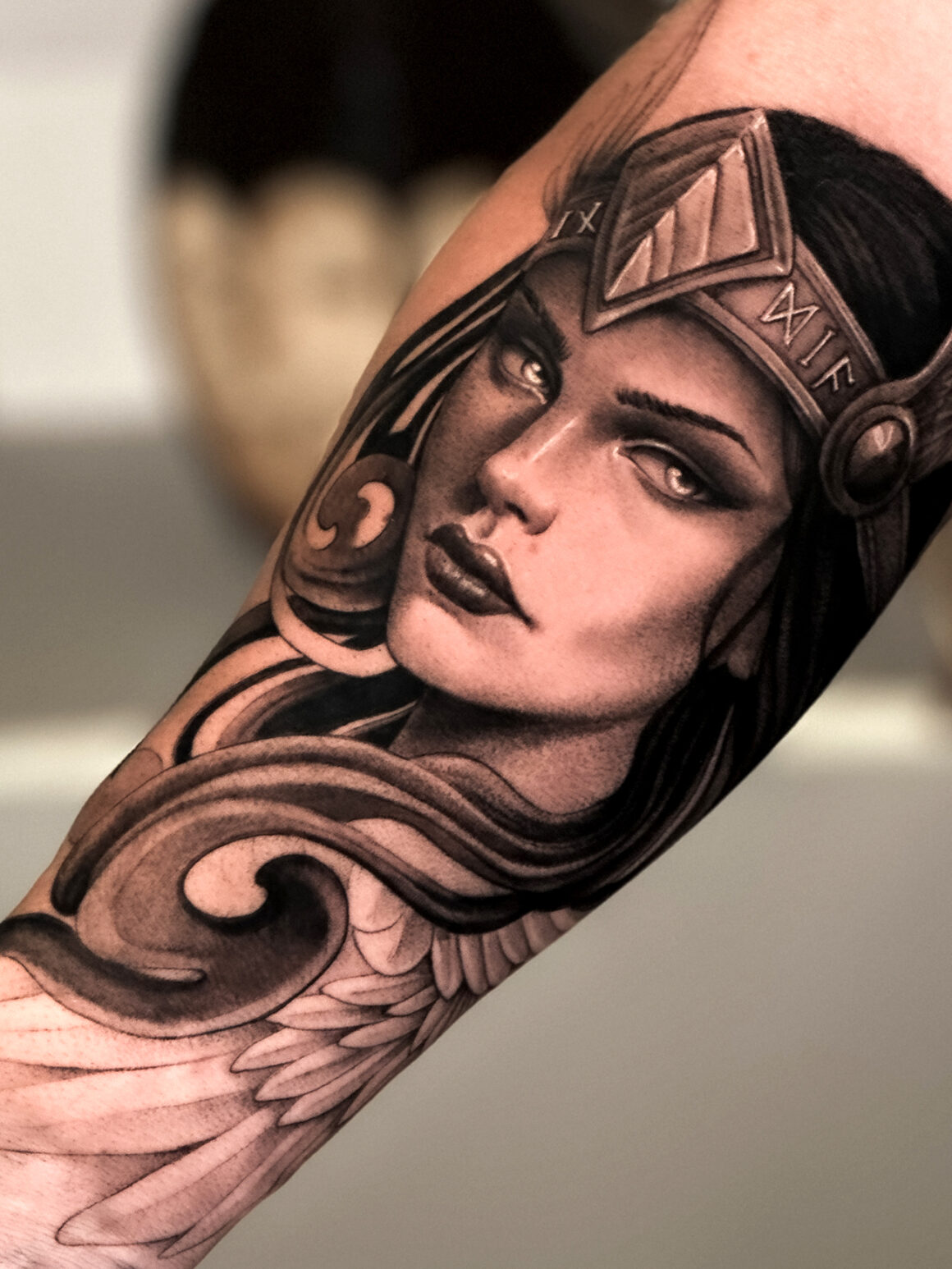
At the moment, an important part of my research is focused on understanding how these influences can communicate with one another. I have been studying ways of combining classical, Eastern and ornamental references with Black and Grey, looking for a blend that feels natural and recognisable without appearing forced. Regardless of the subject, there is a tension that repeatedly appears in my work: strength and fragility, beauty and decay, light and shadow, life and death. I try to create tattoos that have an impact from a distance, but reveal new details when viewed up close, compositions that follow the body and feel as though they truly belong to it.
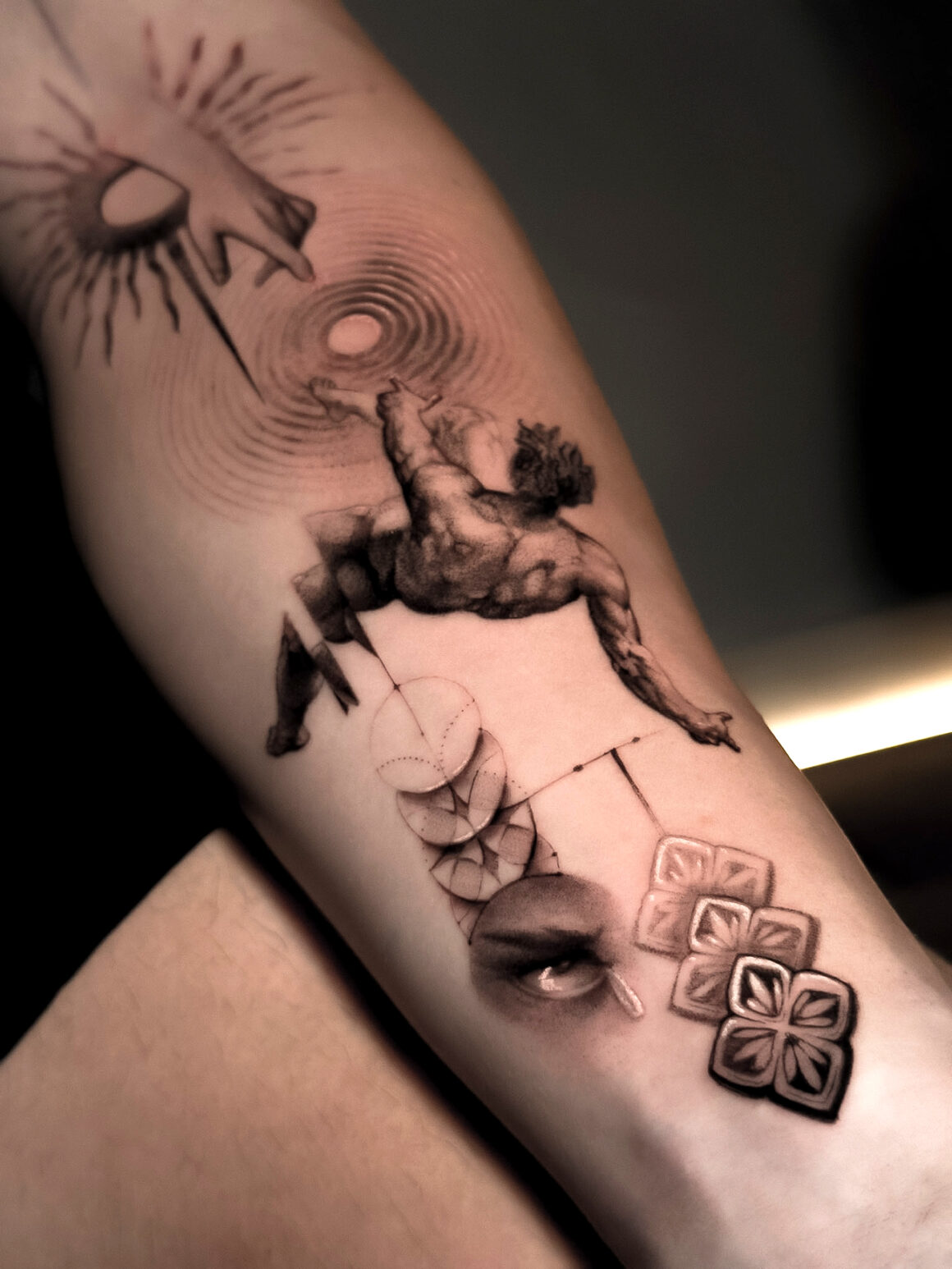
On your Instagram page, you sometimes share glimpses of your daily life and mention that you always come back to the “great masters” of art for inspiration. Which artists or masters are the ones you keep returning to in your research?
I frequently return to Caravaggio, Leonardo da Vinci, Michelangelo, Gustave Doré, Raphael and Alexandre Cabanel. Each of them feeds a different part of my research. Caravaggio is one of my greatest references because of the way he uses light and darkness to create tension, depth and narrative. In his work, shadow does not simply create contrast. It also guides the viewer’s eye and intensifies the emotion of the scene.
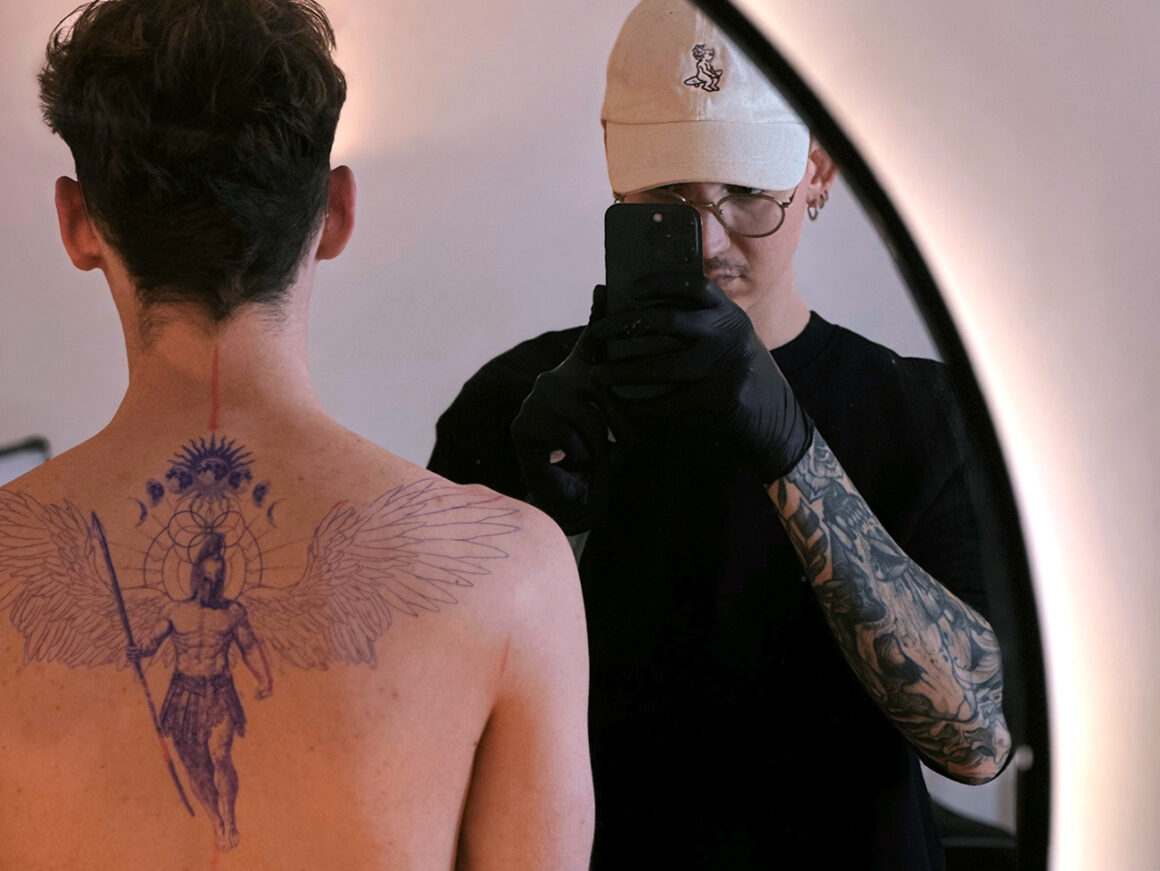
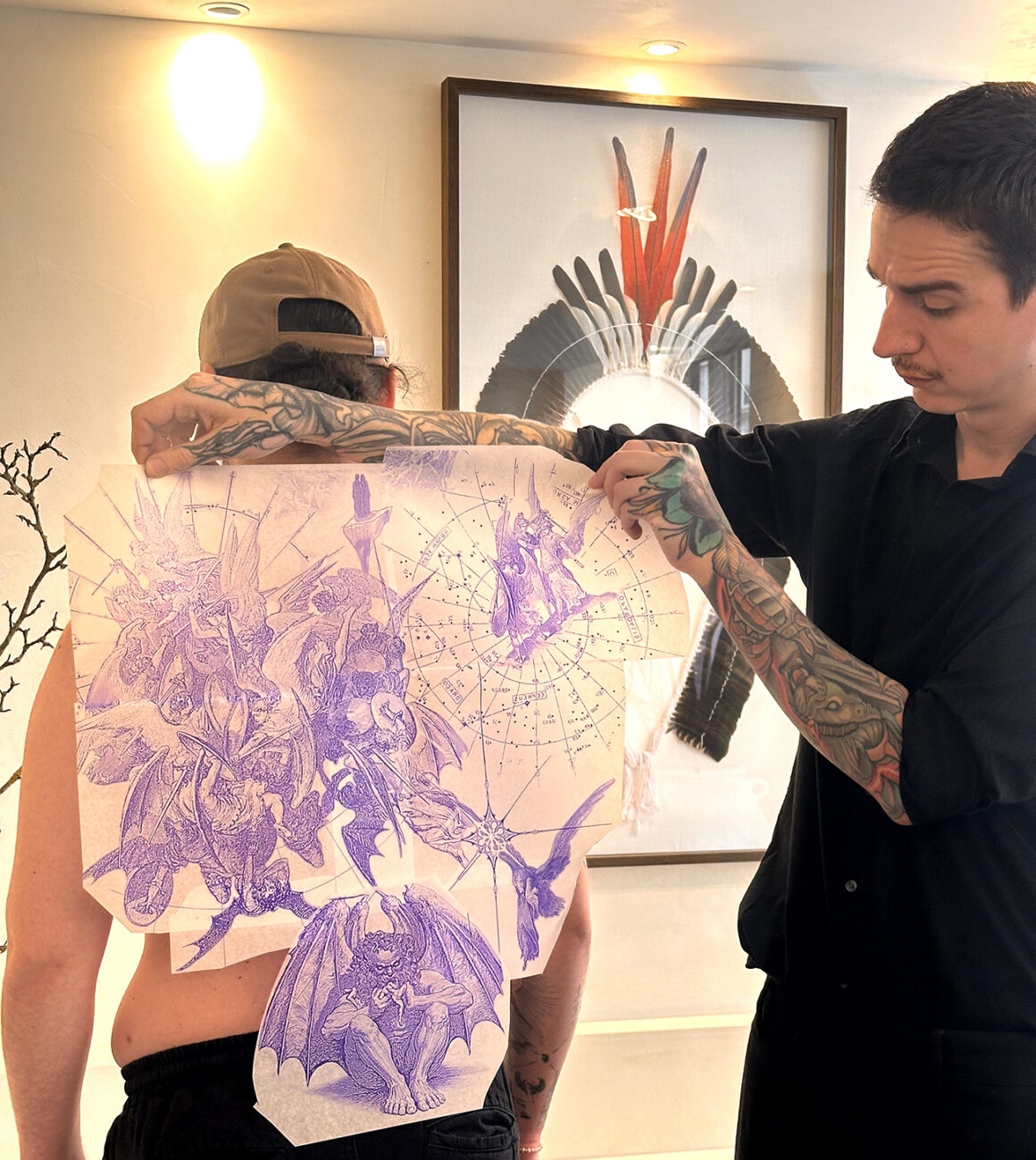
With Leonardo and Michelangelo, I try to gain a deeper understanding of anatomy, movement and the construction of the human figure. Gustave Doré interests me because of the graphic strength of his engravings and the way he creates monumental atmospheres in black and white. Raphael and Cabanel attract me because of the balance within their compositions, the delicacy of their forms and the emotional weight carried by their figures.
I do not return to these masters with the intention of simply reproducing their work.
I try to understand why certain images remain so powerful after so many centuries: how light directs the eye, how a gesture can tell a story and how a composition can communicate emotion before it is even rationally understood.
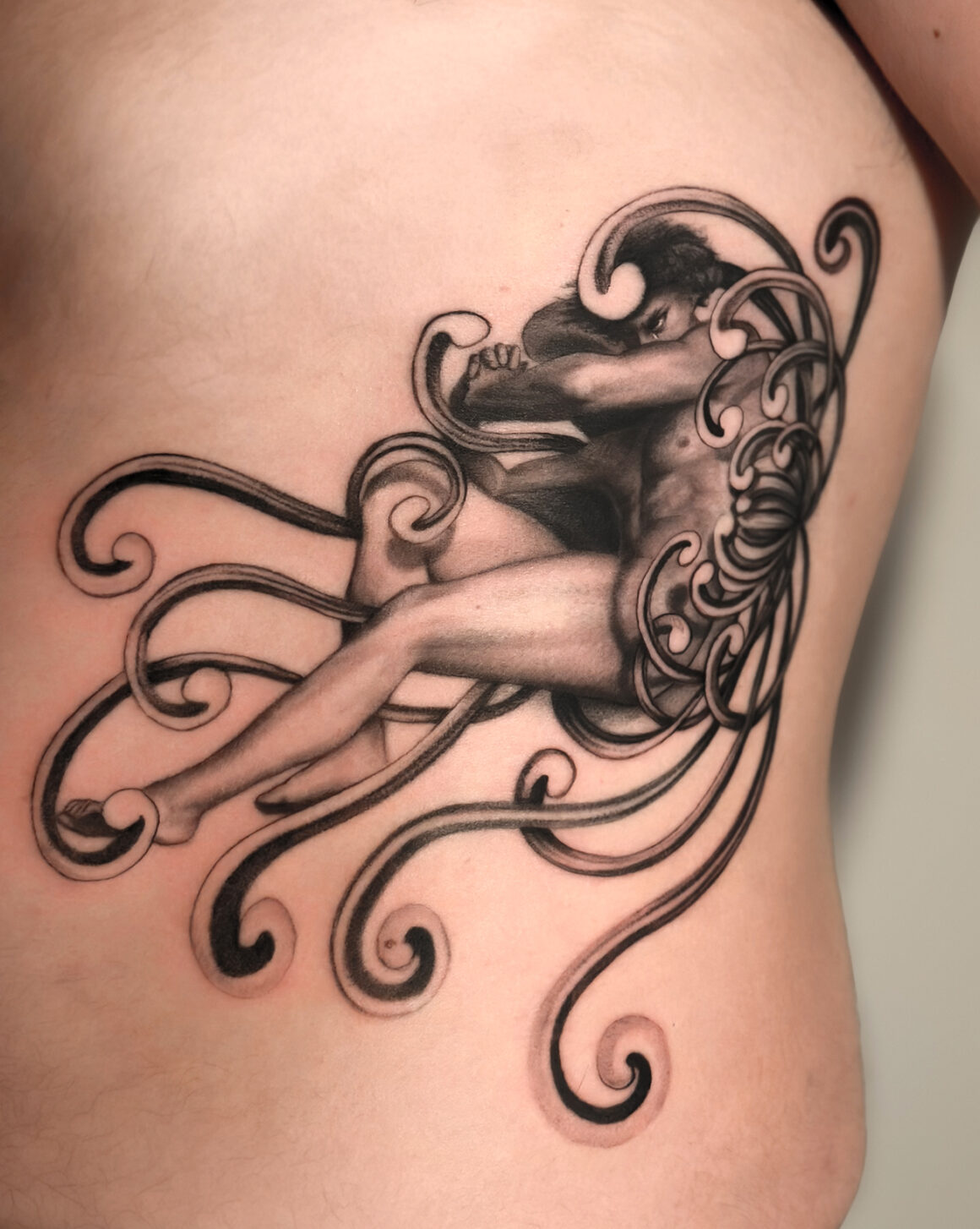
The challenge is to absorb these principles and translate them into tattooing while respecting the anatomy, movement and limitations of the skin. Every time I revisit a work, I notice something that I had not seen before. Perhaps that is exactly what defines a great master: their work is never exhausted.
You have your own studio, Ink29, in Paris. Can you tell us a little about the studio, where it is located and what kind of atmosphere you have created there?
INK29 is located in Saint-Germain-des-Prés, in the 6th arrondissement of Paris. The studio was developed by Priscila and me. As well as being my partner, she is also my business partner in this project. We built it together from the very beginning, combining my experience within tattooing with her perspective and background in architecture. That combination was important because it allowed us to think about the studio differently from what we had been accustomed to seeing within the industry.
Priscila’s architectural perspective brought another level of attention to the organisation of the space, its aesthetics, lighting, functionality and comfort, while I contributed my understanding of the practical requirements of the day-to-day running of a tattoo studio. The result is a professional, calm and welcoming environment with its own identity. We work with artists specialising in different styles and also welcome guest artists from different places, creating a constant exchange of ideas within the studio. As many tattoo sessions are long, we make a point of ensuring that every client feels comfortable and confident throughout the entire process.
Finally, what are your next steps? And what would you like to see as a reaction from the public to this feature on Tattoo Life?
At this stage, my next steps are mainly connected to deepening the research I have already been developing. I want to work increasingly on larger-scale, original projects, explore the relationship between tattooing and the anatomy of the body in greater depth, and continue developing this dialogue between Black and Grey, classical art, Eastern influences and ornamental work. I am not looking for a definitive formula or for a point at which my work stops changing. I want to continue experimenting, drawing and putting myself in situations that force me to evolve.
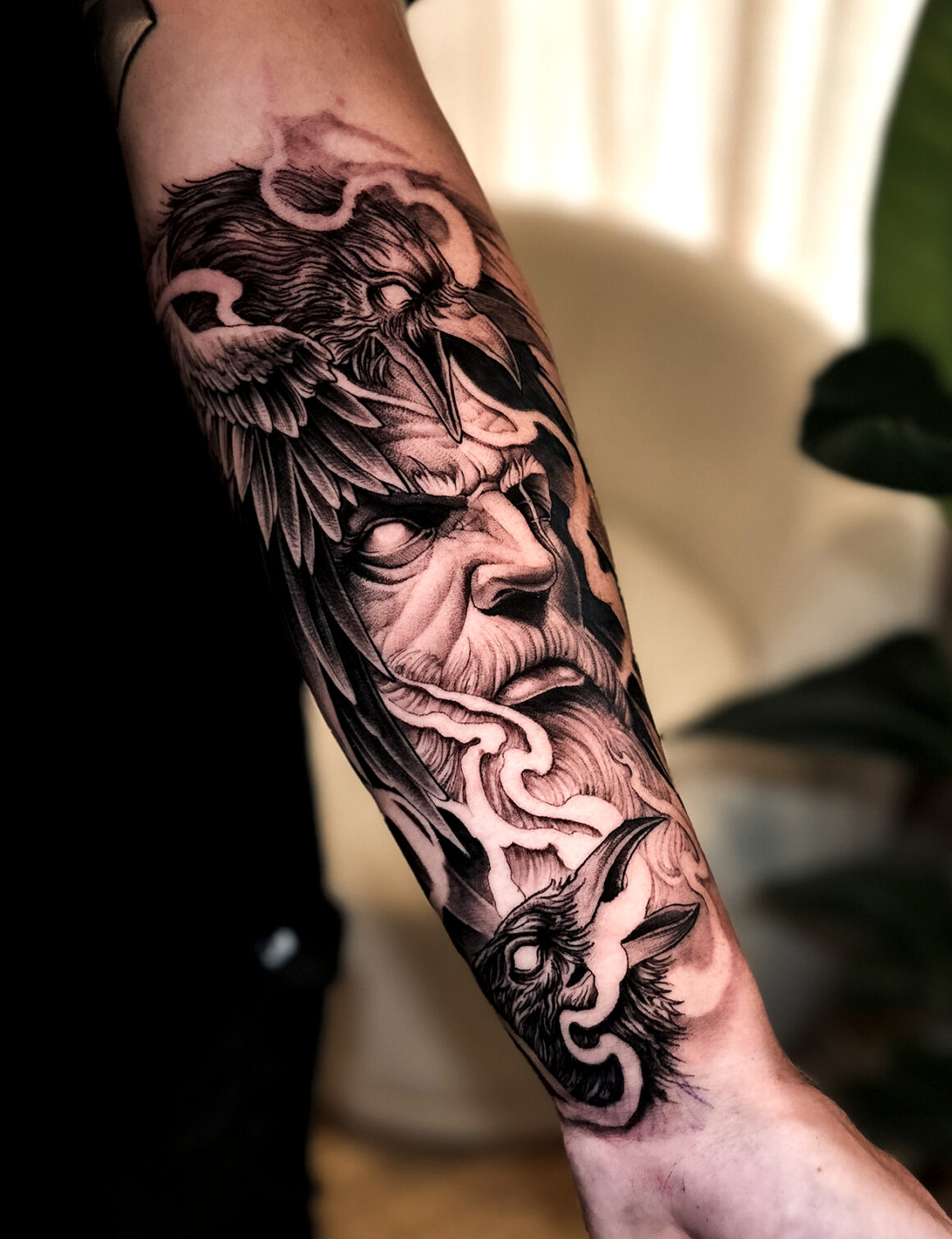
Developing a language of your own happens precisely through that process. Through this feature, I would like people to see not only the final result of the tattoos, but also the research, work and intention behind them. I do not expect my work to appeal to everyone, but I would like it to provoke curiosity and remain in the memory of those who see it. If someone finishes reading the article wanting to discover more about my world and follow my future projects, I would already consider that a very positive response.