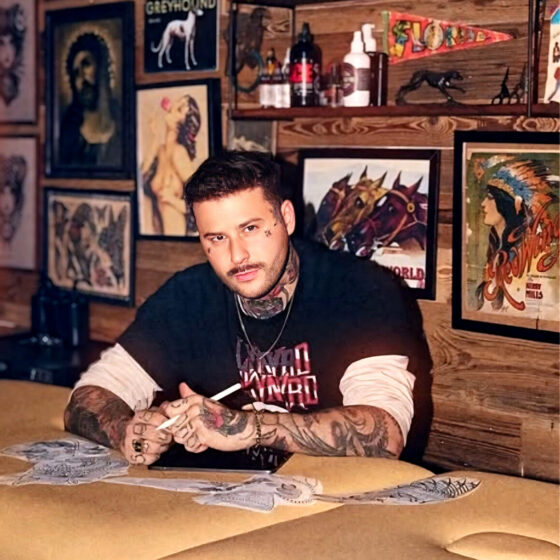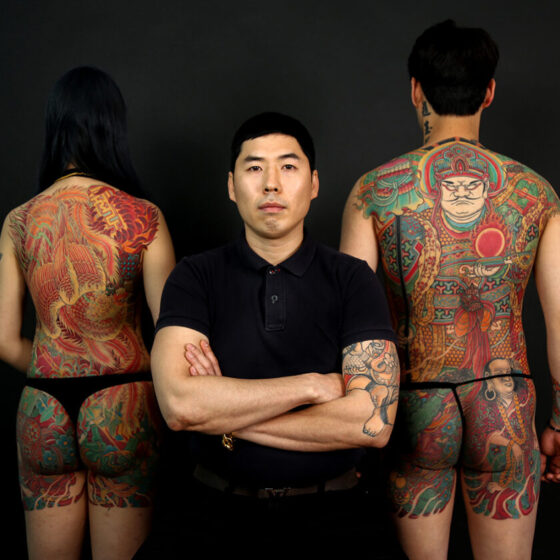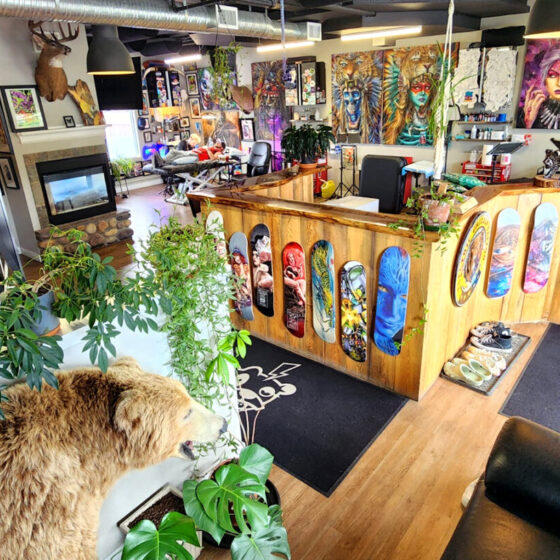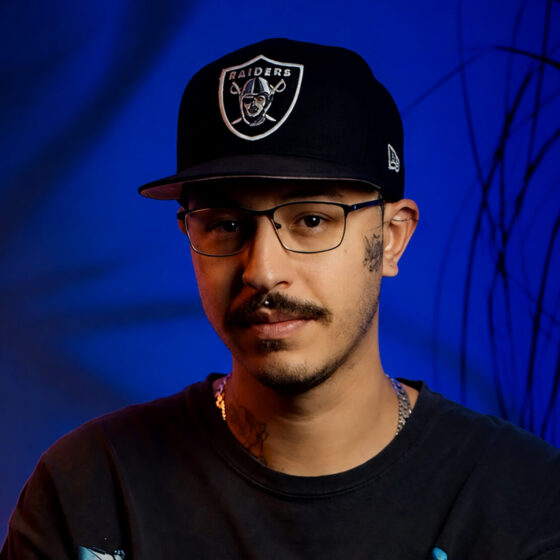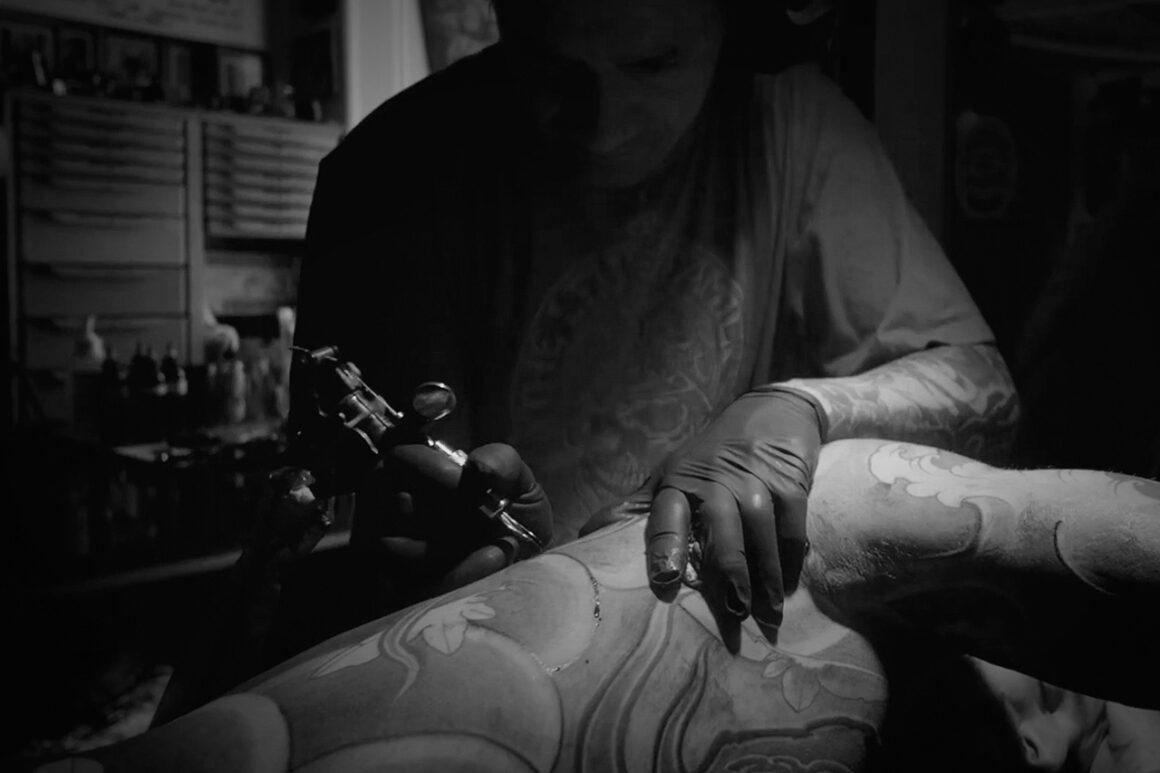
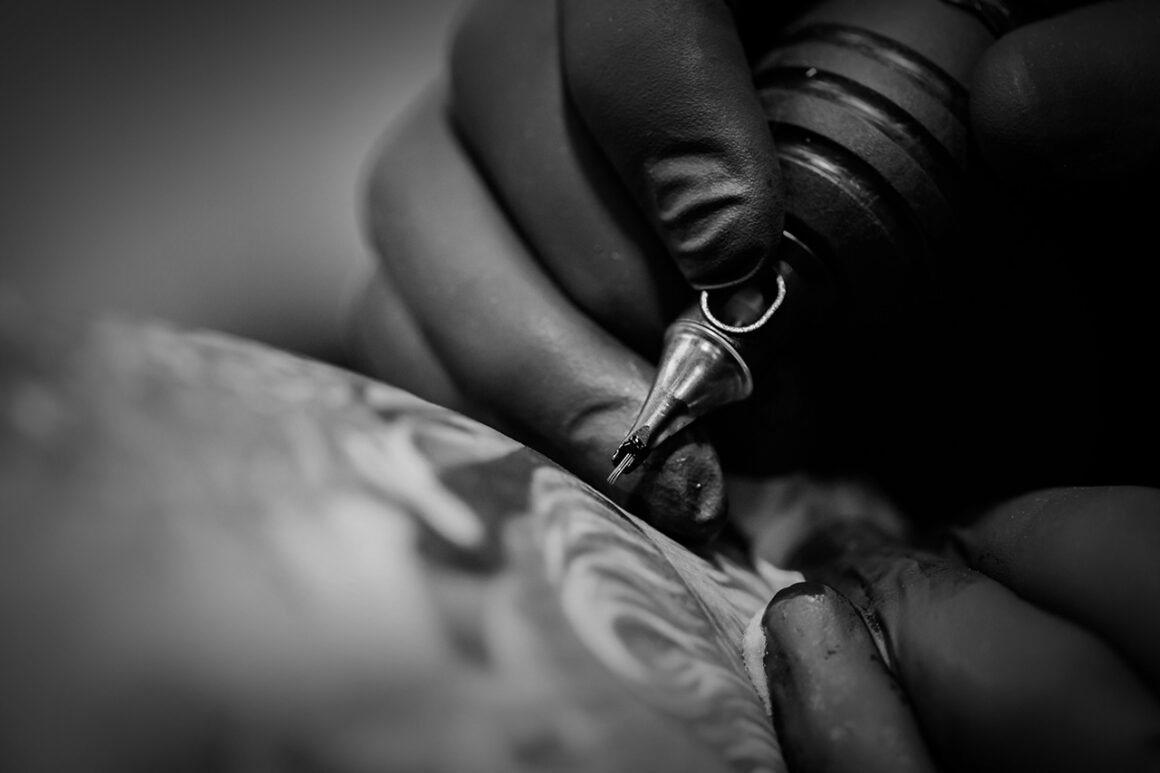

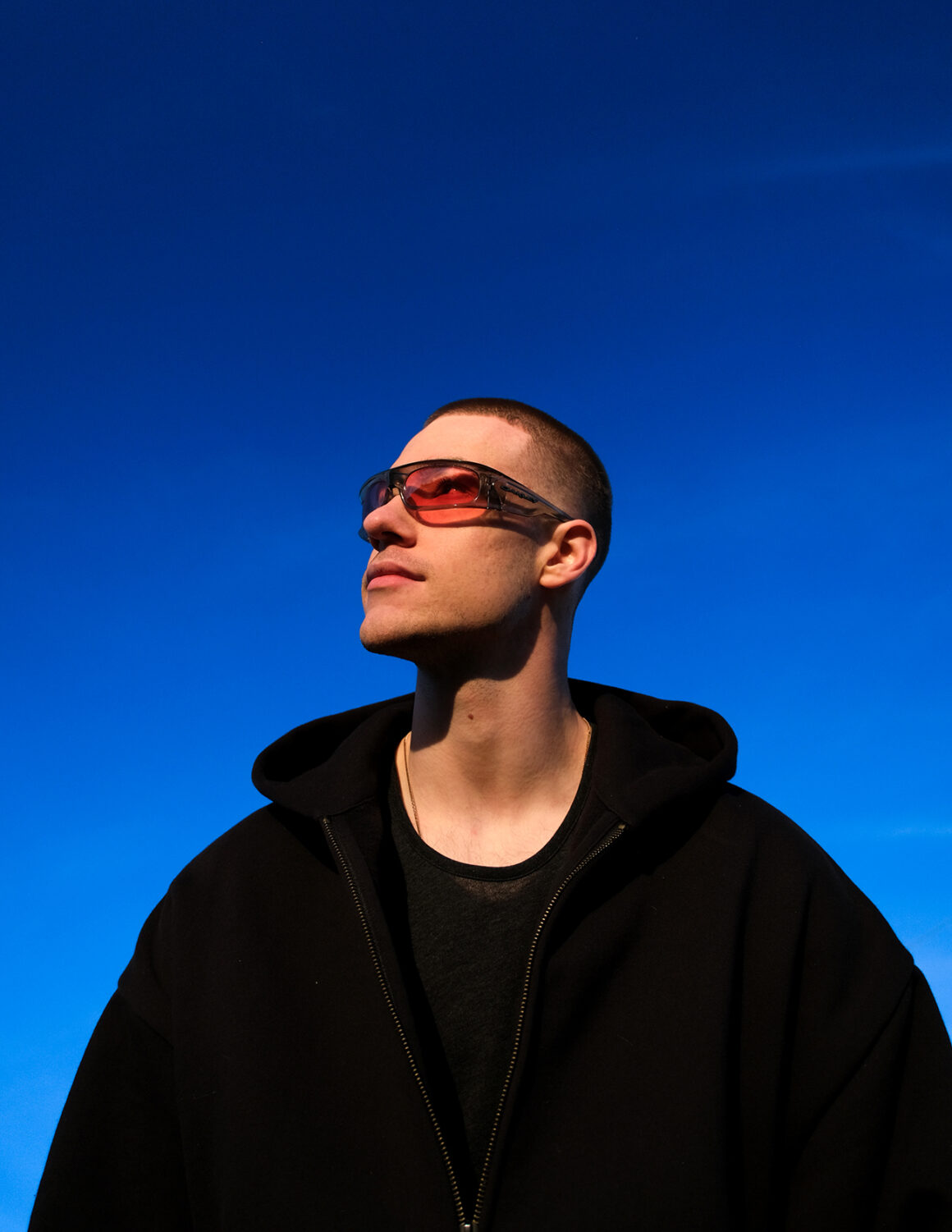
From fine art and painting to skin, Aleki Blue has developed a distinctive visual language that combines micro-realism, geometry, and anatomy. Originally from Russia and now based in Portland, Oregon, Artem Alekhin approaches tattooing as an evolution of his artistic practice, balancing visual composition with his clients’ the personal stories. In this interview, he talks about his artistic journey, the philosophy behind his work, and how empathy, structure, and symbolism shape his approach to tattooing.
Artem, you came to tattooing after studying fine art and painting. What has tattooing allowed you to express that painting couldn’t?
A painting always has a frame. A tattoo has no frame; it lives on the body. The body moves and changes over the years, and the tattoo moves and changes with it. Sometimes, one piece eventually continues into another. What matters most to me, though, is the person.
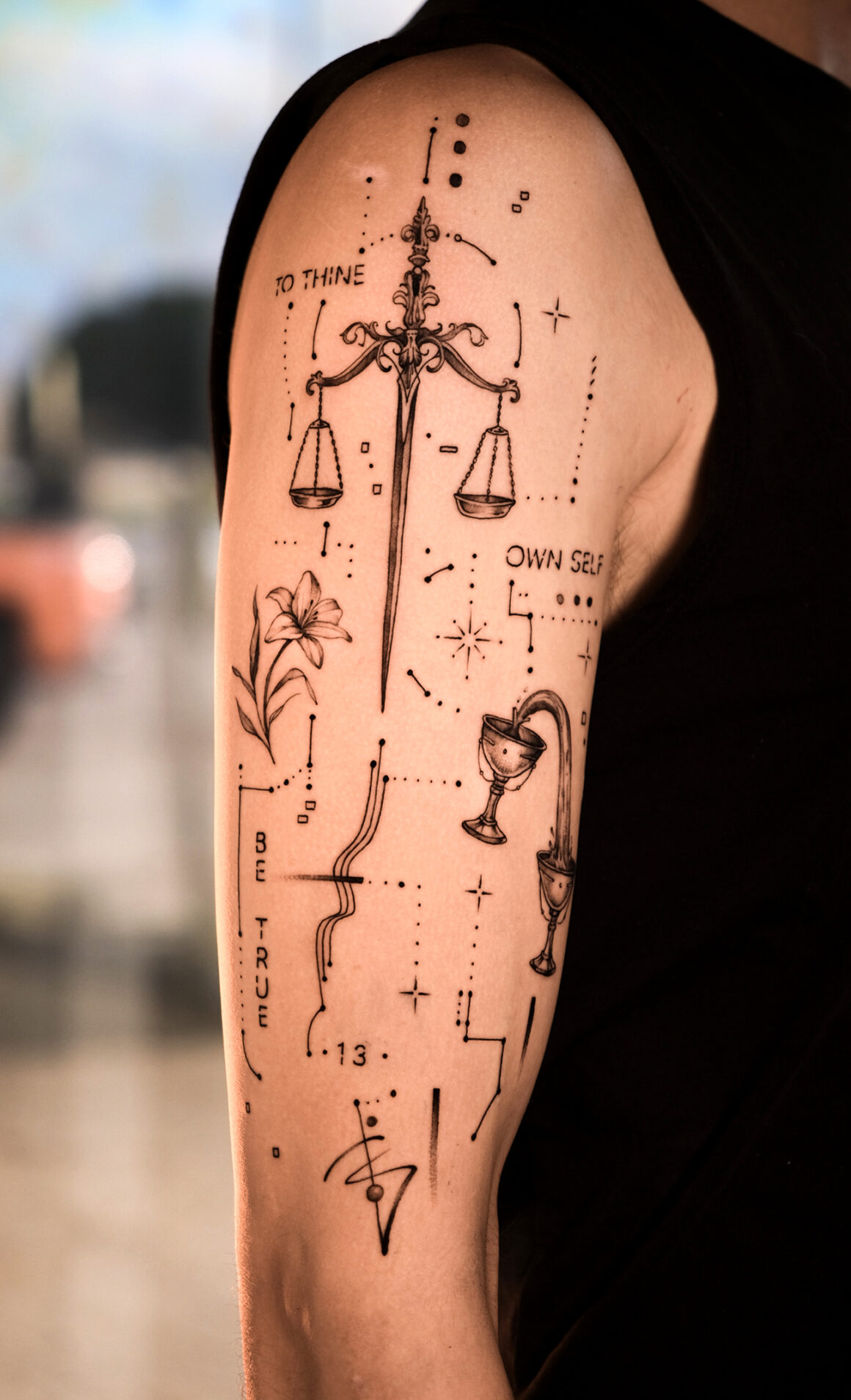
I’m not working on a surface; I’m working with someone who comes to me with their story, with something that means a lot to them. I take that and try to translate it into my own language. And honestly, the responsibility is much greater. I can paint something for a specific person, but in the end, it’s still an object. They can hang it somewhere, put it away, or one day it might simply be gone.
With a tattoo, a person entrusts me with part of their body.
They’ll live with my decisions for the rest of their life. But what you get in return is also much greater. Every project I do is designed exclusively for that particular client. And I can tell you, the reaction to a really good custom painting and the reaction to a really good custom tattoo aren’t even close. The impact is so much stronger. You also spend a lot of time with the person, sometimes many hours, so it becomes a kind of relationship rather than just a commission.
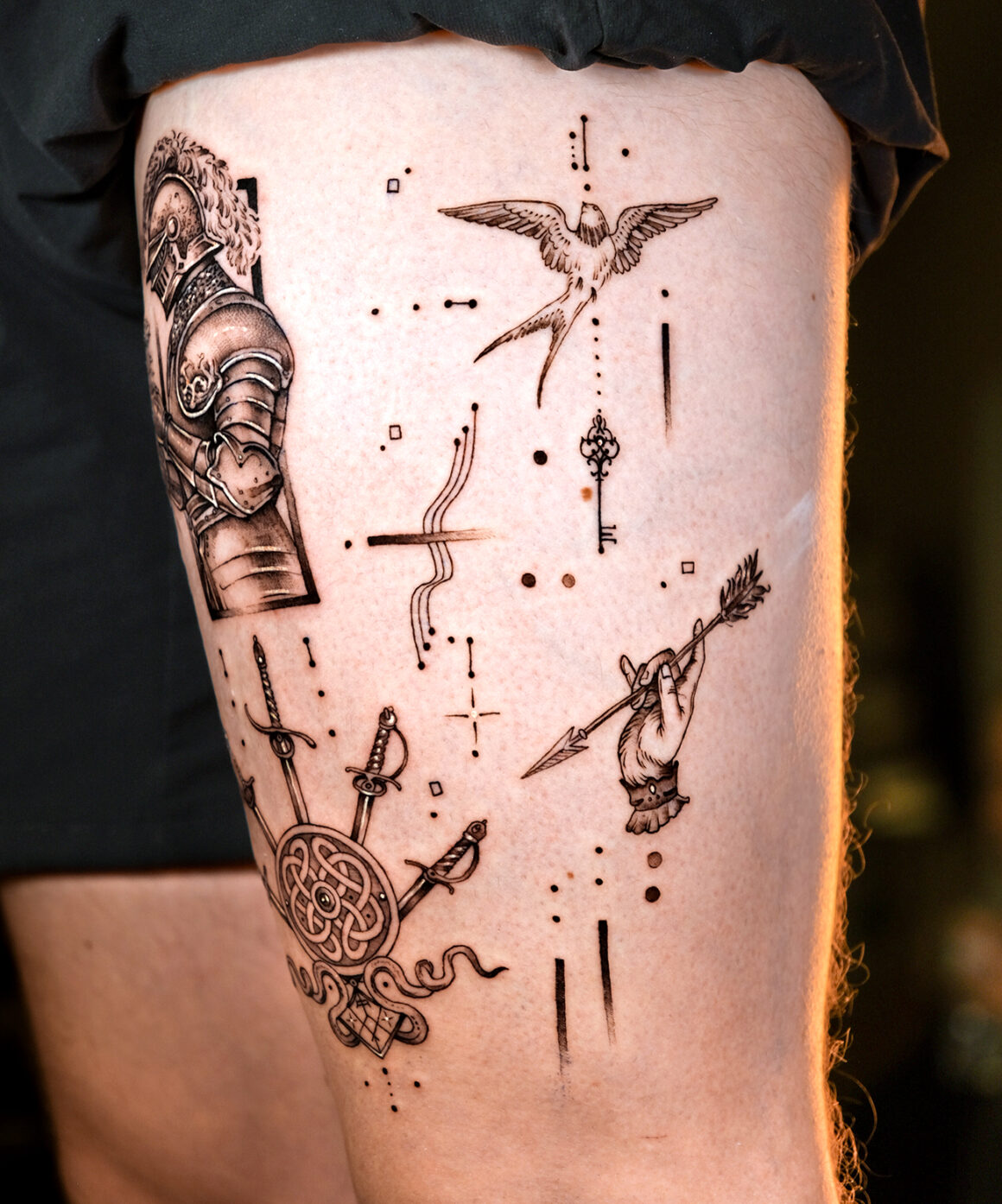
In a way, tattooing became an evolution of my art. At one point, I considered going back to fine art. Tattooing came into my life quite unexpectedly, but now I see that it was actually a pretty logical step. I love working with people, and I’m a very empathetic person. Maybe that’s exactly what I was missing when I was painting as a teenager. My clients give me a lot in return, more than they probably realize.
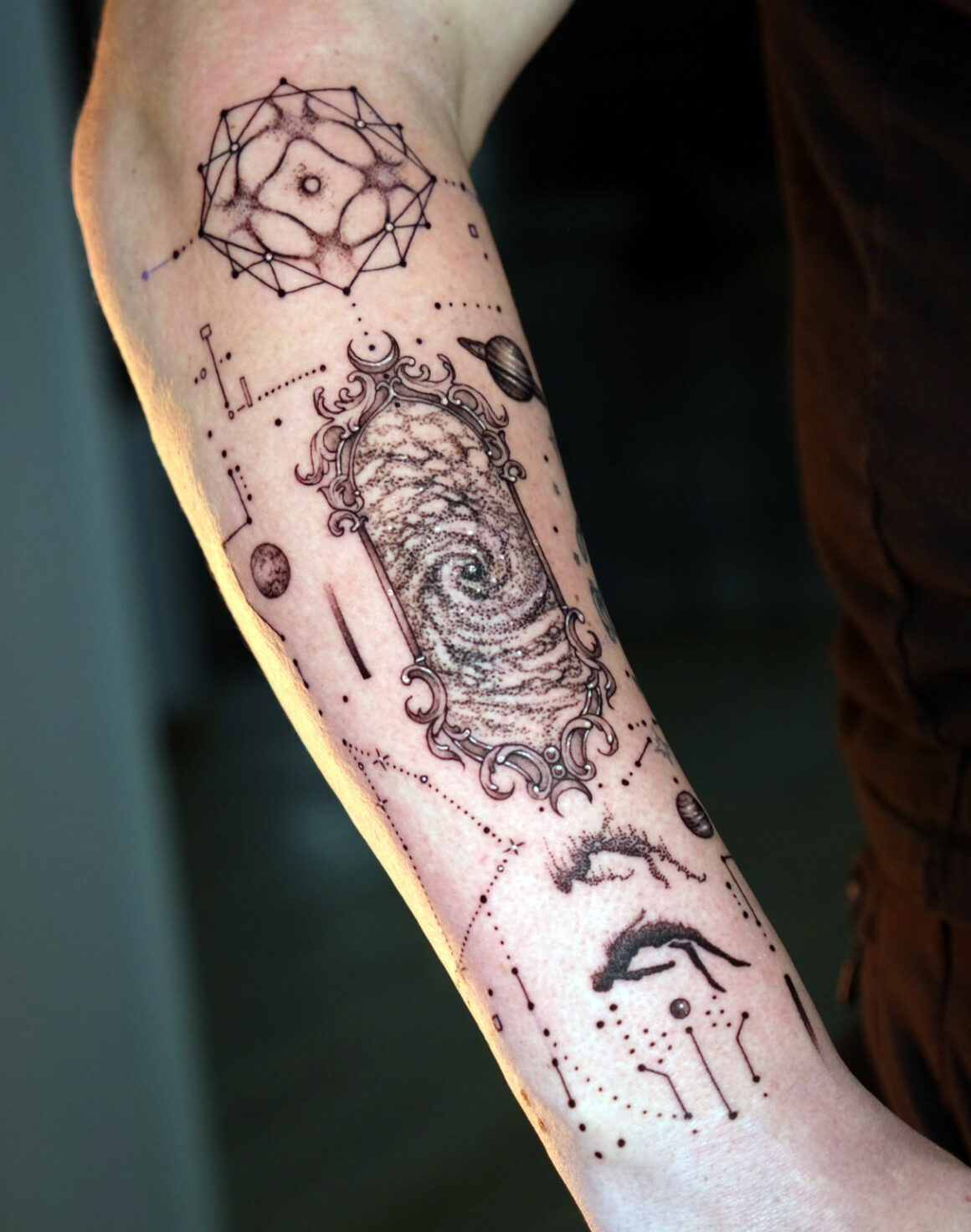
Why did you choose the artistic name Aleki Blue?
Aleki is short for my last name, Alekhin. It’s a Russian surname, and it’s not easy to pronounce in English. My first name is Artem, which is a beautiful name, but people here have a hard time pronouncing it, too. I wanted people to be able to address me without struggling with my name, so I shortened my last name and changed it slightly.
Blue is simple: I’ve always liked the color, especially deep blue.
For me, it’s always been connected to the world around us: the sky, the ocean, and things that seem to have no end. I like to think of it as a reminder that most of the limits in art are the ones we impose on ourselves. You can always go further.
How do you balance maintaining your artistic identity with adapting your visual language to each individual?
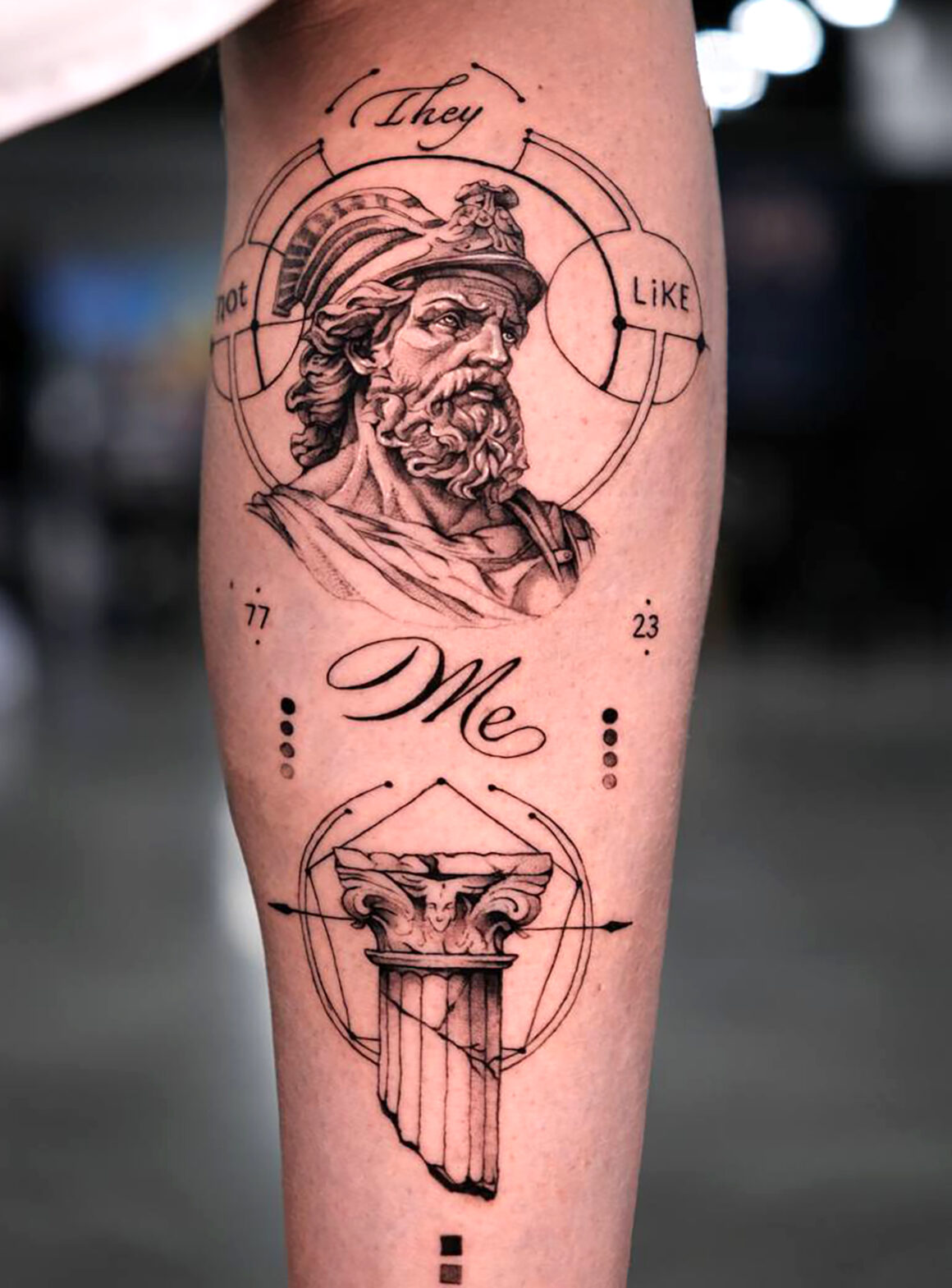
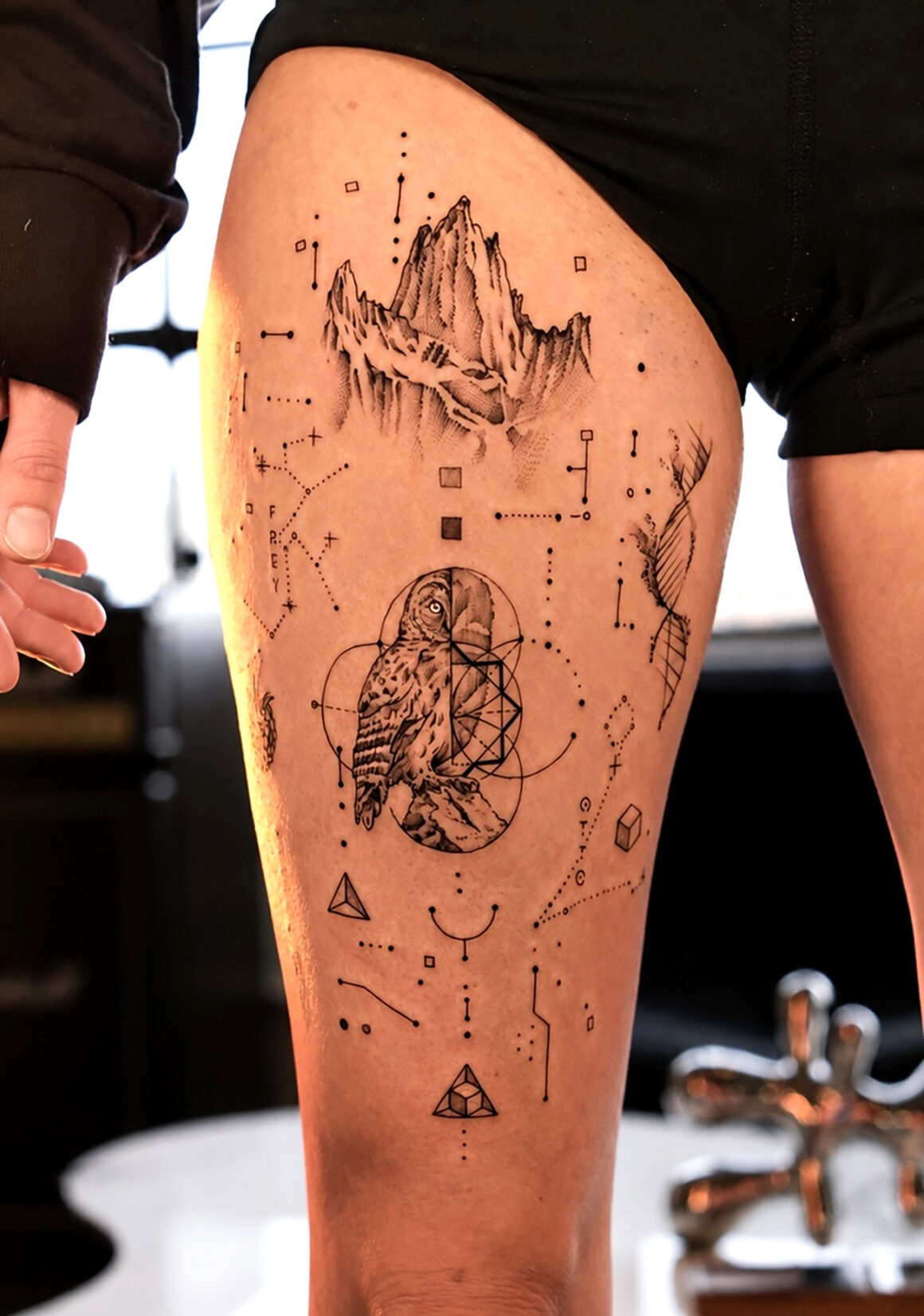
I think style is like handwriting. You can write a thousand different sentences, but it’s still your handwriting. My style is made up of many elements, but one of the most important to me is composition. Every project needs its own composition, designed specifically for the person and the part of the body it’s intended for. Space is particularly important to me when it comes to composition. I leave space between elements and work a lot with negative space so that the tattoo remains clean and readable over the years.
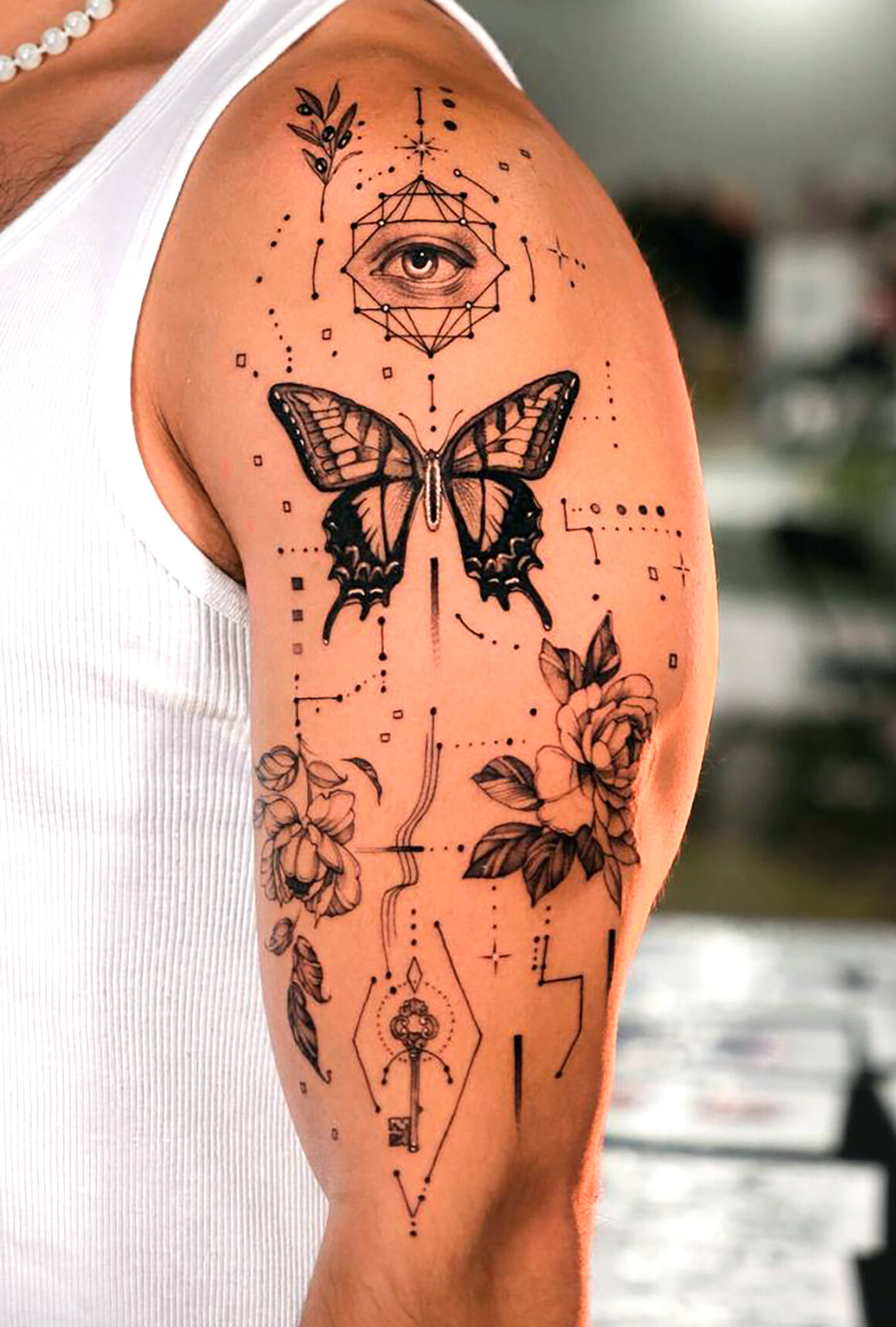
Over time, I’ve developed my own set of rules. It’s not exactly a formula, because I still need to adjust it every time. But I now have a much better understanding of how to work with different parts of the body. Then there are the lines. The geometric lines in my work, both the connecting and decorative ones, always follow the same approach. I never place them randomly. They’re either there to connect elements or to follow and emphasize the anatomy. With the micro-realism elements, contrast and negative space are important, too.
When the forms are small, these are what keep them readable.
That’s why I sometimes simplify certain elements deliberately. For complex textures, such as rocks, mountains, or fur, I use strokes. I think it’s a good solution because it allows me to convey texture and depth while ensuring that the smaller piece heals well and remains clear. This visual language gives me a lot of freedom. Every client comes with something different, and I can incorporate very different ideas into my work.
There’s something almost architectural about the way you use geometry around realistic elements. Where does your fascination with structure, proportion, and balance come from?
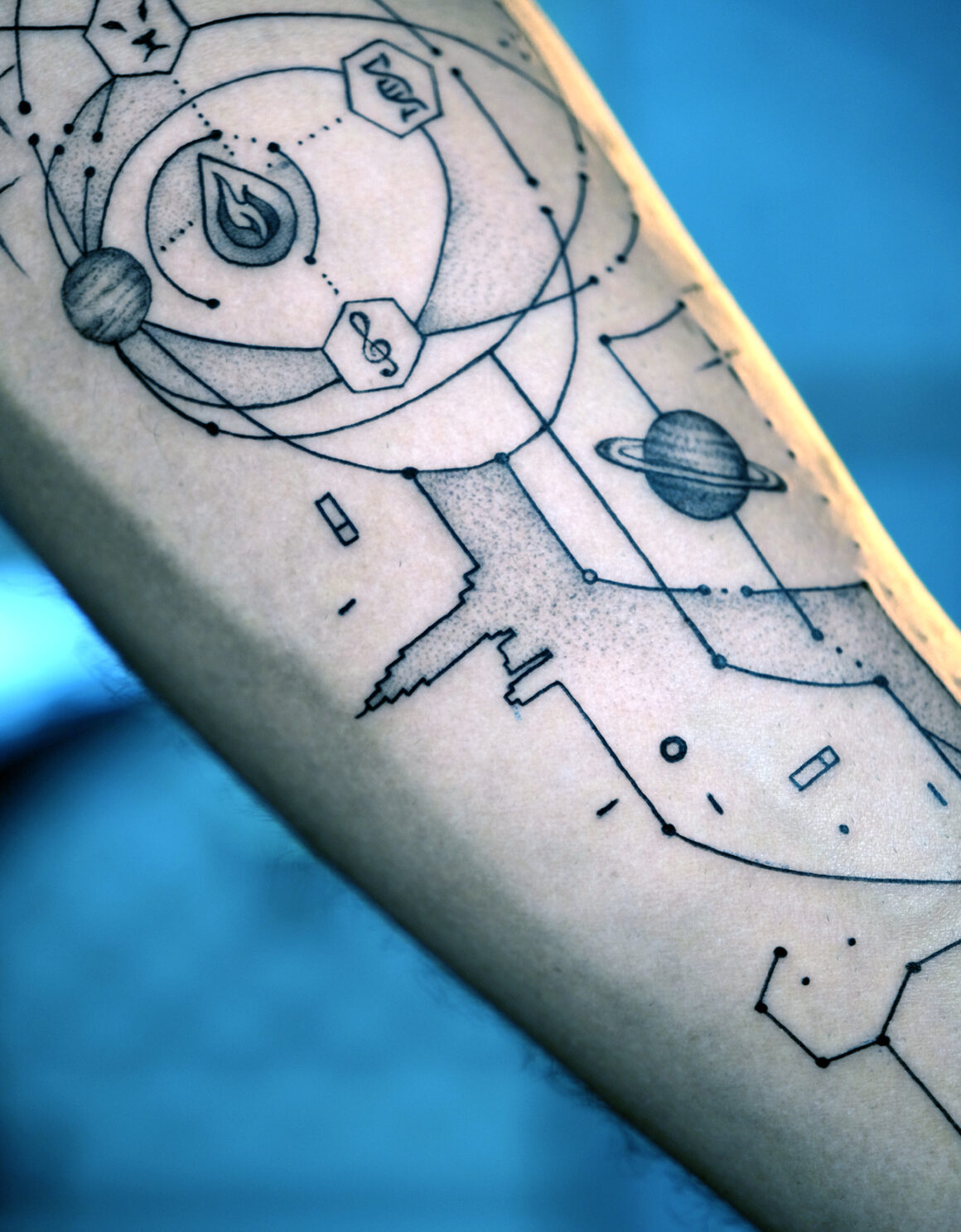
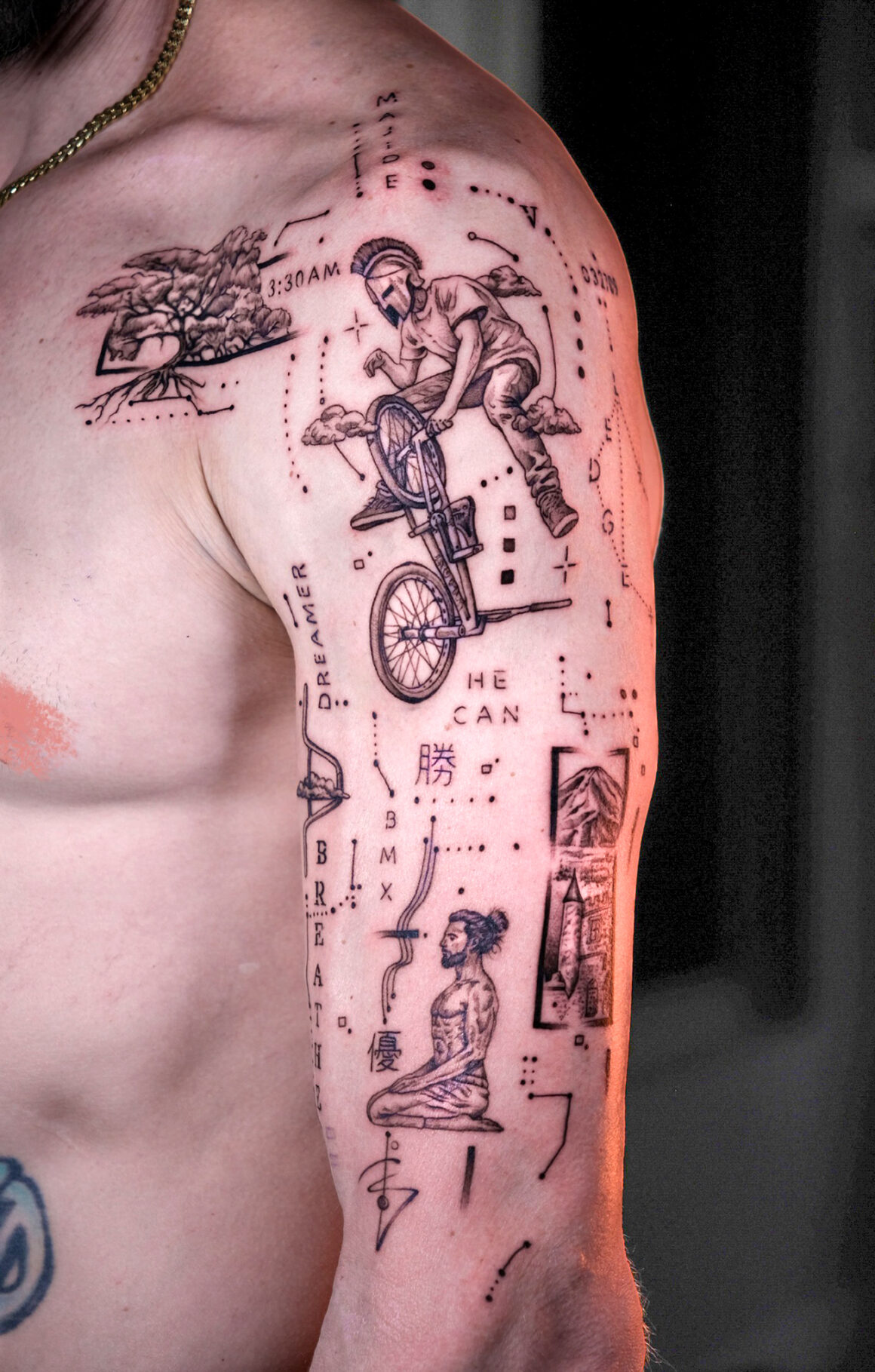
Honestly, geometry only came into my work when I started tattooing. My earlier paintings were in a completely different style and followed a different direction. When I first started tattooing, I mainly focused on realism. The first time I used geometry was in Miami, during my first year in the US. A client wanted to combine several elements related to his son and football. It was the first time I’d built a composition like that, and I loved it right away. I think what makes it work for me is the contrast. Realism and nature are about living forms, and living forms can’t be perfect.
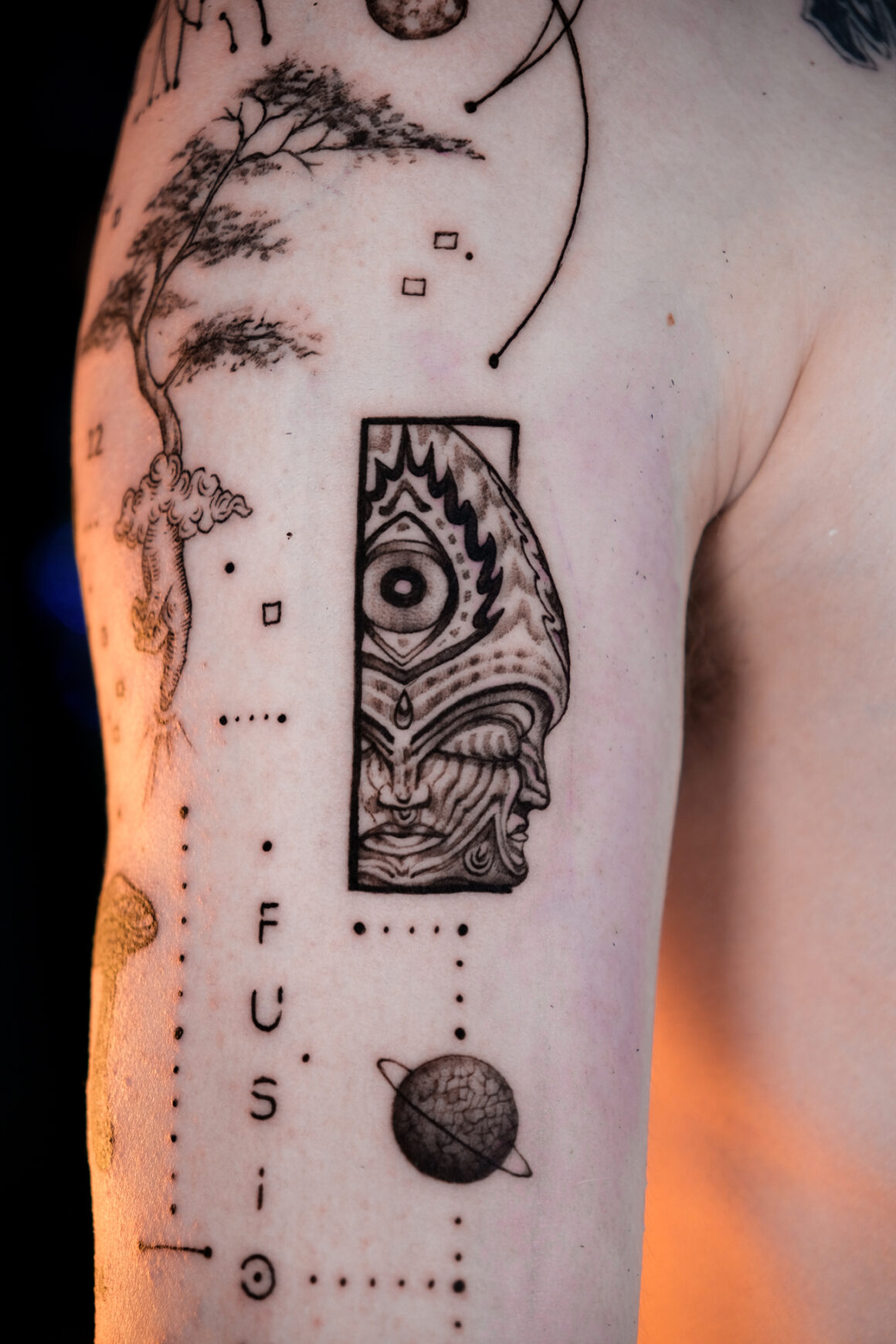
Nothing in nature is perfect. In Japanese culture, there’s a concept that captures this idea: wabi-sabi, the beauty of imperfect things. Geometry, on the other hand, is the opposite. It’s clean and precise. It gives the piece structure, something that holds all the elements together. When both are balanced, the organic and the precise, the tattoo feels complete. For me, the body is the foundation of everything. My medical background helps me a lot here: I look at the anatomy first, and then I build the geometry around it.
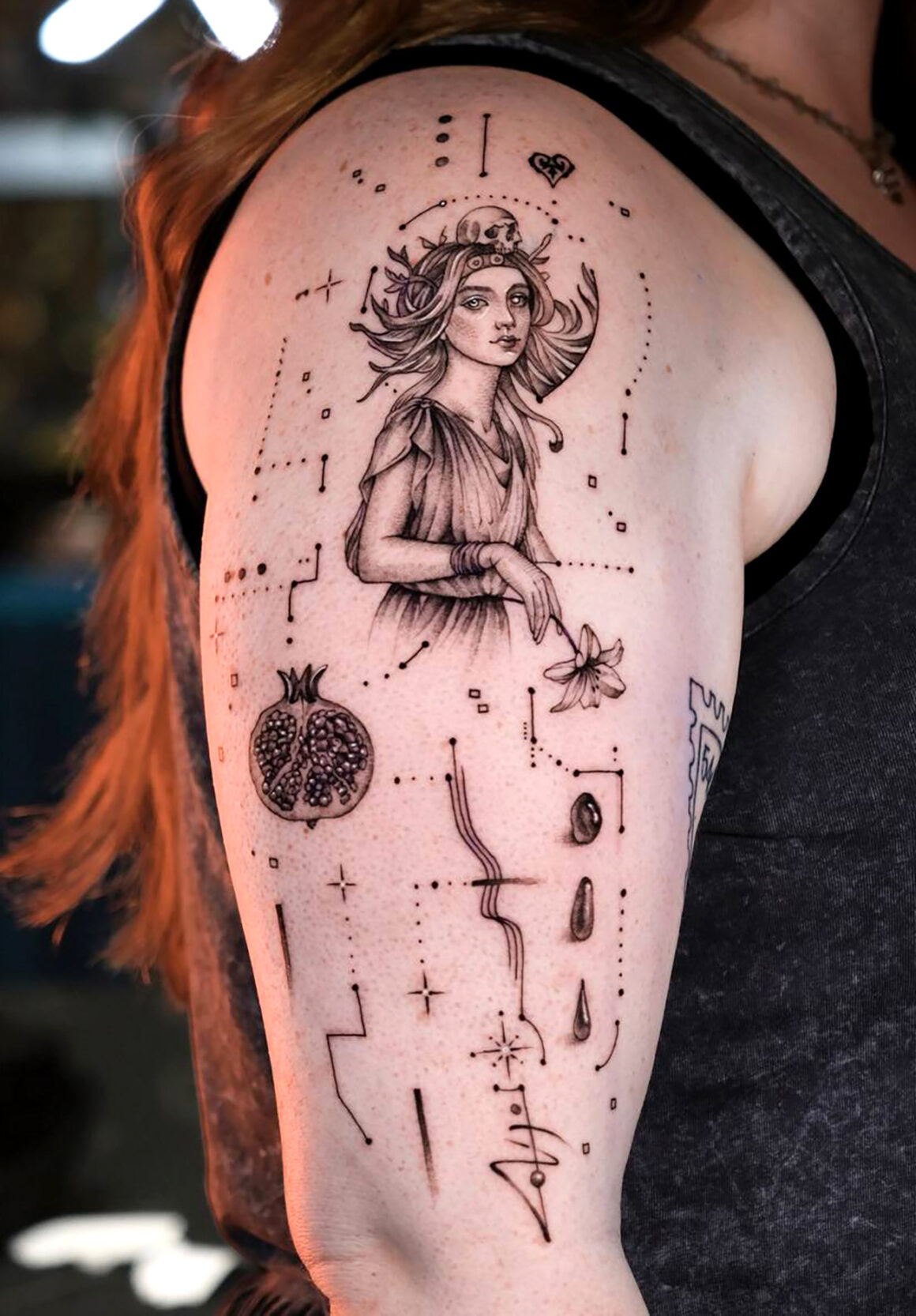
Your tattoos can be highly detailed, yet they often carry complex symbolism. How important is the meaning behind an image compared to its purely visual impact?
For me, it’s not one or the other. They have to be balanced; one doesn’t work without the other. You can’t just take an idea that pops into your head and turn it into a tattoo. At the same time, I don’t want to create tattoos just for the sake of making tattoos. I’m very selective about the projects I take on. If an idea doesn’t resonate with me, I won’t take it on, and I’m honest about that with both myself and the client. Of course, some people get tattoos purely for aesthetic reasons, and that’s great, too. But most of my clients come to me with something important from their lives: an event that changed them. It might be a trauma, a moment when they felt incredibly happy, or a time when they felt truly at peace.
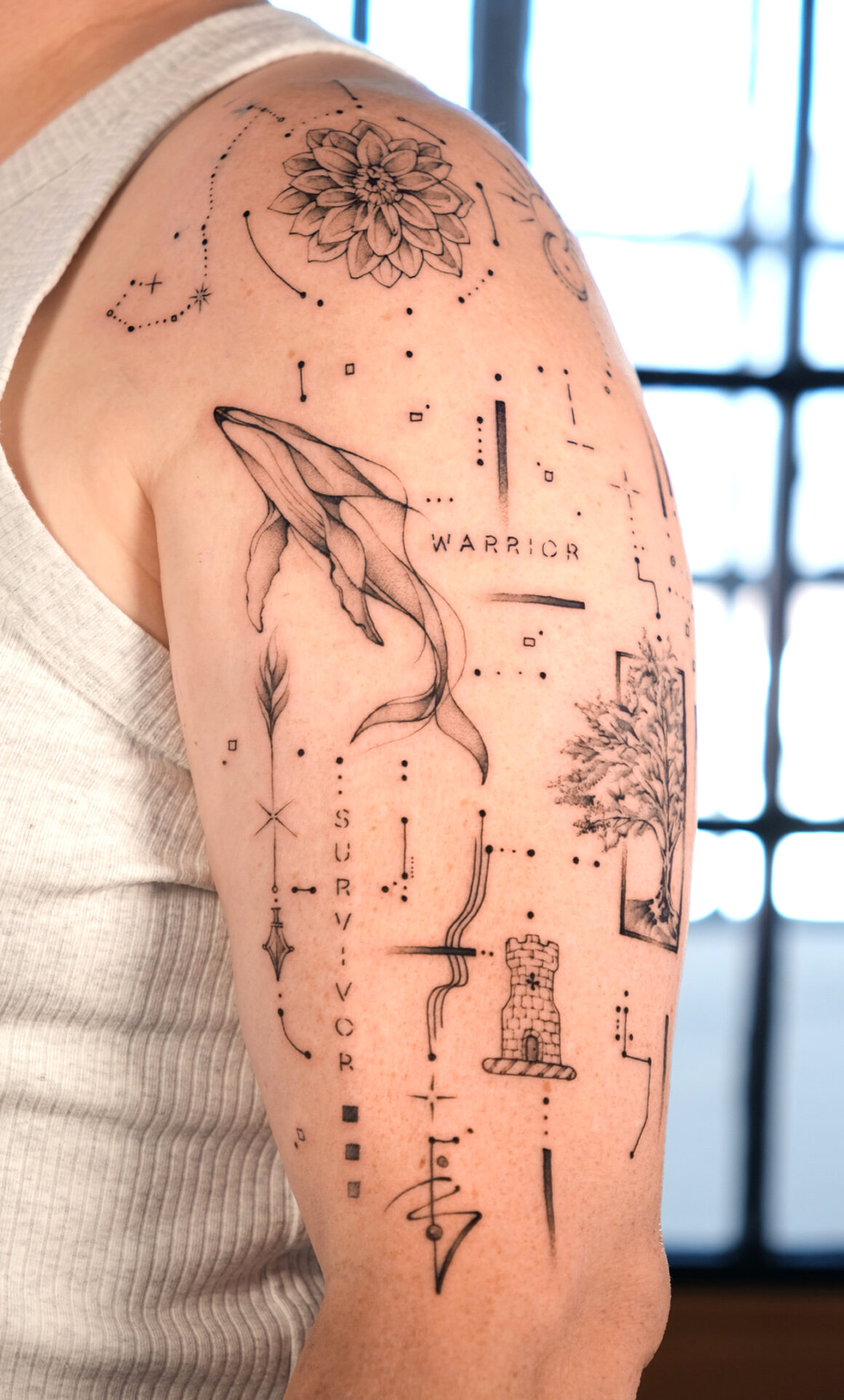
At the same time, I have my own visual standards. The tattoo has to look beautiful to me as I’m creating it, too. Honestly, I spend a lot of time refining the design and trying to make every element as good as it can be. Of course, it also has to be beautiful to the client. But beauty means something different to everyone, and that’s what matters most. For people looking at the tattoo from the outside, I’m more concerned with making sure it’s clear and readable. I often use coded elements, such as Morse code or constellations. Sometimes a client has a date, an event, or a phrase they want to include, perhaps a line from a song that has really stayed with them. They want it in the tattoo, but not too visibly. Other times, I use these elements myself because they work better compositionally and visually.
It’s rare for a symbol to be completely unusable.
With micro-realism, geometry, and anatomy, you can play around with elements and incorporate many different things. Sometimes, though, a client wants to include too many elements in a single piece. In those cases, I suggest starting with a few and continuing with the rest later, perhaps in another placement, so the design doesn’t become too crowded. The visual aspect matters a lot because everything has to work perfectly. It’s a tattoo, and it stays with you for life.
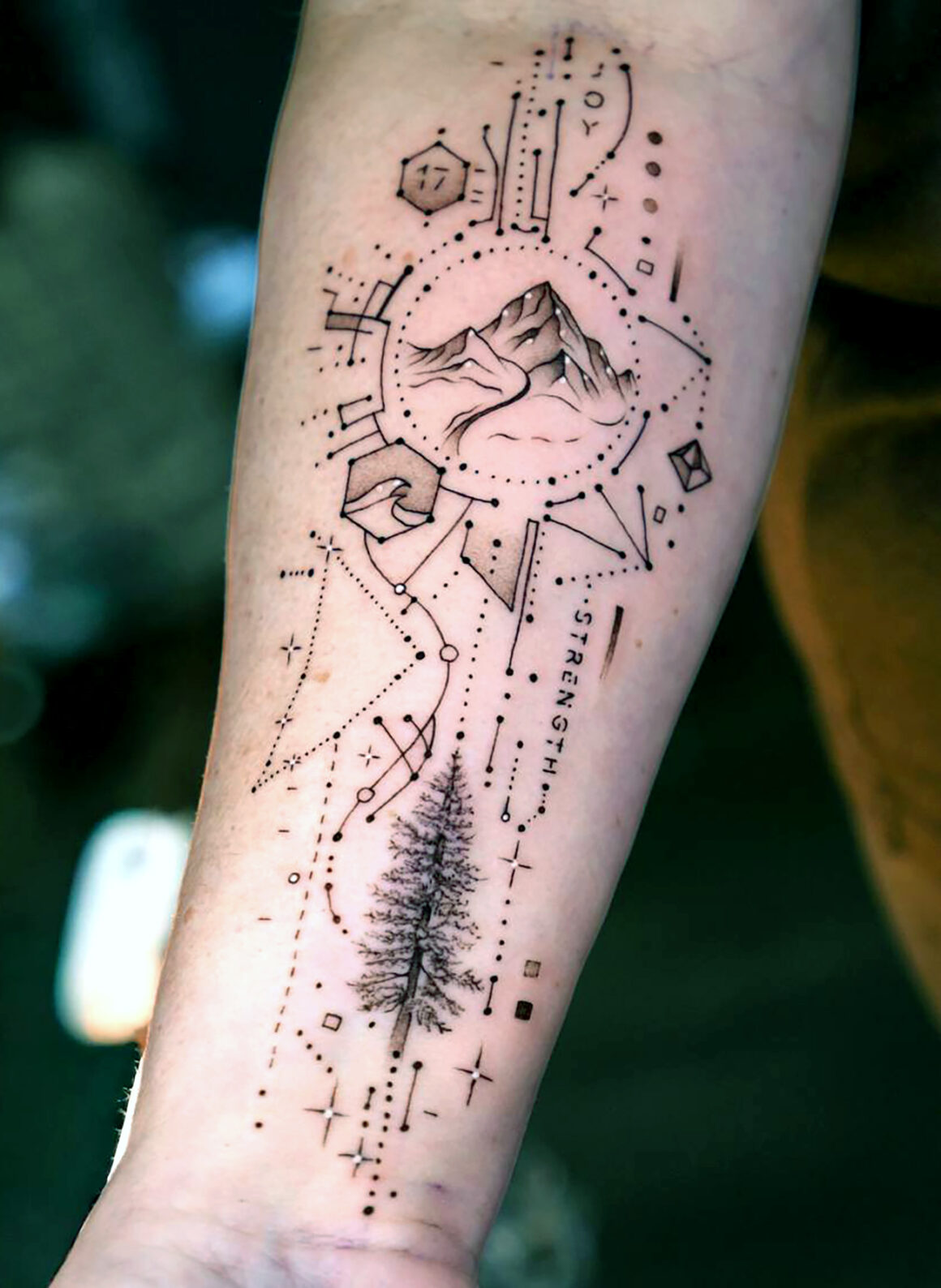
When a client comes to you with a very personal story, how much of that story do you need to understand before you can translate it into a tattoo?
It really depends on the person. Sometimes someone comes to me knowing exactly what they want, for example, four specific elements, and the idea is already clear. Before larger projects, though, I always have a consultation before the session, either over the phone or in person if the location allows. Talking to the person beforehand helps me a lot. I get to understand how they think, their personality, their vibe, and what’s important to them.
Quite often, deeper things come up during these conversations. We talk about the design, of course, but we also talk about their life journey and the events that have been important to them. I don’t necessarily need to know the whole story. What matters more is understanding what that particular moment means to the person. Everyone shares as much as they feel comfortable sharing. If I need to understand something better, I ask, but usually it all happens naturally as we talk. That’s when I can discover symbols or ideas that I might incorporate into the design. Of course, sometimes it’s difficult for someone to talk about certain things, or they simply prefer to keep them private. In those cases, we don’t go there. That’s completely fine.
Beyond the personal story, the body itself is just as important.
We always decide on the placement in advance, at least roughly, because I design specifically around the anatomy. I ask clients to send me photos of the area, and if there’s any medical history that could affect the tattoo, it’s good to know about it. Once, I was designing a back piece and noticed a slight curve in the client’s back in the photos. I asked her to send me more pictures in different positions so I could better understand her anatomy. It turned out that she’d had an injury when she was a child. So I built the design around her body, taking into account the way it actually is.
Do you see yourself more as an artist who tattoos or as a tattoo artist who makes art? Has your answer changed over the years?
I’d say I’m an artist first. I came to tattooing through painting, and I’ve seen it that way from the very beginning. For me, tattooing has always been art; it just happens on a person’s skin. So my answer hasn’t really changed. Honestly, I don’t care much about what people call me. What matters to me is continuing to think like an artist. At the same time, I treat tattooing as a very serious craft. It requires a lot of practice, knowledge, and responsibility, and that’s something you should never forget.
Where are you from, and where do you live now?
I’m from Russia. I moved to the US in 2022. For the past year and a half, maybe even two years, I’ve been traveling a lot, working in different cities and attending tattoo conventions. I’m currently based in Portland, Oregon.
Where do you see your work heading now? Is there a direction you’re trying to explore, or do you prefer to let the next stage of your evolution happen naturally?
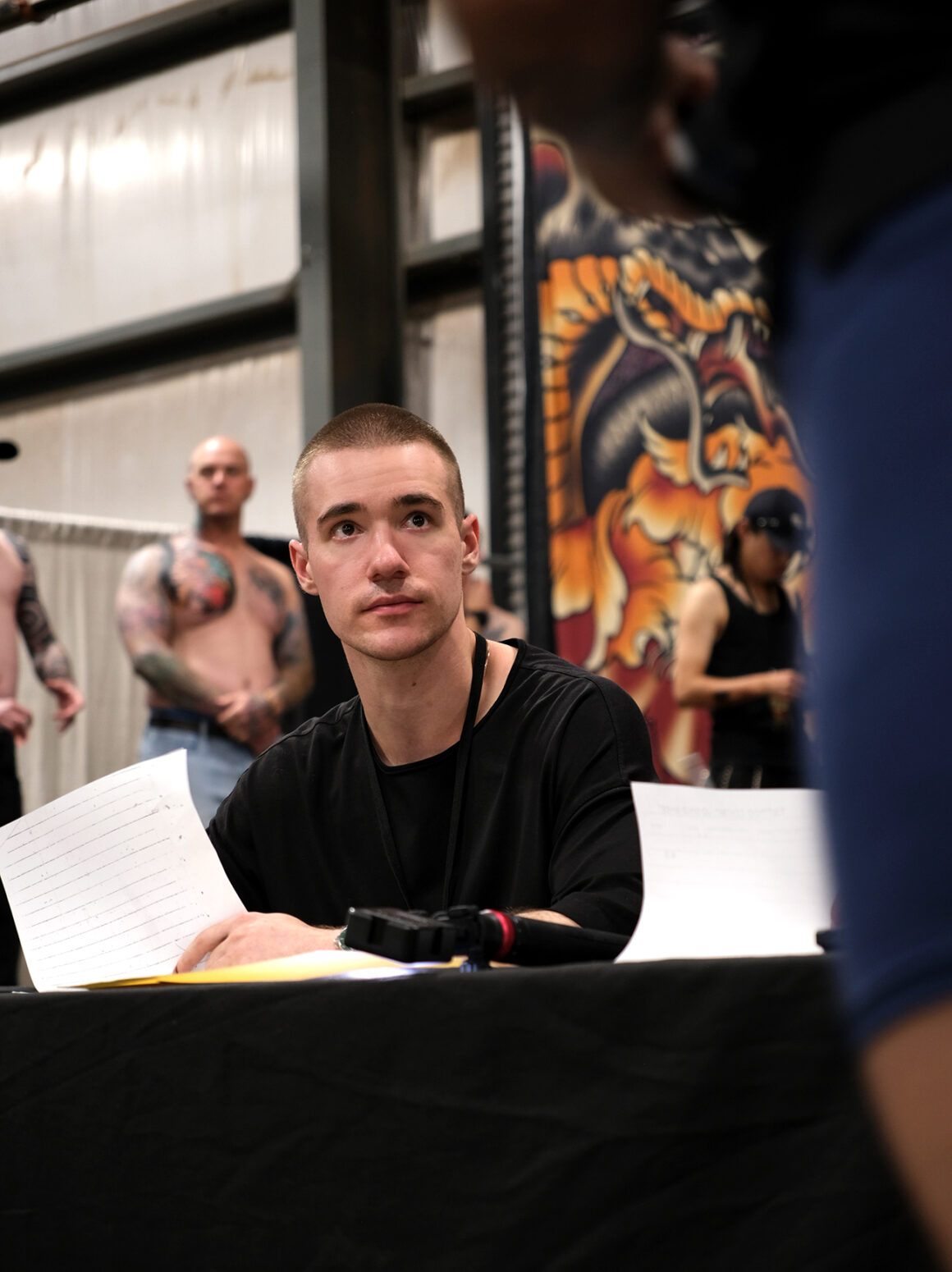
For me, it happens more naturally. Like my style, my work evolves a little with every new project. Sometimes I find a better solution; other times, I improve something. Step by step, my work moves forward. Something new for me this year is tattoo education. I’ve spoken with many artists who are just starting out, and through judging at conventions, I’ve seen how many of them struggle with the same things. I’ve started thinking a lot about how people learn to tattoo and what could be done to improve the process. It’s something I’d like to dedicate more time to.