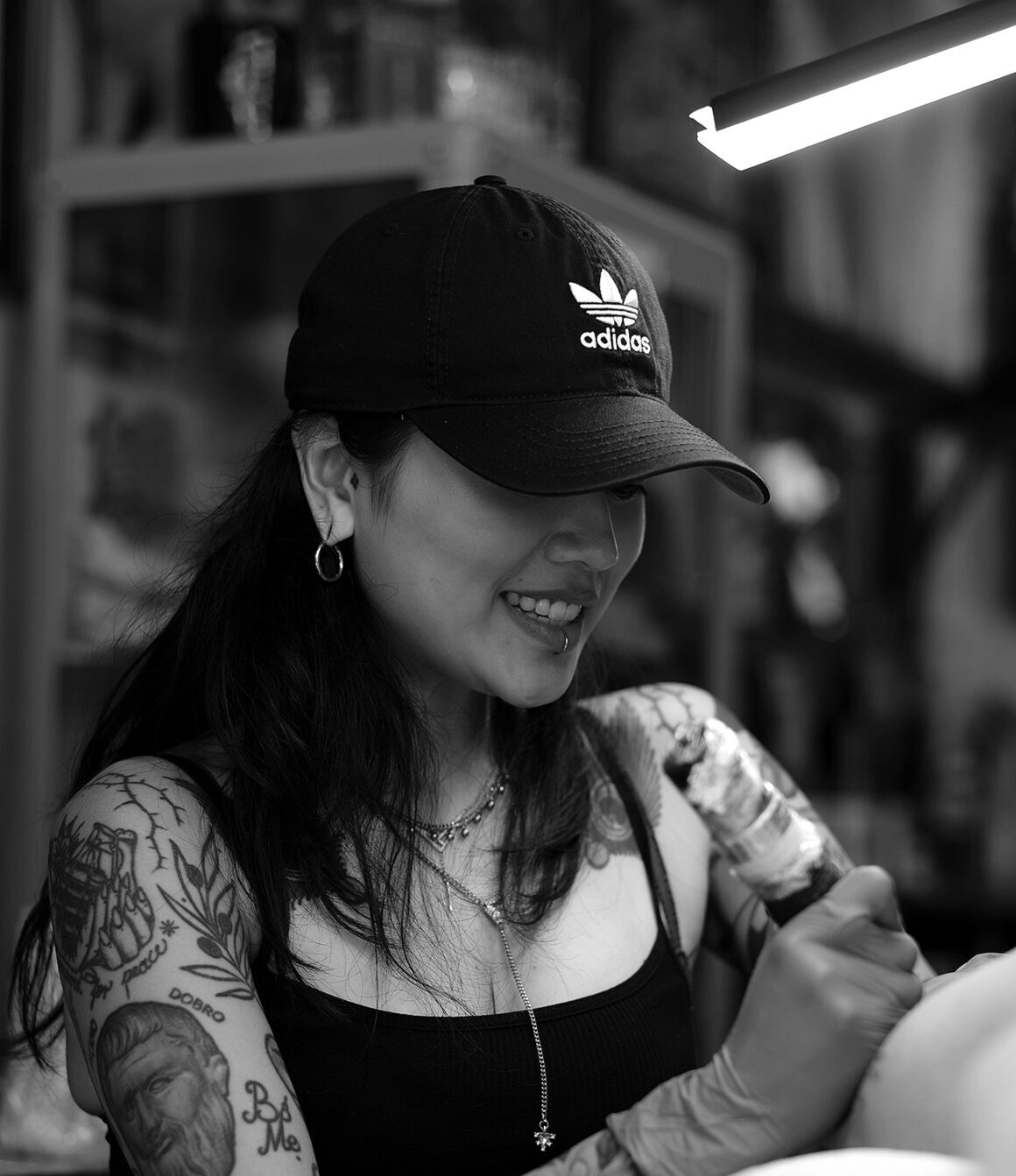


Born and raised in Warsaw, Poland, and of Vietnamese background, Trang Nuen — better known as Capital T — has been tattooing since 2015. Alongside her career as a Fine Line Black & Grey tattoo artist, she is also a painter, developing a deeply personal visual language shaped by surrealism, introspection and a fascination with human emotion. In this interview, she talks about the relationship between painting and tattooing, the influence of Chicano culture on her work, and the artistic vision that defines her distinctive style.
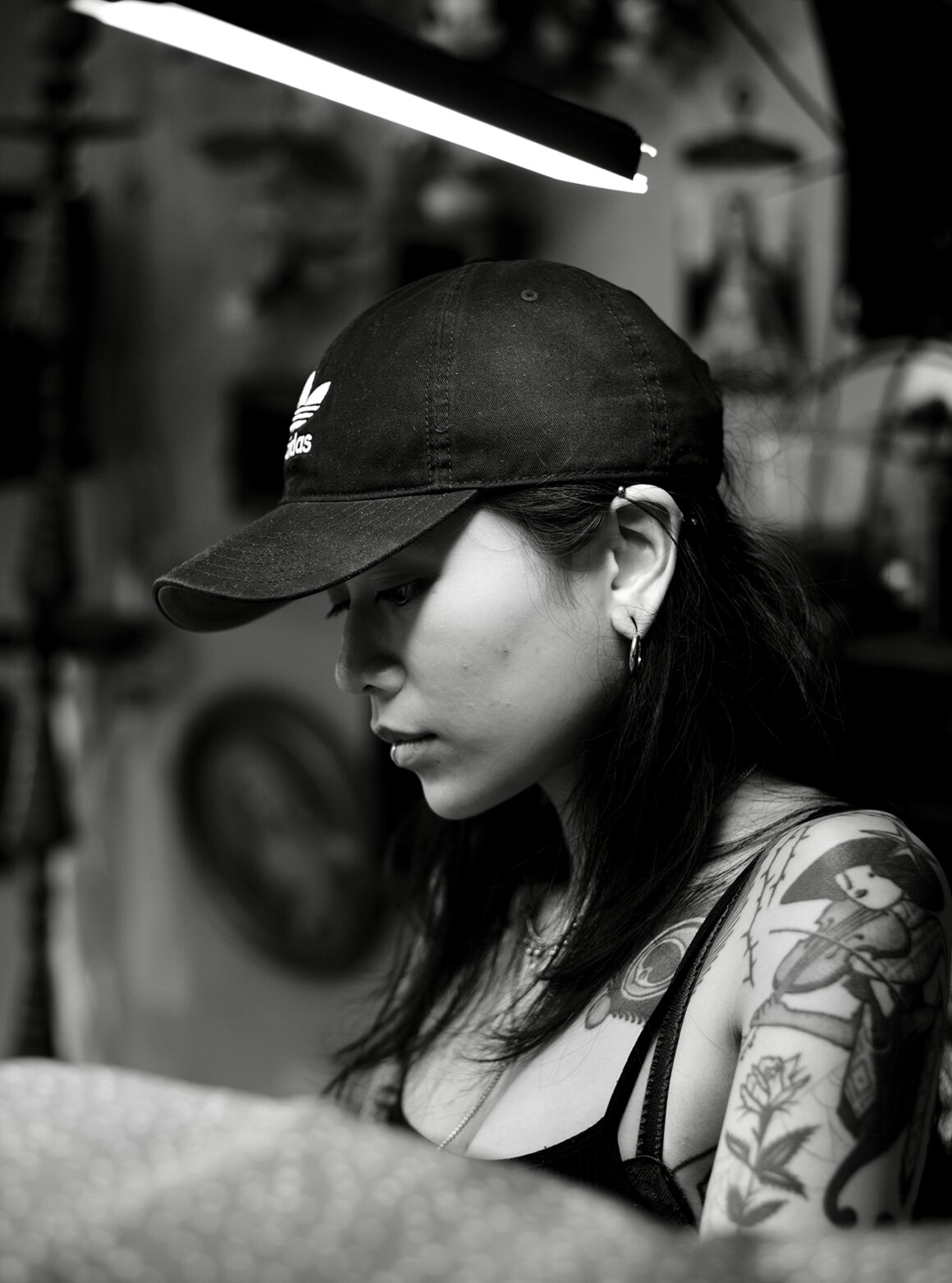
Hi Lan, welcome to Tattoo Life! Could you introduce yourself to our readers? Where are you from and where do you work?
Hi, thank you so much for having me. I’m Trang Nuen, an artist and tattooist of Vietnamese background currently based in Warsaw, Poland. This is where I was born, where I grew up, where I studied art, and where I took my first steps in tattooing in 2015.
You are known on Instagram as Capital T. Is that your artist name, especially as you work on the road?
Actually, yes. A lot of my friends and people in the industry simply call me T. Capital T is basically an initial that I’ve used online for as long as I can remember. On my first social media accounts, in text messages and emails, I always signed with a capital “T” instead of using my full name. Maybe subconsciously I wanted to avoid my name being mispronounced, so I preferred giving people the chance to hear it before seeing it written. Over time, it naturally became my artist name.
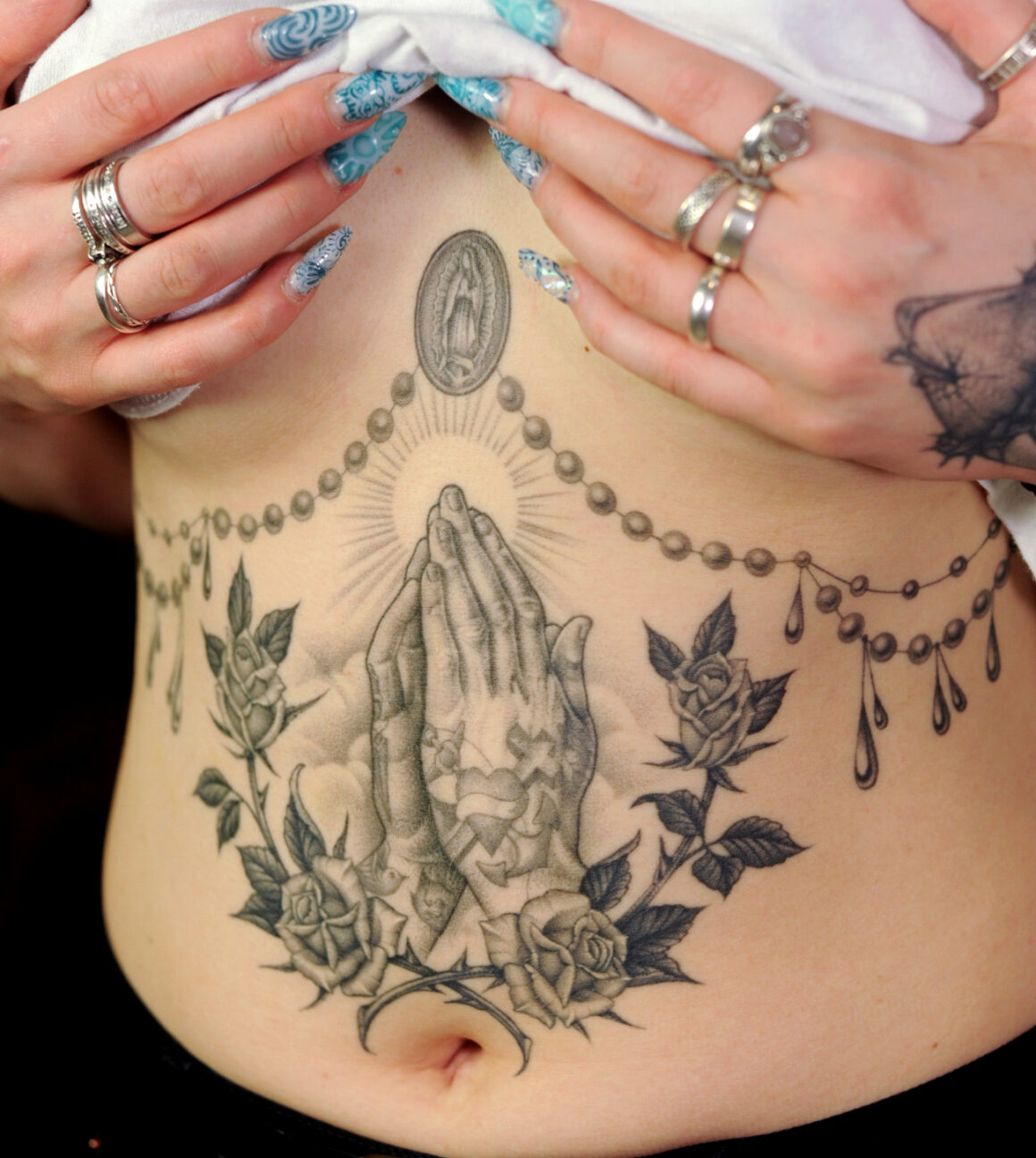
How would you describe yourself as both an artist and a tattooer?
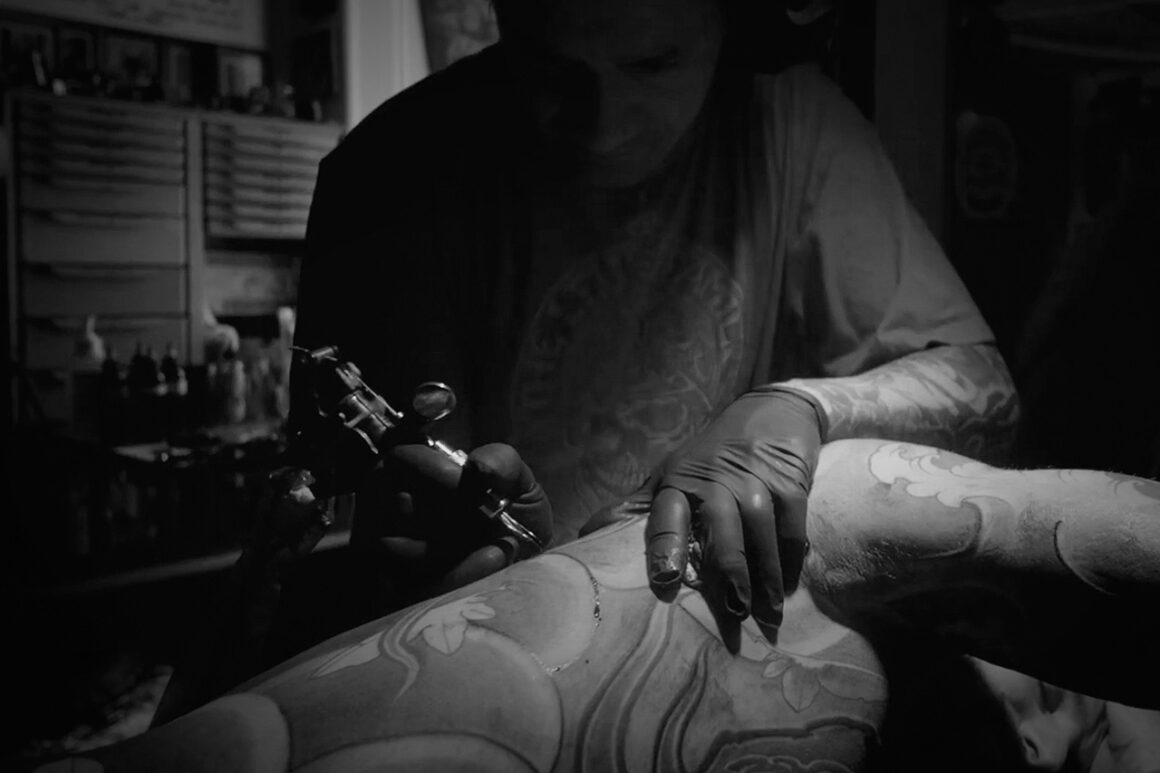
As a painter, I primarily work with oil and acrylic on canvas, creating surreal, introspective images inspired either by my own inner world or by my interpretation of other people’s introspection. As a tattooist, I specialize in Fine Line Black & Grey tattooing. My work combines classic tattoo imagery with more personal and experimental creations, some of which originate from ideas first developed in my paintings and later redesigned for the skin.
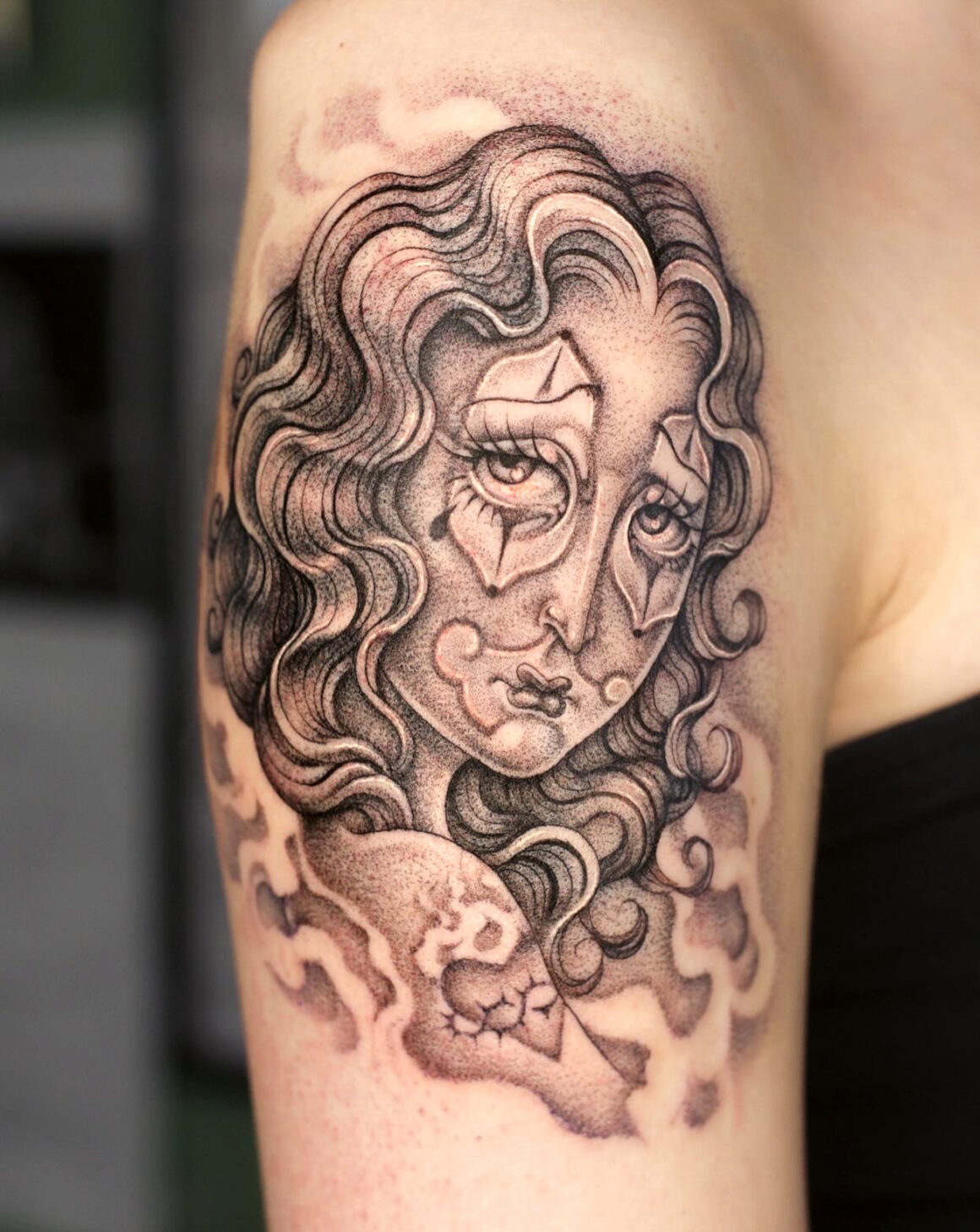
Human emotion and human experience have always been my greatest source of inspiration. I think that’s something people can easily recognize in both my paintings and my tattoos, despite the differences between the two practices. I use detail and contrast to create a sense of depth and a nostalgic atmosphere.
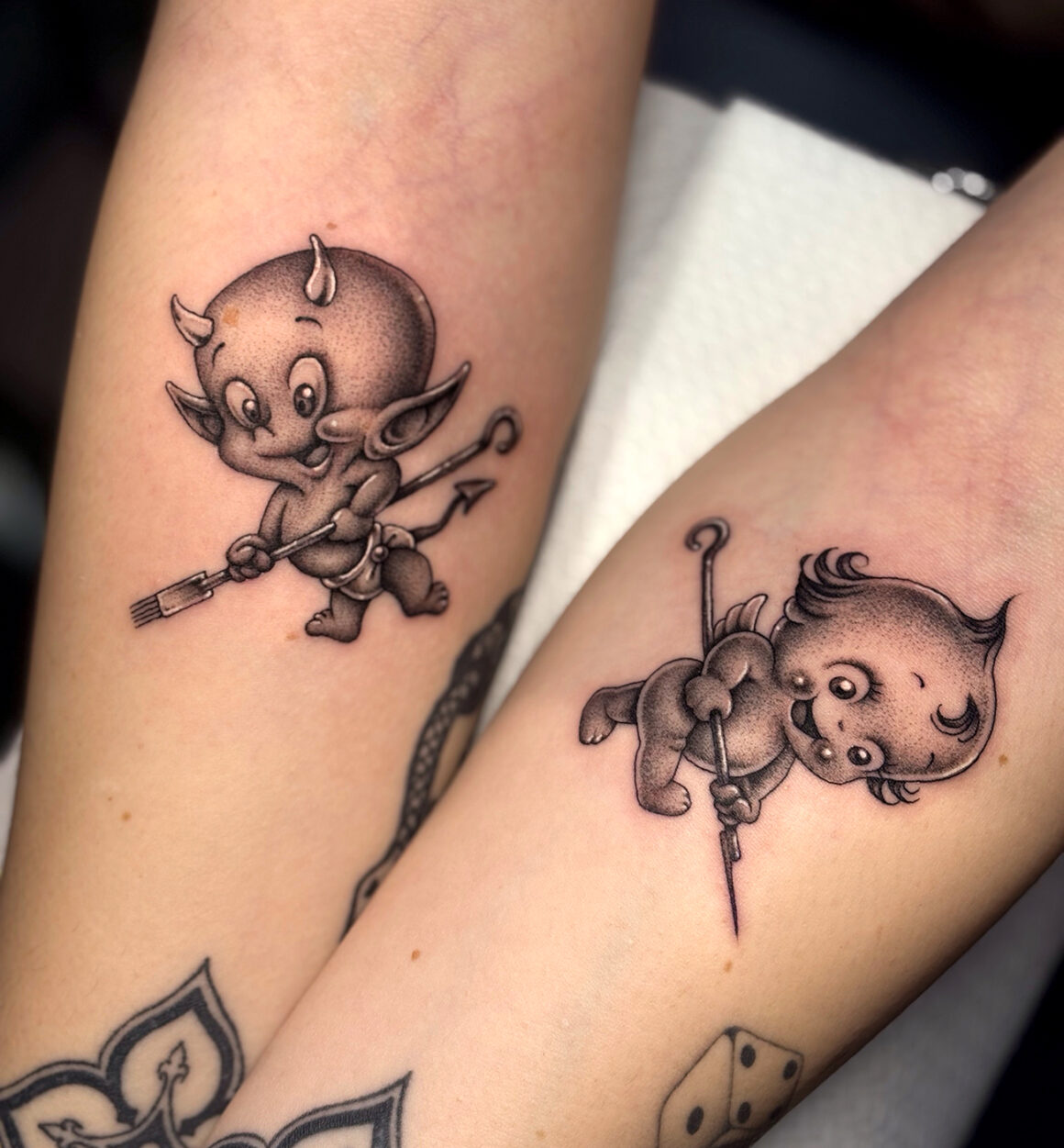
Tattooing, and painting. How do these two artistic practices influence each other? Do you approach a canvas and a piece of skin with the same mindset, or are they completely different creative experiences?
To me, they are two completely different creative experiences, mainly because of their purpose. Painting is an intimate and personal form of self-expression.
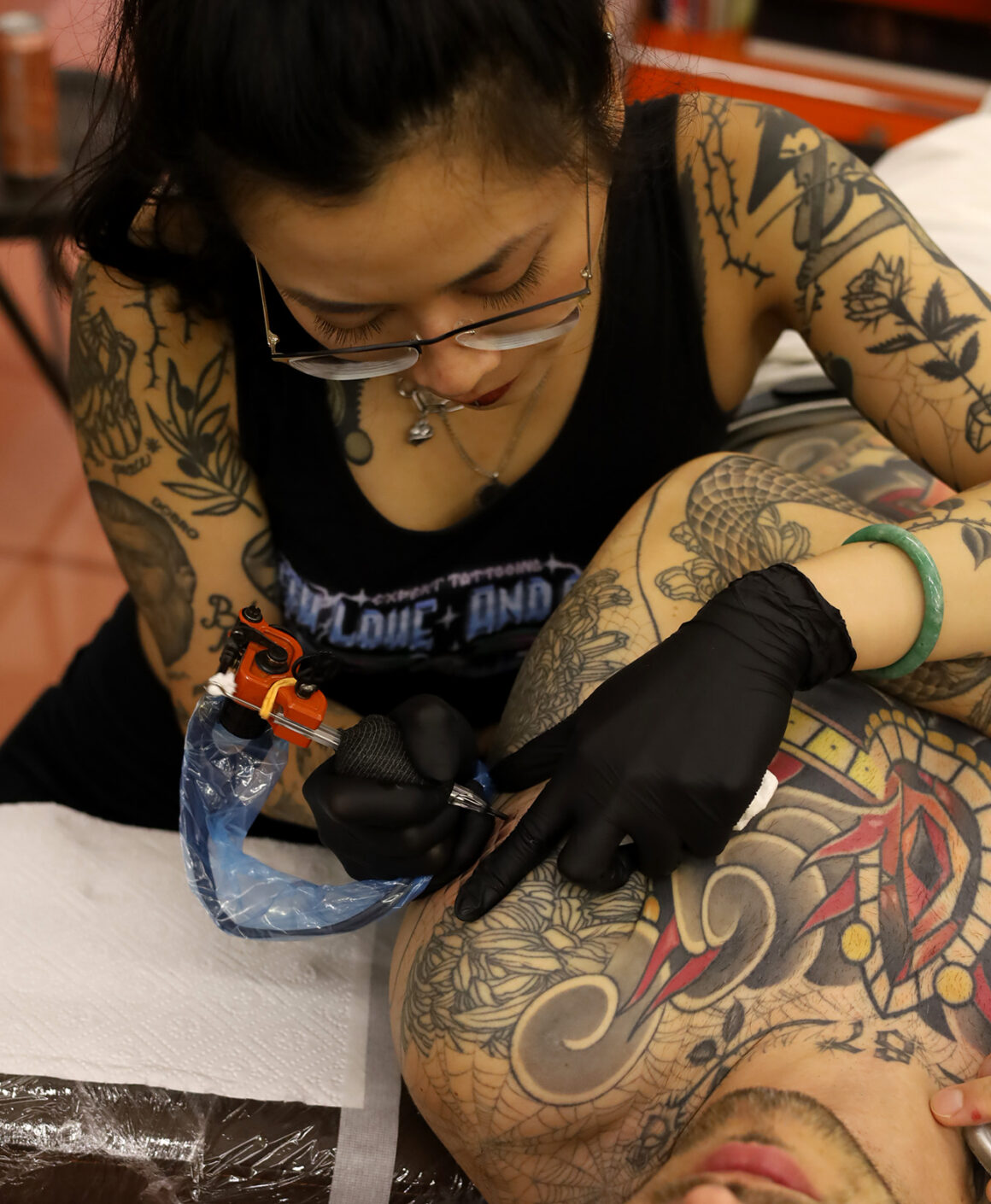
I try not to overthink either the process or the final result, and I allow myself to make mistakes. Tattooing, on the other hand, is about contributing to a culture that I constantly study and respect. My goal is to create pieces that connect people. Self-expression naturally becomes part of the process, but it plays a secondary role.
Tattooing is also based on repetition and the pursuit of perfection, whereas those are aspects I deliberately avoid in painting.
At the same time, the two practices constantly enrich each other. Tattooing has taught me how to use shapes and forms to guide the viewer’s eye through a composition, while painting helps me stay open-minded and continuously develop new motifs and themes that I later incorporate into my tattoo work.
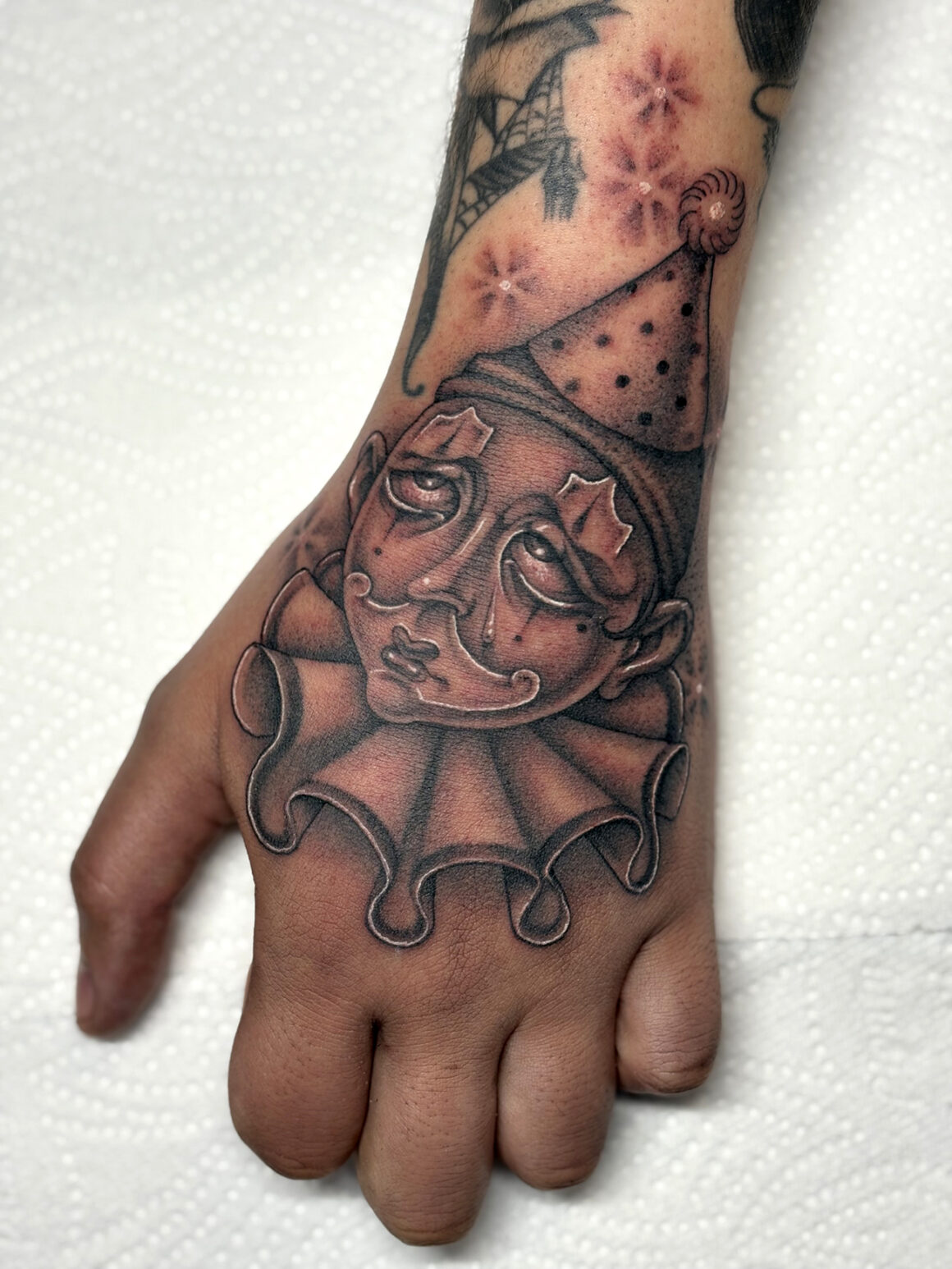
Your work has a very recognizable visual language. How would you define your tattoo style today, and how has it evolved over the years?
My style has evolved significantly since my apprenticeship. I started by practicing bold lines, simple shapes and bright colours before gradually moving towards Fine Line Black & Grey. Looking back, every phase was simply a step that helped me discover what truly felt authentic.
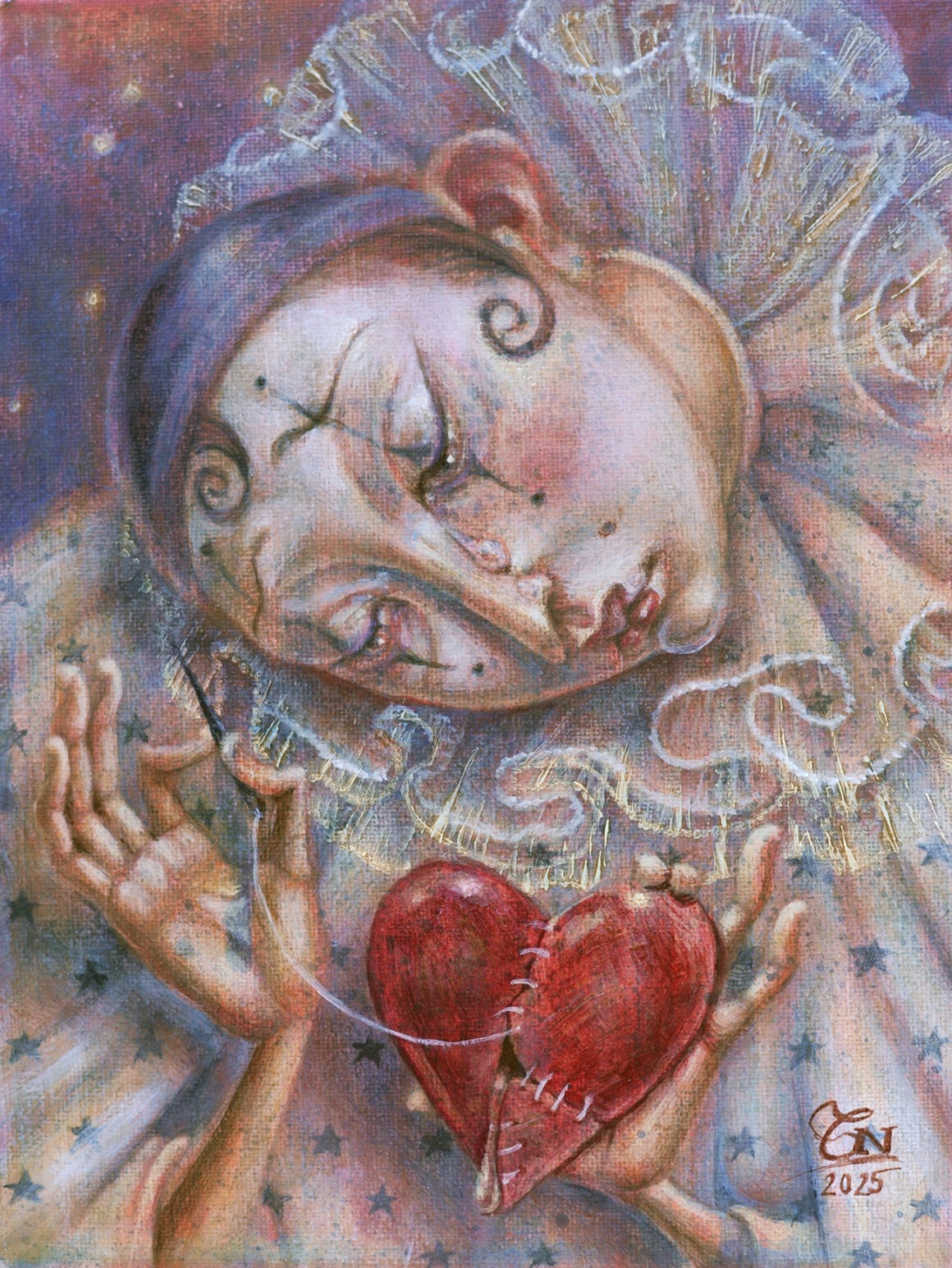
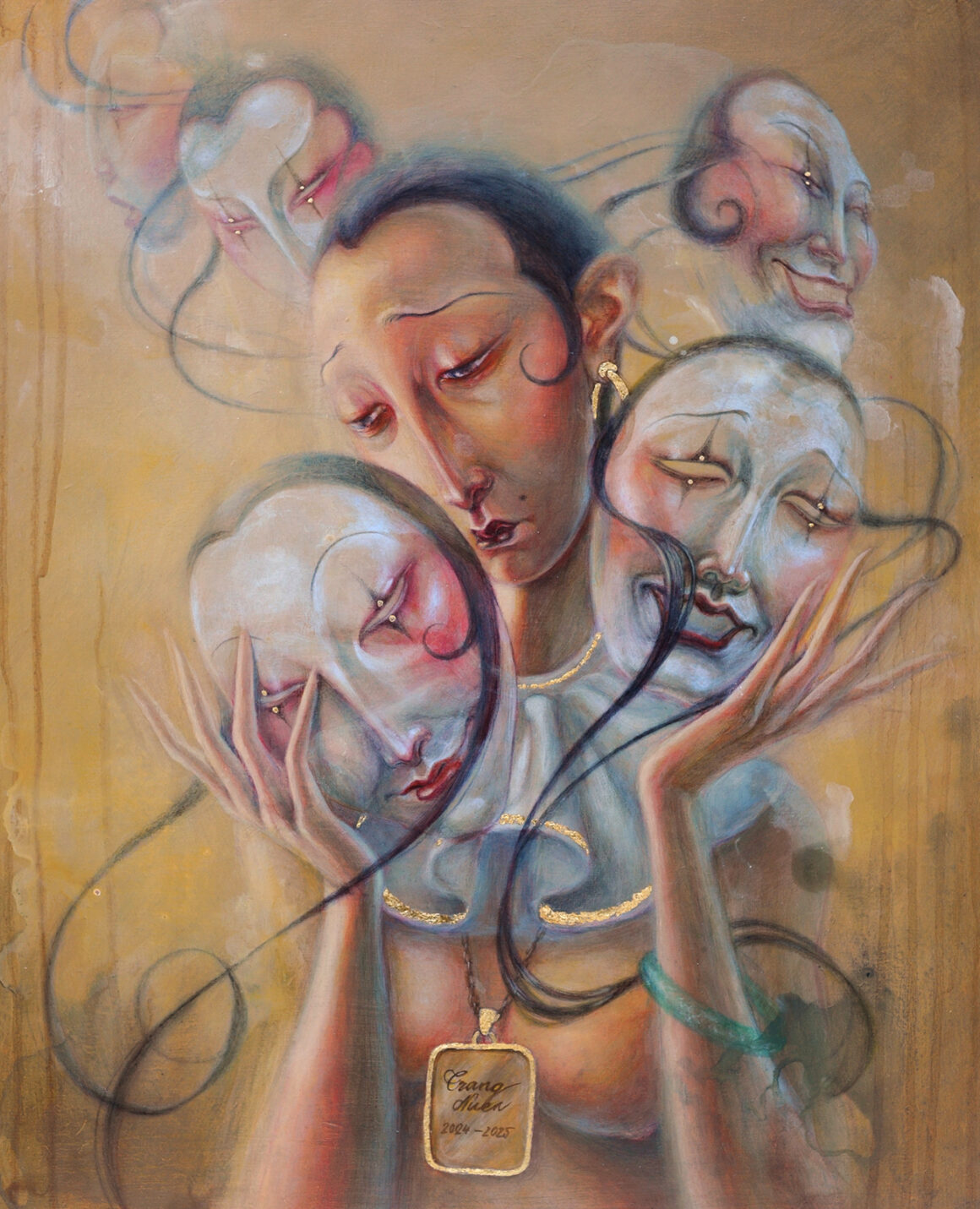
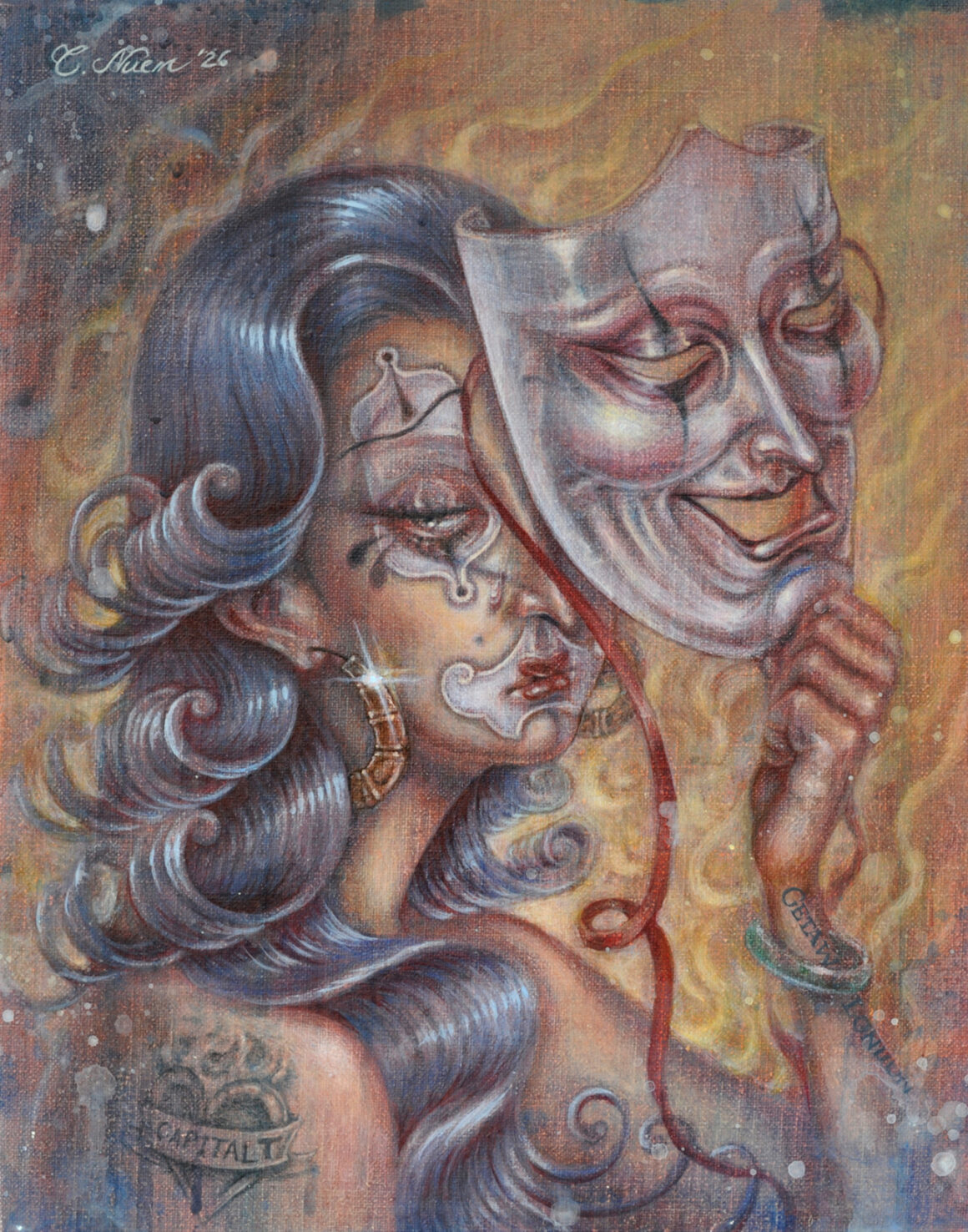
Although my work is strongly inspired by Chicano tattoo culture, I don’t define it as Chicano tattooing. That style is deeply rooted in a specific cultural and personal experience connected to its ethnic background, and I don’t share that experience.
For me, it wouldn’t be accurate to describe my work that way.
That said, I see nothing wrong with artists from different backgrounds practicing this style, as long as they approach it with respect and dedication. Personally, I recognize that there are themes and subjects I consider off-limits because I couldn’t represent them authentically. The influence is certainly visible in my work, especially through certain techniques and recurring subjects, but I combine those elements with my own drawing style.
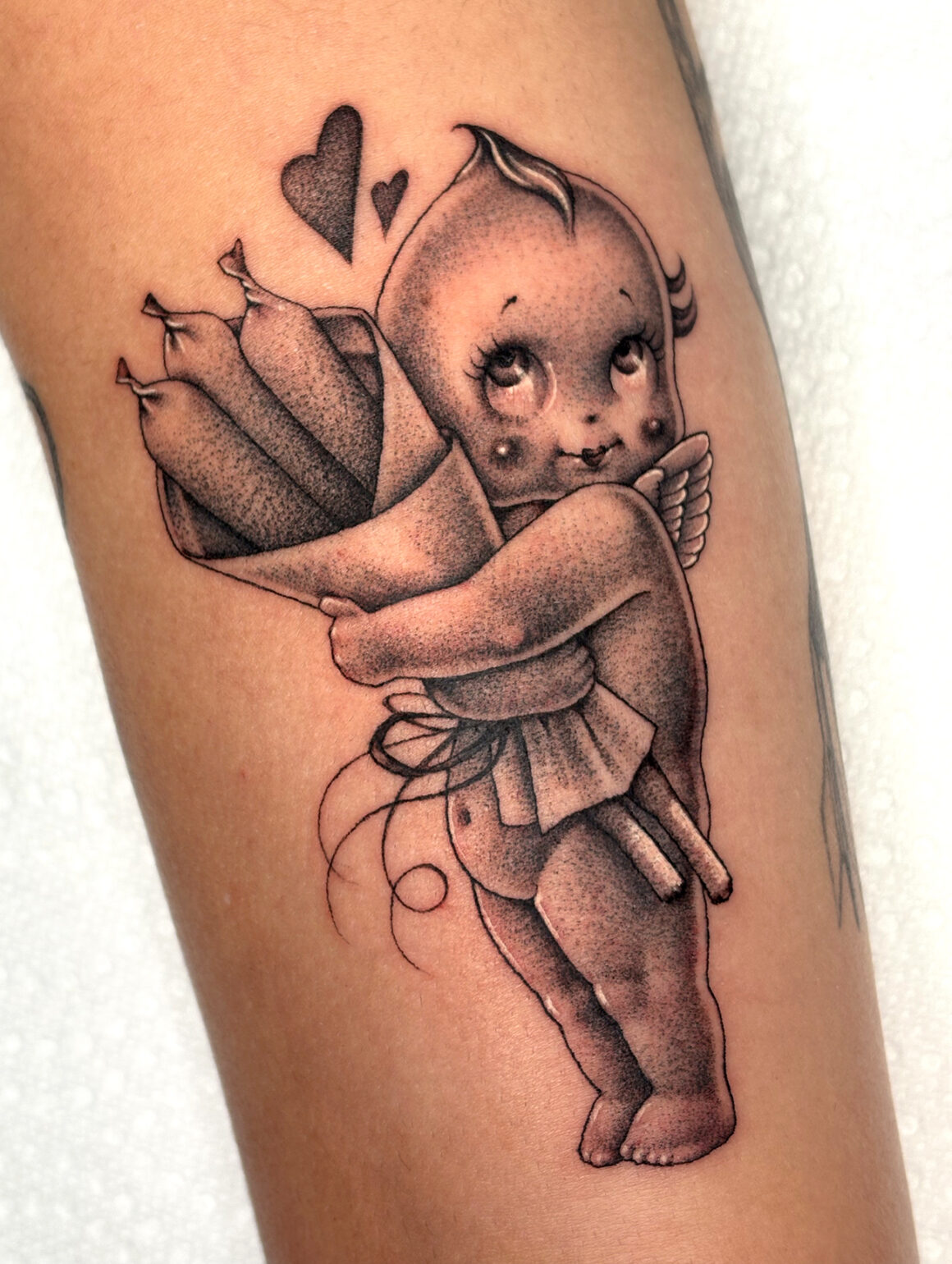
Your tattoos are almost exclusively Black & Grey, yet they have a remarkable sense of depth and atmosphere. How do you build contrast, texture and composition?
Thank you—that’s very kind. Composition is always the foundation of every piece and the first thing I think about. When I was young, I heard someone describe composition as the art of guiding the viewer’s eye, controlling its rhythm and direction, and that idea has stayed with me ever since.
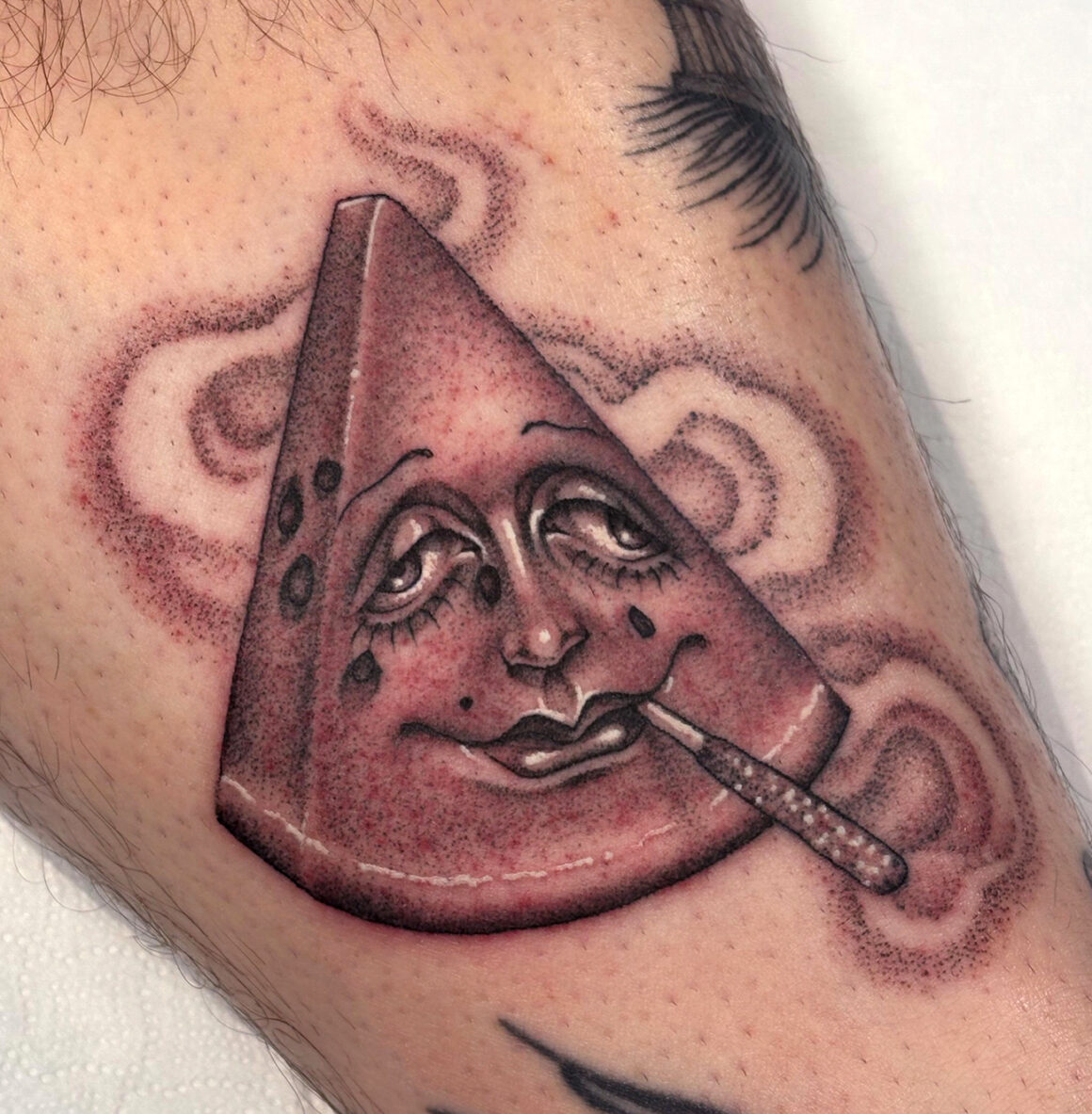
I begin by establishing the hierarchy of every element. I ask myself what I want people to notice first and what the main message should be. From there, I decide what additional elements can support the composition without distracting from its focal point. Contrast and tonal values are the tools I use to build that visual narrative, while different textures help reinforce the contrast and create depth.
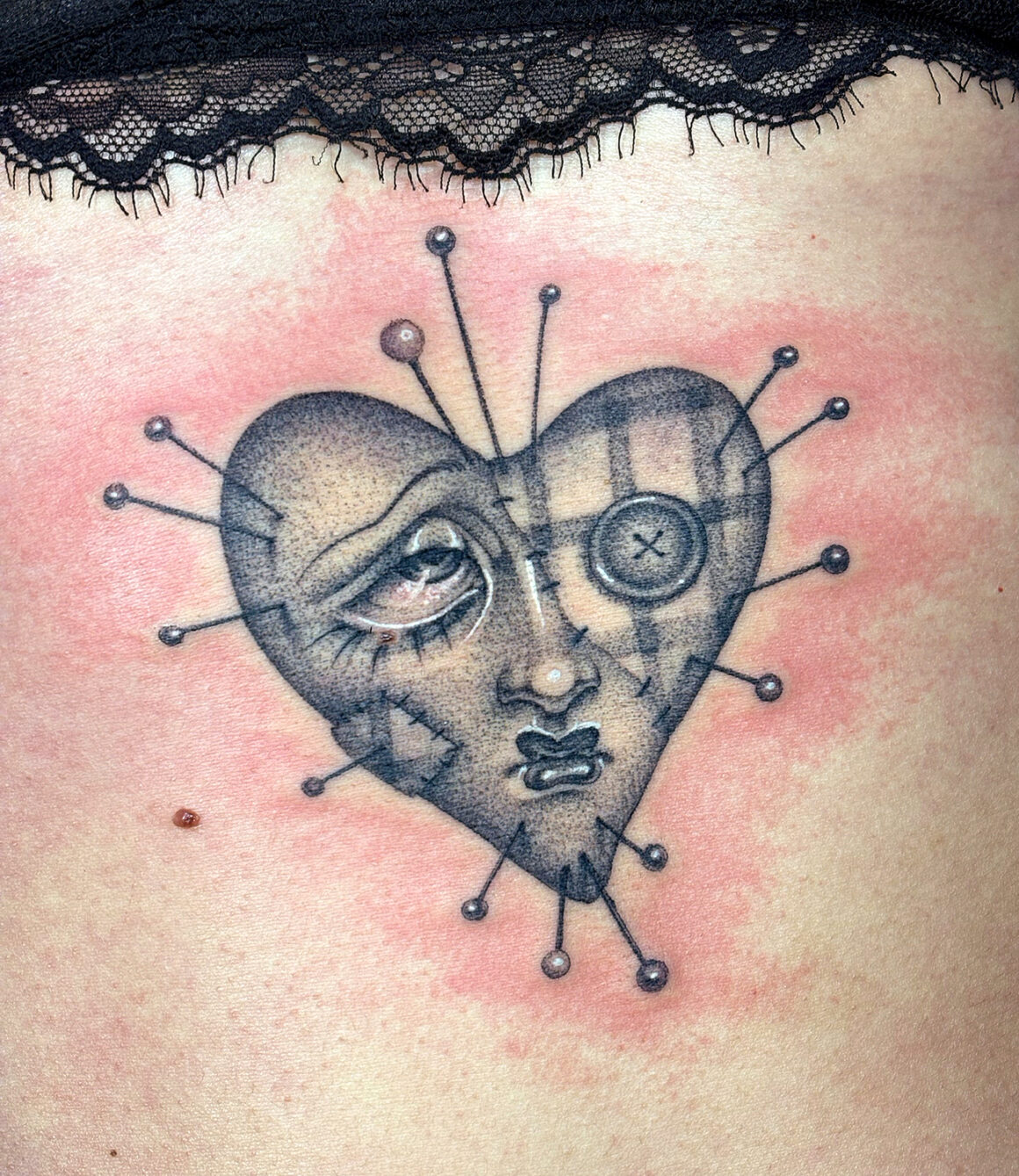
Do you usually start from a story shared by your client, or do you prefer to develop your own artistic vision and let the client enter your world?
I enjoy working both ways, but most of my work is based on my own artistic vision. I also think that’s when my style becomes the most recognizable. Even many of my custom tattoos begin from my existing flash designs and sketches. Most of my clients are collectors or fellow tattoo artists who specifically want something that clearly reflects my personal language. They often feel that a piece carries more meaning and impact when it has been conceived entirely by me, and I feel incredibly grateful to be able to work in that way.
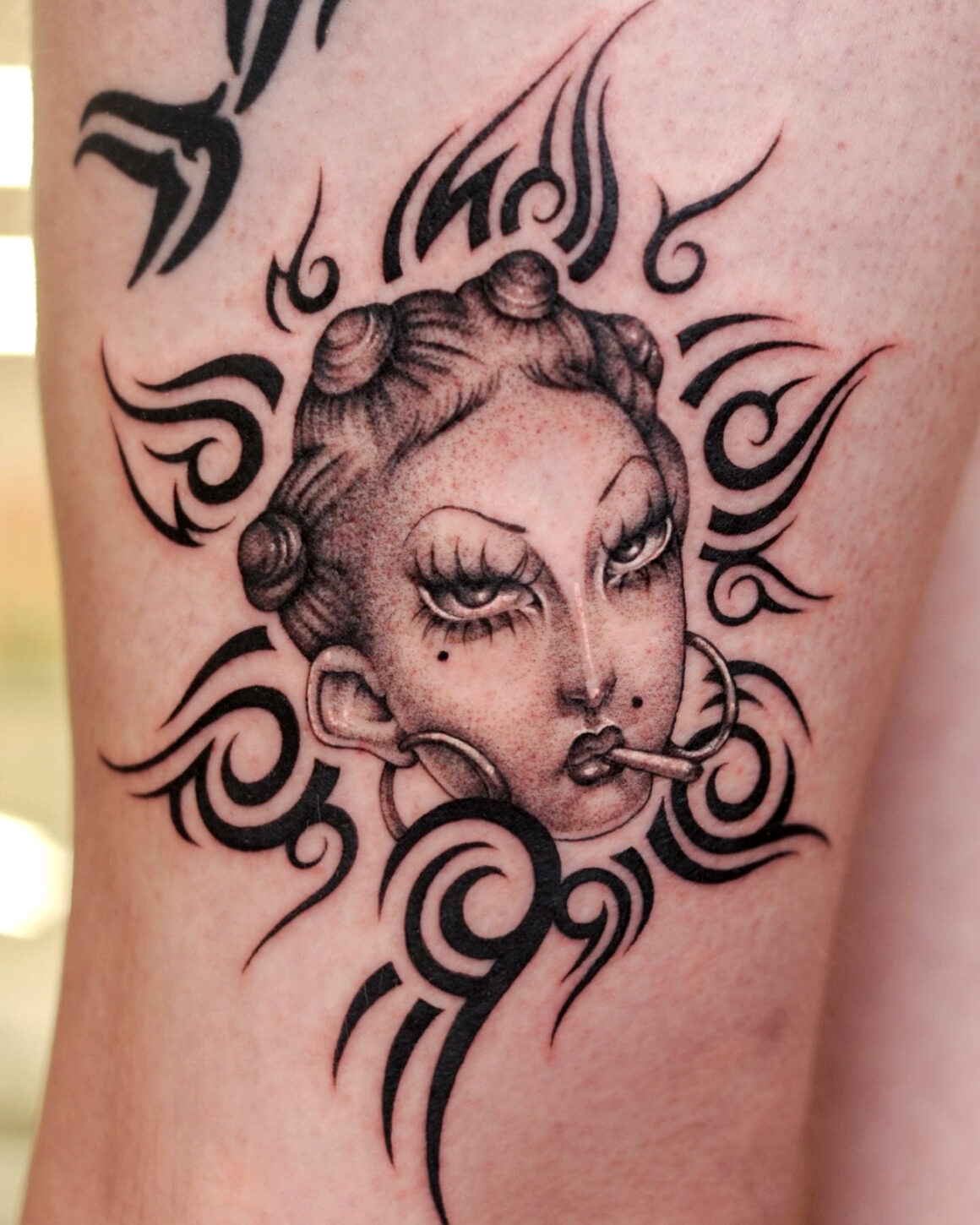
Are there subjects or themes that you particularly enjoy tattooing? Is there an image, symbol or motif that best represents your artistic identity?
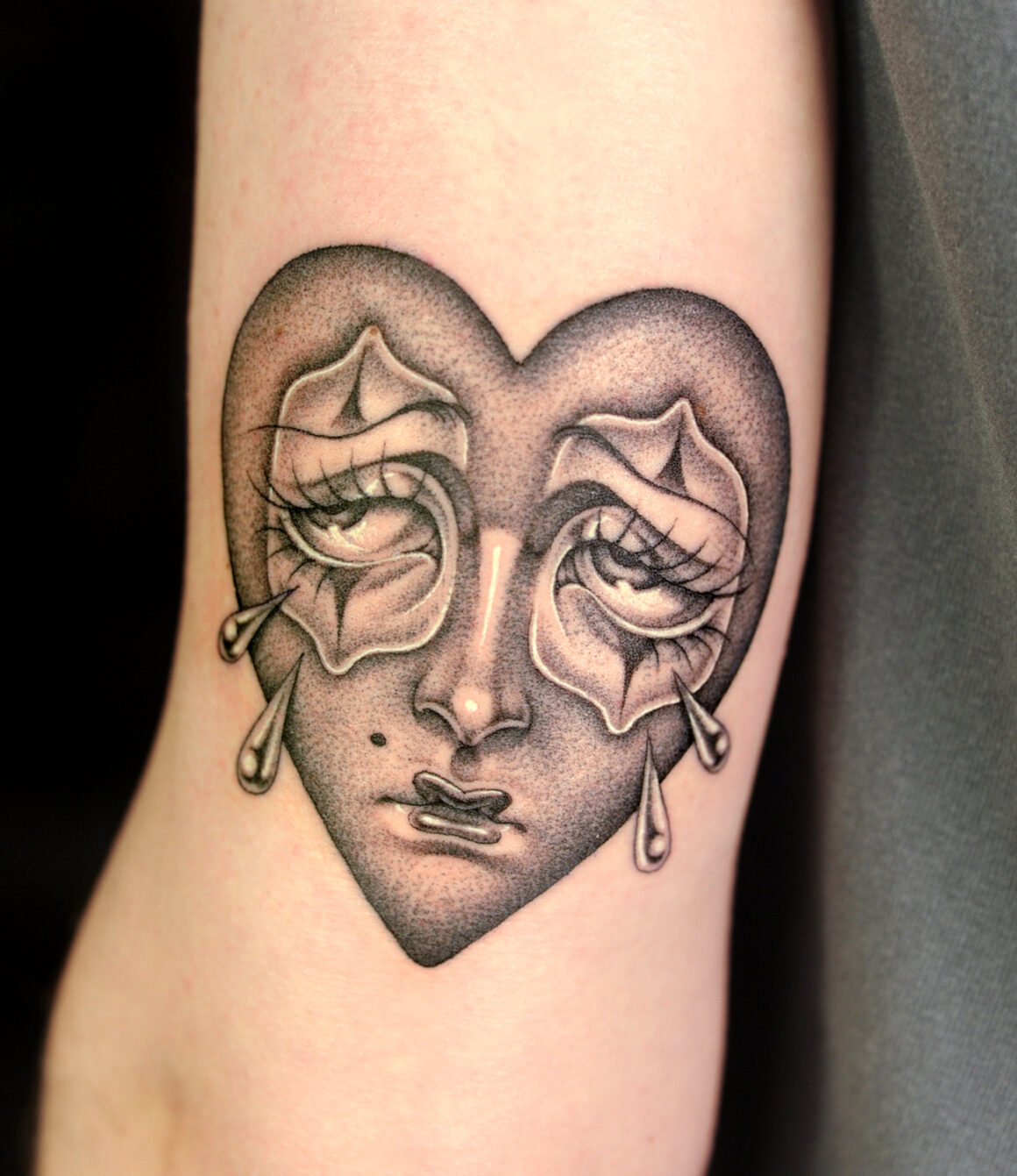
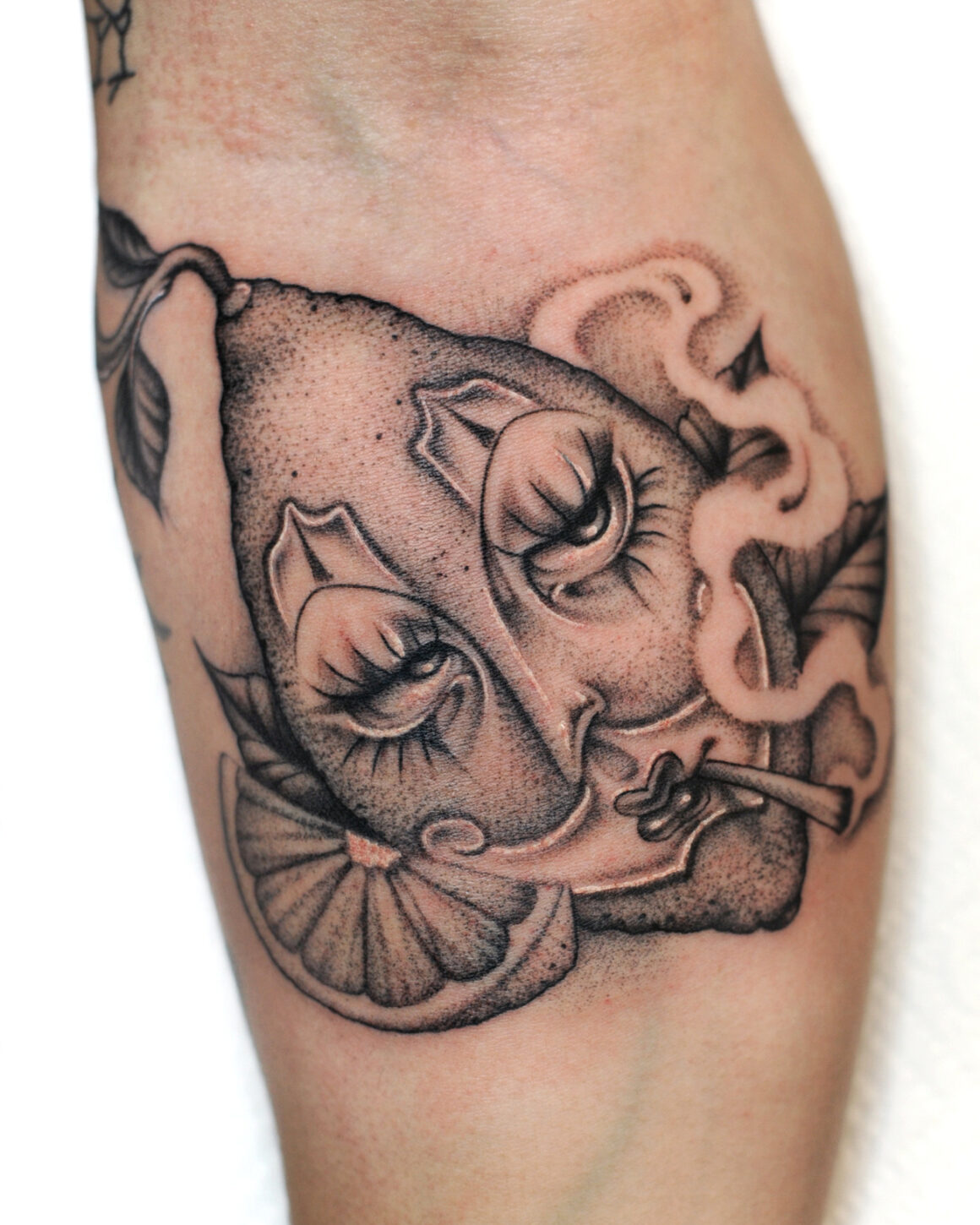
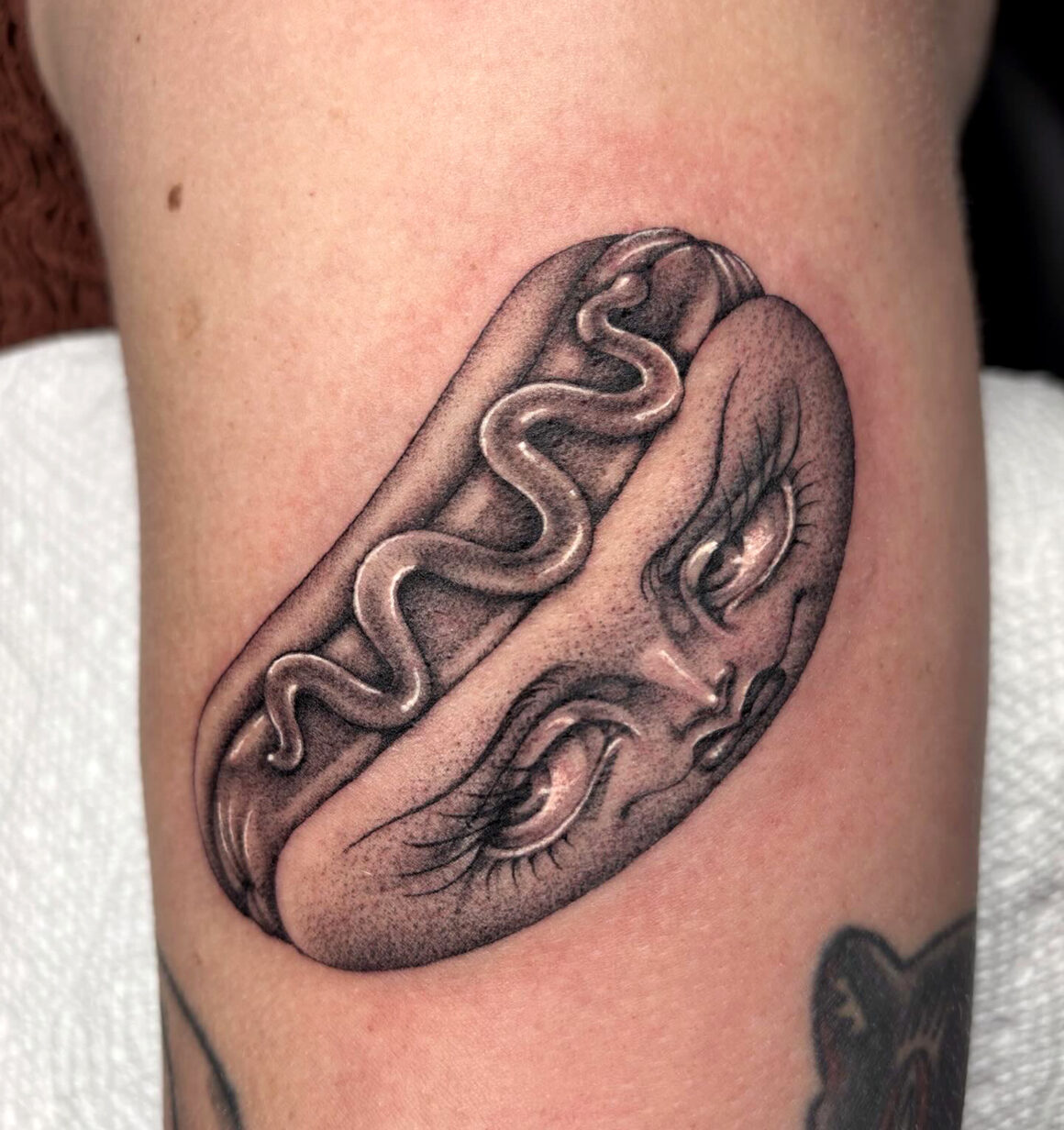
I constantly develop new ideas, so my favourite subjects change quite often. However, one recurring element in my work is personification. I especially enjoy tattooing faces and eyes. I like adding human faces to plants, objects or even food. Capturing human emotions fascinates me, and one of my favourite approaches is building an entire composition around a specific emotion or telling a subtle story through a facial expression.
Looking ahead, what would you still like to explore or achieve in your artistic career?
I’m really looking forward to dedicating more time to painting, continuing to develop my style and creating larger-scale works. I’m excited to see where that journey will take me.