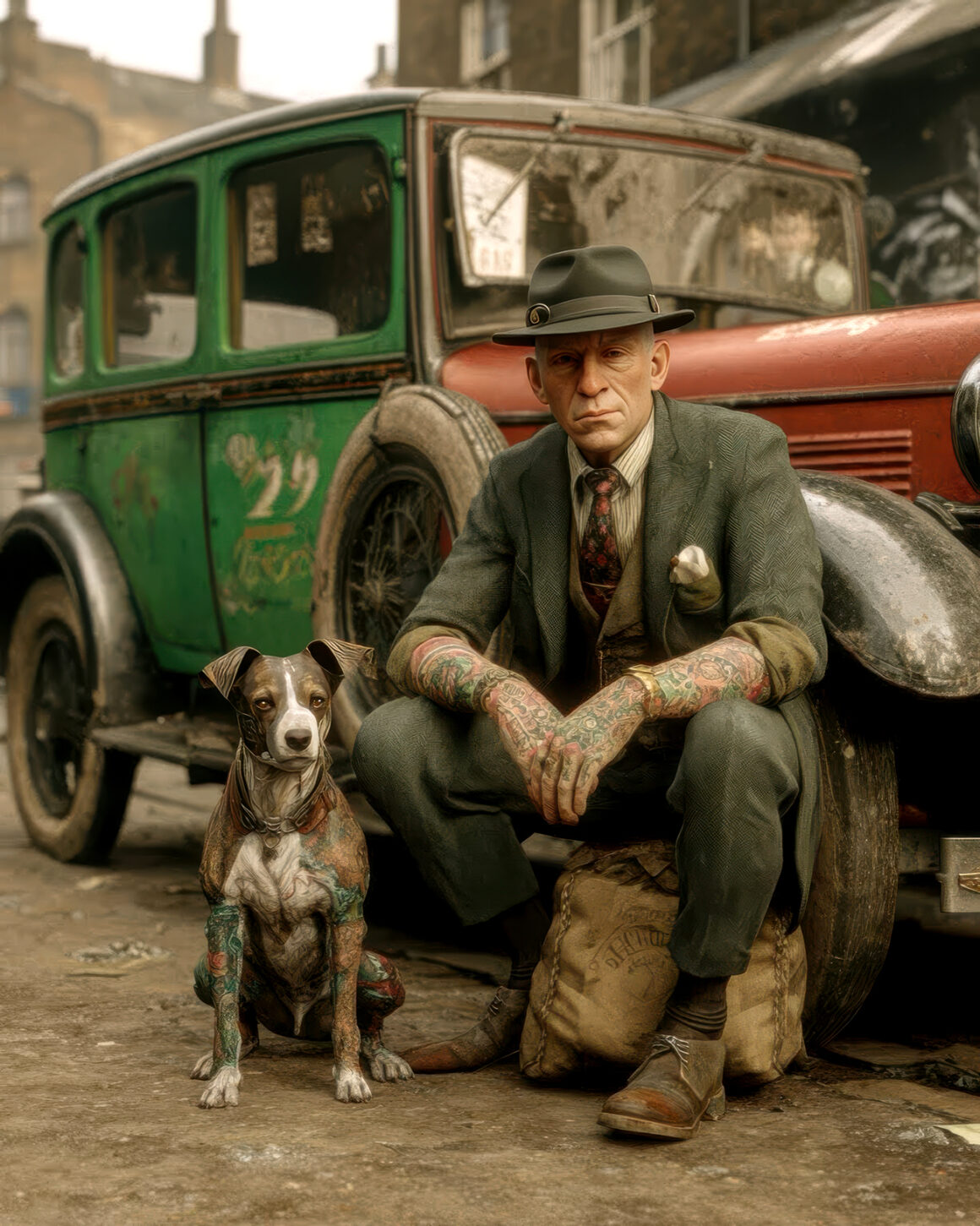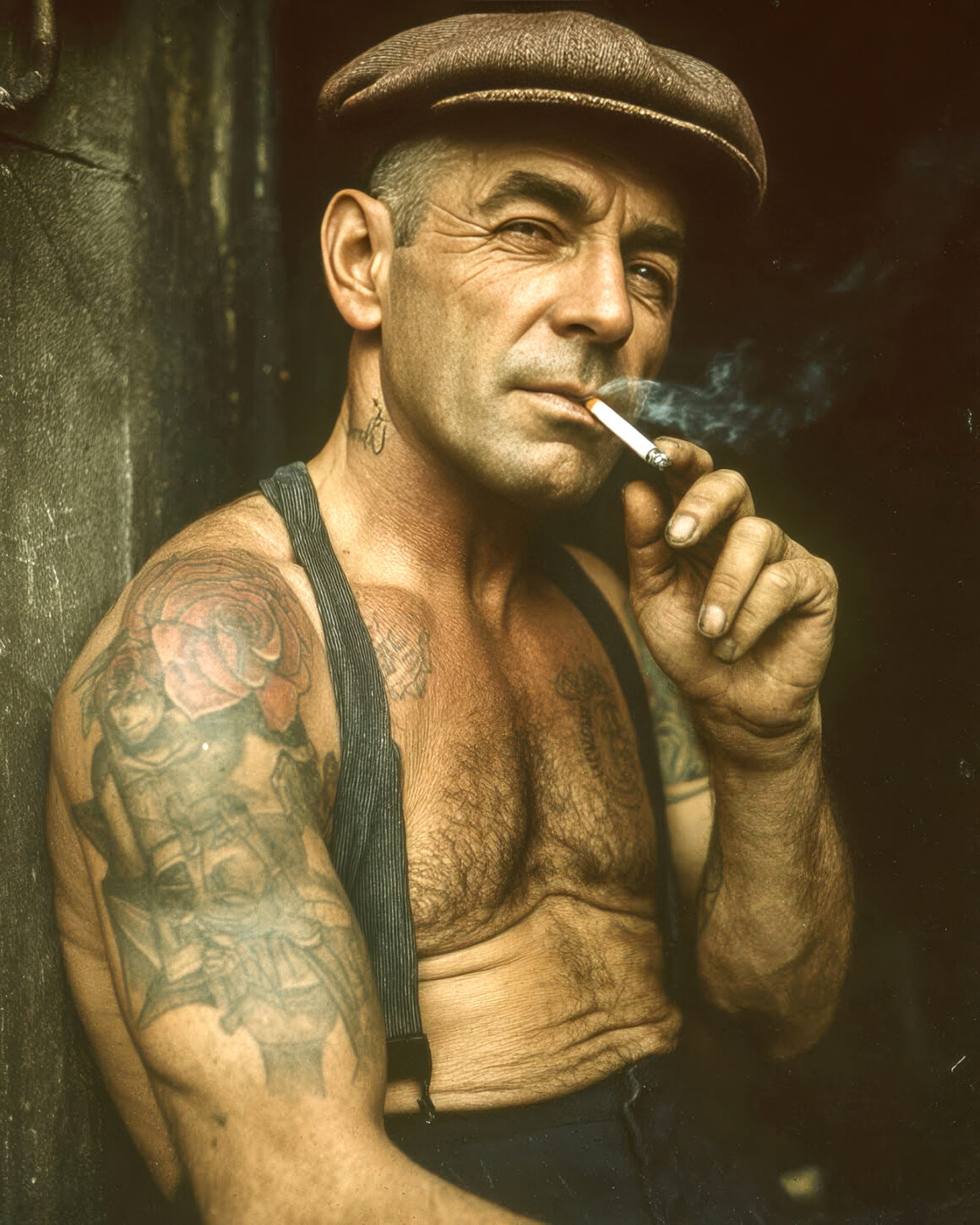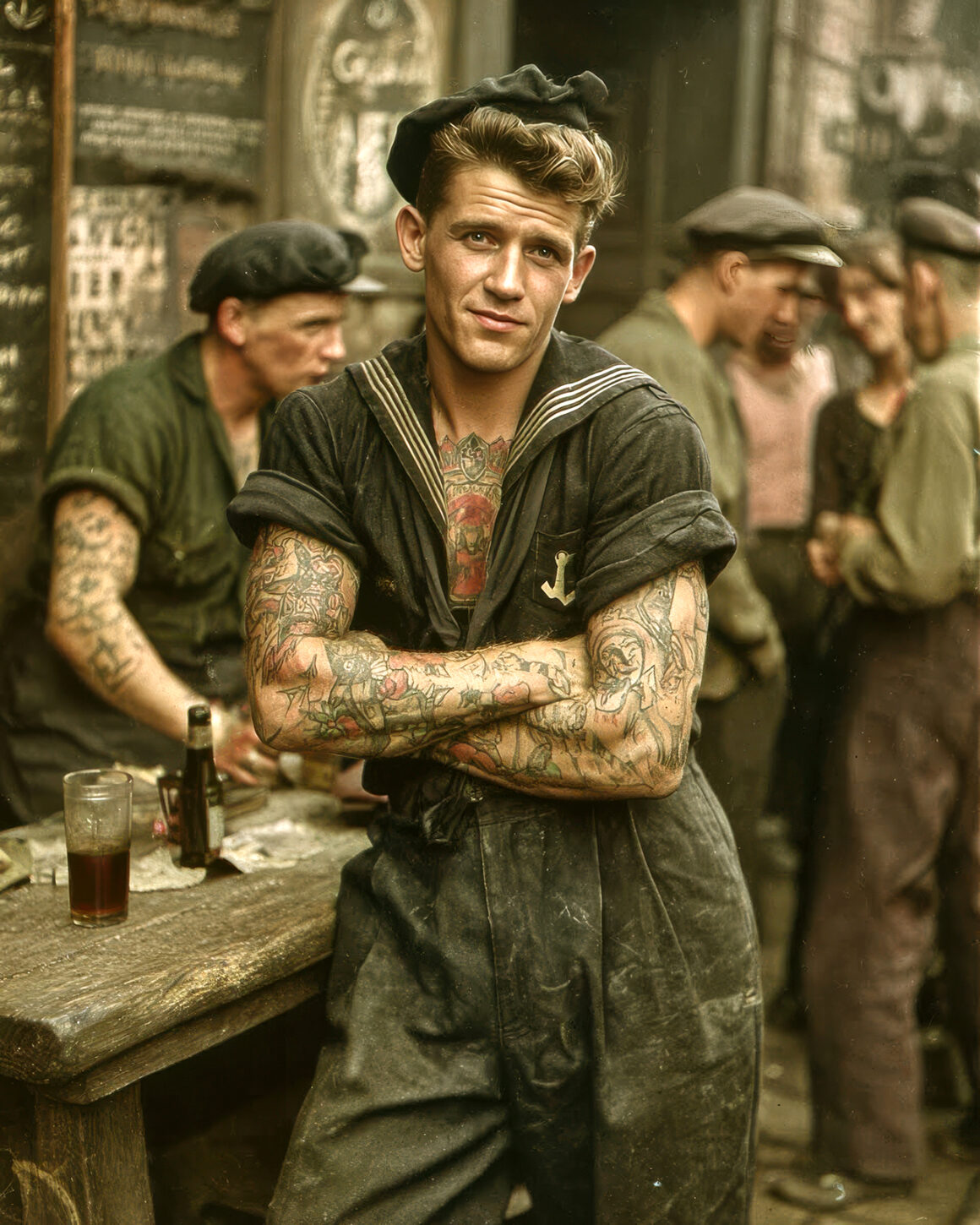



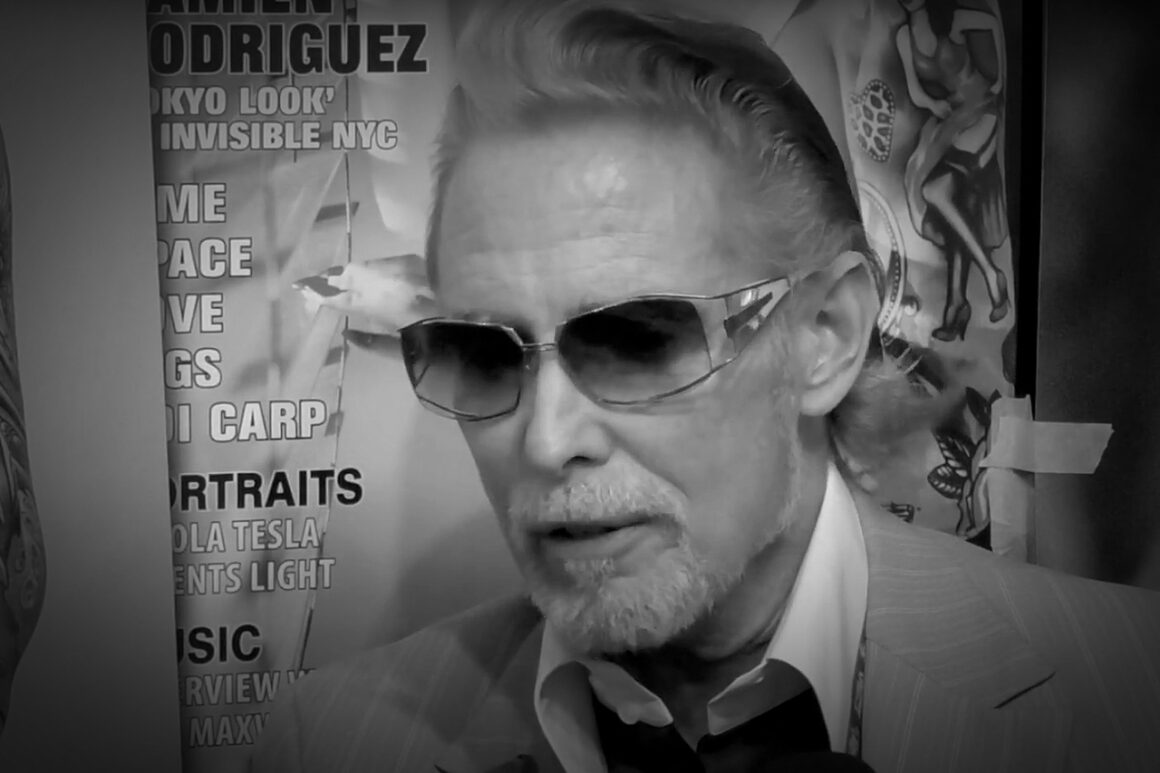


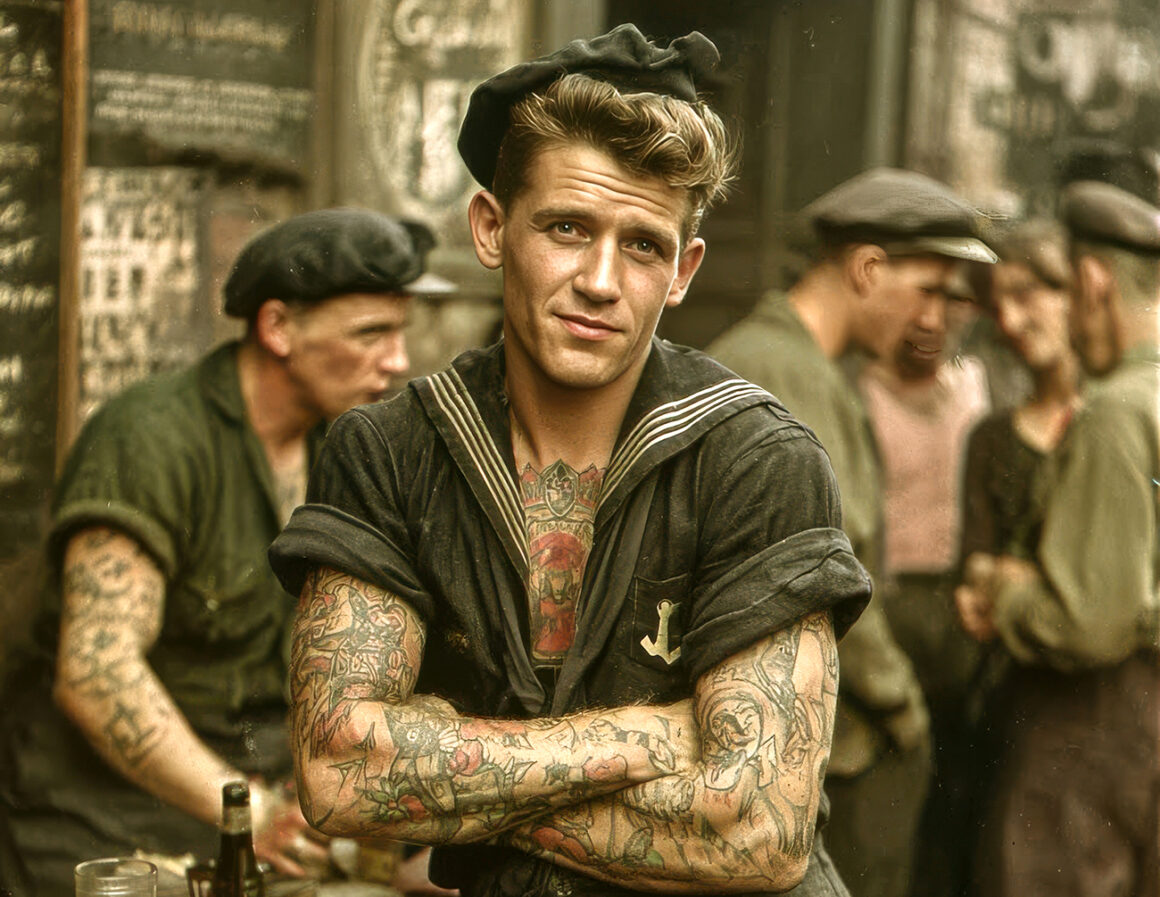
After featuring the work of Tony Karpinski in the latest issue of Tattoo Life, we continue exploring the intense and deeply human universe behind his images. Set in post-war Westminster and suspended somewhere between memory, cinema, and emotional reconstruction, his works speak a language that tattoo artists instinctively understand: one made of scars, silence, identity, and lived experience.
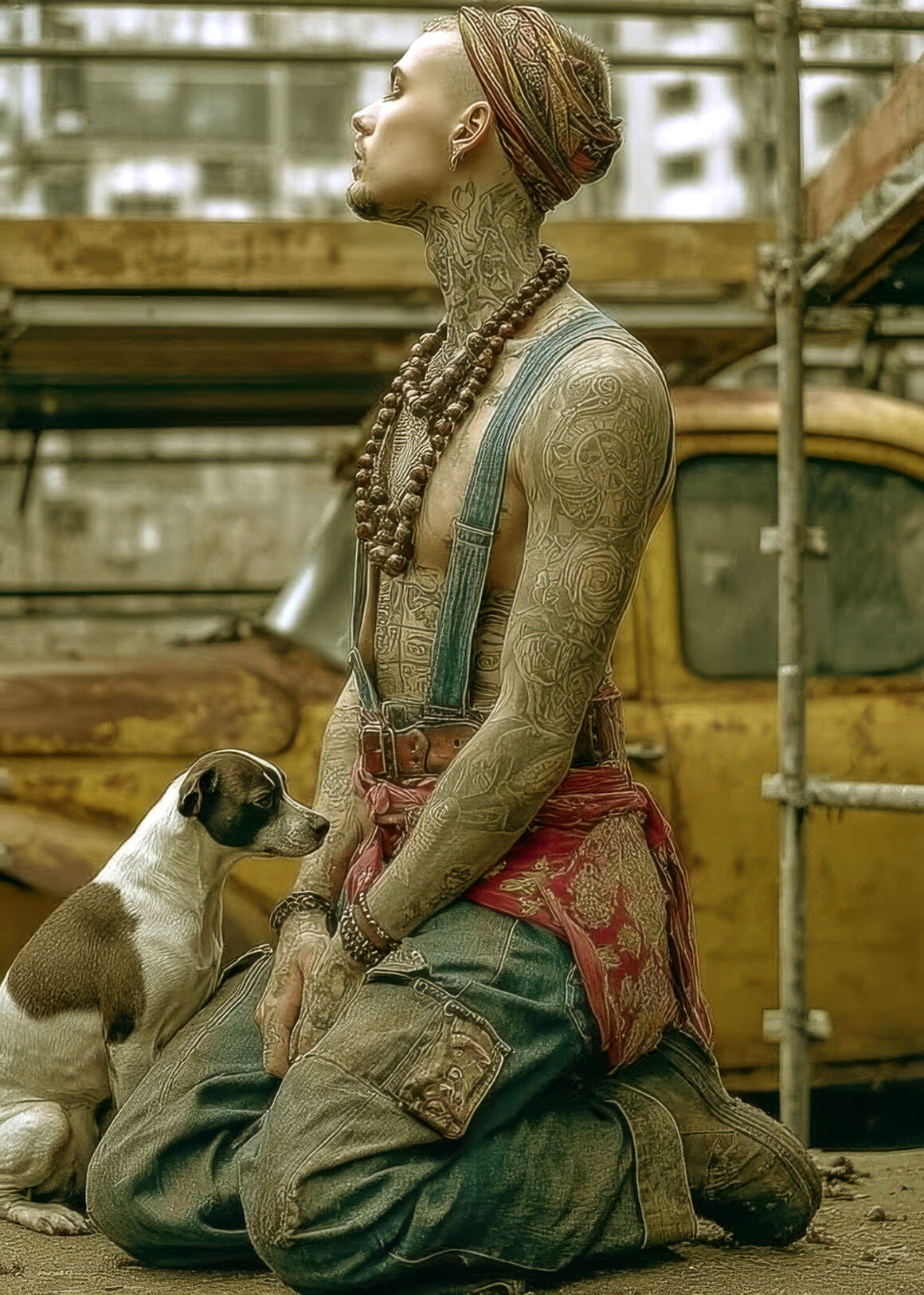
In the latest issue of Tattoo Life, we presented a wide selection of works by Tony rooted in the atmosphere of post-war Westminster, the London neighborhood where Karpinski grew up surrounded by contrasts — beauty and brutality, culture and survival, silence and unpredictability. Although born in 1965, the artist absorbed the lingering echoes of a world still marked by the aftermath of war: bomb sites, rough housing estates, unstable lives, and unforgettable personalities.
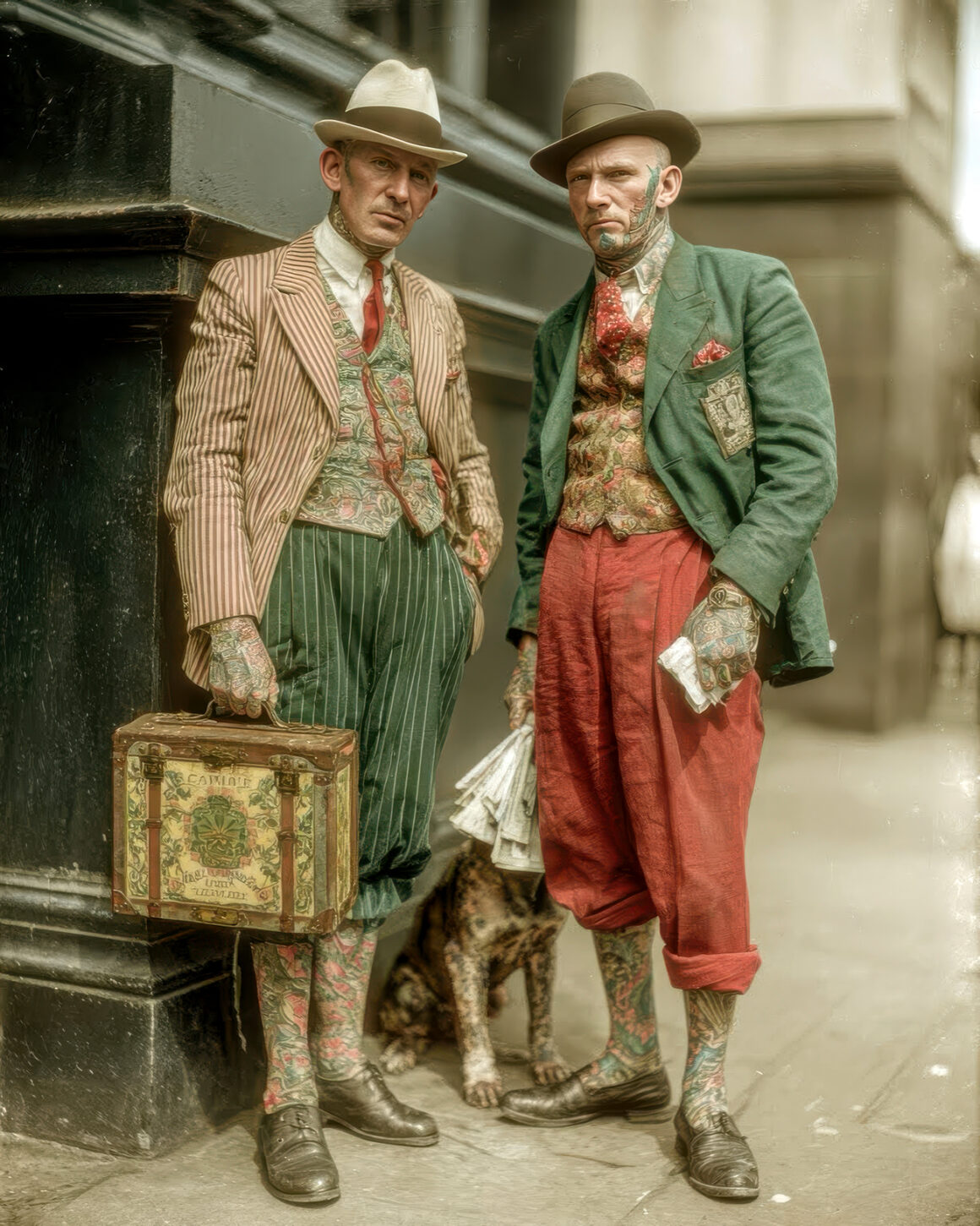
His figures feel profoundly familiar because they are imperfect. They are not heroic subjects designed to impress, but human presences shaped by contradiction. Strength and vulnerability coexist naturally within them, just as they coexist within tattoo culture itself. In many ways, his images operate like tattoos: they become marks of memory, traces of identity carried visibly on the surface.
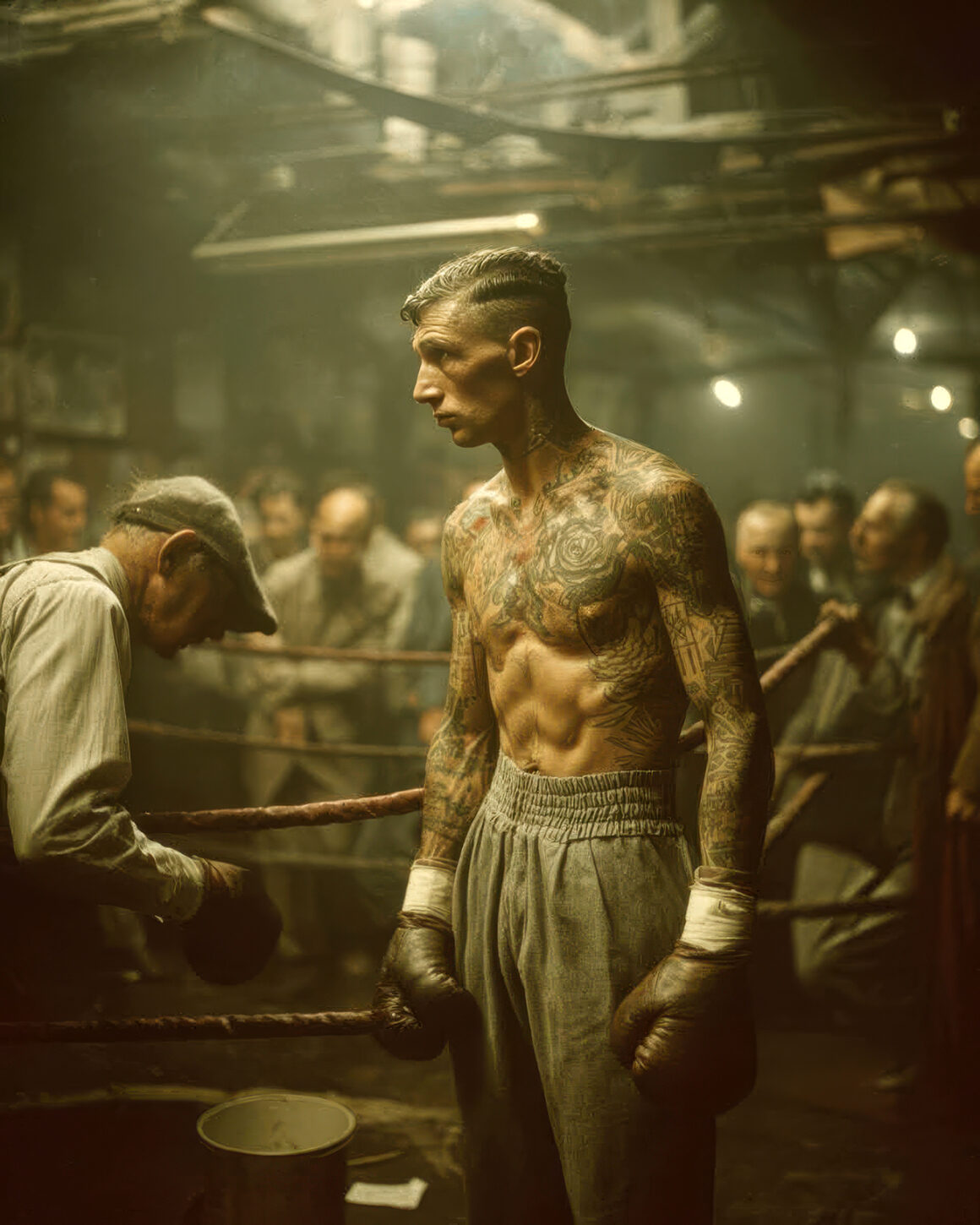
One of the most compelling aspects of Karpinski’s work is its cinematic tension. Every scene seems suspended in the instant before or after something significant happens. That sensation comes directly from lived experience. As he explained in the interview published in Tattoo Life, much of his childhood was spent observing the world from windows, staircases, rooftops — spaces where danger, excitement, and uncertainty constantly overlapped.
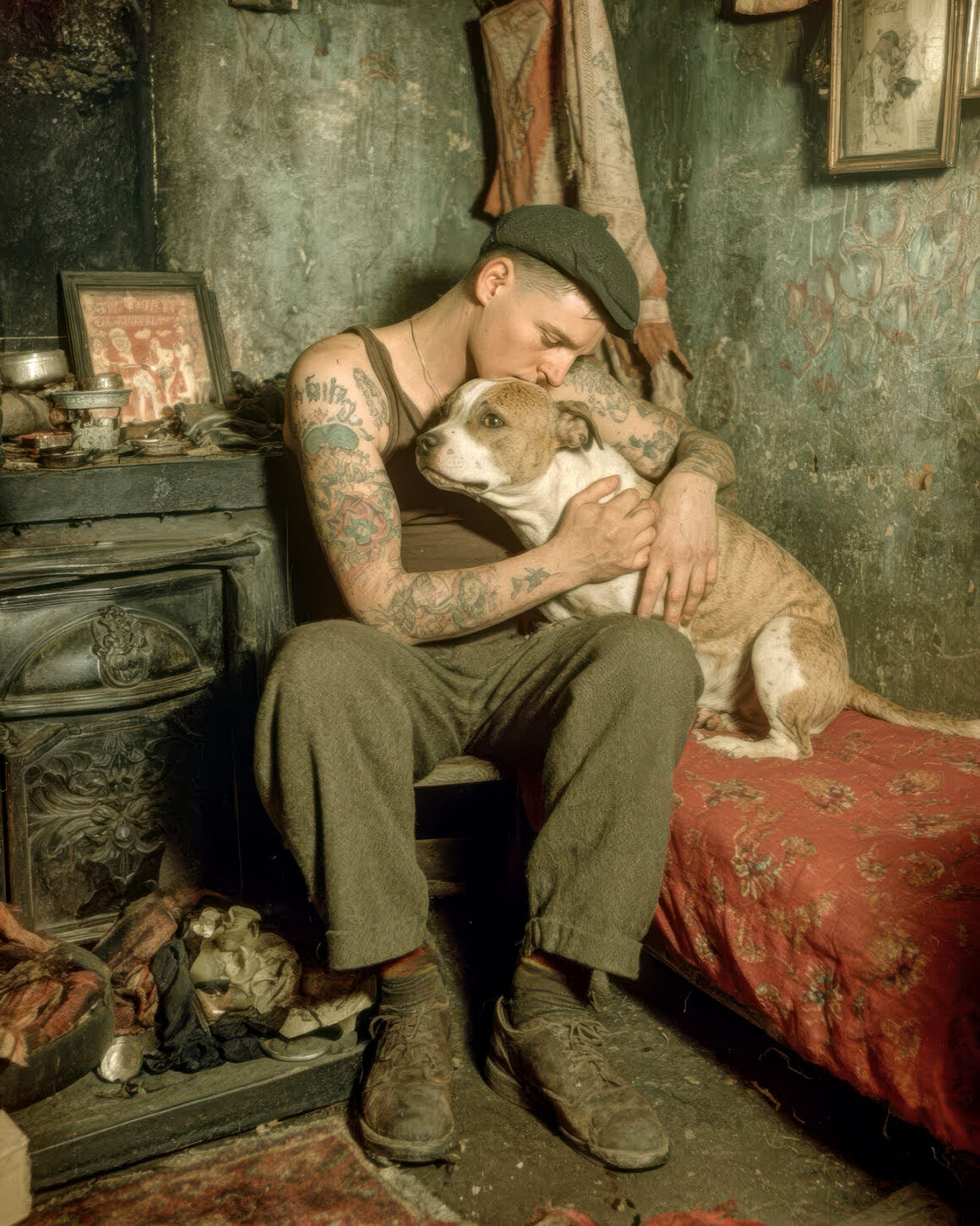
Dogs also play a recurring role in his imagery, not as symbols, but as silent witnesses. They move through these emotional landscapes carrying loyalty, tension, and companionship without softening the reality surrounding them. Much like the human figures in his work, they simply exist within the truth of the moment.
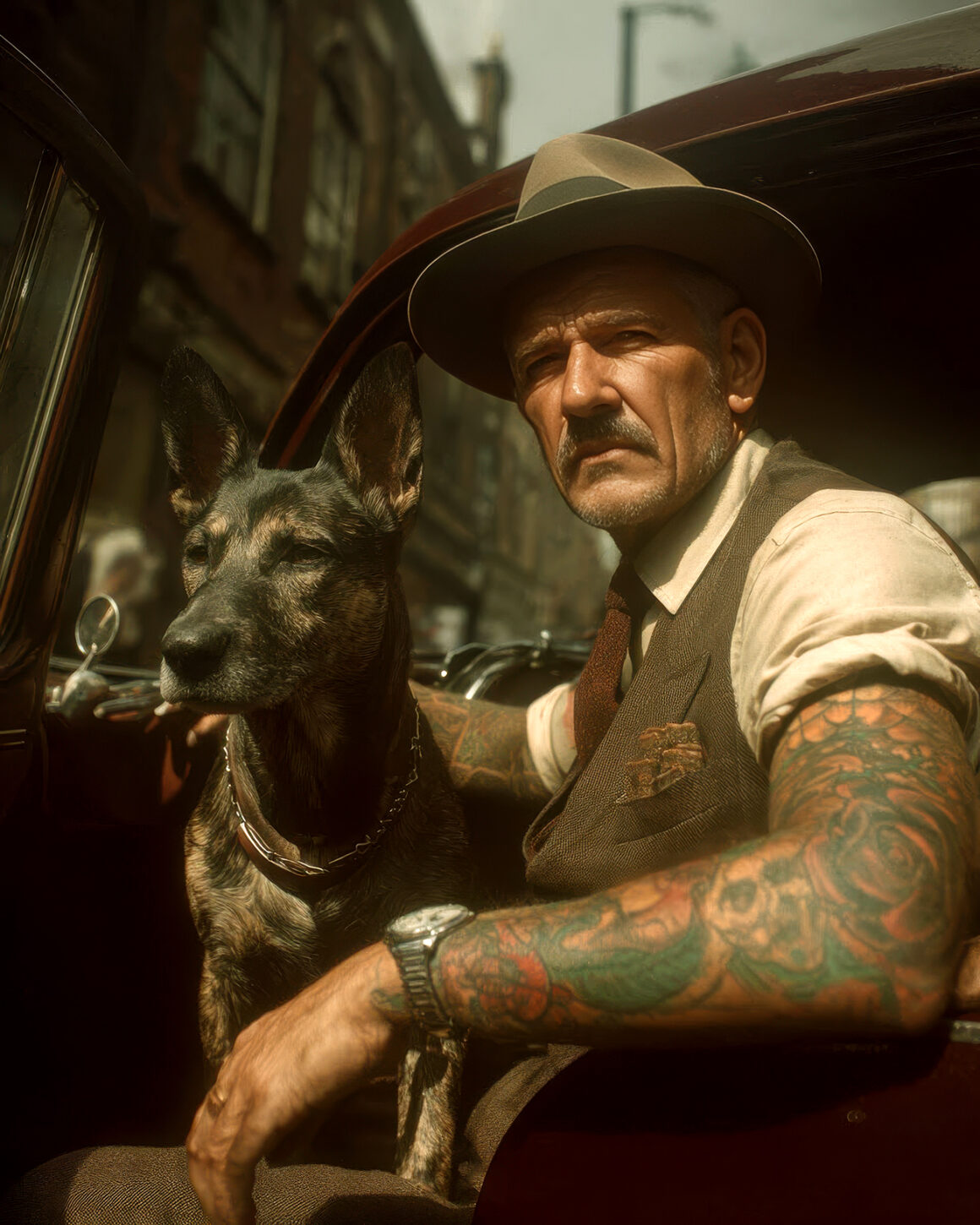
The work of Tony Karpinski exists in a fragile and fascinating territory between personal recollection and collective emotion. His scenes do not simply depict characters: they breathe, hesitate, observe. They carry the weight of stories that are never fully told.