




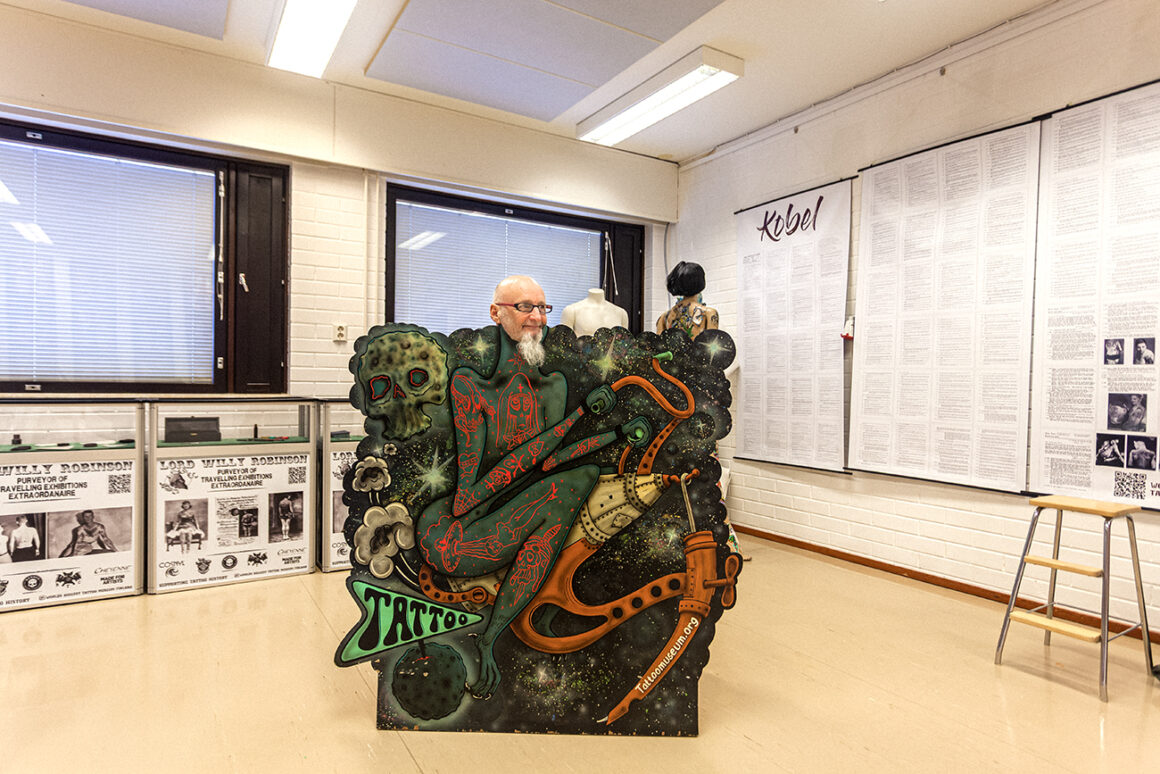
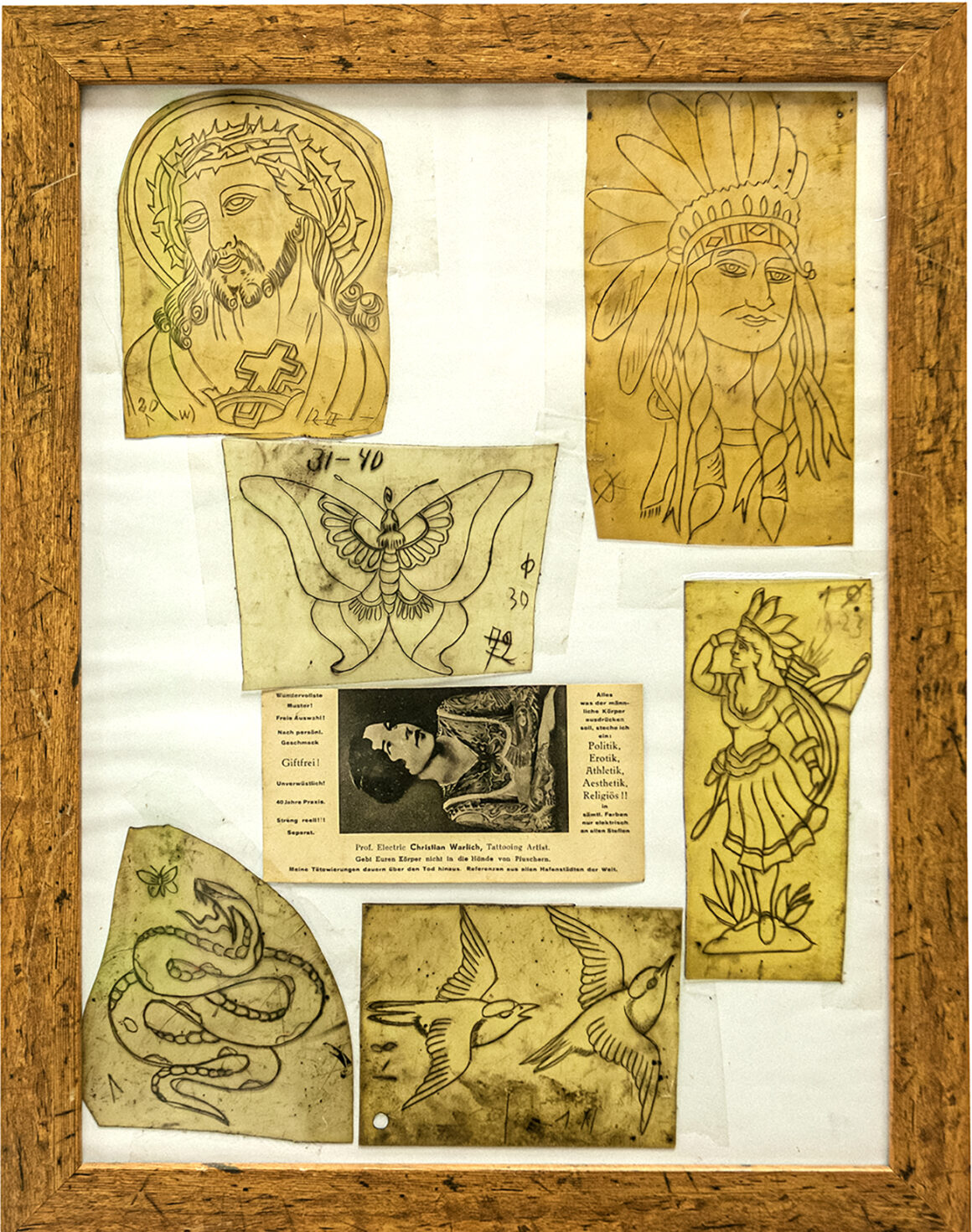
Renowned collector William Robinson has found the perfect setting in Finland for his collection: a former school in Leppävirta, transformed into a museum with the help of Pena, a local tattoo artist and the building’s owner. Together, they have brought to life the “World’s Biggest Tattoo Museum,” a true cabinet of curiosities!
The name of your museum, The World’s Biggest Tattoo Museum, sounds like an ironic statement. Is it a joke meant to tease the more “serious” collectors?
Well, I’ve grown up and I’ve learned that you can dream. And if you dream too small, that’s all you’ll ever achieve. So you can dream big. But if you dream too big you can’t achieve your dreams. And so I’ve achieved my dream. So why can’t I call it the world’s biggest tattoo museum?
Do you enjoy provoking or challenging the codes of the collectors’ world?
Well yes, I believe in moving the goalposts, crossing the line, and yes it’s a challenge because I want the other collectors to do something and not just have their collections stuck in cardboard boxes. So yeah, come on, get it out and show us what you’ve got.
Let’s go back a little: how did you first get into the world of tattooing?
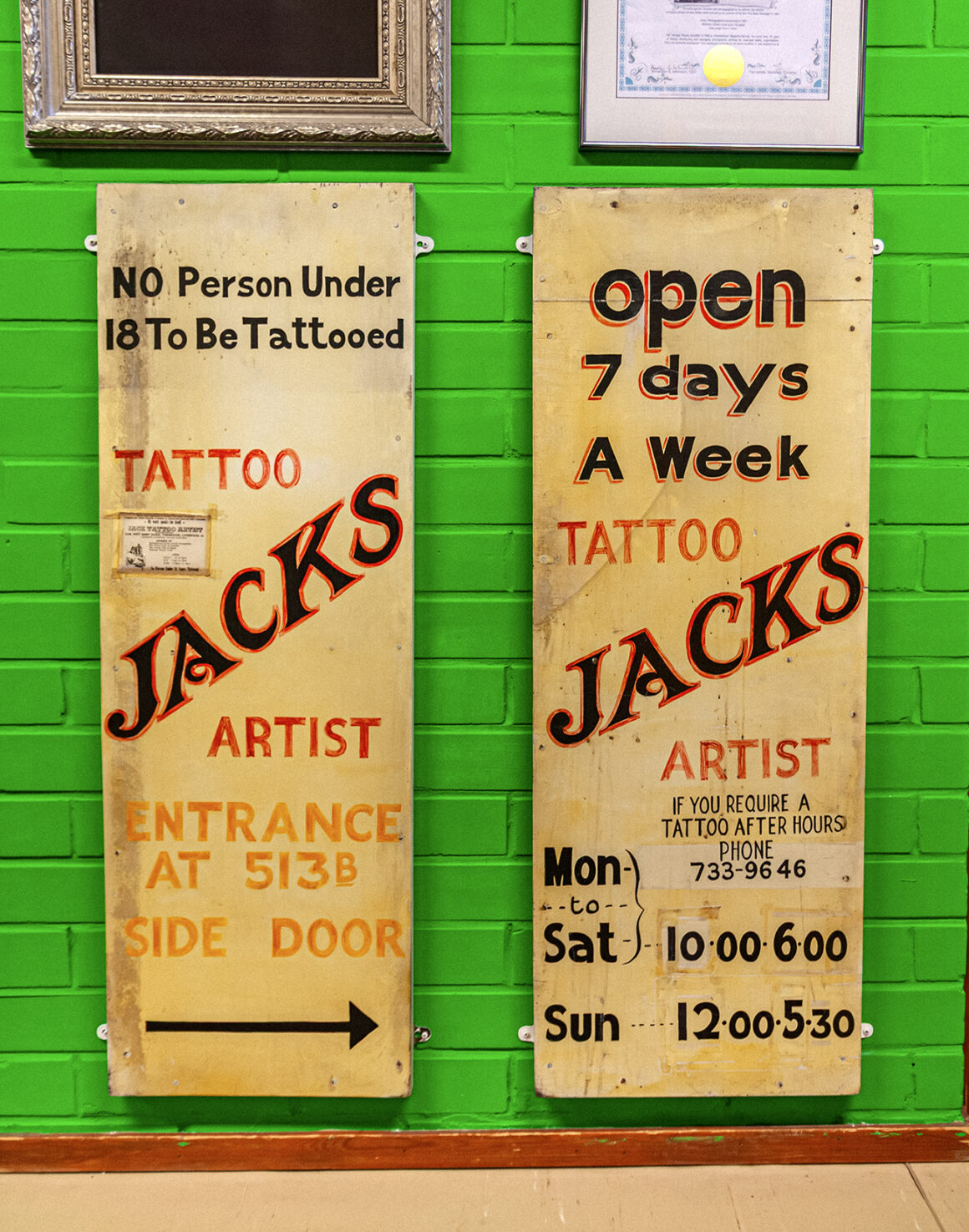
Oh, my goodness—how much time do you have? Mr. Dixon and I were living in the same town. I was working for a company installing and repairing one-arm bandits, while Alan Dixon was already a tattoo artist. We became close friends and even opened a discotheque together. But after a couple of weeks, I told him, “I need a job.” He was confused—I was making good money—but we were only working Thursday to Saturday, and my wife was spending it faster than I could earn it. So I said, “I’m going to open a tattoo studio.” He went absolutely mad—back then, everything in tattooing was kept secret.
Can you tell me about your career as a tattoo machine supplier ?
Well, after the initial anger over opening a tattoo studio, Mr. Dixon decided we would do it together, and things just took off from there, they rollercoastered. We were, I believe, the first tattoo studio in the world to purchase a laser and start taking tattoos off with a laser back in 1994. And then, we became suppliers, we were manufacturing, we were doing just about everything, really.
Madness. A long, long time ago. Yes, a long time ago.
Do you see yourself primarily as a collector, archivist, artist — or a bit of all three?
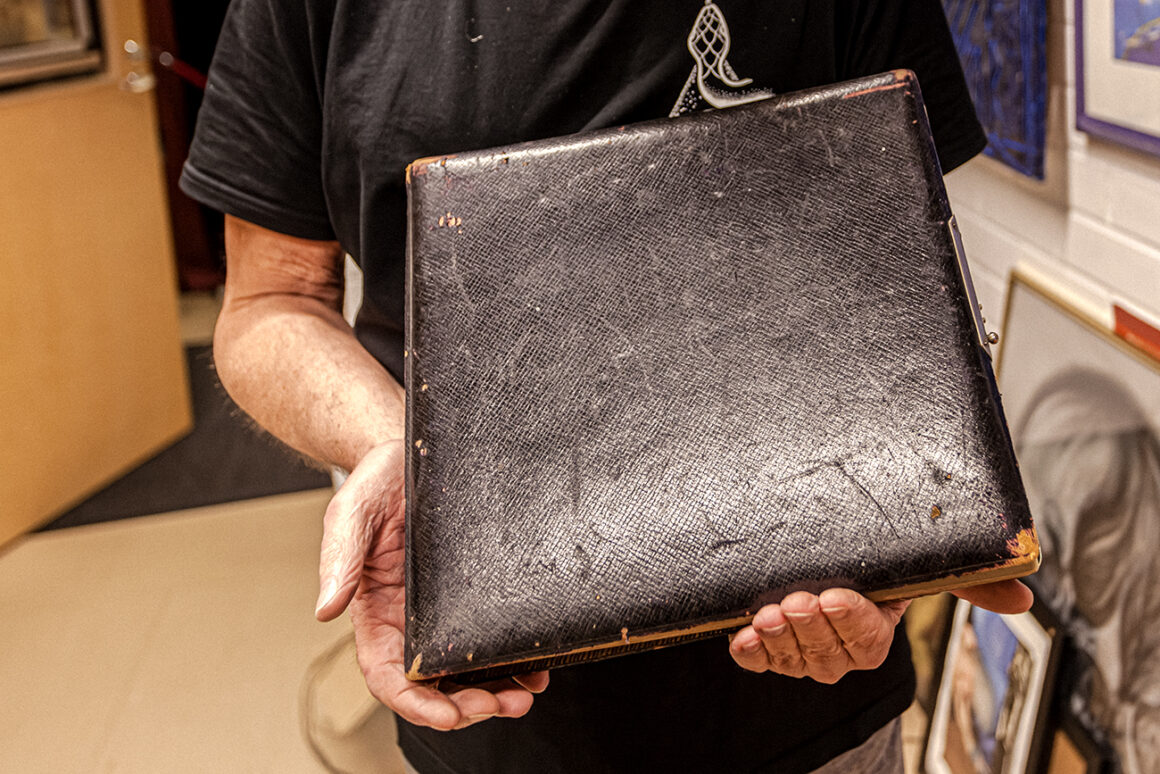
Well, I love telling people when they ask me, What do you actually do? And I say, « Well, I’m a modern day Indiana Jones ». I’ve travelled over a million kilometres. I’ve been into thousands and thousands of tattoo studios collecting for many, many years. So I suppose, once again, a little bit of all of it.
What sparked this desire to preserve, archive, and showcase things others might have left forgotten in boxes?
Well, I suppose really as a young guy, I was one of these. I liked to collect stamps, and I liked to collect coins. And then I got involved into the tattoo world, and I was doing a little bit of collecting. And I just realised how important it was that there was only a few people that were actually collecting because everything was ignored. It wasn’t valuable.
What was the very first piece in your collection? Do you remember that moment?
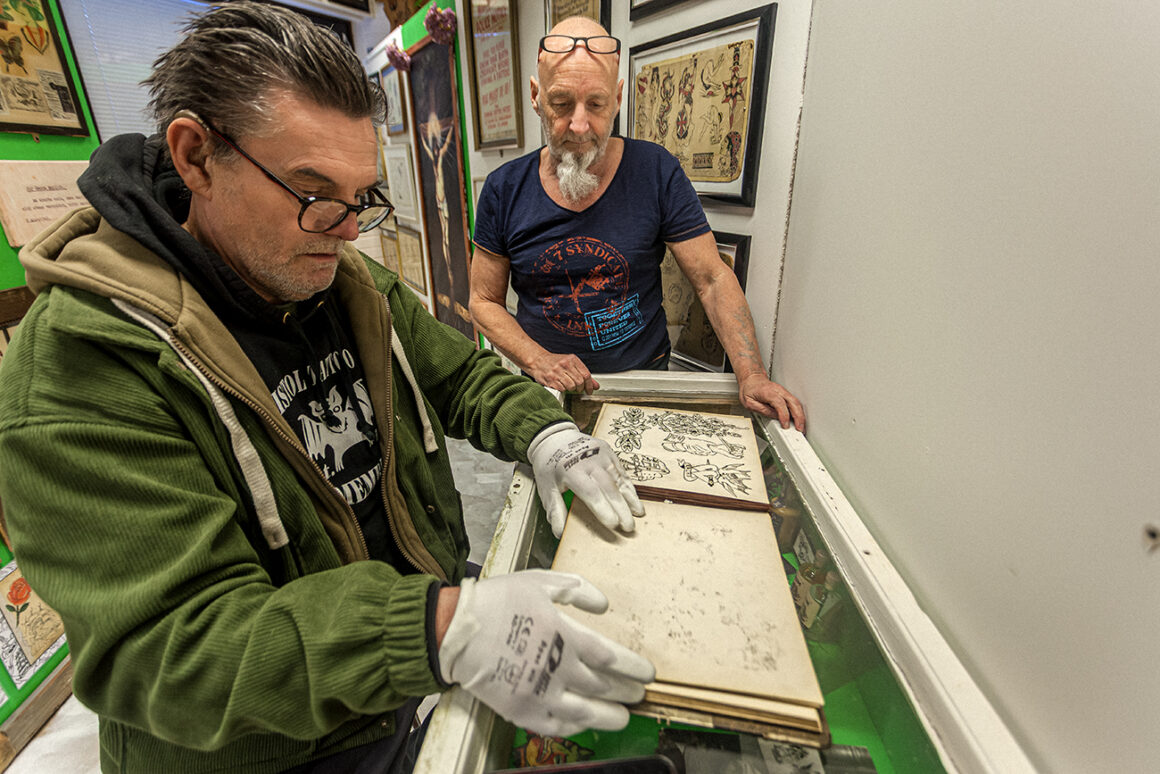
Well, that goes back a long time. What I do remember is that everything was very secret at the beginning. If anyone came into the shop with tattoo-related items, we’d buy them to take them off the street. And this was obviously before eBay when it went out of control.
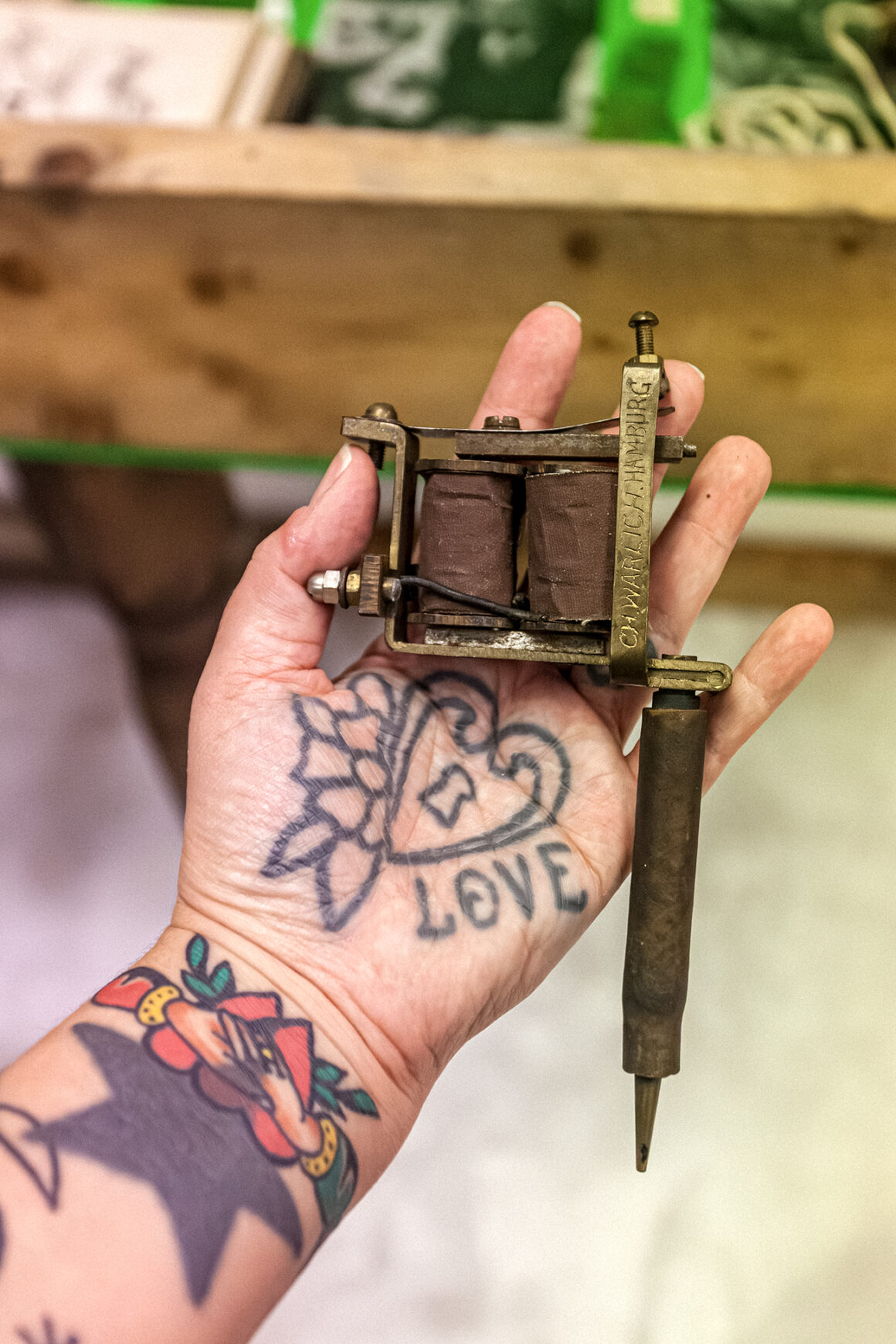
I can’t recall exactly what my first piece was, probably a handmade machine.
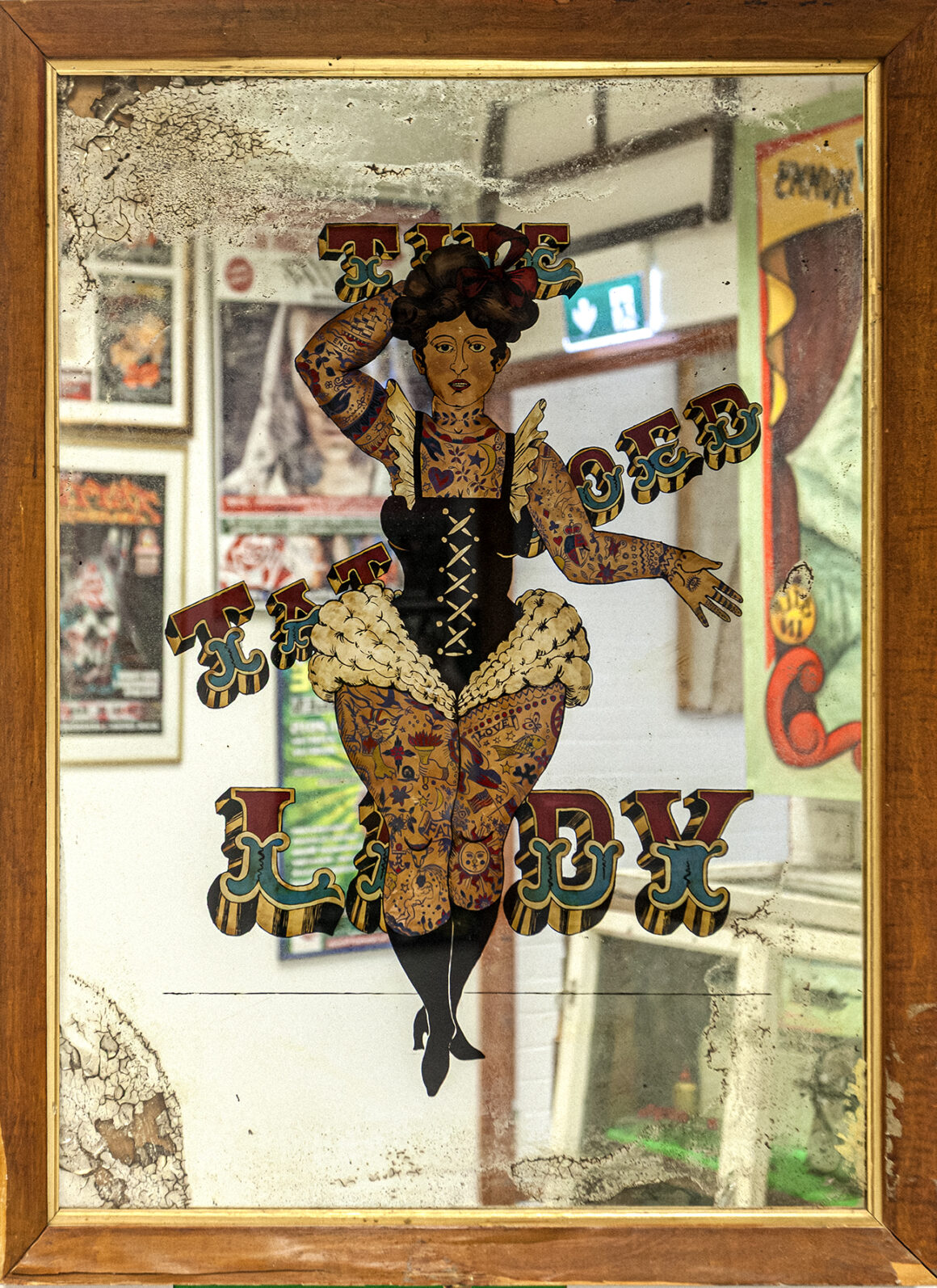
How did you build your collection ? Do you hunt for items? Recover them? Trade with other enthusiasts?
So I suppose there’s that saying: beg, steal, and borrow. Well, I say that I sold my soul to the devil twice. So he’s obviously not very happy with me. And I don’t know how many souls I’ve got left, but I believe it’s something like a cat. Therefore, yeah, I’ve traded, I’ve bought, I’ve searched, I’ve hunted. The million kilometres I did travelling around Europe, going into all the shops, that really helped, because people would have something old sitting in the corner and they felt it needed to go into the right hands, or it needed to be looked after. Or else what are they going to do with it when it’s stuck in a draw somewhere in the corner of the studio?
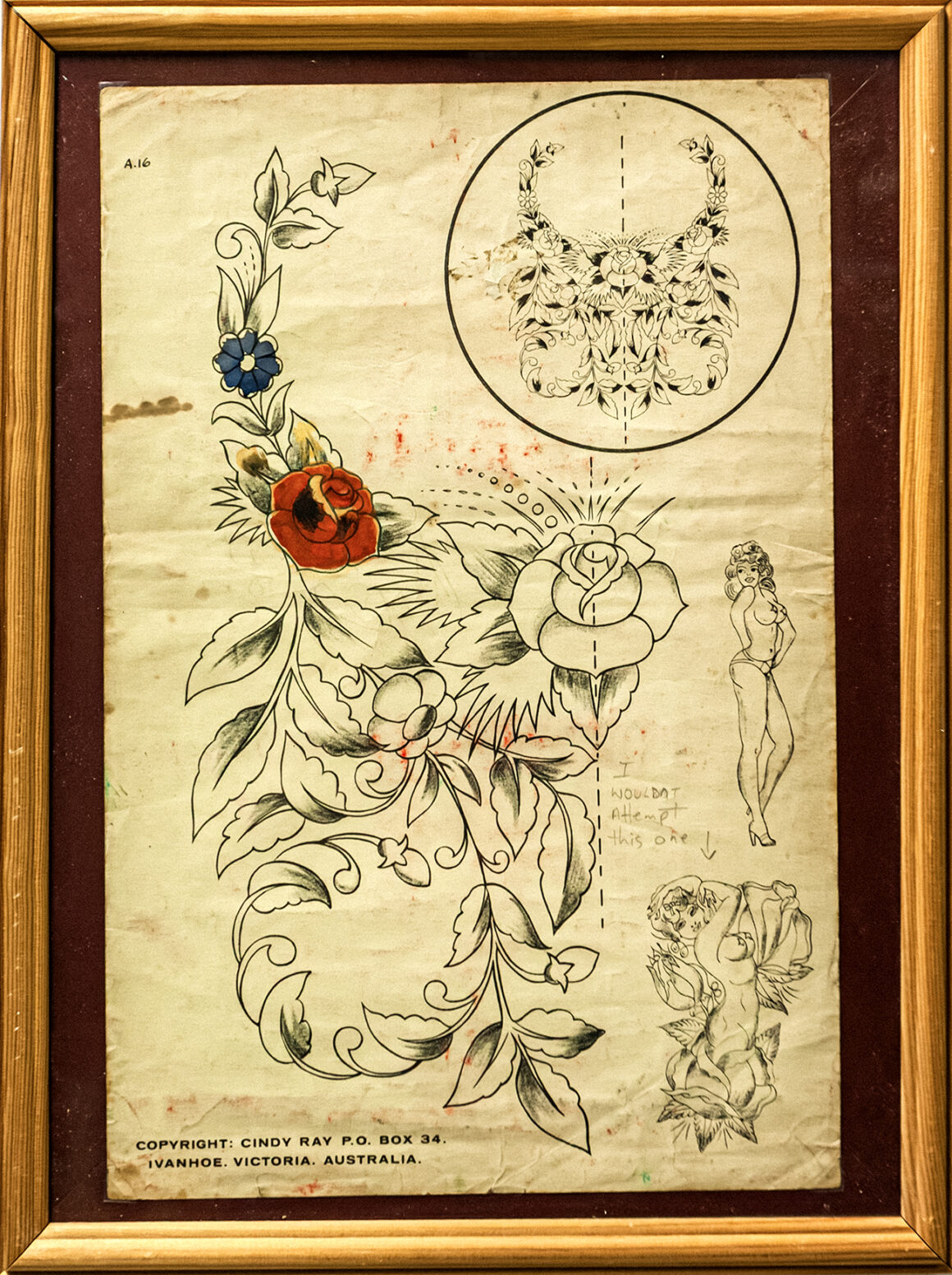
In your opinion, what sets yesterday’s tattooing apart from today’s?
Well, simple. In the old days, it was magic. It was secretive. Nobody told you anything. Today’s tattooing has no more secrets. The magic has gone out of it. But on the other side of the coin, we’ve never had so many incredible artists involved in this wonderful, wonderful art, and they are pushing boundaries like never before. Some of the things you see people are capable of doing today is just incredible. So yeah, the quality has skyrocketed. But on the other side, because there are no secrets left and everything is readily available, there are people out there who get their hands on the equipment and are tattooing when they shouldn’t be, because they’ve got no art in their blood whatsoever.
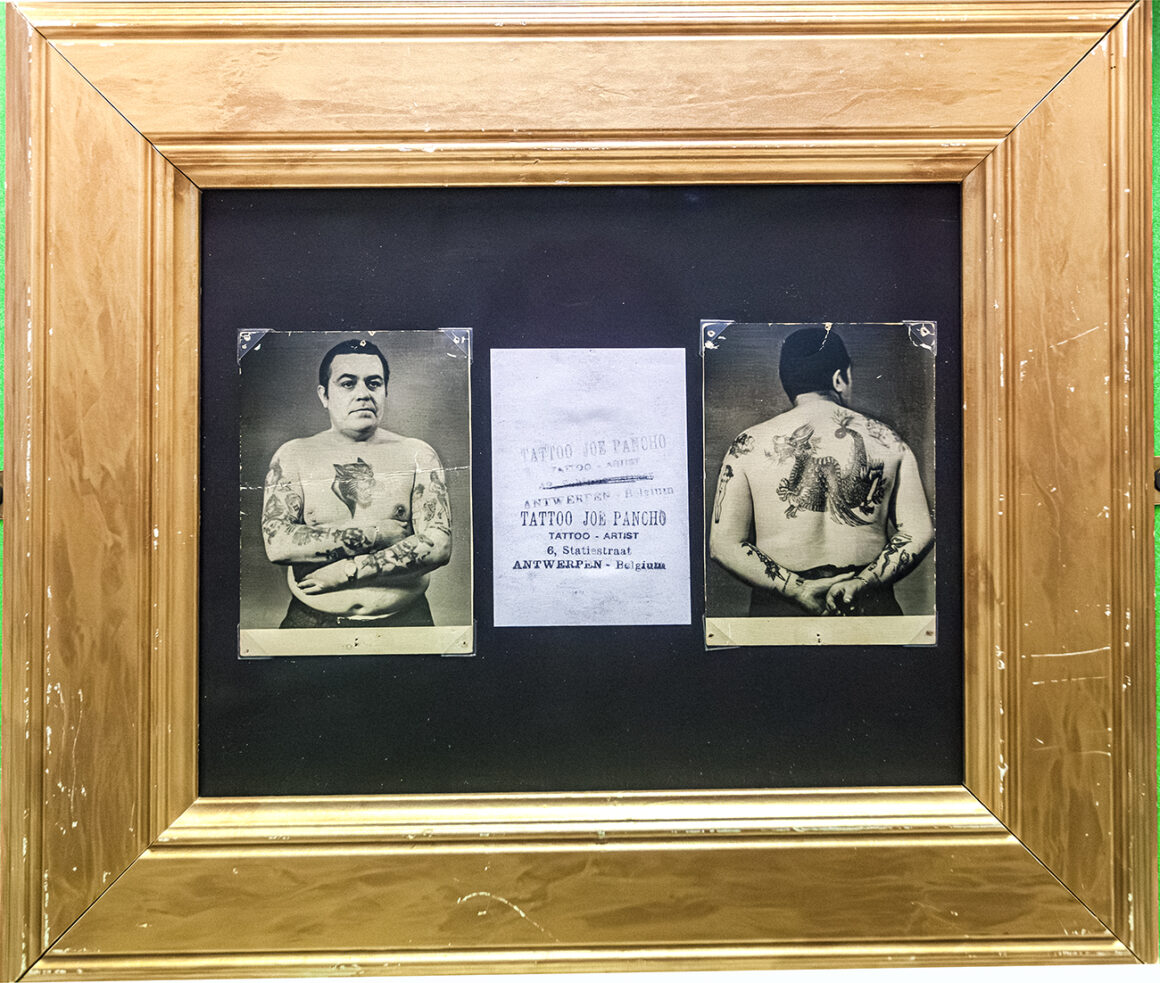
Do you intentionally blur the lines between real and fake, document and fiction ? I’m thinking of those reproductions you have.
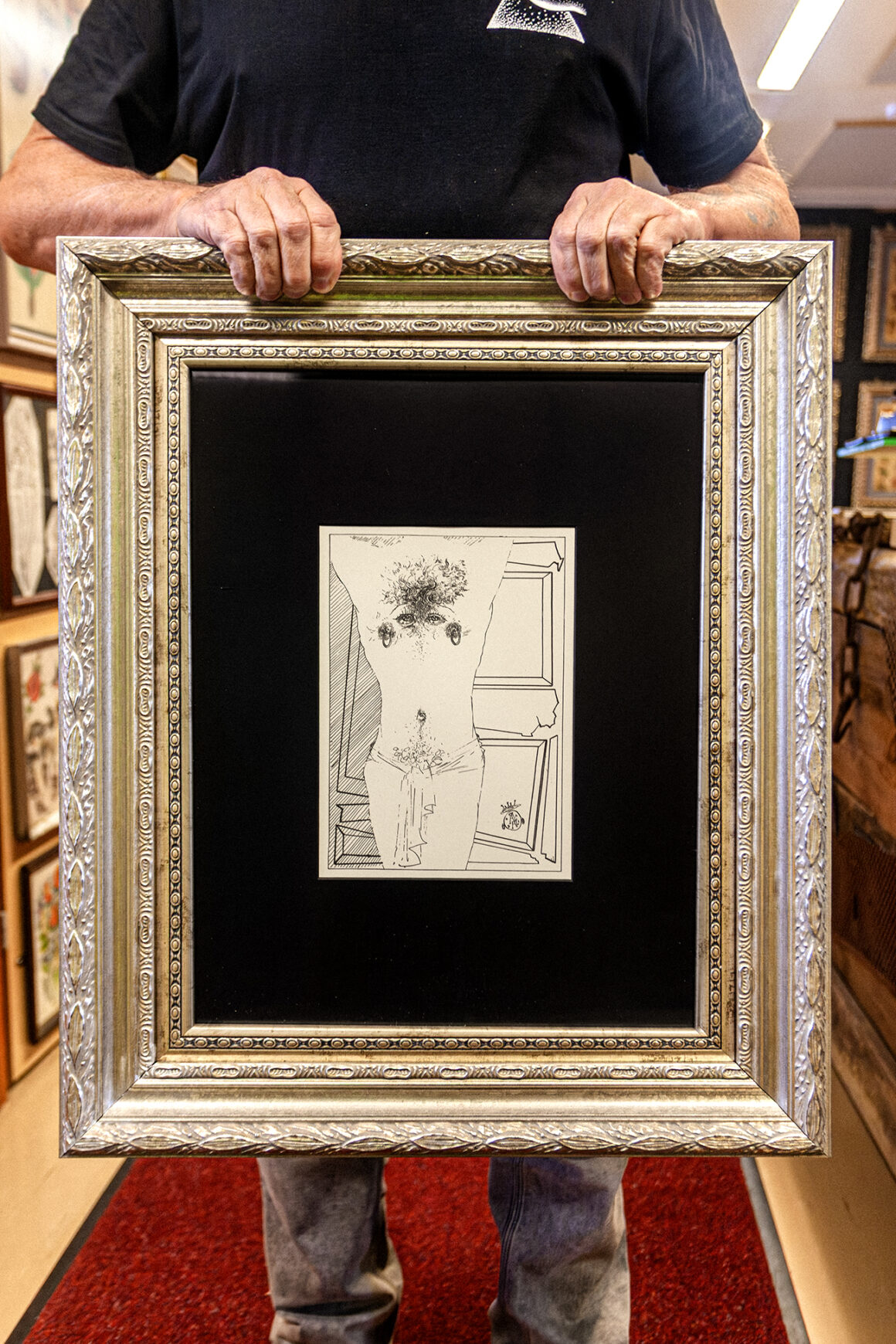
Well, the thing is, the way I look at it, I want to create my own history. There are items out there that belong to museums that you’re never, ever, ever going to own or get your hands on. So if you can find an artist that can make you a foul or a copy, then why not? Because you should be able to show people everything.
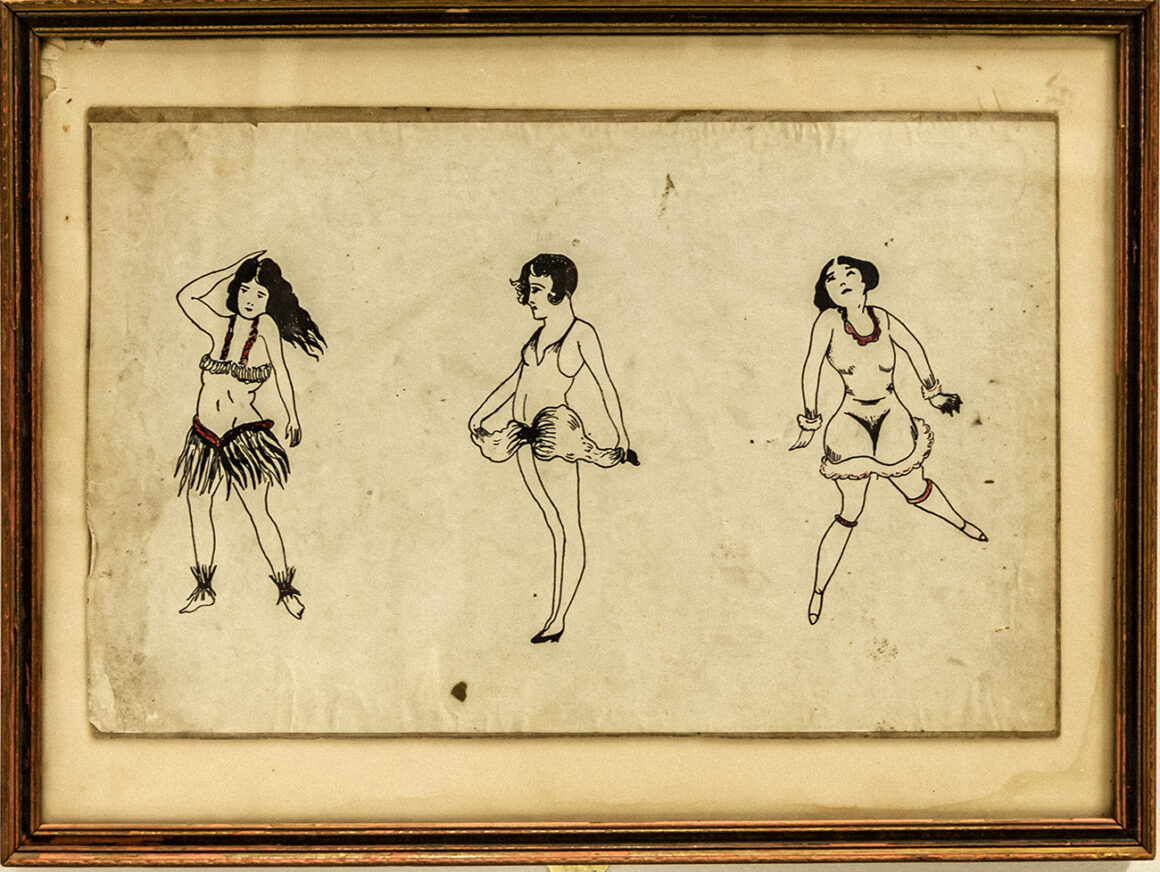
If it’s interesting and it makes people smile, then we should be doing reproductions or even tributes. Take that latest piece, for example:, the tribute of the Charlie Wagner Rock of Ages. I don’t know where the original is, so why shouldn’t I look at pieces and think, « Right, we’ll make a copy of it or a reproduction? » Because one day that reproduction will also be 100 years old.
It will hold some value, and it’s important to save the documents, to save those missing items.
What’s your favorite reaction from a visitor when they see a particular object?
Well, yeah, I just said it. I suppose a lot of my visitors to the museum say that word. Wow. But I had one guy, this really stands out for me, Finnish, so his English was obviously very good, and he didn’t write, wow. He wrote, simply: breathtaking.