
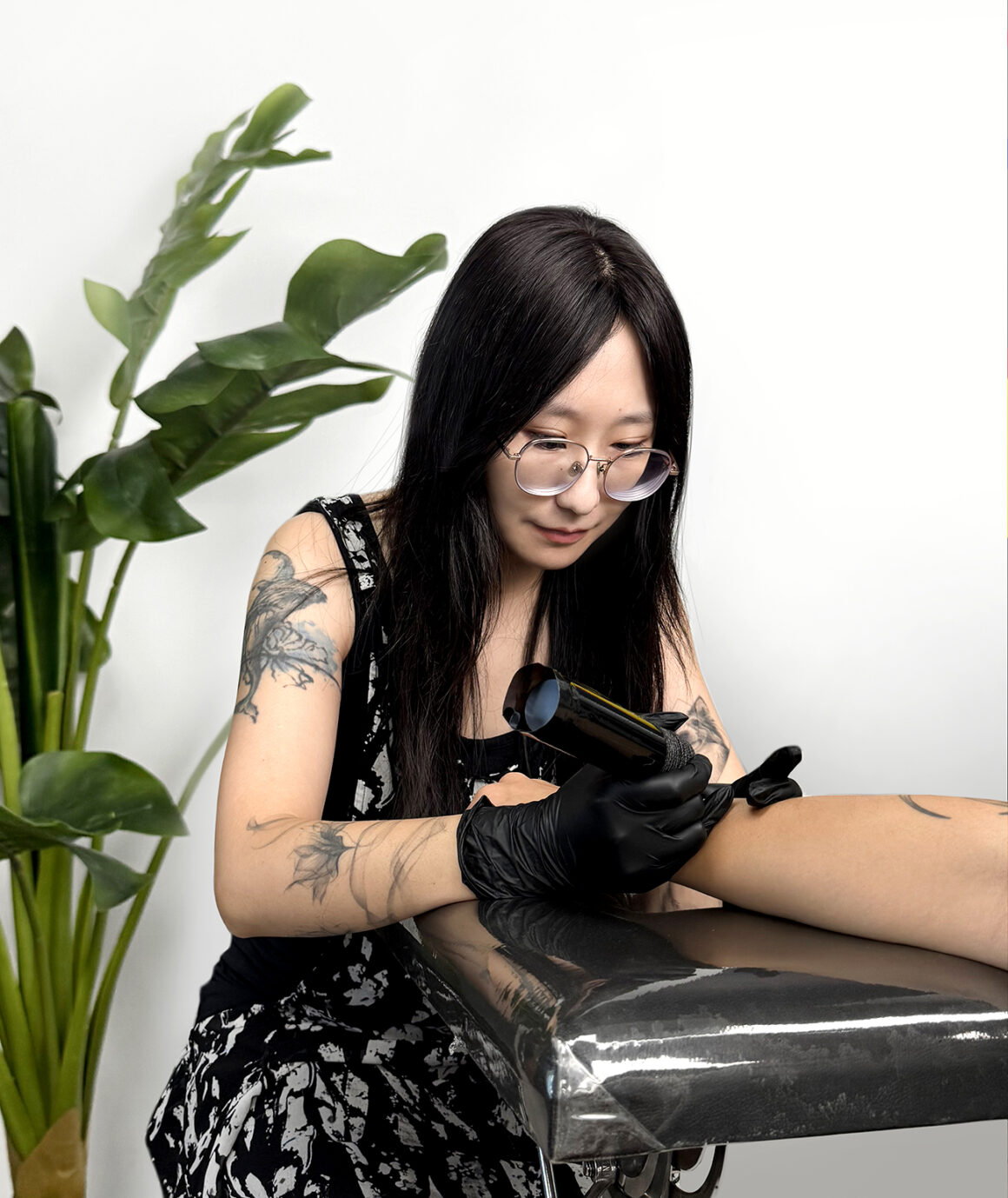
From concept art for video games to tattooing, the Los Angeles–based artist brings the expressive spirit of Chinese ink painting onto skin.
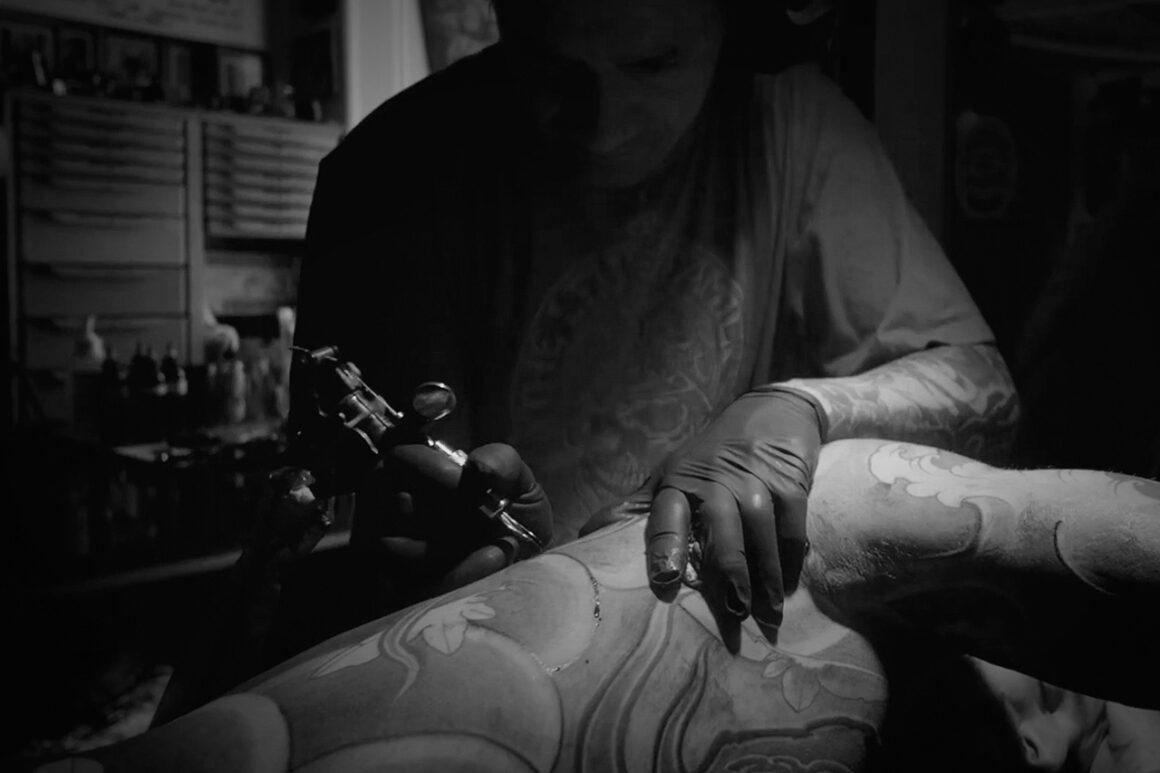
Born in a small city in China and based in Los Angeles since 2016, Yicheng “Cici” Zhu is a multidisciplinary visual artist who moves freely between concept art, painting and tattooing. After graduating from ArtCenter College of Design in Pasadena and contributing to game projects such as Apex Legends, Cici turned to the needle, bringing a painter’s sensitivity for composition, contrast and negative space. Her delicate, highly customised work draws on Xieyi, the expressive freehand tradition of Chinese ink painting, in which a few carefully placed strokes are enough to suggest movement and character. Although relatively new to the industry, Cici has already collected awards at the Twin Cities Tattoo Festival and the Oklahoma City Tattoo Festival in 2025, and at the Villain Arts Oklahoma City Tattoo Arts Festival in 2026. In this interview, the artist talks about the path that led her to tattooing, her two distinct ways of working – original flash and custom pieces – and her goal of bringing fine art ever closer to tattooing.
Hi Cici, would you like to introduce yourself to our readers?
Hi! I’m Yicheng Zhu, also known as Cici Zhu. I’m a multidisciplinary visual artist working across concept art, fine art, and tattooing. My artistic journey began with a background in illustration and concept design, particularly in the game and entertainment industry, where I developed a strong interest in world-building, visual storytelling, and creating immersive environments.
Over time, my practice has expanded beyond commercial projects into more personal forms of artistic expression, including traditional and digital painting and tattooing. Although these disciplines may seem quite different, I see them as interconnected parts of my creative practice. They allow me to explore different ways of translating imagination, memories, emotions, and cultural influences into visual experiences.
Where are you originally from, and where are you currently based and working? What made you choose California as your adopted home?
I’m originally from a small city in China, and I moved to the United States in 2016 to pursue my education and career in art.
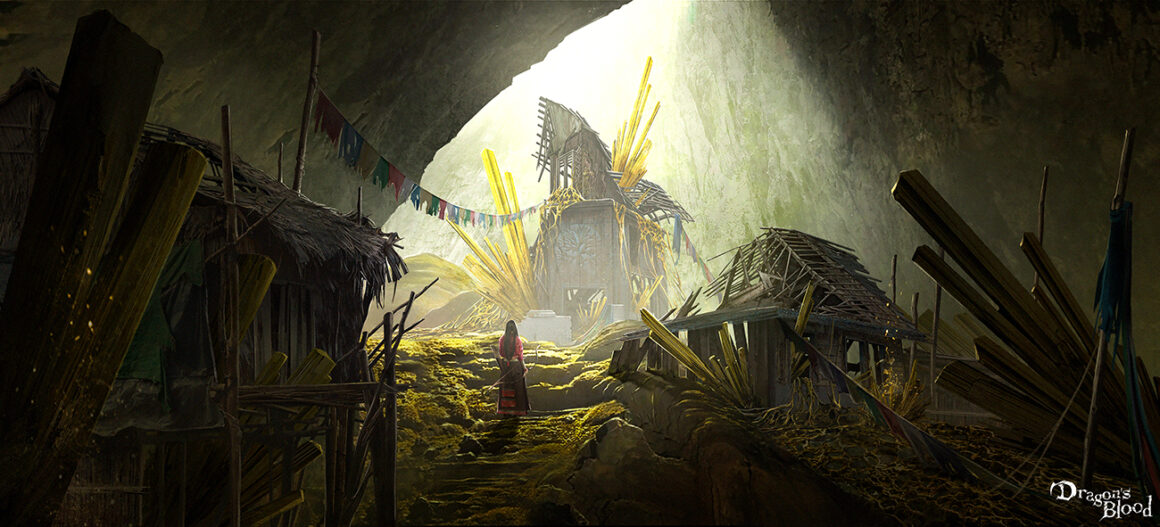
I initially chose California, particularly Los Angeles, because of its strong game and entertainment industry. I wanted to pursue a career in concept design, and LA offered great opportunities to connect with studios and creative professionals. During my time at ArtCenter College of Design, I had the opportunity to contribute to game projects including Apex Legends and GKART.
Beyond the professional opportunities, I fell in love with LA’s diversity and vibrant artistic community. I enjoy being surrounded by artists from different backgrounds and disciplines, exchanging ideas, and learning from different creative perspectives. This environment has made the city feel like home to me.
Did you attend any art school or receive any formal training that helped shape and guide your artistic journey?
Yes. I graduated from ArtCenter College of Design in Pasadena, California, in 2022, with a Bachelor of Science degree, focusing on Illustration, Concept Art, and Entertainment Design.
My education at ArtCenter played an important role in shaping the way I approach art. Through intensive training in drawing, painting, visual development, and concept design, I developed a strong foundation in visual storytelling, composition, perspective, and environmental design. It also introduced me to the professional game and entertainment industry, allowing me to work on game development projects and collaborate with other artists.
Beyond the technical skills, one of the most important things I took away from my education was learning how to approach visual creation through problem-solving, research, and world-building. That foundation continues to influence my work today, including my fine art and tattoo practice.
Your style feels almost painterly, delicate and highly customized. How would you describe it in your own words?
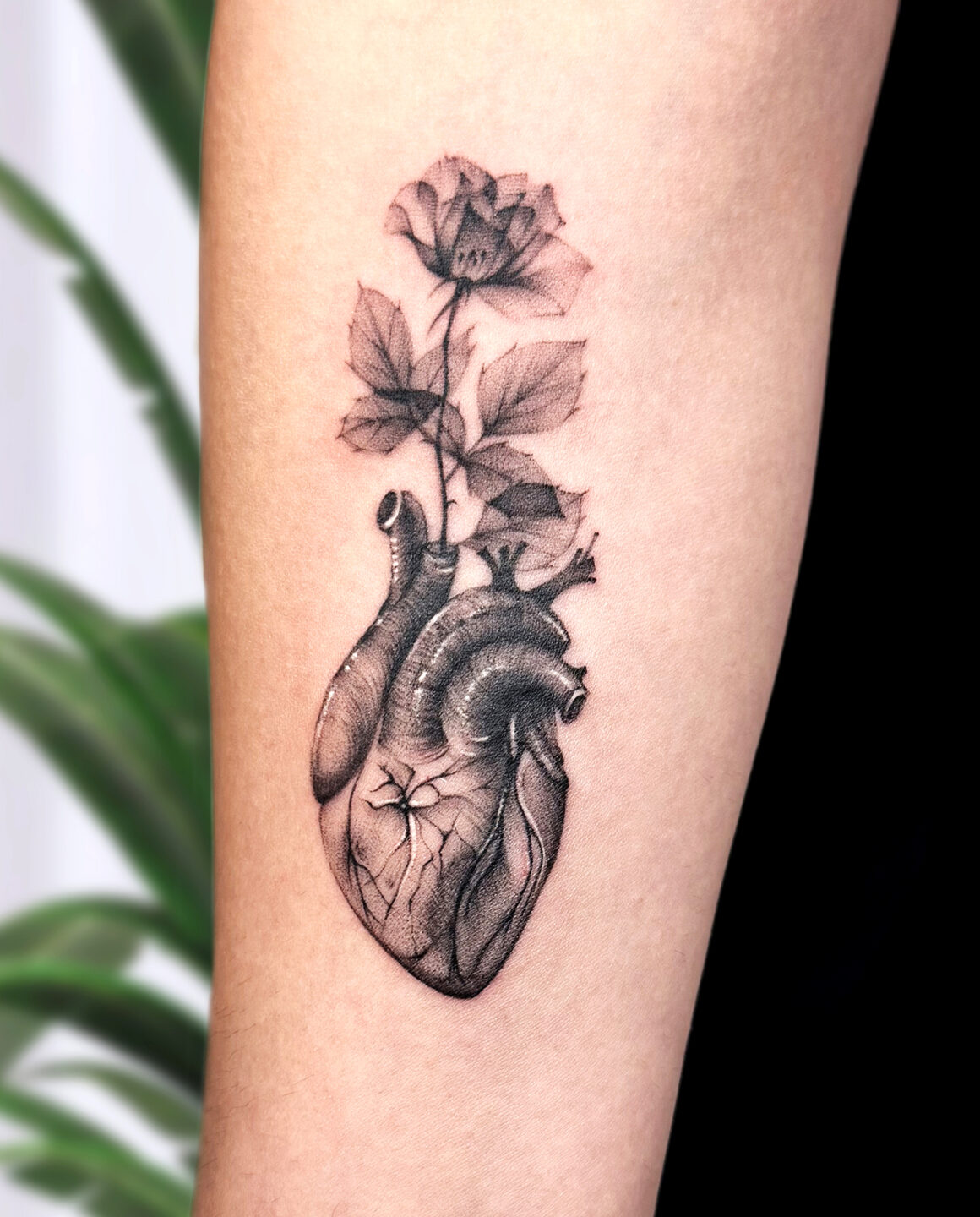
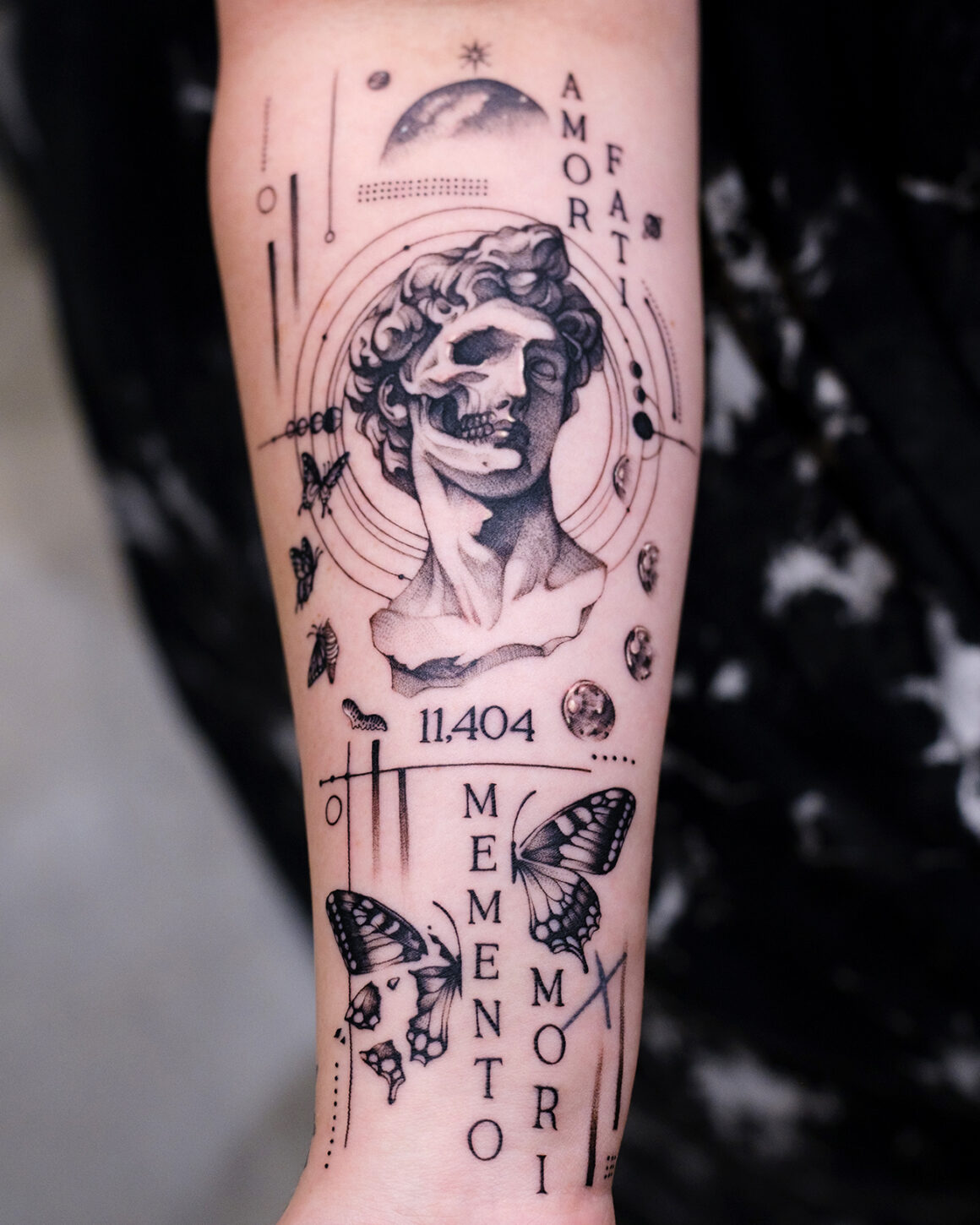
I would describe my style as a reflection of my broader artistic background. I believe that the fundamental principles of aesthetics are universal across different artistic disciplines. Whether I’m creating an illustration, a fine art painting, or a tattoo, I’m always considering the balance of shapes, the distribution of contrast, and the relationship between detailed and simplified areas.
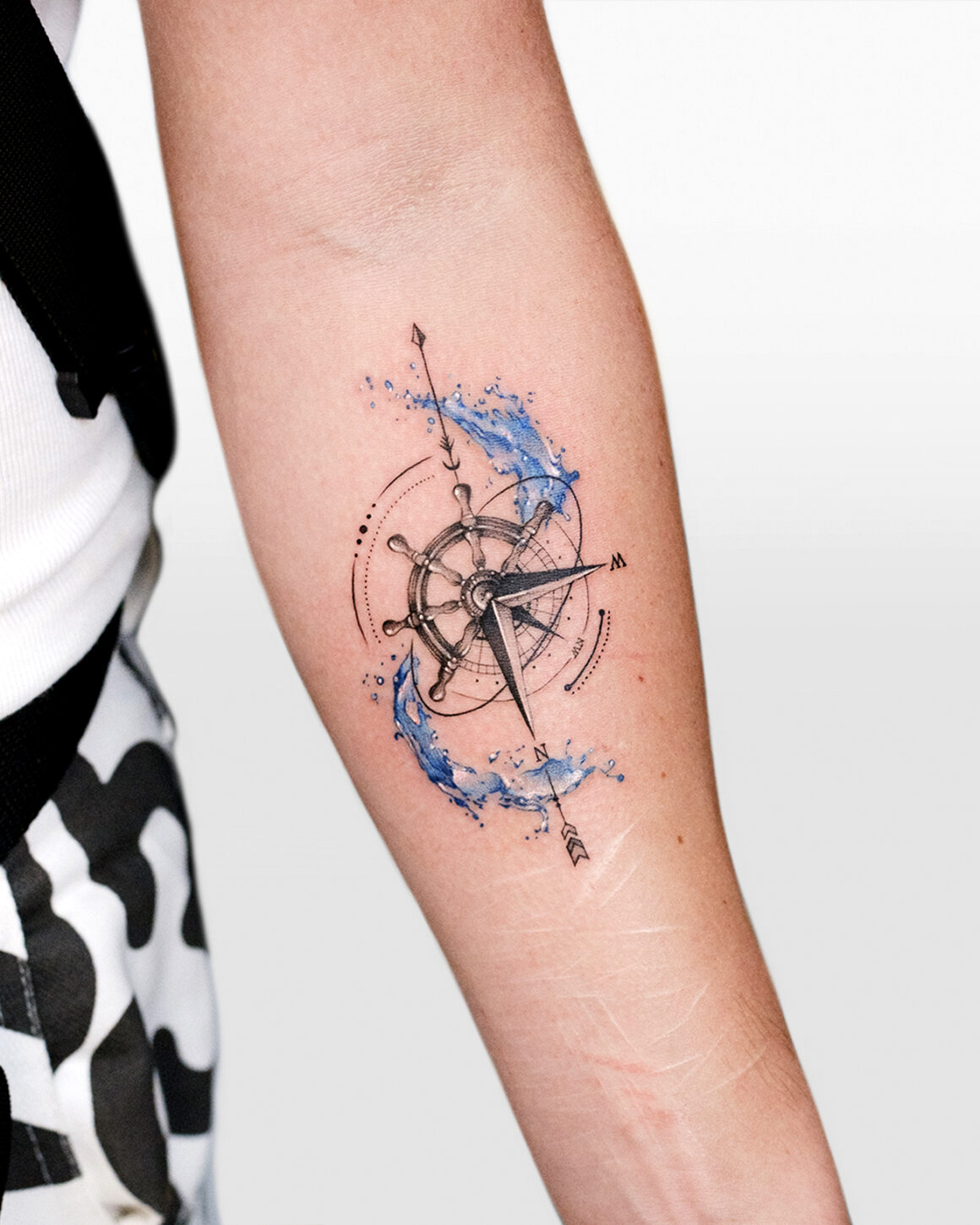
My background in illustration and fine art has greatly influenced how I approach tattooing. I approach each design as an individual artwork, carefully considering its composition, visual rhythm, and how different elements interact. I also draw inspiration from different artistic traditions, particularly traditional Chinese painting, which has influenced my understanding of visual expression and simplicity.
What are your favourite elements or subjects to combine in your designs?
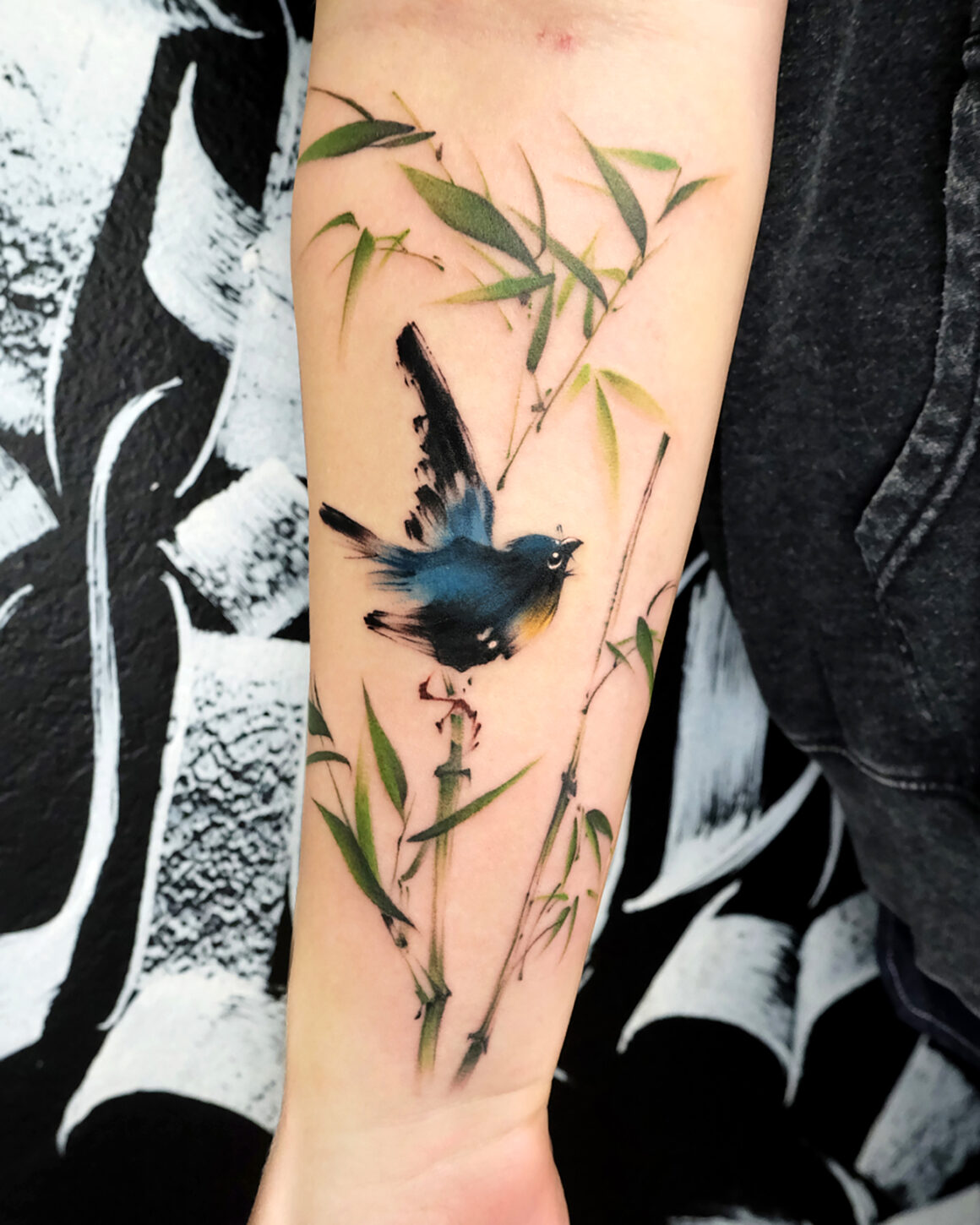
I’ve always been particularly drawn to traditional Chinese painting, especially Xieyi (写意), the expressive and freehand approach to painting.
One of my designs, for example, draws inspiration from traditional Chinese ink painting. I depicted birds and bamboo using a minimal selection of brushstrokes, focusing on capturing their essence rather than realistically reproducing every feather or leaf. I love how a few carefully placed strokes can convey so much movement, character, and expression.
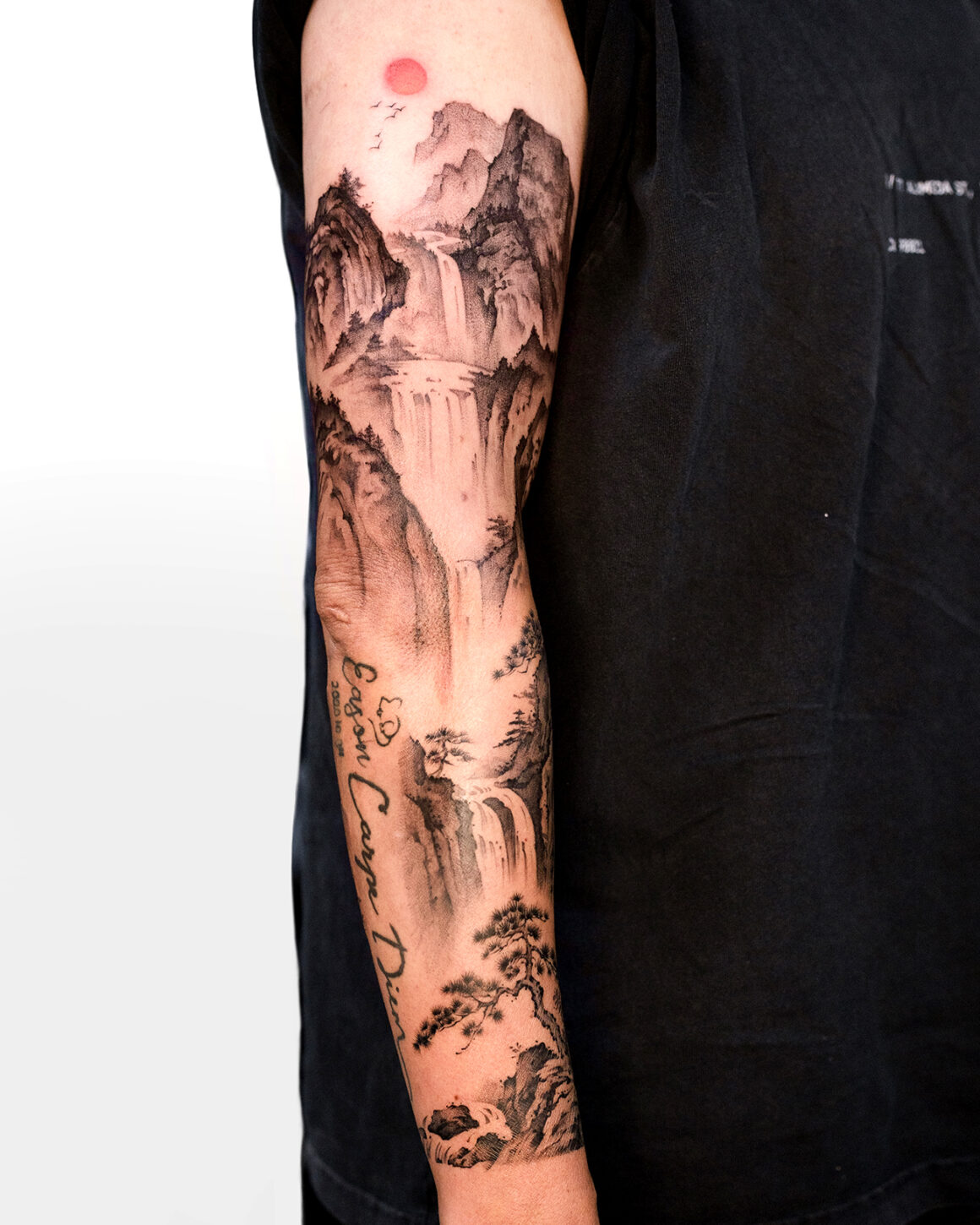
I’m also fascinated by traditional Chinese landscape painting, particularly the use of simplified forms, expressive brushwork, and negative space to create depth and atmosphere. Rather than depicting every detail, traditional landscape painting often suggests mountains, water, and distance through a few carefully composed elements, leaving room for the viewer’s imagination.
I enjoy bringing these traditional visual languages into my tattoo designs, sometimes combining them with realistic rendering and contemporary techniques. For me, it’s about translating the artistic philosophy behind these traditions into a different medium, rather than simply incorporating traditional Chinese imagery.
And how much of the final result comes from your own artistic vision, and how much from your clients’ ideas?
I actually work in two different ways. I create my own original flash designs, which are pre-designed pieces that represent my personal artistic vision. With these, I’m looking for someone who genuinely connects with the artwork and wants to carry it with them permanently on their skin. It’s a very personal exchange: I’m offering something that comes entirely from my own creative expression, and the client chooses to make it part of themselves.
I also do customized work based on my clients’ ideas and requests. In these cases, my goal is to understand what they’re looking for and bring their vision to life as beautifully and professionally as possible. I’ll offer my own artistic input and suggestions whenever I feel they could improve the design, but I always respect that the client is the one who will be wearing this artwork permanently. I understand and deeply appreciate the trust involved in allowing someone to put my art on their body, so their wishes and expectations are always my primary consideration.
In a way, I approach customized tattoo work much like I used to approach concept art projects for games and animation. As a concept artist, I had to work within the creative direction of a project and meet the requirements set by art directors. In customized tattoo work, my client essentially becomes my art director. My responsibility is to translate their ideas and requirements into something visually compelling, thoughtfully designed, and professionally executed. I think being able to balance personal artistic expression with someone else’s creative vision is an important part of being a professional artist.
What have been the most important milestones in your artistic evolution? Where did it all begin?
I think my artistic journey has been shaped by several important transitions. After studying illustration and concept art at ArtCenter College of Design, I went on to work in the game and entertainment industry. Eventually, I transitioned into tattooing, which introduced me to an entirely different medium with its own challenges and possibilities. What I find most rewarding is being able to carry my previous artistic experience into this new field while continuously discovering new ways to express myself.
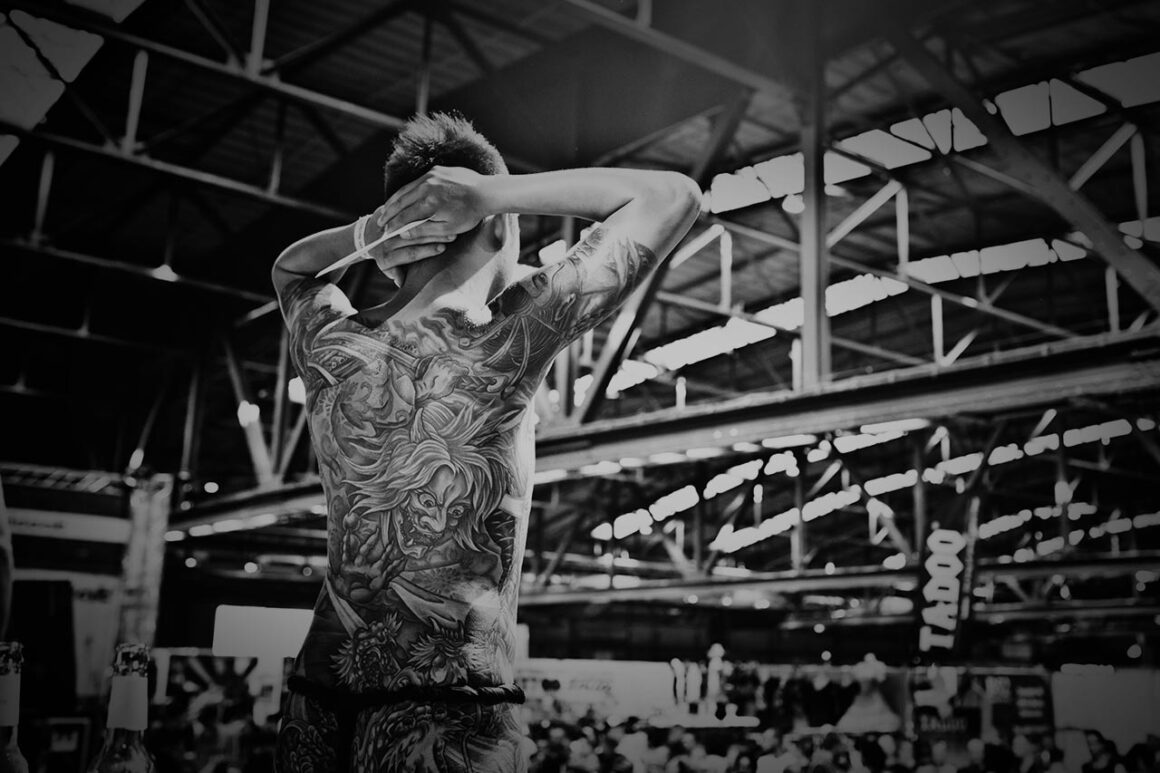
Another particularly meaningful milestone was participating in tattoo conventions and competitions. In 2025, I attended the Twin Cities Tattoo Festival, which was my very first tattoo convention. I remember feeling quite nervous, being surrounded by so many tattoo artists for the first time. It was an entirely new experience for me and receiving both first- and second-place awards in the Fresh Small Black and Grey categories made it even more memorable. Later that same year, I competed at the Oklahoma City Tattoo Festival, where I received two first-place and two second-place awards.
Then, in 2026, I participated in the Villain Arts Oklahoma City Tattoo Arts Festival, where I received several awards across different categories, including Tattoo of the Day, Black and Grey, Color Realism, and Geometric/Tribal.
As someone who was still relatively new to the tattoo industry, receiving recognition from experienced fellow artists and professionals was incredibly meaningful to me. It gave me a real sense of pride and encouragement, especially knowing that my work was being appreciated by people who understand the craft so deeply. These experiences have motivated me to keep pushing myself, refining my skills, and exploring how far I can take my artistic practice.
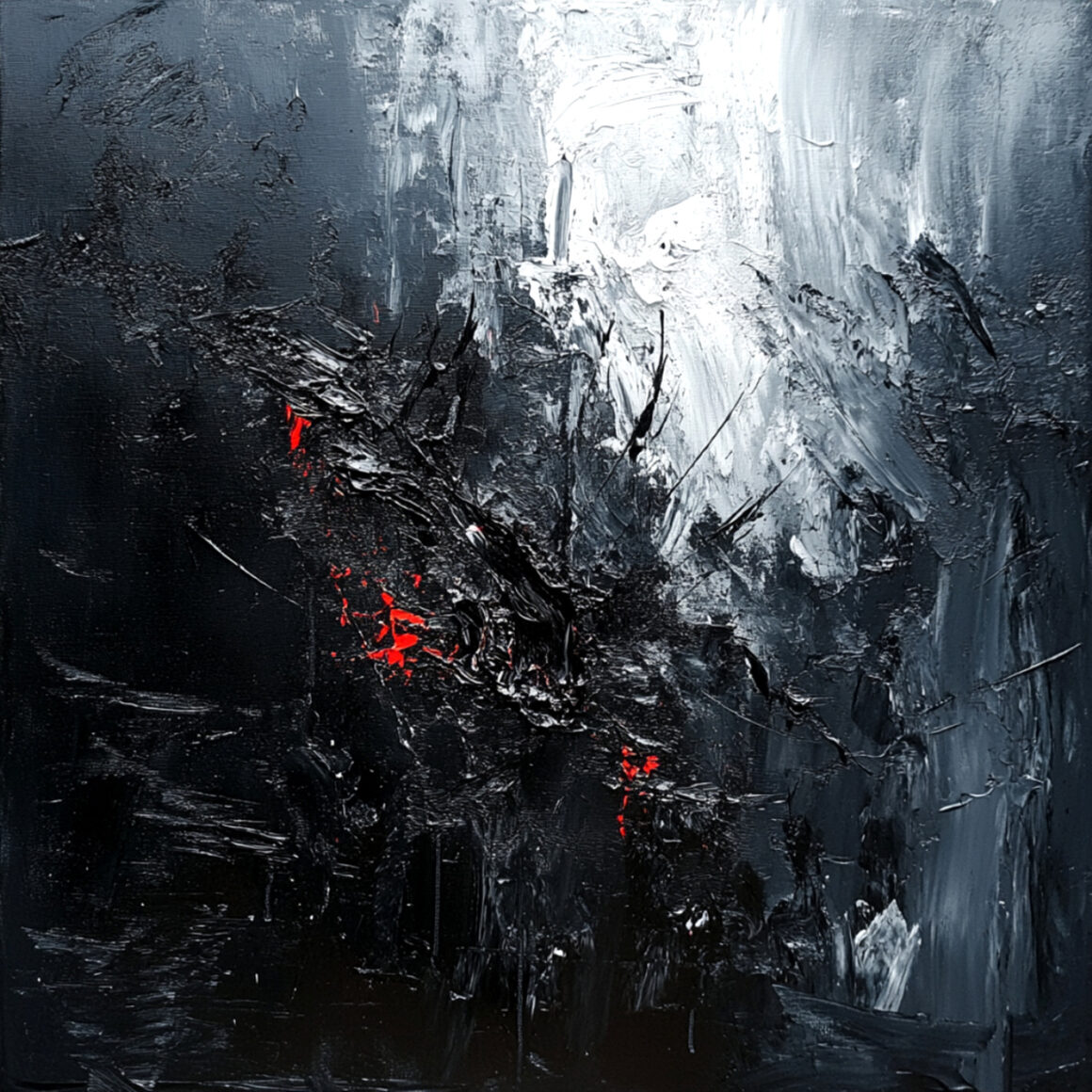
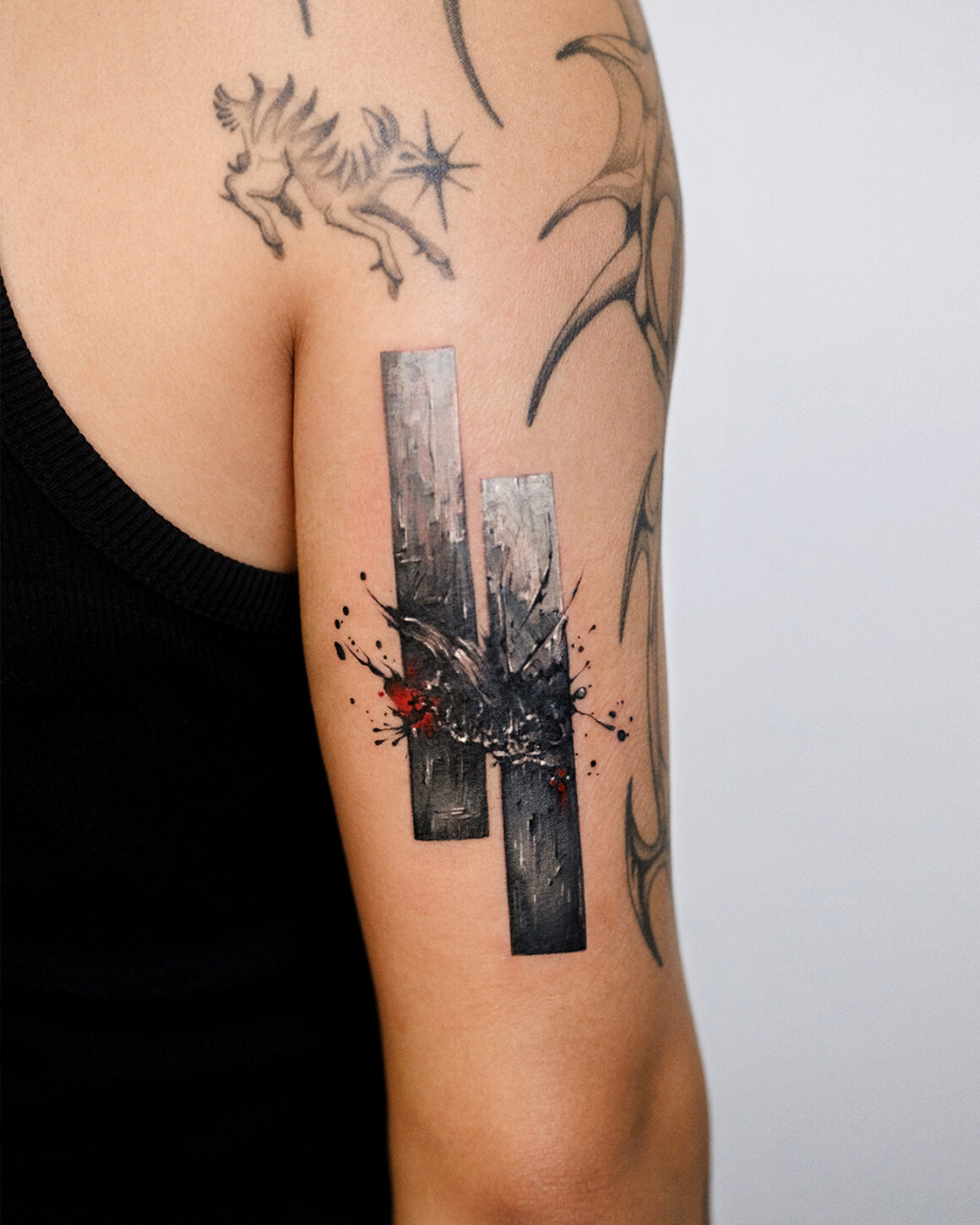
A recent example of this exploration is the transformation of Eruption, one of the paintings from my Talks of Dreams series, into a tattoo. When working on this piece, I was particularly interested in bringing the rich, heavy texture and distinctive material quality of oil painting onto the skin. Rather than simply reproducing the original painting, I adapted the composition and certain visual elements to make them work better as a tattoo, while preserving the character and essence of the original artwork. Seeing this piece come to life in an entirely different medium was a very meaningful experience for me. It was a rewarding opportunity to explore how the qualities of one medium could be translated into another without losing its original artistic identity.
What is your life as a tattoo artist like today? What are the next goals or milestones you would like to achieve in your career?
I’m genuinely passionate about what I do as a tattoo artist. One of the most rewarding parts of my work is being able to create something unique and meaningful for another person, something they can carry with them permanently. There’s something very special about knowing that my artwork becomes part of someone’s life and personal story, and I feel incredibly grateful for the trust people place in me.
As a multidisciplinary visual artist, I see tattooing and my personal art practice as two equally important parts of my creative journey. I want to continue developing both, just as I do today, while constantly exploring new possibilities within each medium. One of my biggest goals is to bring more of my experience and techniques from fine art, illustration, and painting into my tattoo work, and to keep experimenting with how these different disciplines can influence and enrich one another. I hope to continue pushing my artistic boundaries and creating increasingly distinctive and meaningful work across all these mediums.