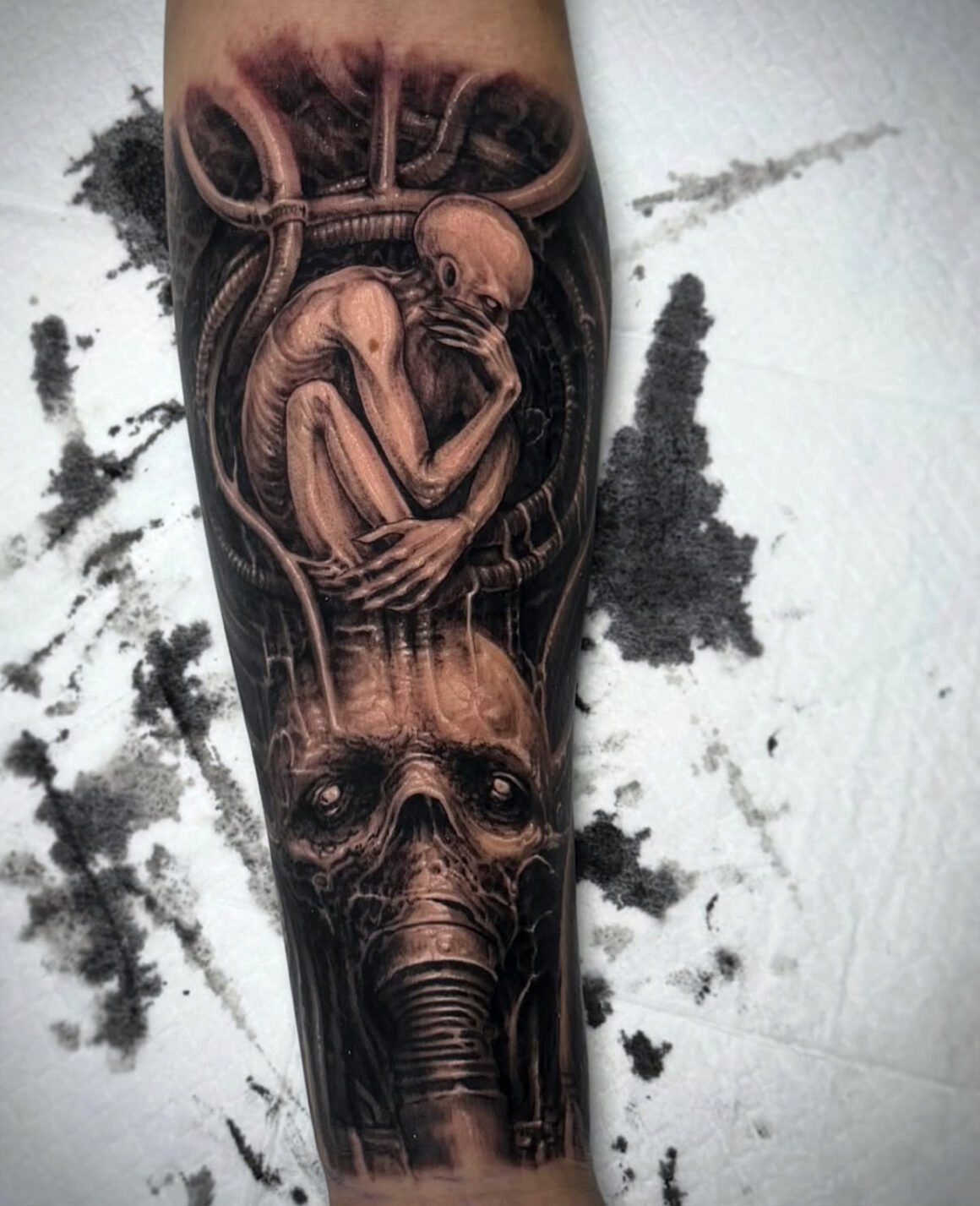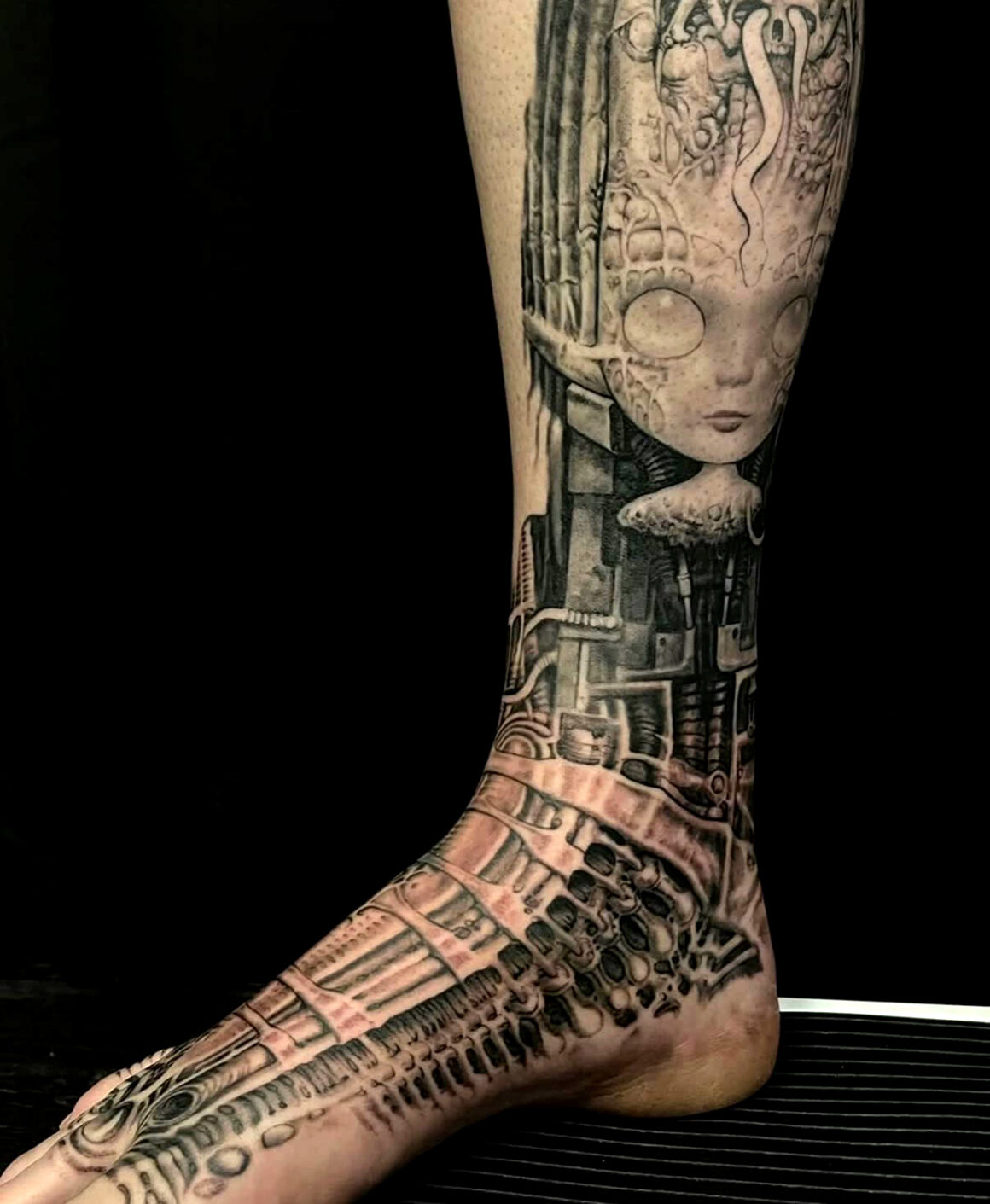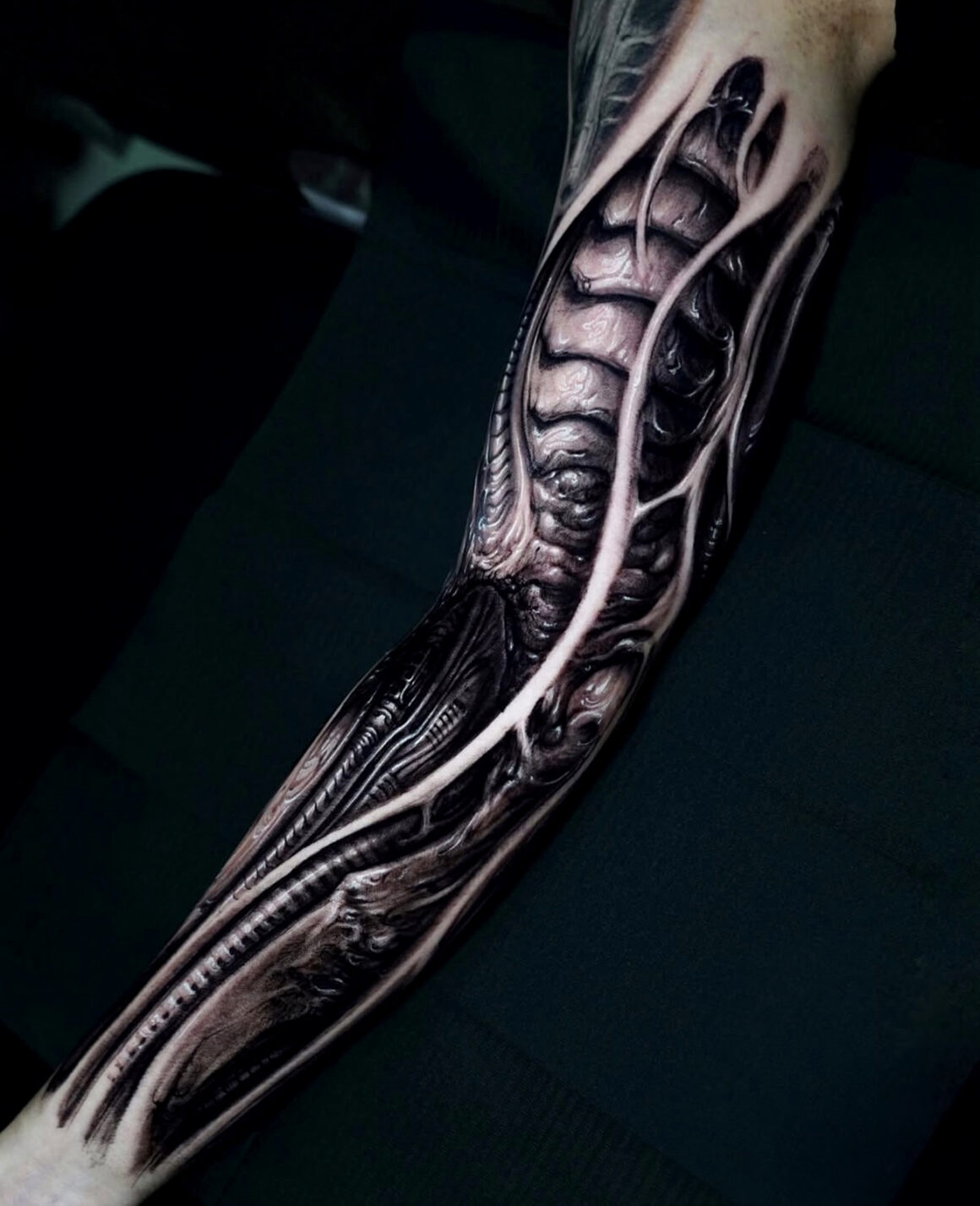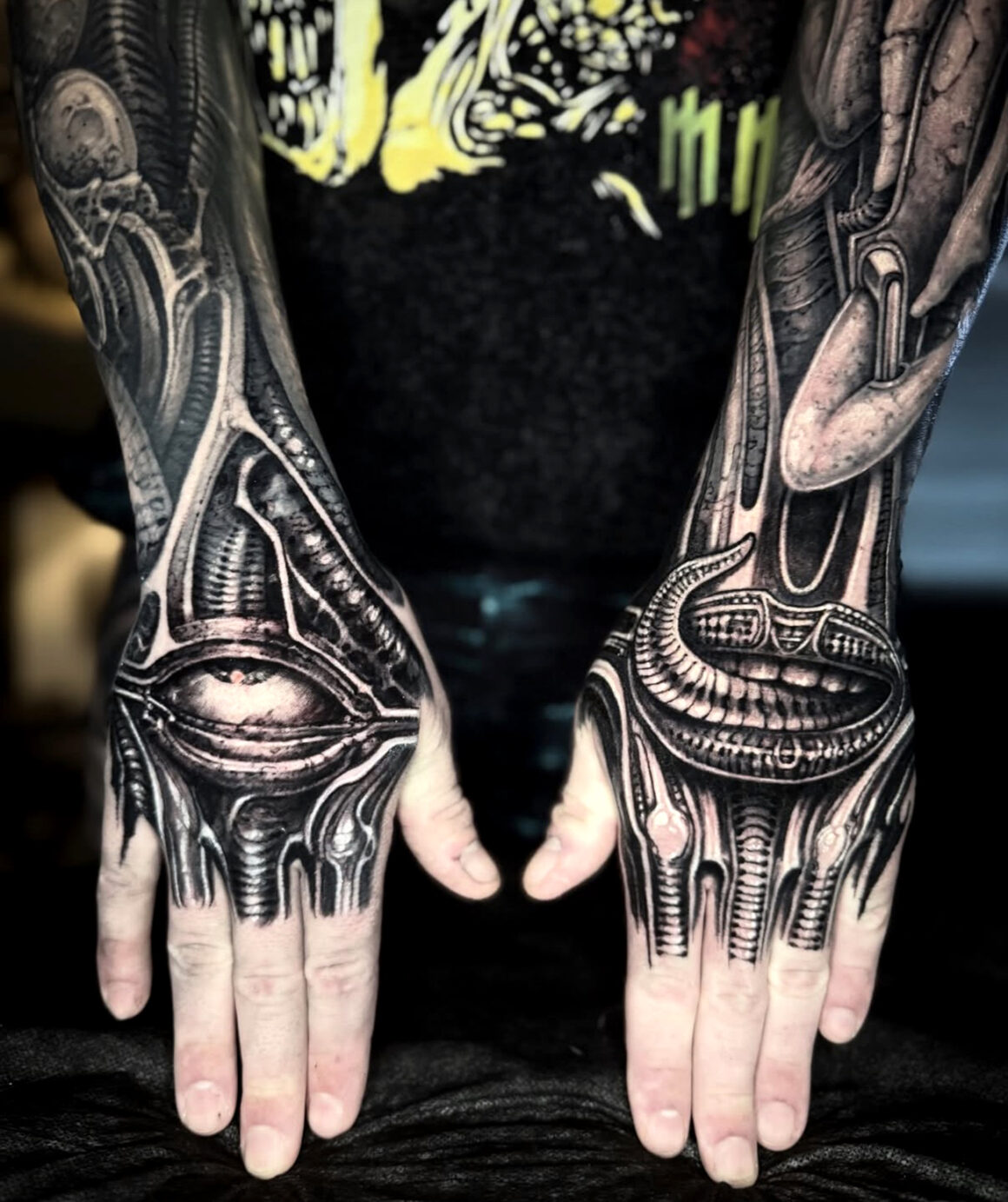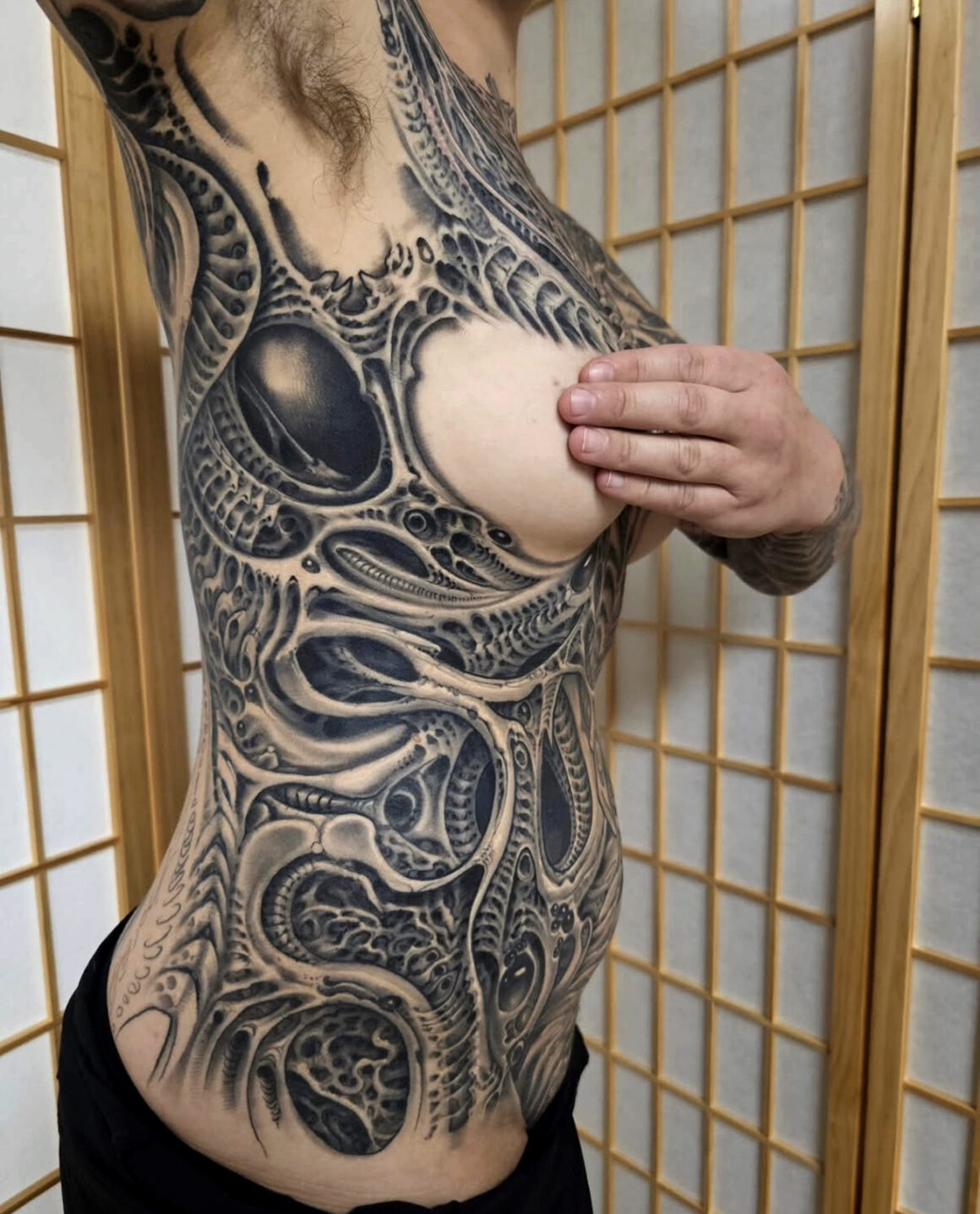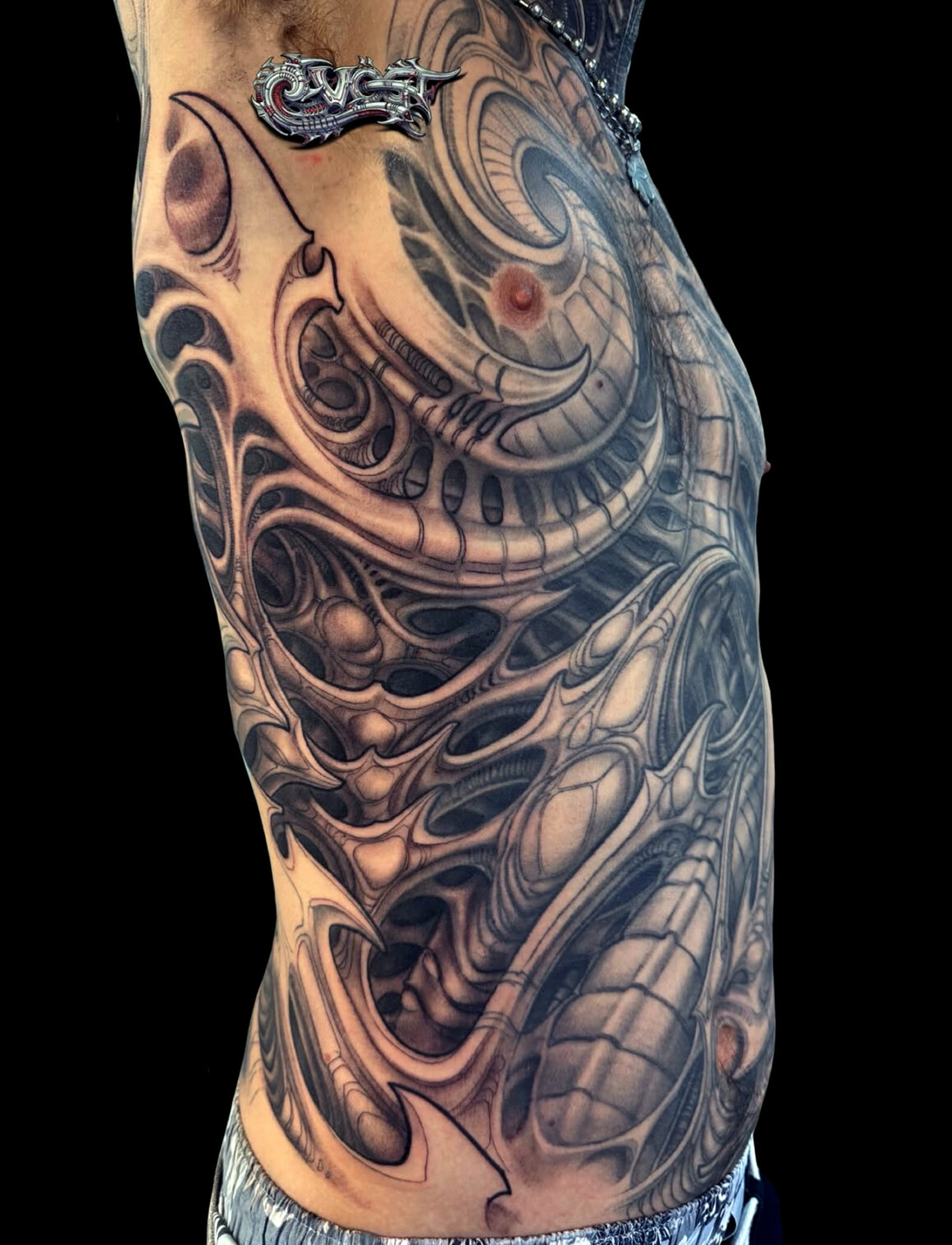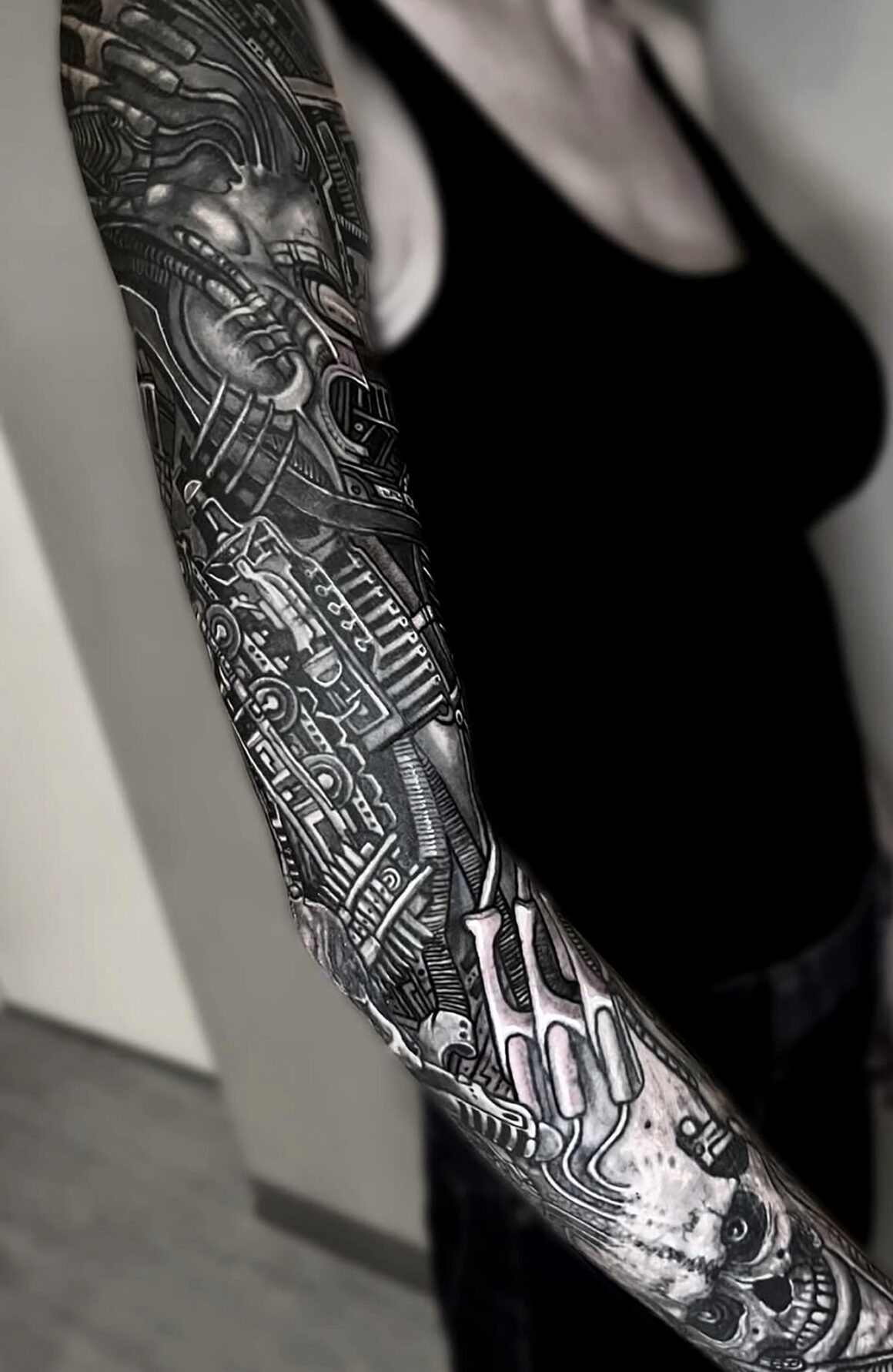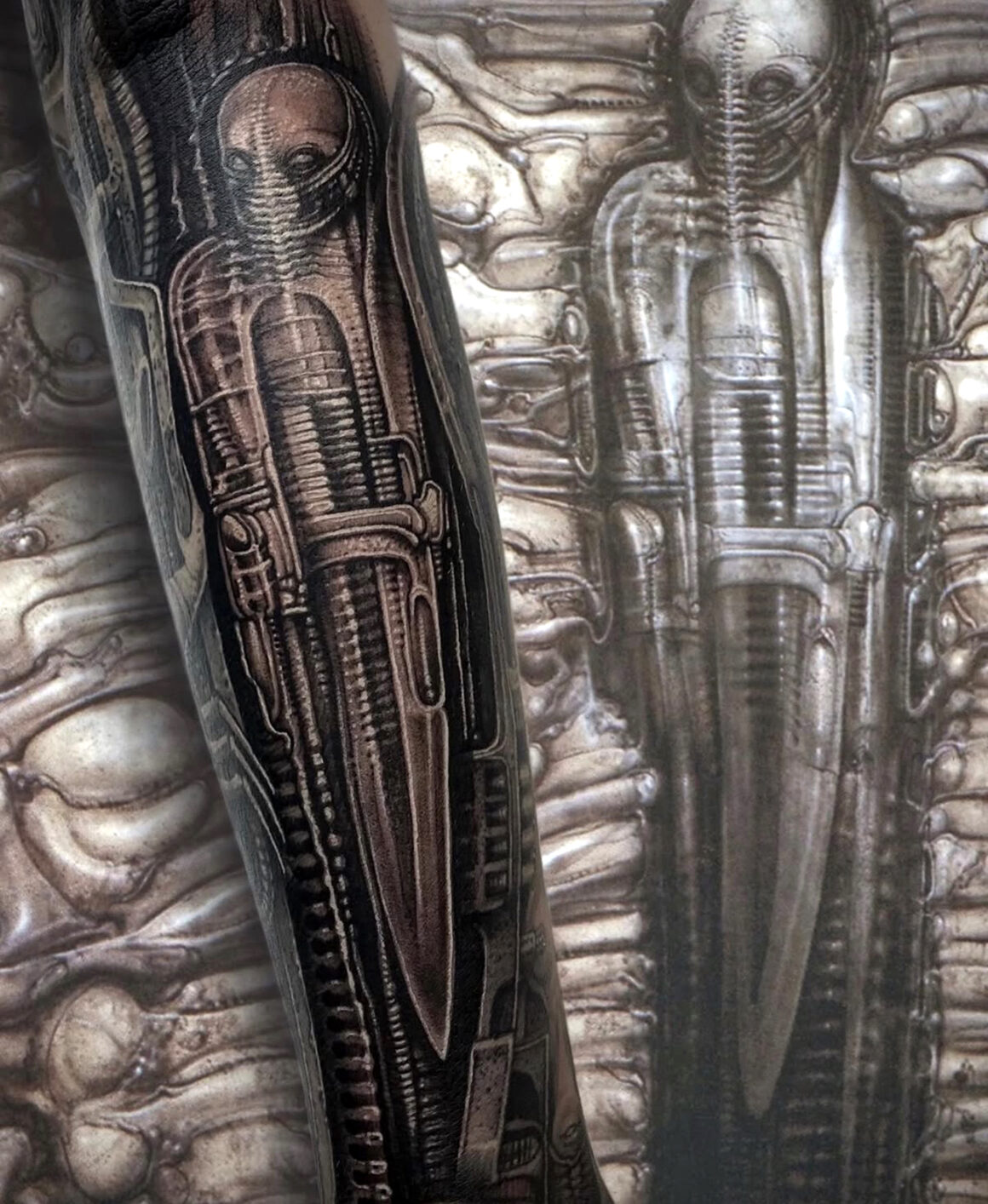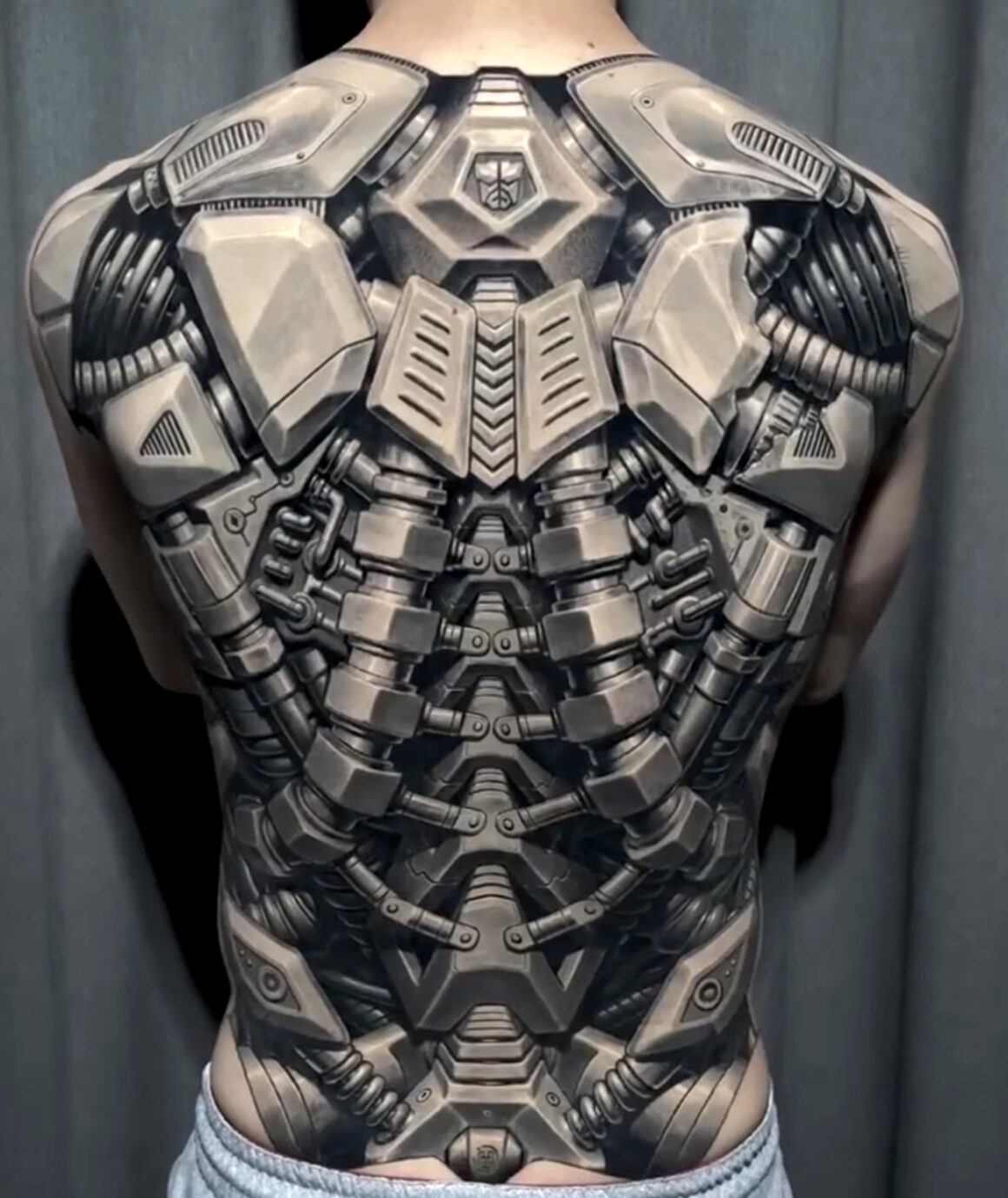







Biomechanical tattooing transforms the skin into a striking fusion of human anatomy, gears, and mechanical components. One of the most significant artistic influences on this genre is the work of H. R. Giger, the Swiss artist renowned for his biomechanical imagery, in which organic bodies, metallic structures, and industrial forms merge into dark, surreal, and futuristic visions.
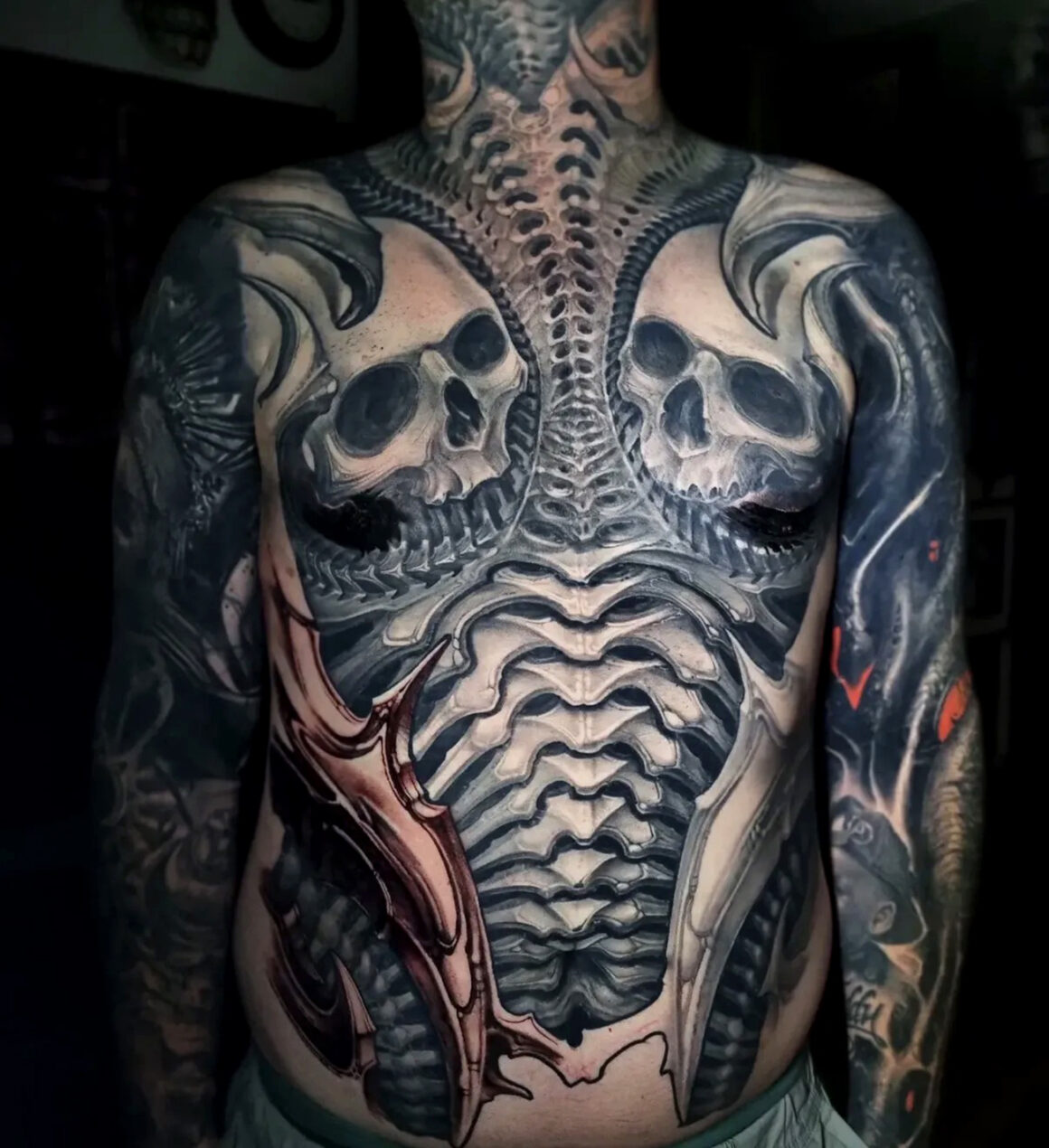
His aesthetic, made famous in part by his design of the creature in the film Alien, helped define a visual language in which the boundary between human and machine becomes blurred and unsettling.
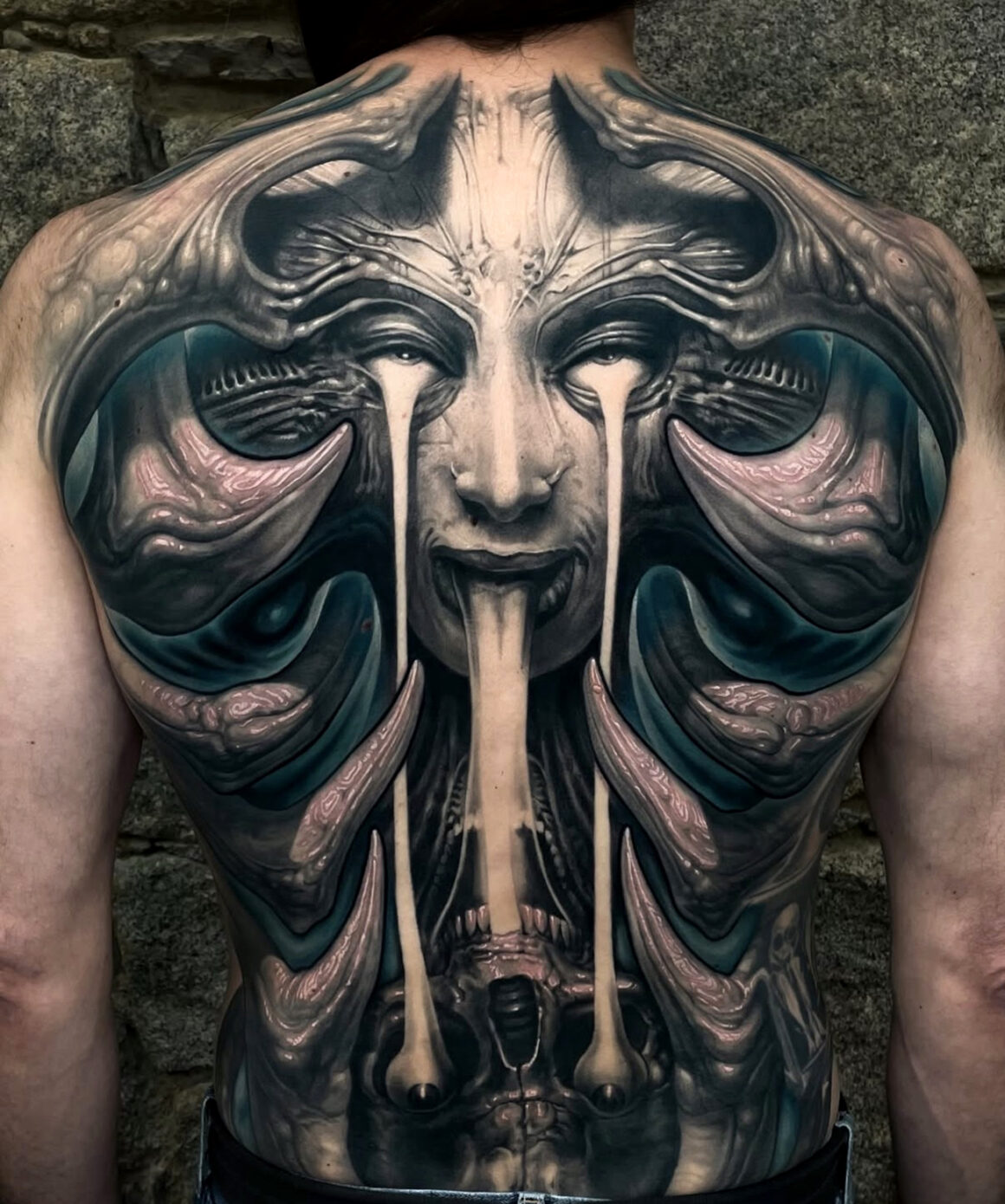
Inspired by these concepts and the imagery of science fiction, biomechanical tattooing creates the illusion that artificial structures, circuits, pistons, and metallic components lie beneath the surface of the body. Through the use of perspective, deep shading, and realistic contrasts, three-dimensional compositions are created that appear to tear open the skin, revealing an underlying technological universe.
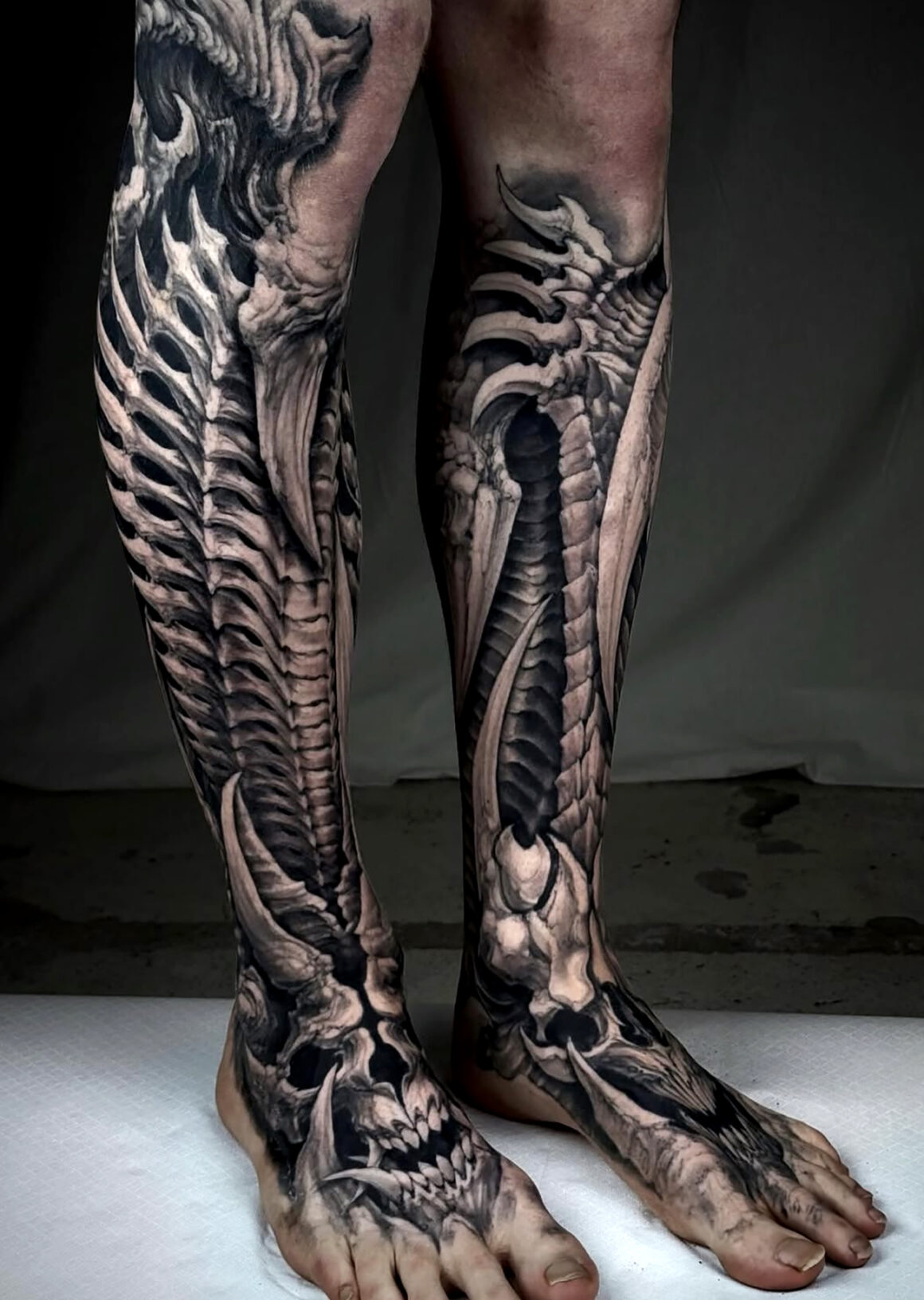
Arms, shoulders, legs, and backs become ideal canvases for intricate designs that follow the body’s anatomical contours and enhance muscular definition. Over time, the style has evolved to incorporate horror, cyberpunk, and futuristic influences, while preserving the visual dialogue between organism and machine that lies at the heart of Giger’s art.