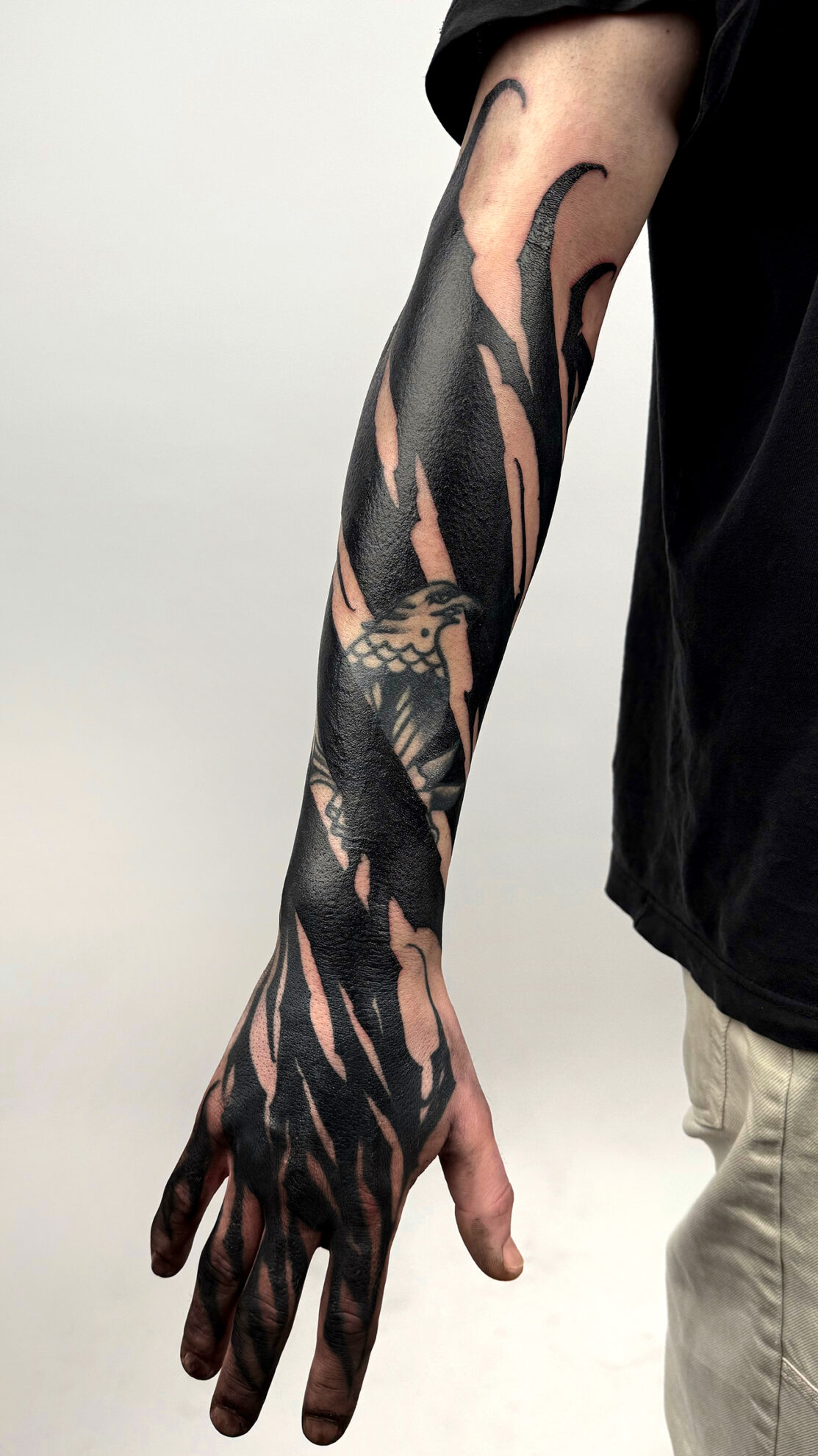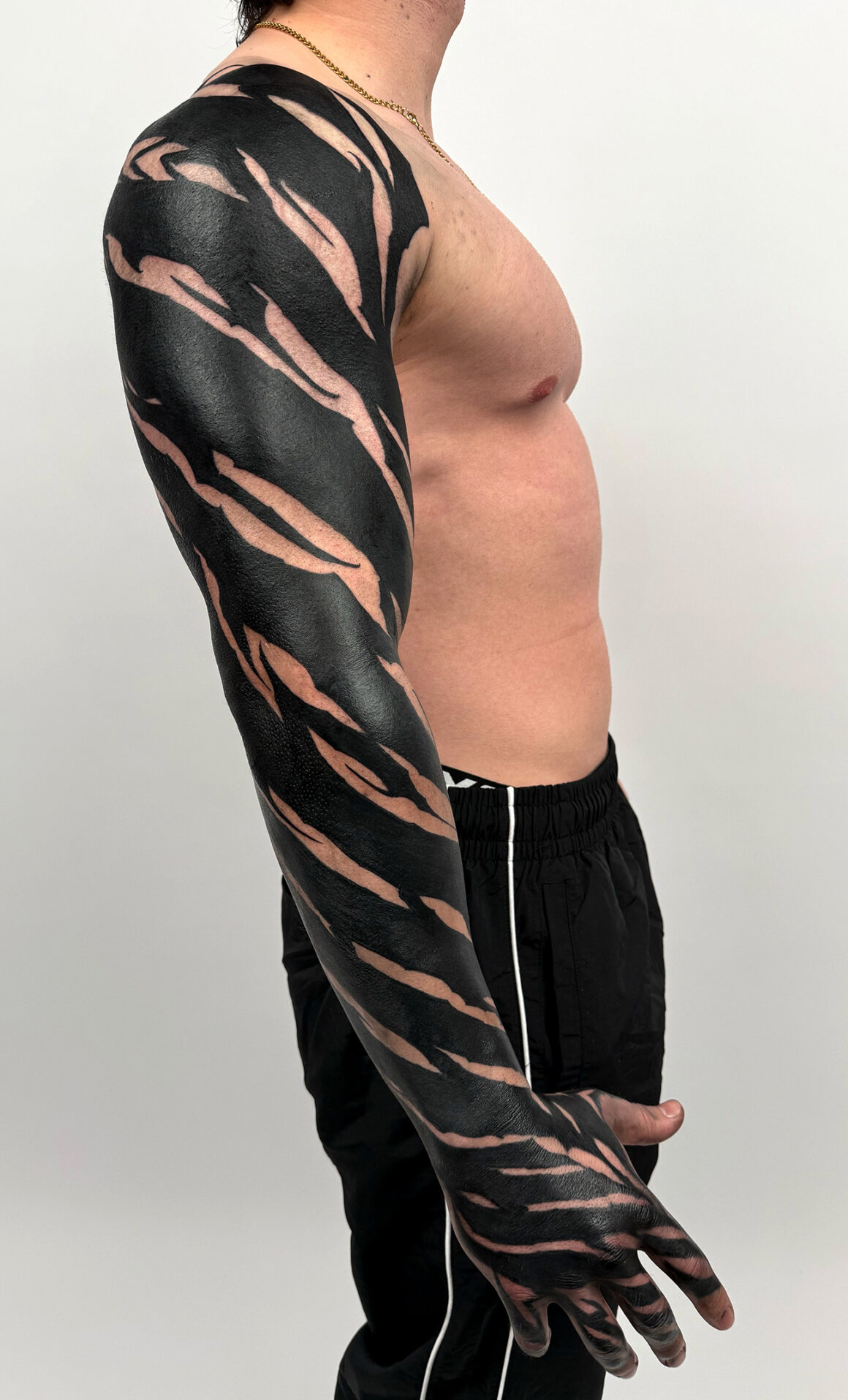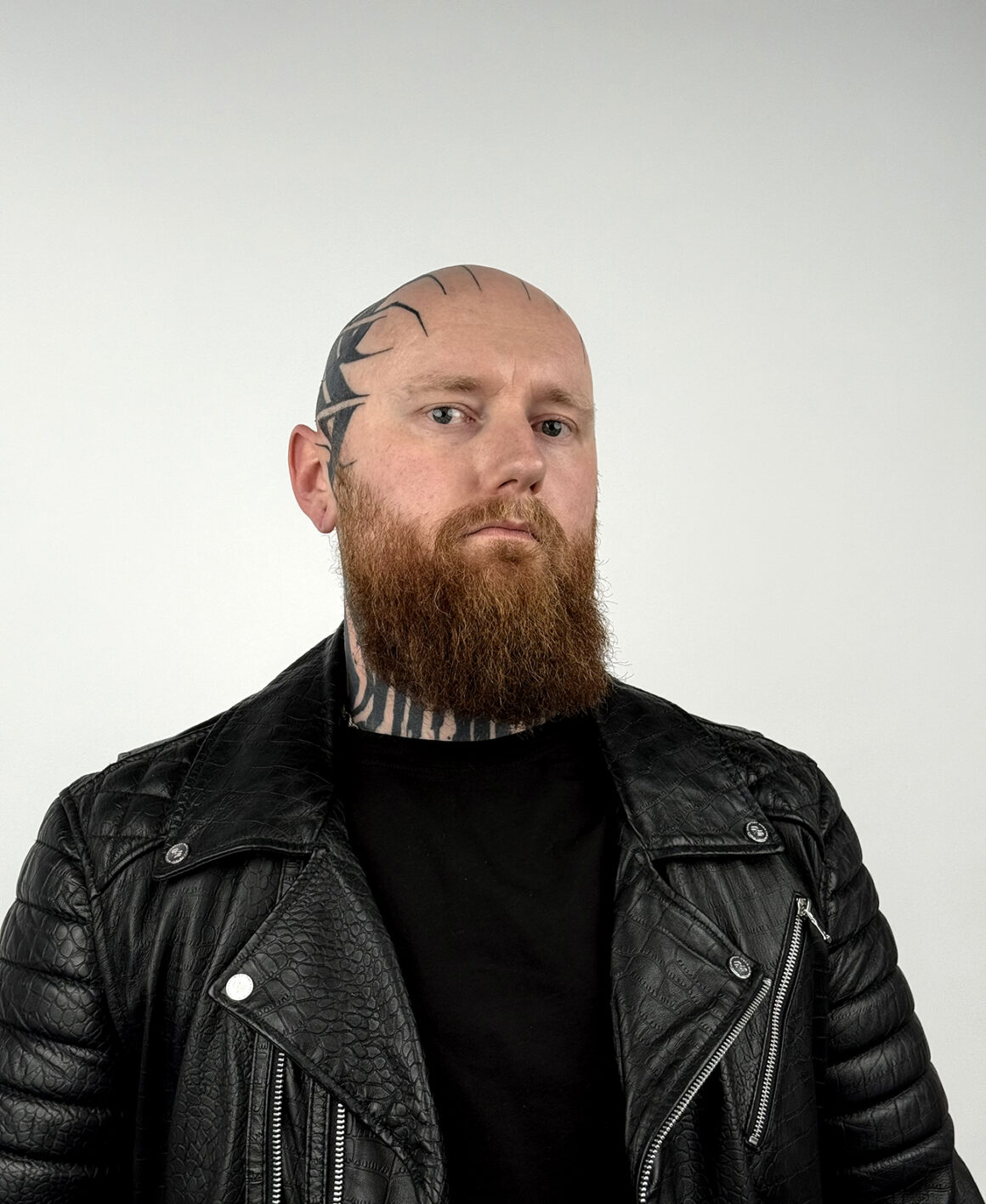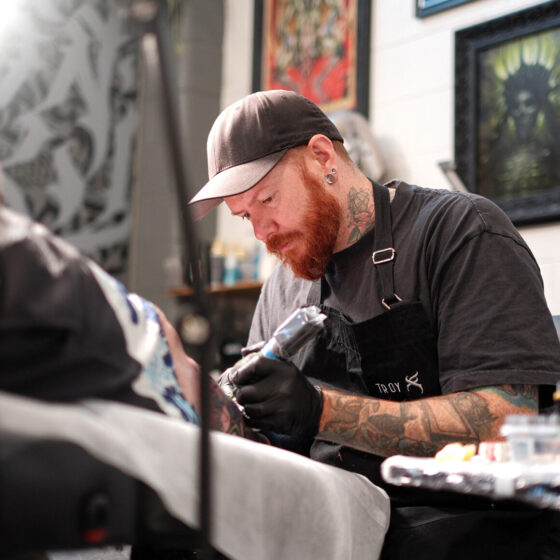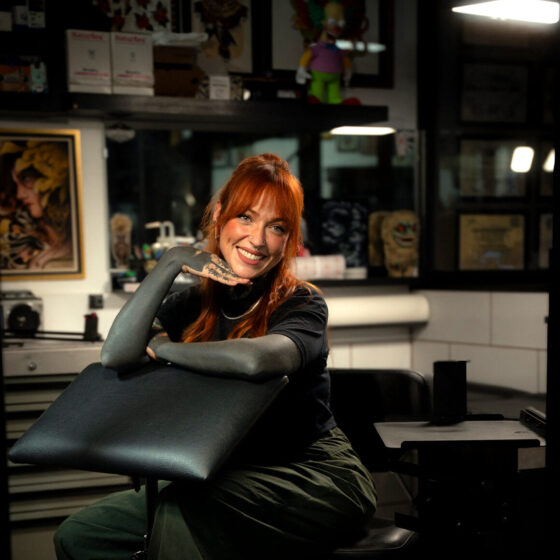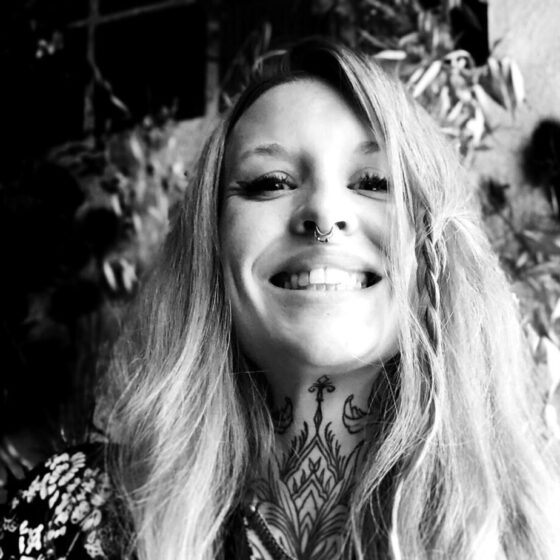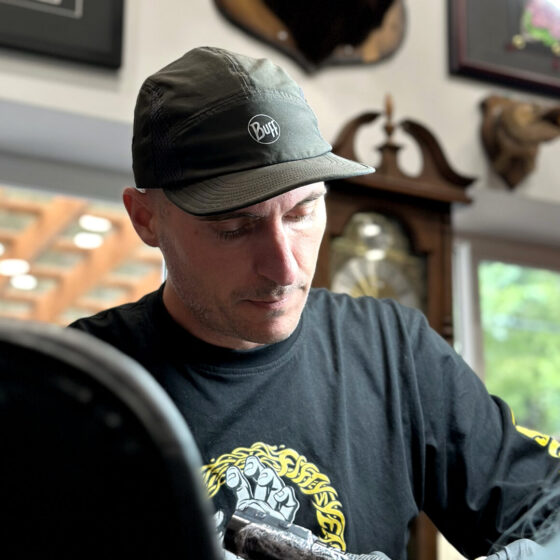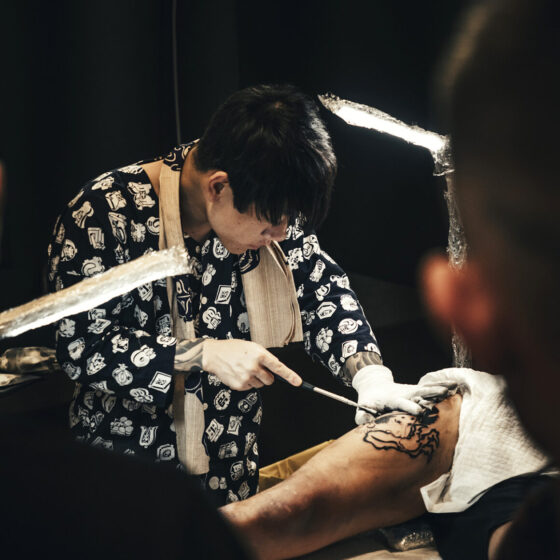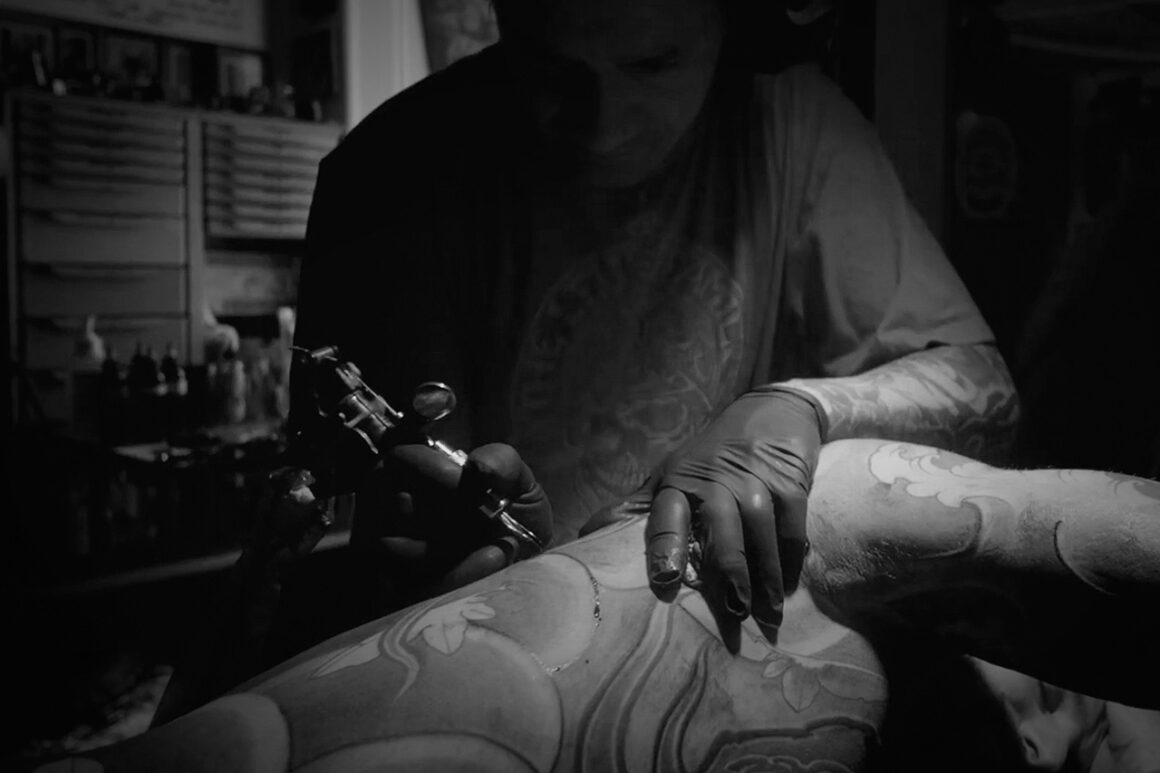
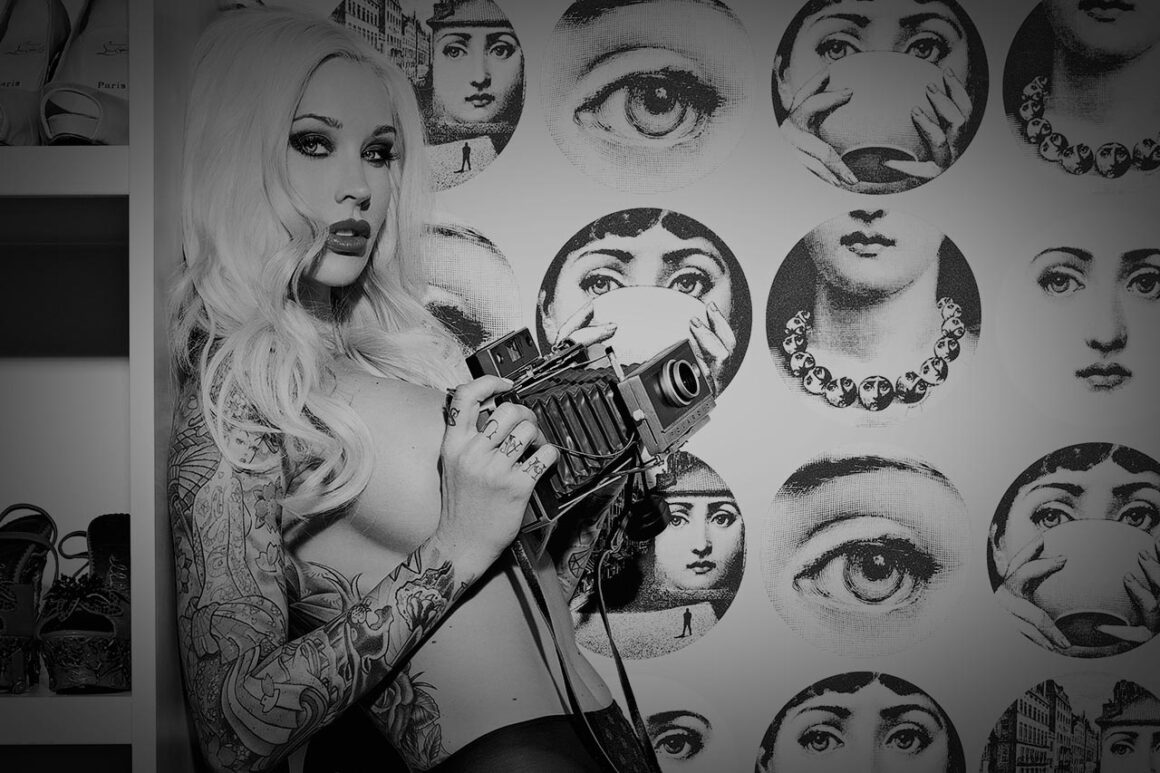
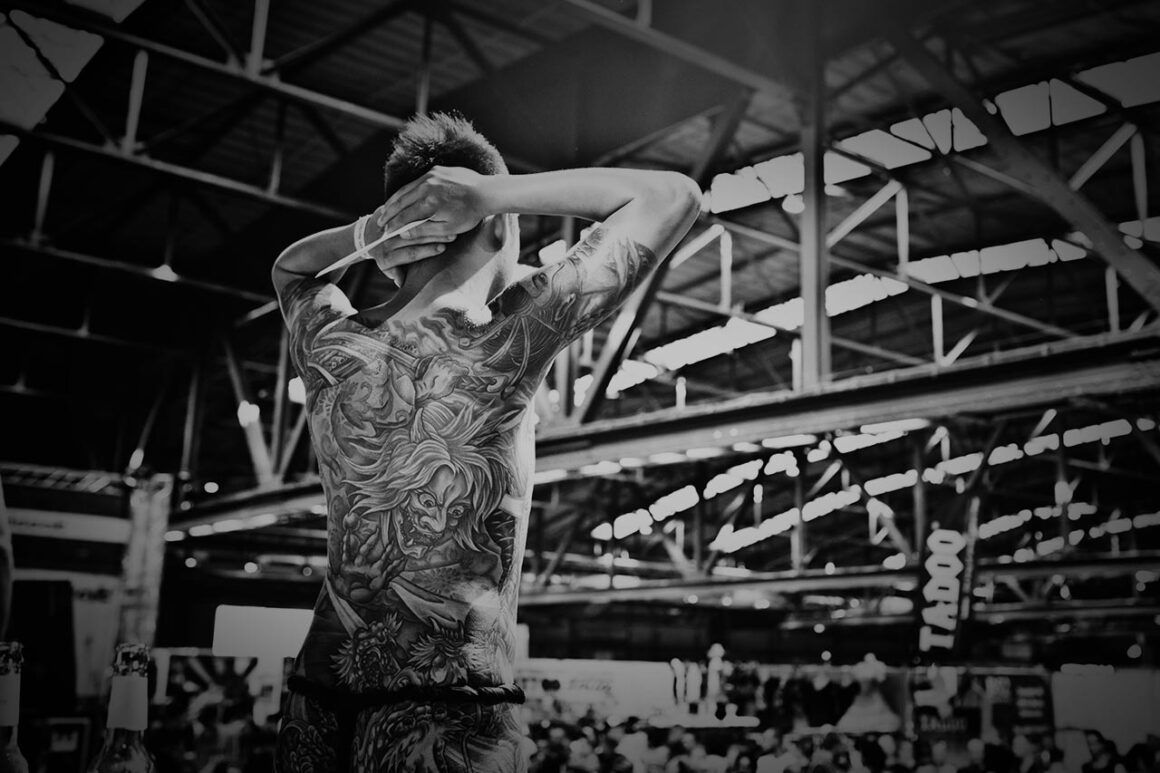

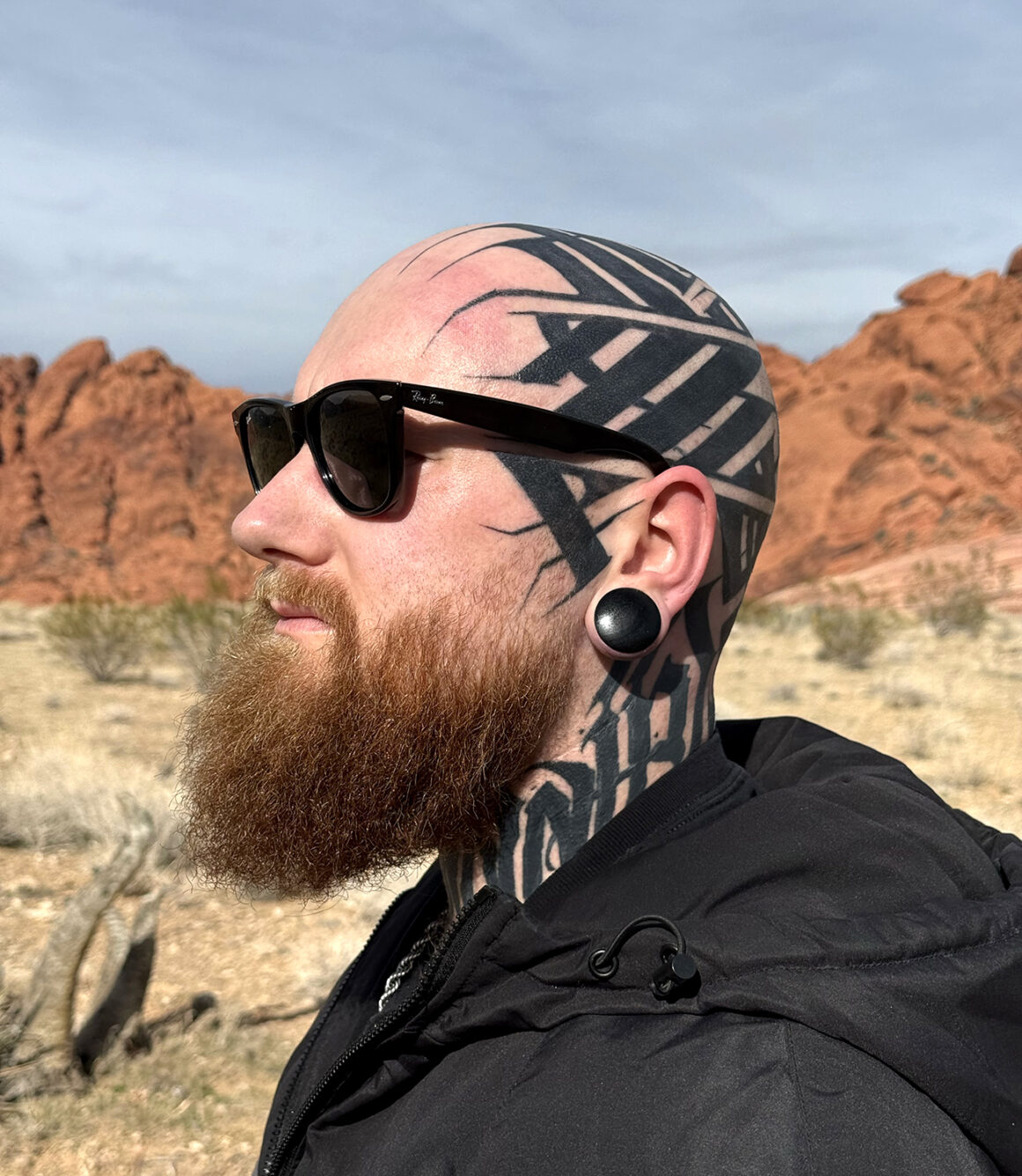
Born and raised in The Hague, Robbin Vieselman, better known as Sharp Force Trauma, left a decade-long career in fintech to fully dedicate himself to the intensity of heavy ornamental blackwork.
Today, working from his private studio Vagevuur in Delft, he creates bold Total Black compositions that blend freehand dark calligraphy, architectural flow, and uncompromising saturation. His work is not about symbolism or decoration, but about impact, discipline, and commitment — tattoos that engage with the body as sculptural forms, balancing brutality and refinement within a single, solid field of black.
Where are you from and where do you live?
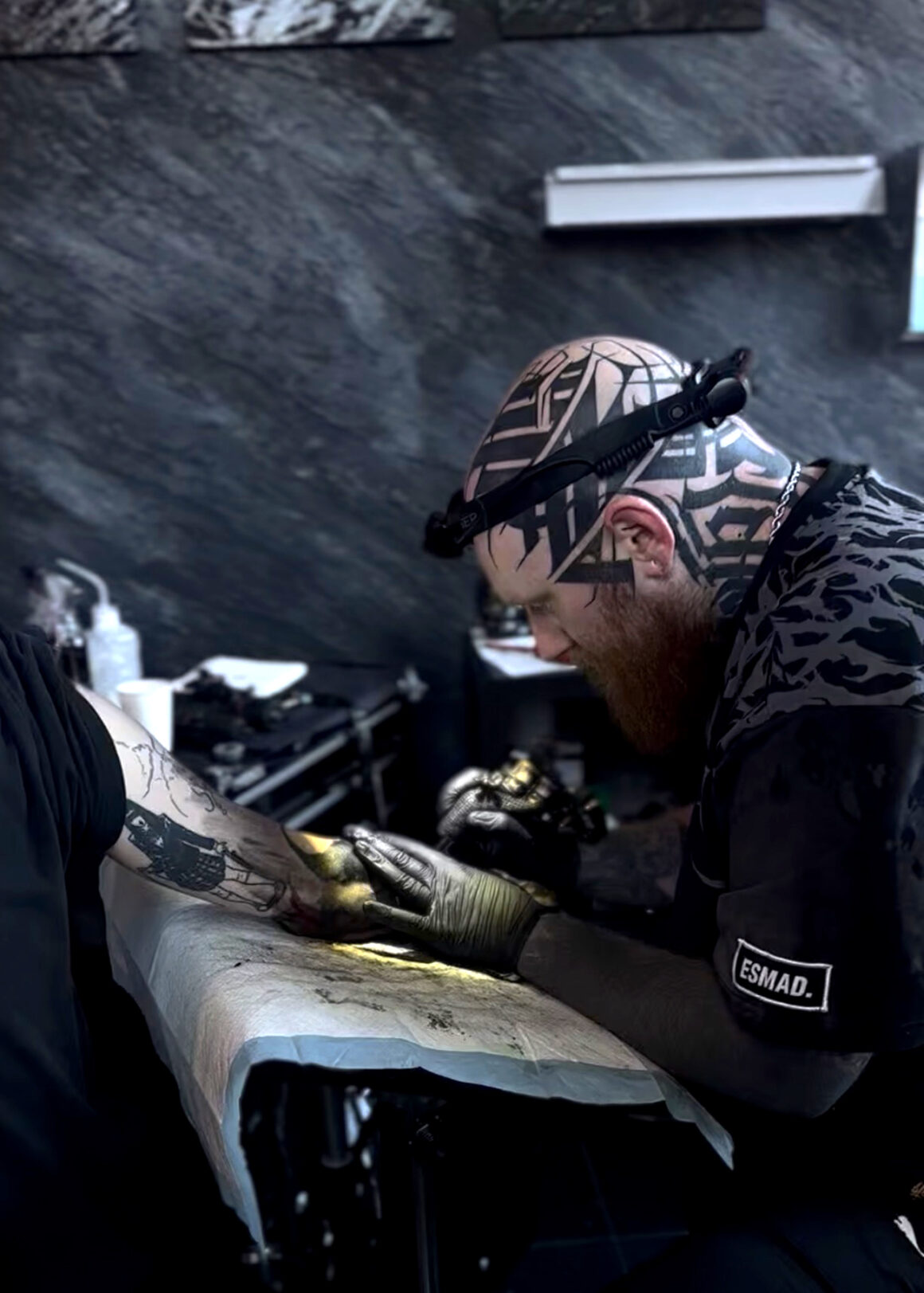
My name is Robbin Vieselman. I was born and raised in The Hague in The Netherlands and my tattoo studio Vagevuur is located in Delft. My artist name is Sharp Force Trauma and you can find me on Instagram via the handle @sharpforcetrauma.
Before being a tattoo artist what did you do?
I studied UX design and went on to spend ten years working in the financial technology sector. Over time, the lack of creative fulfillment became impossible to ignore. Being a tattoo artist was my dream job since I was very little. After saving enough to make the transition, I resigned from my job and began an apprenticeship at a tattoo shop. Here I learned some basics, but most I learned through my own research and determination. I started collecting tattoos when I was eighteen. Even while working in the financial sector, I never felt the need to hide them. Getting my hands tattooed was a deliberate choice. I always felt that if a company couldn’t accept my tattoos, it probably wasn’t the right place for me anyway.
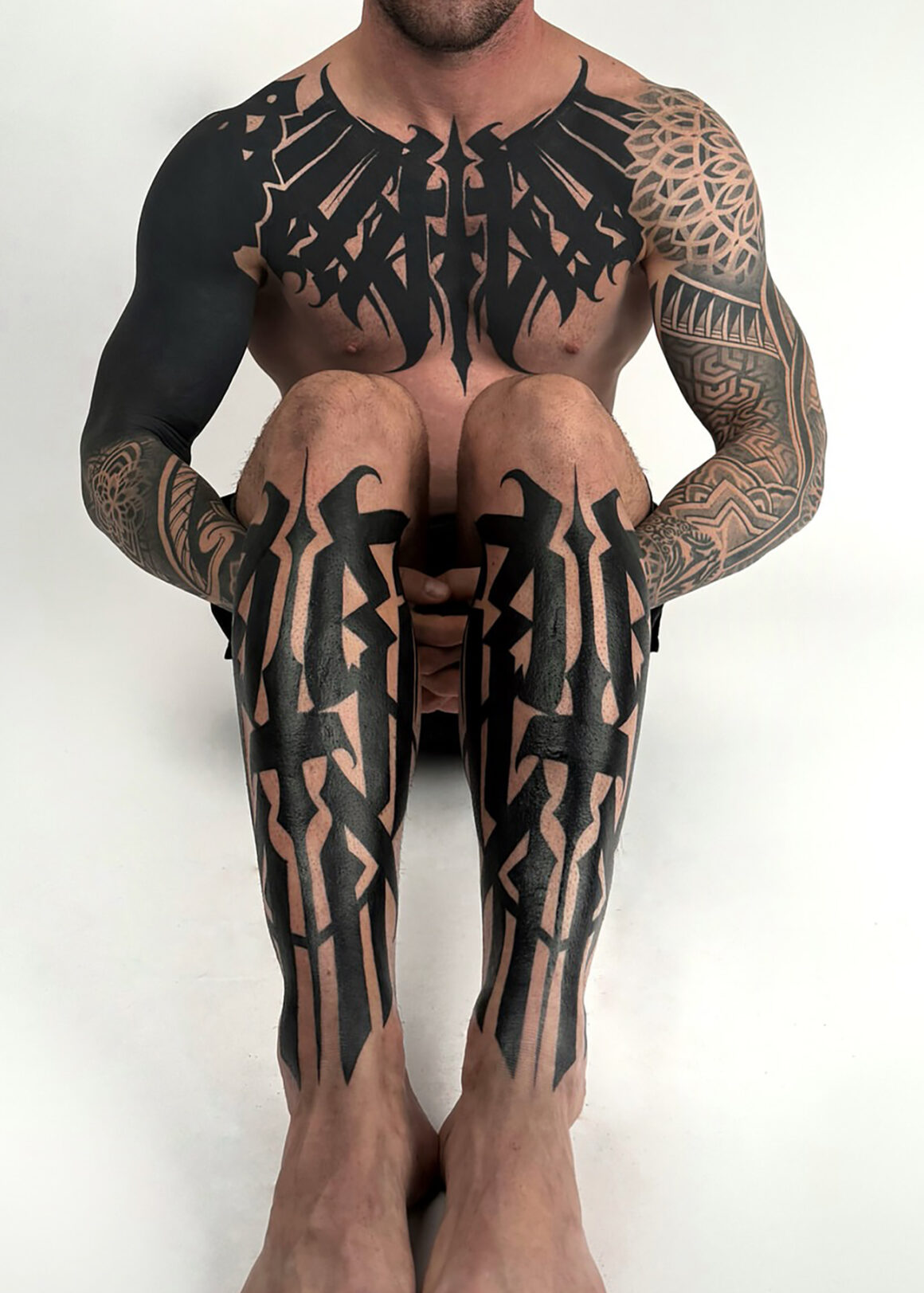
As I kept collecting, I eventually discovered heavy ornamental blackwork. The bold contrast, flow, and way it worked with the body immediately stood out to me. It made me look at tattooing differently and deepened my appreciation for the craft as a whole. At that time, I only saw myself as a collector. Becoming a tattoo artist wasn’t something I considered, and the idea of one day focusing on heavy blackwork felt far removed from reality. Looking back, though, those years of collecting quietly shaped my taste and laid the groundwork for the path I would later follow.
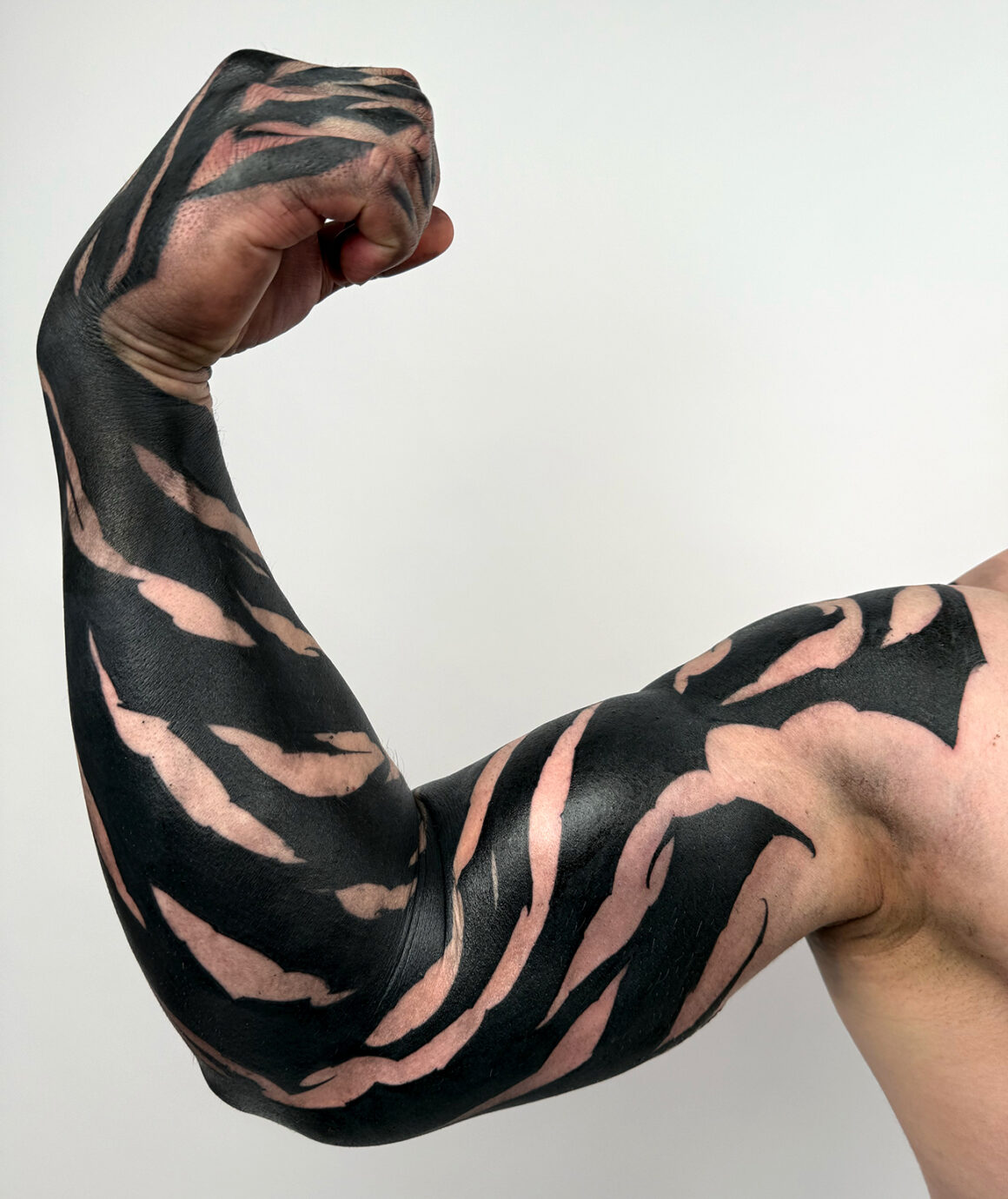
You are now well known for your Total Black Ornamental style. What do you like about this style?
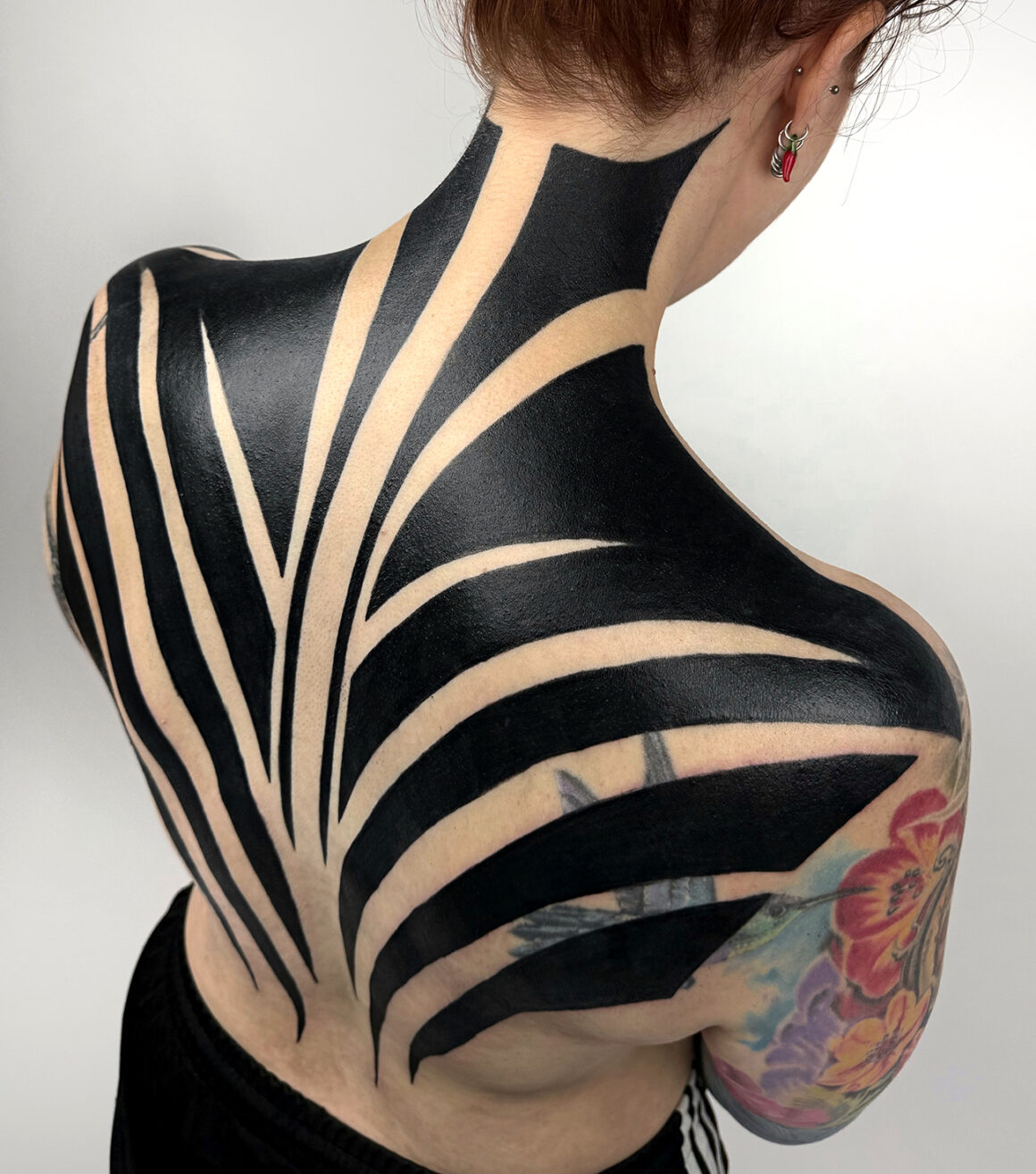
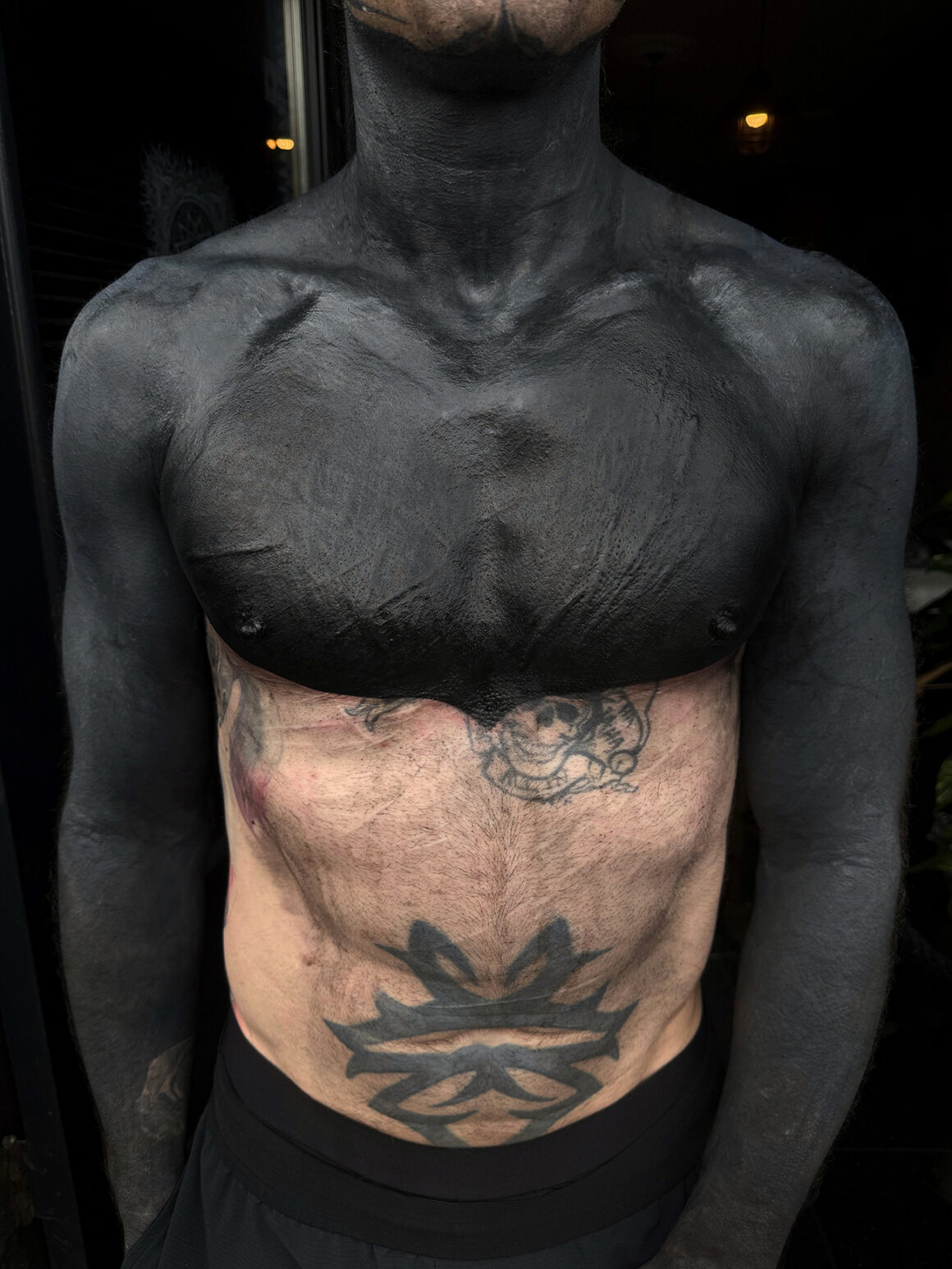
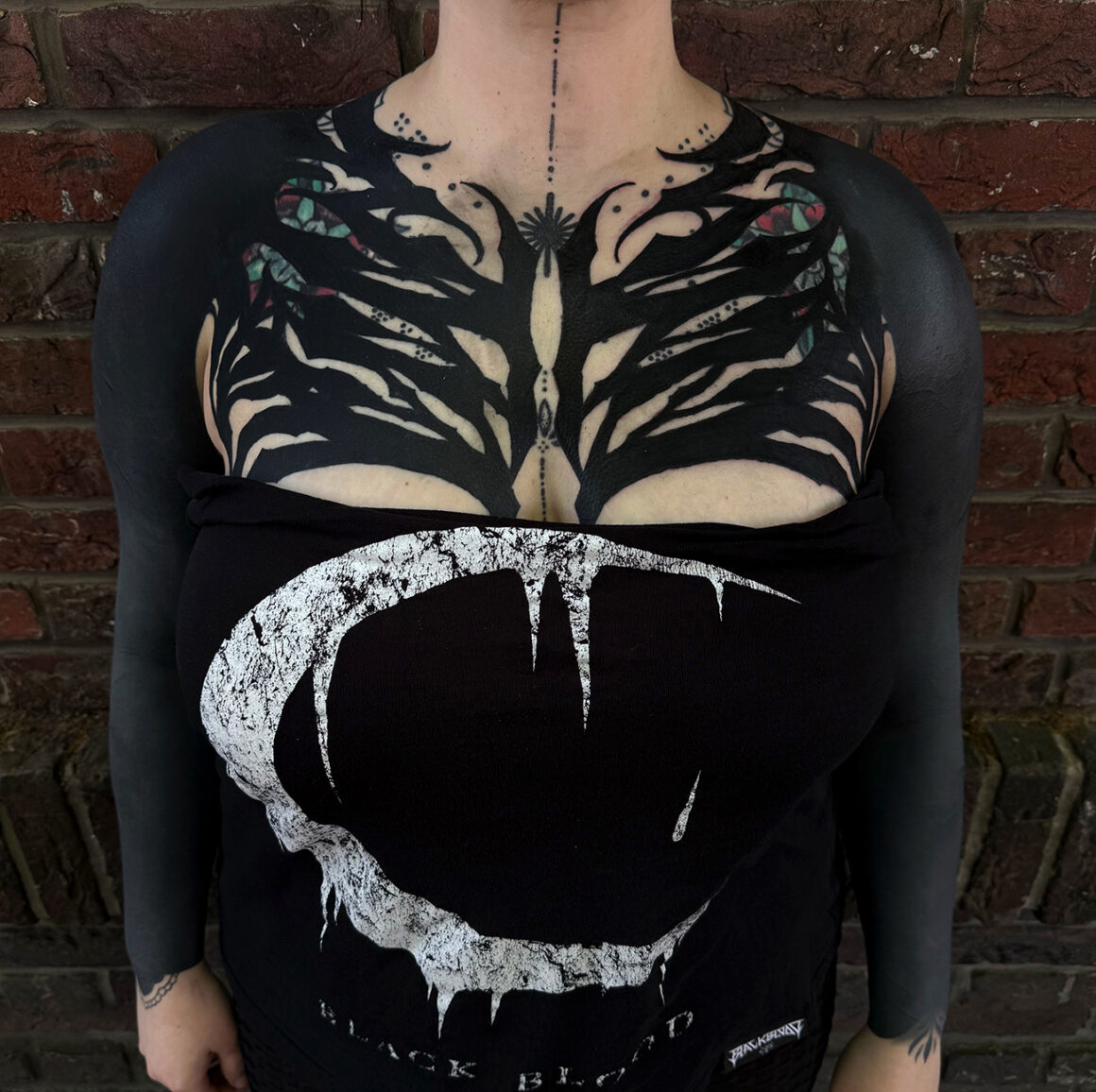
Heavy blackwork attracts me because of its extremeness and strong contrast. Large areas of solid black create an immediate impact without needing complex imagery or symbolism. It doesn’t rely on deep meanings that need to be explained. The statement is already clear through the scale and commitment behind the work.
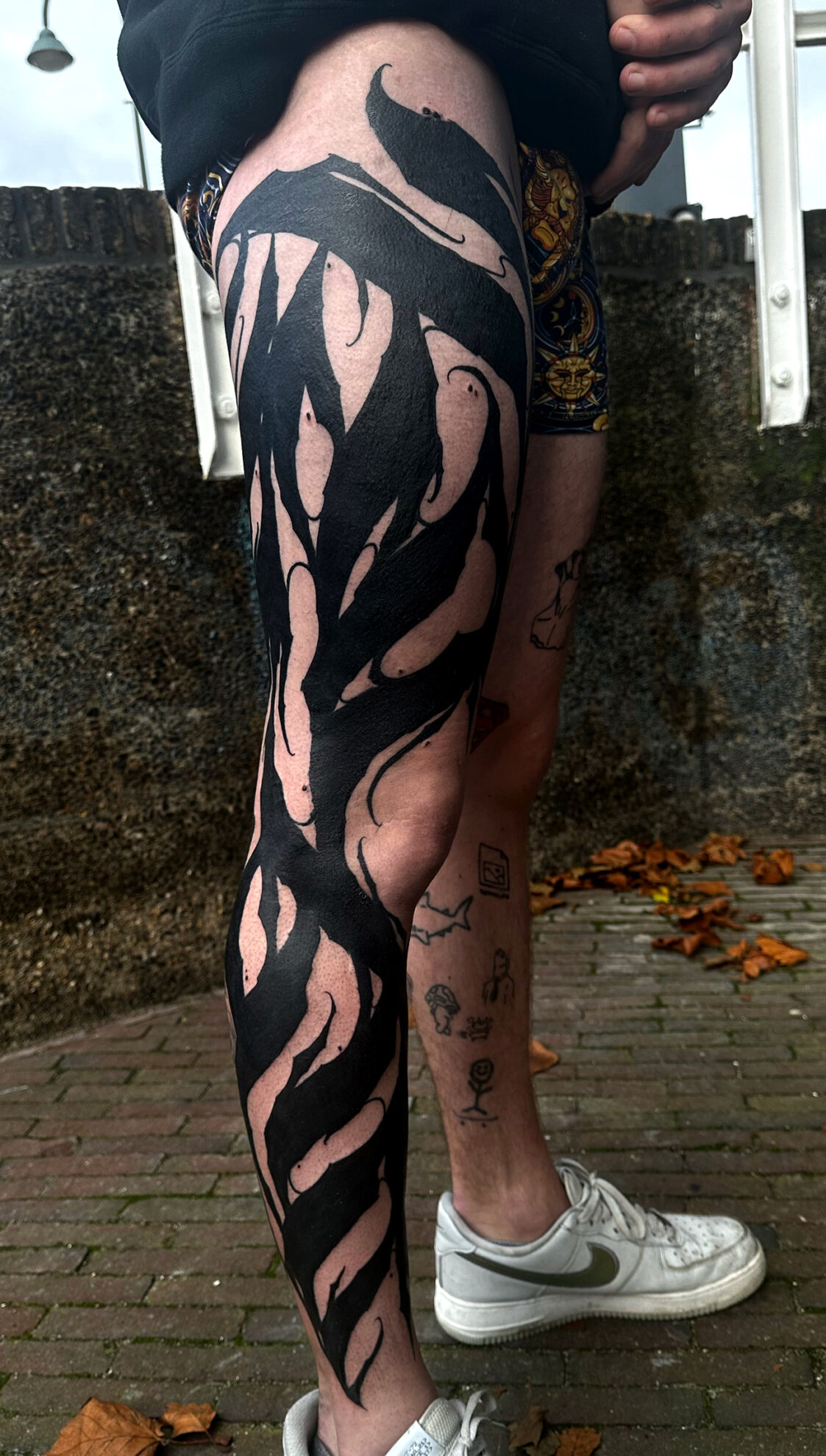
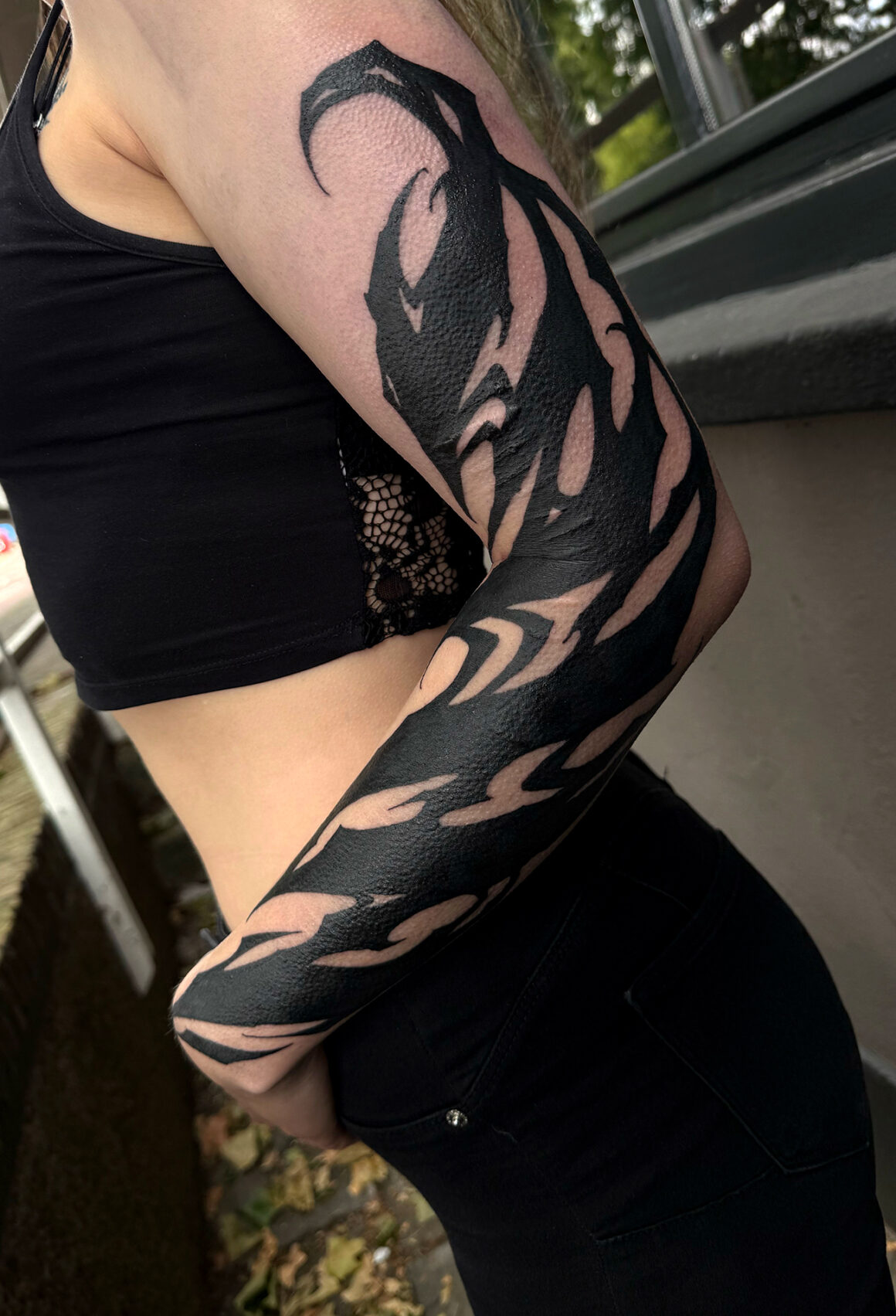
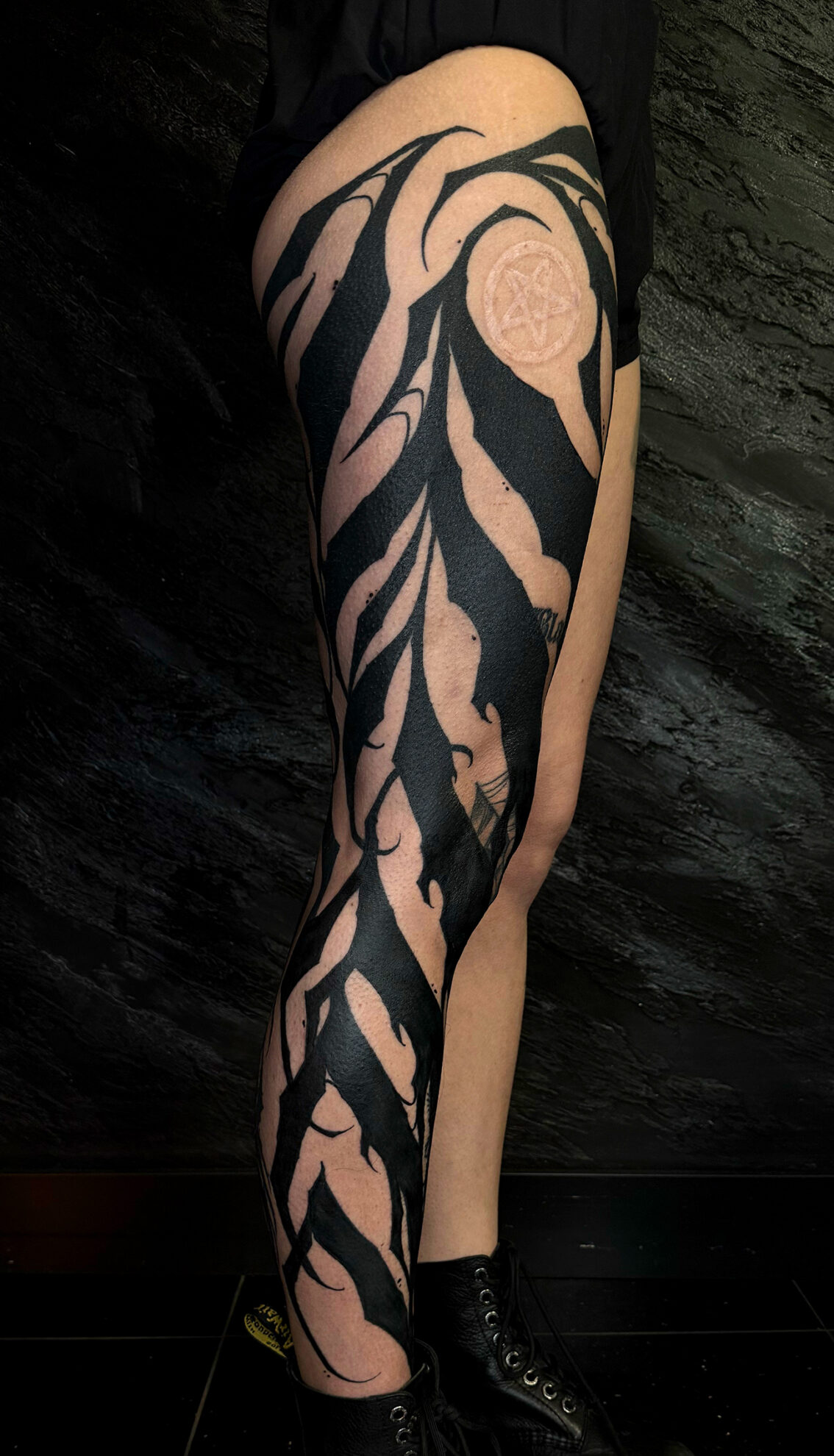
What I appreciate just as much is how blackwork works with the body. When done well, it follows natural shapes and movement, enhancing them instead of distracting from them. The result can feel bold but at the same time calm and minimal.
I’m also drawn to the contrast between the process and the final result.
Blacking out skin is intense, repetitive, and physically demanding, yet the finished look can appear clean and simple. I often compare it to a modern minimalist leather couch. The process behind leather is raw and extreme, but when treated and shaped properly, it becomes a refined and beautiful piece. Heavy blackwork carries that same tension between intensity and minimalism. There is also a countercultural element. Fifteen years ago, a full sleeve already stood out. Today sleeves are common almost everywhere. A blackout sleeve still feels different. It represents a deeper level of commitment and remains a subtle but clear middle finger to mainstream culture.
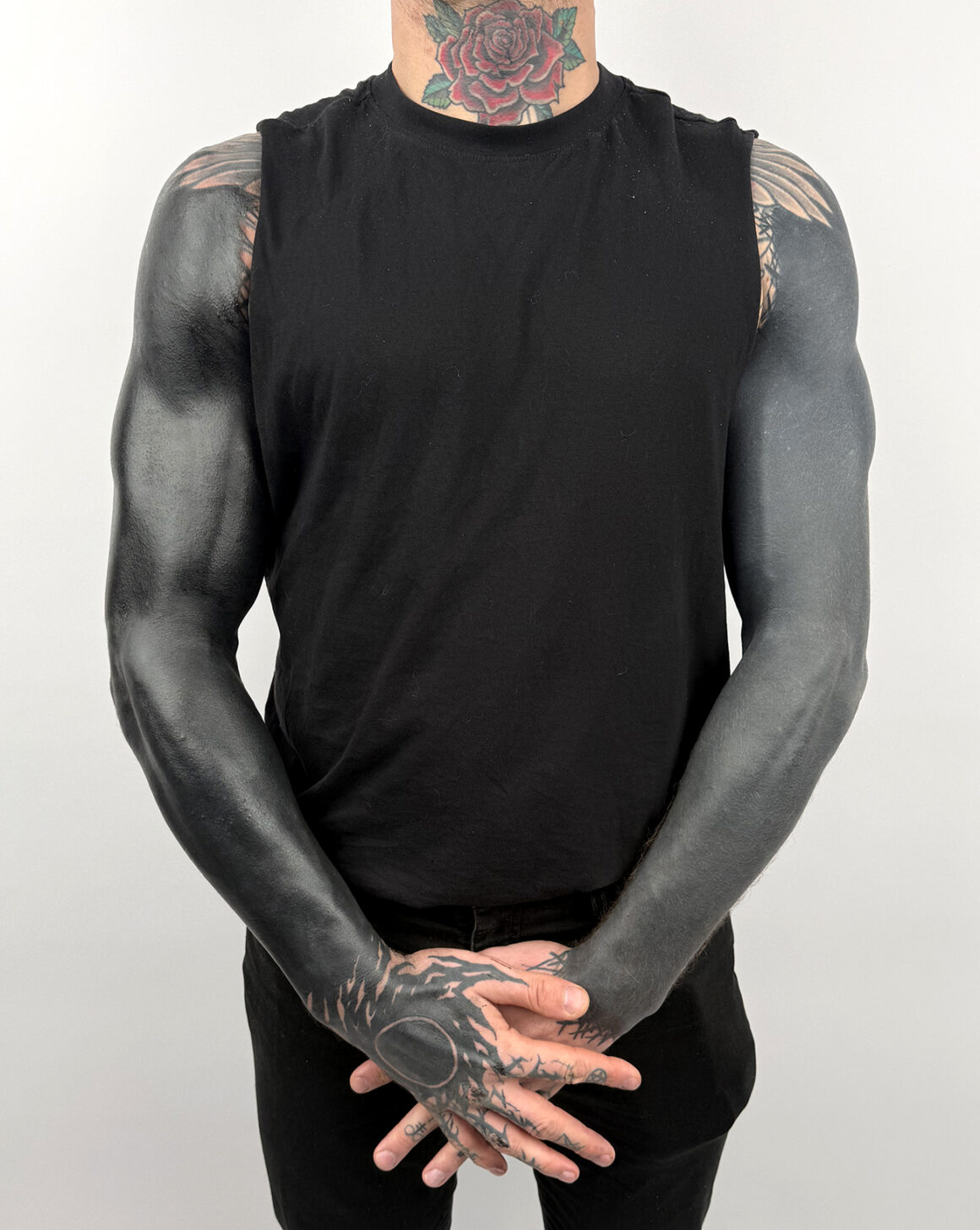
What are the most challenging aspects of this style for you?
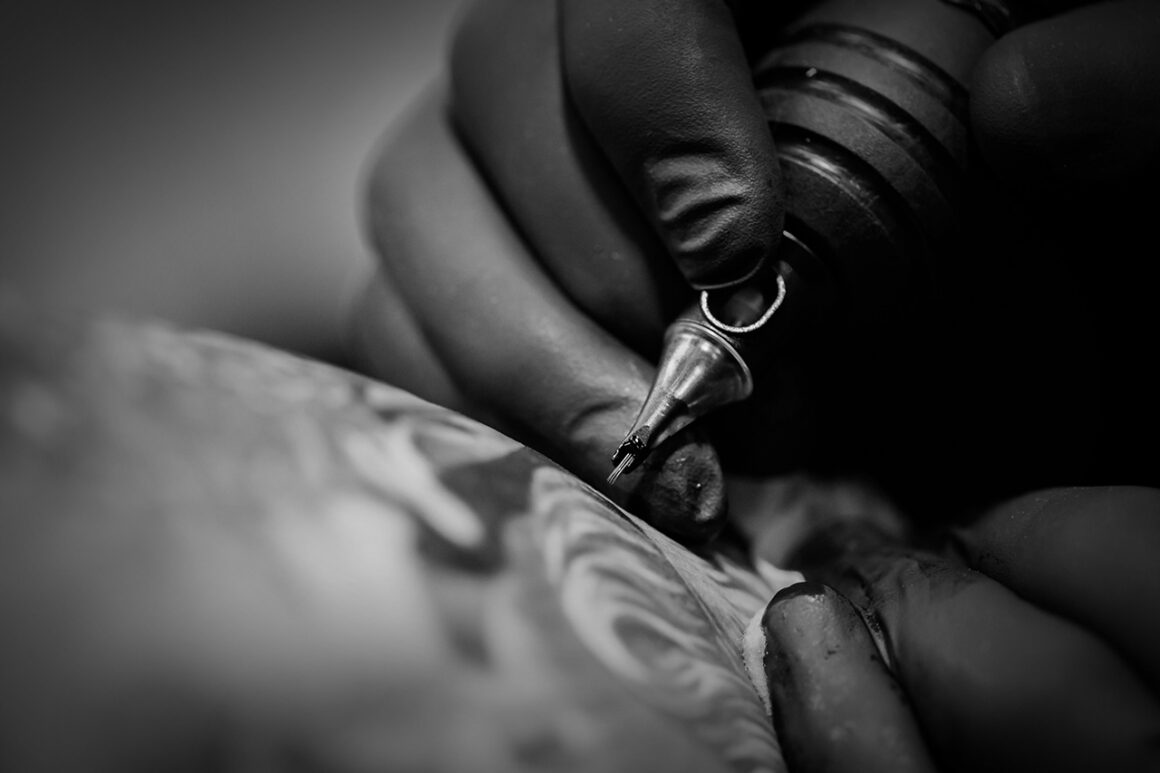
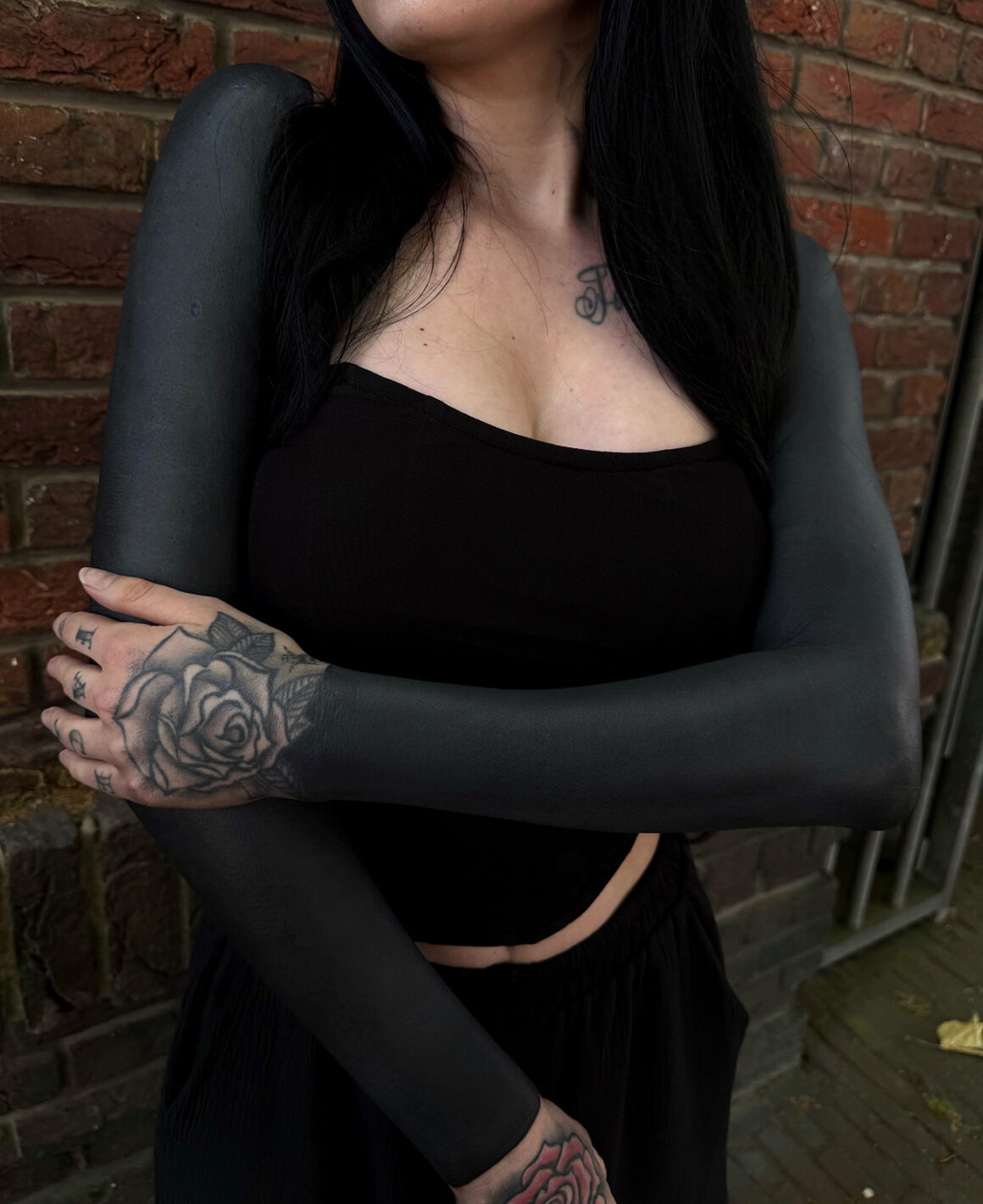
Tattooing large areas of solid black is far more difficult than it appears. From the outside, it can look straightforward, which is why it’s often underestimated, even within the industry. The reality is highly technical. Achieving smooth, consistent saturation over a large surface requires control, patience, and a deep understanding of how skin behaves.
There are many variables involved, and they rarely stay constant. Skin quality differs from client to client.
Some skin is more hydrated, some more resilient, while other skin can be fragile or unpredictable. Even within a single session, conditions can change. Excessive bleeding, swelling, or sensitivity can affect how the pigment sits and how the skin responds. Because of this, tattooing heavy black demands constant focus and the ability to adapt in real time. Machine setup, needle choice, hand speed, pressure, and stretching all need to be adjusted as the session progresses.
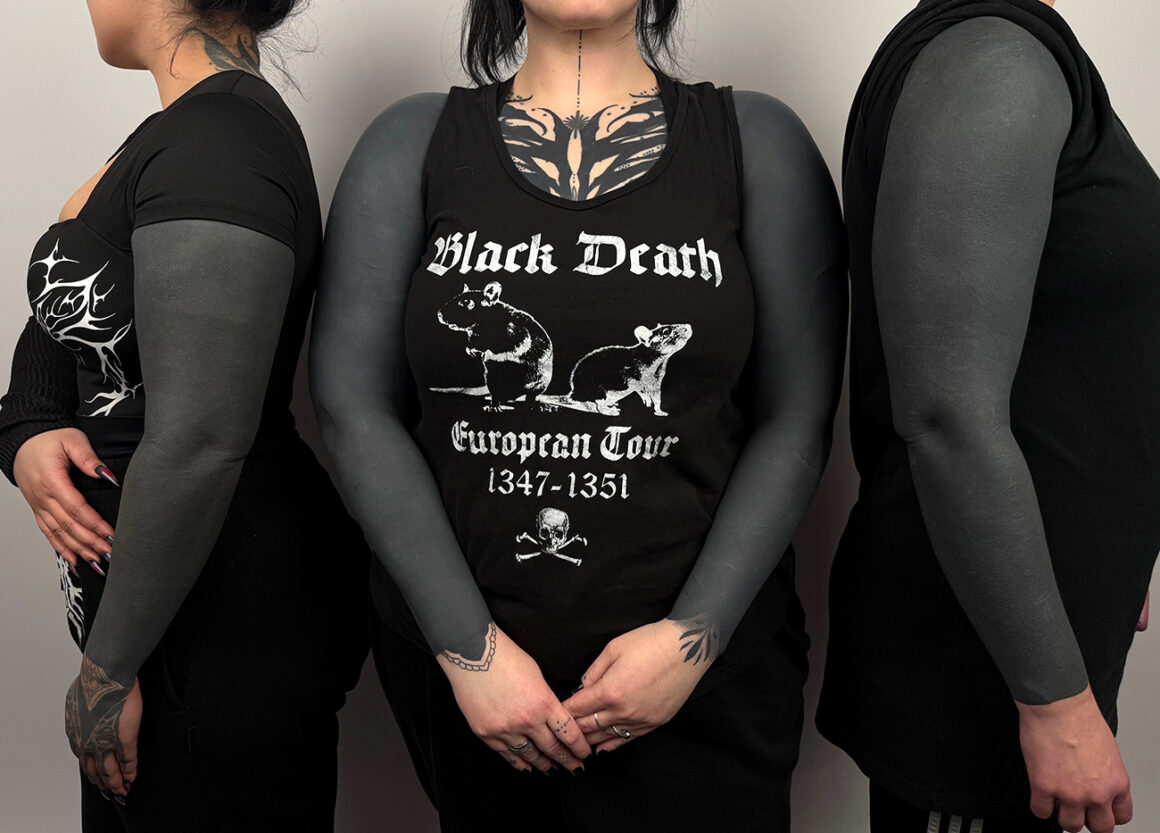
Small misjudgments quickly become visible in large black areas. To gain more control over these variables, I also learned how to build and modify my own machines, allowing me to fine-tune the way they perform and better support the demands of blackout work. Mastering this process has been one of the most challenging and rewarding parts of tattooing. It requires discipline and technical awareness, and I take pride in having developed the control, tools, and consistency needed to execute this kind of work properly.
And what about your hallmark?
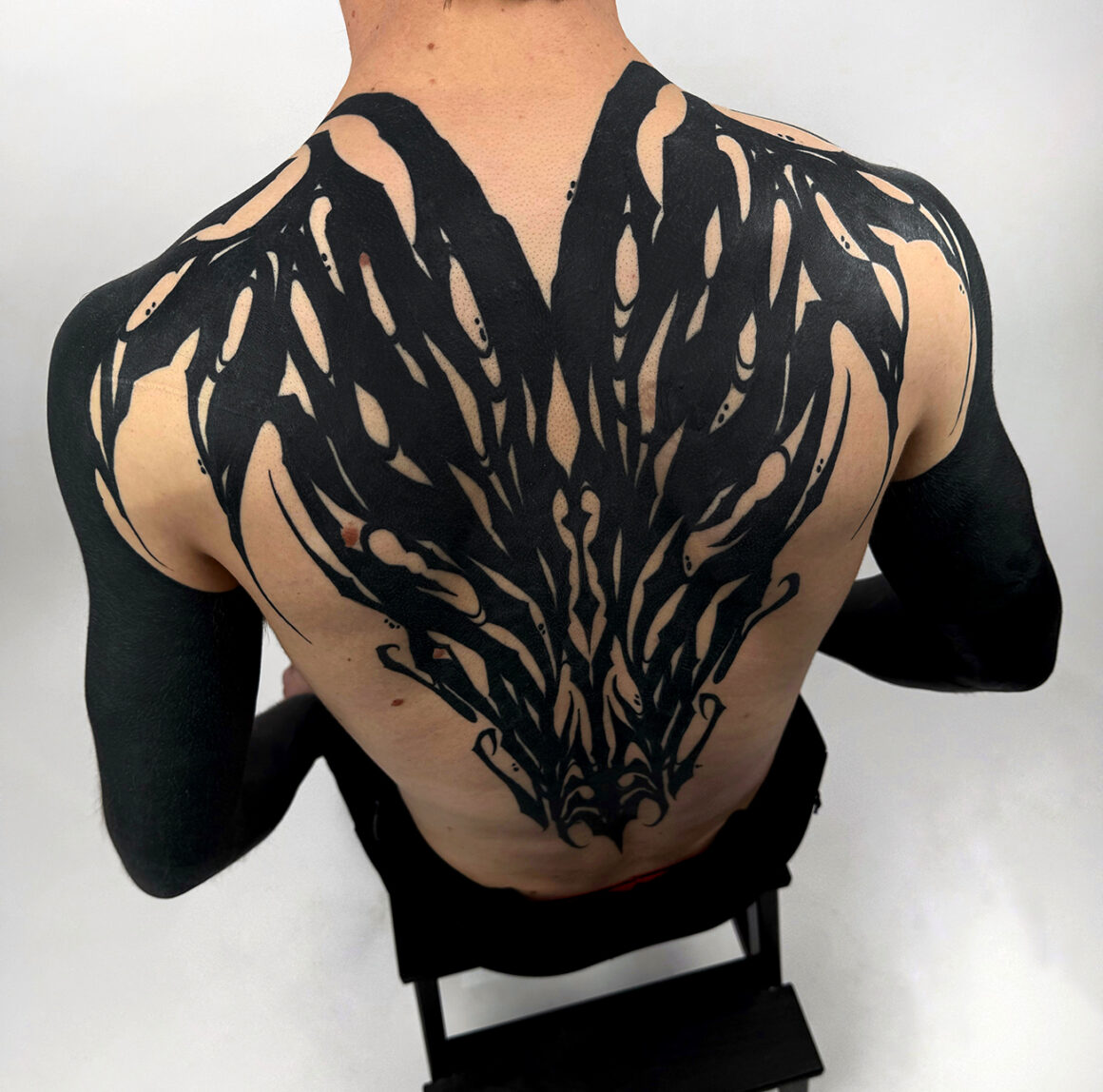
My hallmark shows itself in three areas: visual language, healed result, and the way I approach the process with clients. Visually, my work is defined by freehand dark calligraphy and its flow across the body. The shapes are elegant and controlled yet carry a sense of extremeness and weight. That balance between refinement and brutality is what gives the work its presence. It feels deliberate, structured, and still raw. Equally important is how the work heals.
My goal is a surface that settles into the skin like black velvet.
Smooth, even, and calm once healed. The impact should remain strong while the texture looks soft and consistent over time. The third element is my approach during sessions. Heavy blackwork is physically demanding, and I don’t pretend otherwise. Proper saturation requires intensity, and that means discomfort is part of the process.
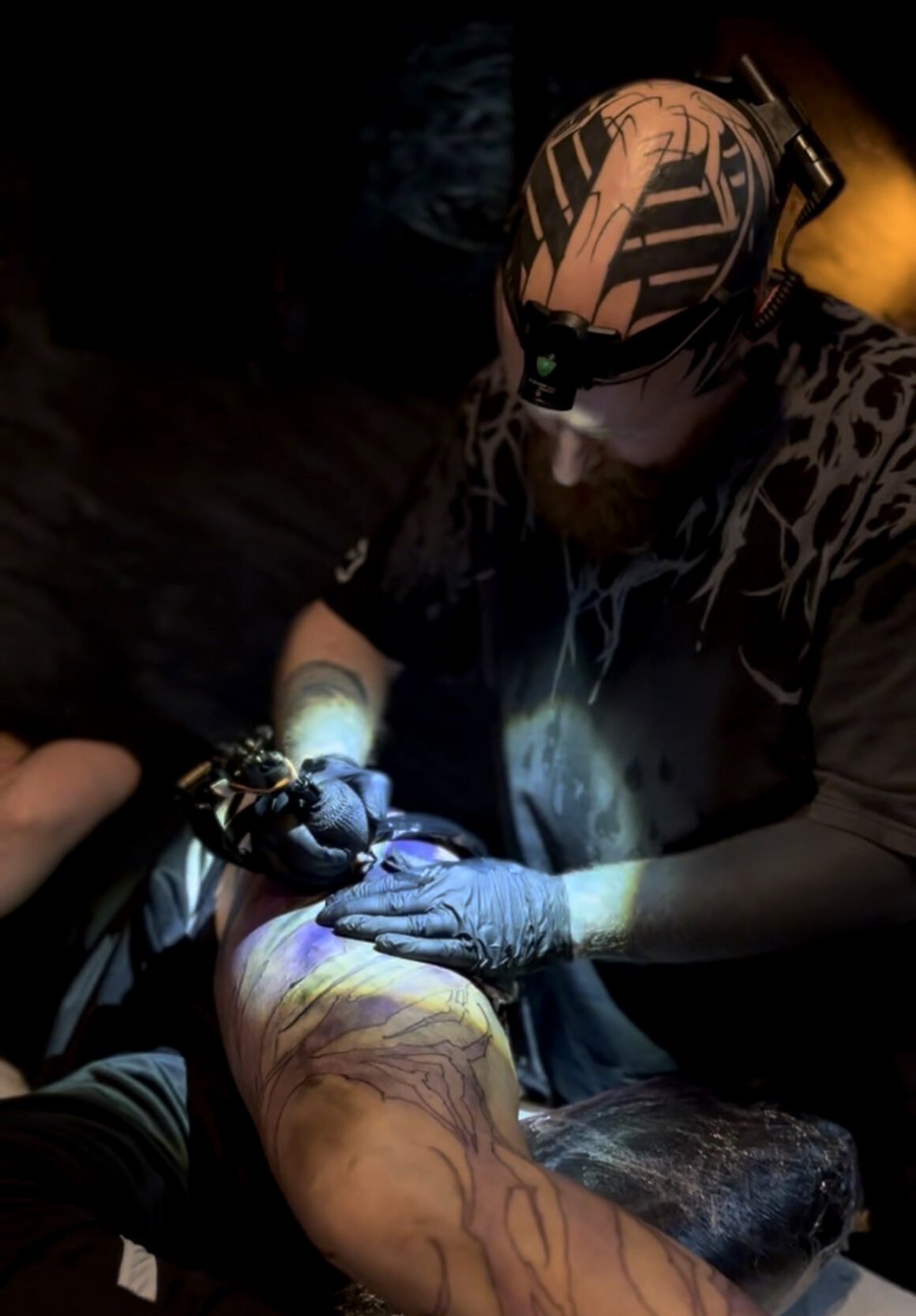
At the same time, I don’t approach tattooing with a careless or aggressive attitude. I see it as a collaboration. Clients trust me with something permanent, and I respect the vulnerability that comes with that. I don’t shame emotional reactions. Long, heavy sessions can bring out psychological or even spiritual responses, and that is a natural part of the experience. My role is to guide people through that process with honesty, focus, and mutual trust so we can achieve the result together.
Where do you work now?
When I decided to open my own studio, I quickly realized that many studios in the Netherlands didn’t meet the level of experience and professionalism I was looking for. My background in UX made me highly aware of what a premium experience should feel like.
I wanted more than just a space to tattoo — I wanted an environment where every detail supported the client’s comfort, focus, and privacy. I don’t do walk-ins. Heavy blackwork sessions are long, intense, and often emotionally vulnerable. My clients deserve my full attention, and the studio needs to be a space where they feel safe and cared for.
Tattoos are permanent and an investment, both financially and emotionally.
I make sure the experience is as thoughtful and high-quality as the work itself, so that every time someone looks at their tattoo, it brings them pride and satisfaction. At this point, I’m also looking to expand internationally by traveling and guesting abroad. Working in new environments allows me to connect with different clients, share knowledge with other artists, and continue developing my craft on a global scale.
What kind of clientele do you have?
My clientele tends to be young adults to adults who aren’t afraid to express themselves and stand out from the mainstream. They want something bold, different, and personal — tattoos that reflect their individuality rather than trends. They come from all walks of life. Some have high incomes, others save for months or even years to get the work they want. Political beliefs or sexual orientation are completely irrelevant here. When someone walks through my door, everyone is equal. The focus is on the art, the experience, and the commitment to a tattoo that will last a lifetime. What unites my clients is their willingness to embrace something unique and meaningful, no matter who they are or where they come from.
Where do you find your inspiration?
My inspiration comes from a mix of architecture, nature, and historical art forms. I’m drawn to the structure and detail of churches, the way natural forms flow and interact, and the rhythm found in old calligraphy, particularly older German fonts. I also study indigenous and ancient tattoo art from around the world, learning how different cultures have used line, pattern, and negative space to convey meaning and shape the body. Combining these influences allows me to create work that feels both timeless and personal, rooted in history but interpreted through a modern lens and adapted to the flow of the body.
How do you see your style evolving in the future? Are you studying or exploring anything new?
My style has gradually moved toward simplicity and purity. It started out busier, with splatter, shading, and lots of extra details, but over time I’ve stripped it back to focus on the shapes themselves. By emphasizing the forms and flow, the work accentuates the body, following its natural curves and enhancing movement, rather than distracting from it. The evolution is ongoing. I don’t plan it or force it — I let it happen naturally. That freedom is part of the process and part of the joy of doing what I love. The work grows and changes as I do, and that’s what keeps it alive, authentic, and exciting both for me and for the people who wear it.