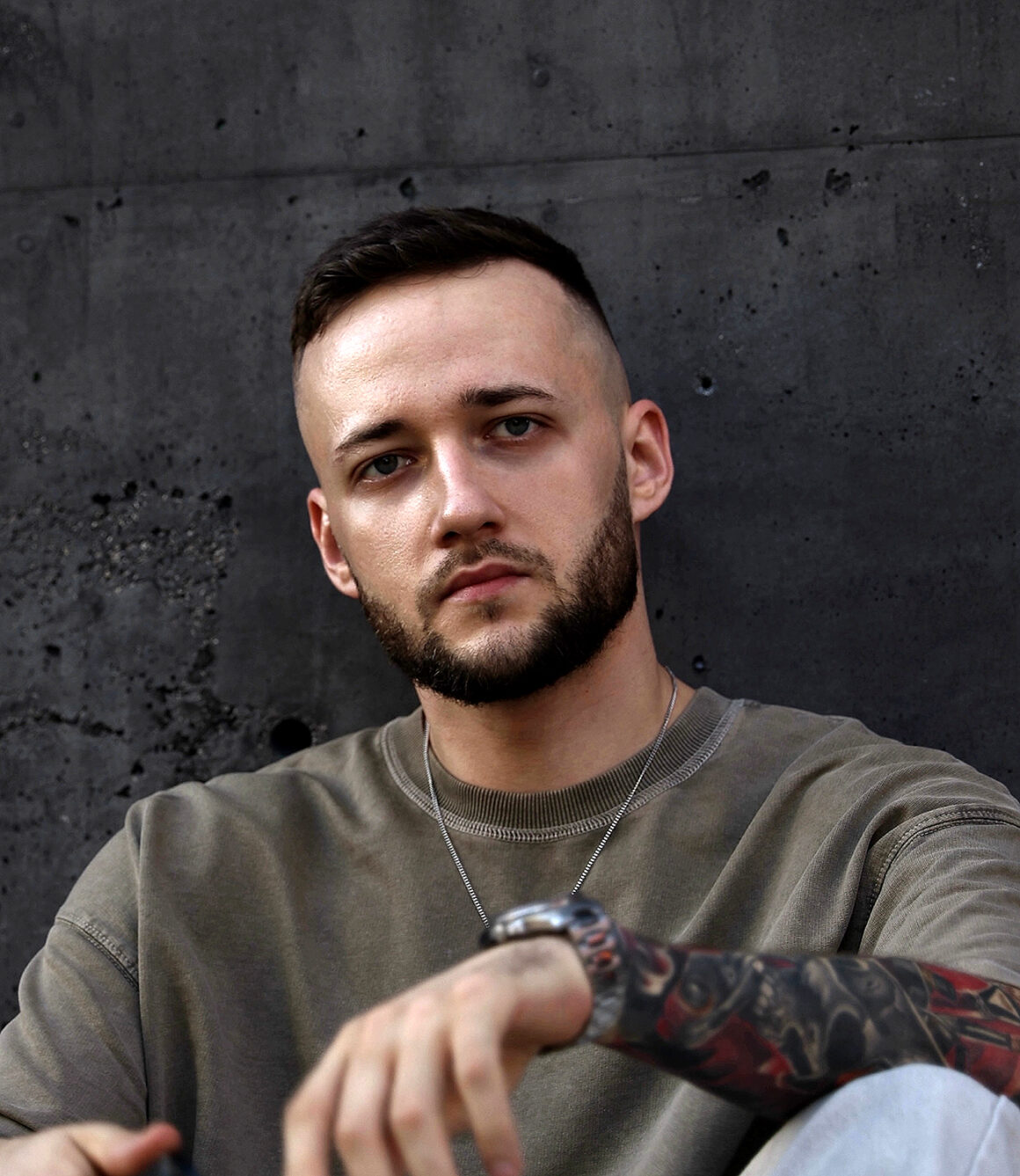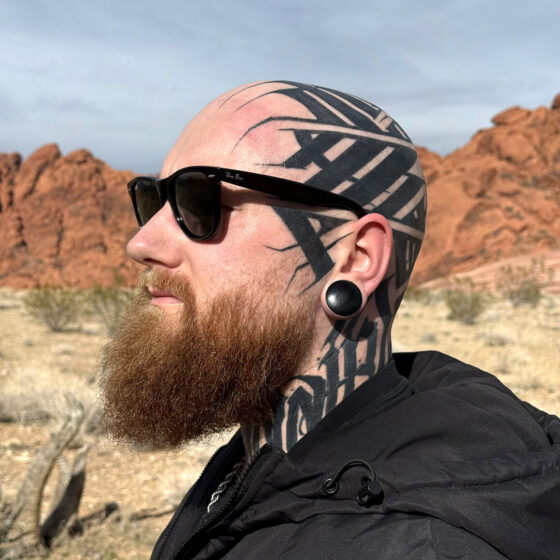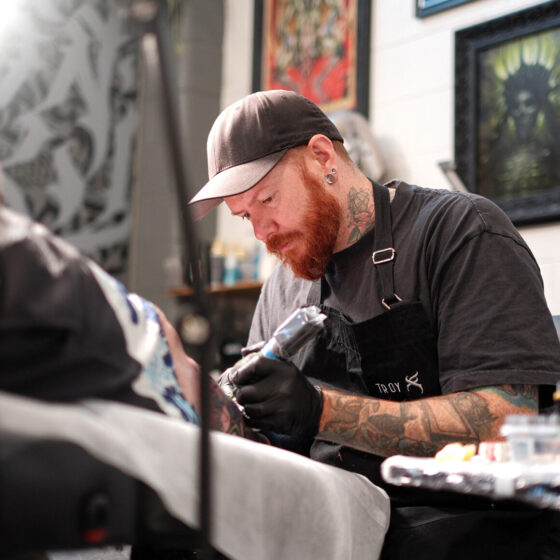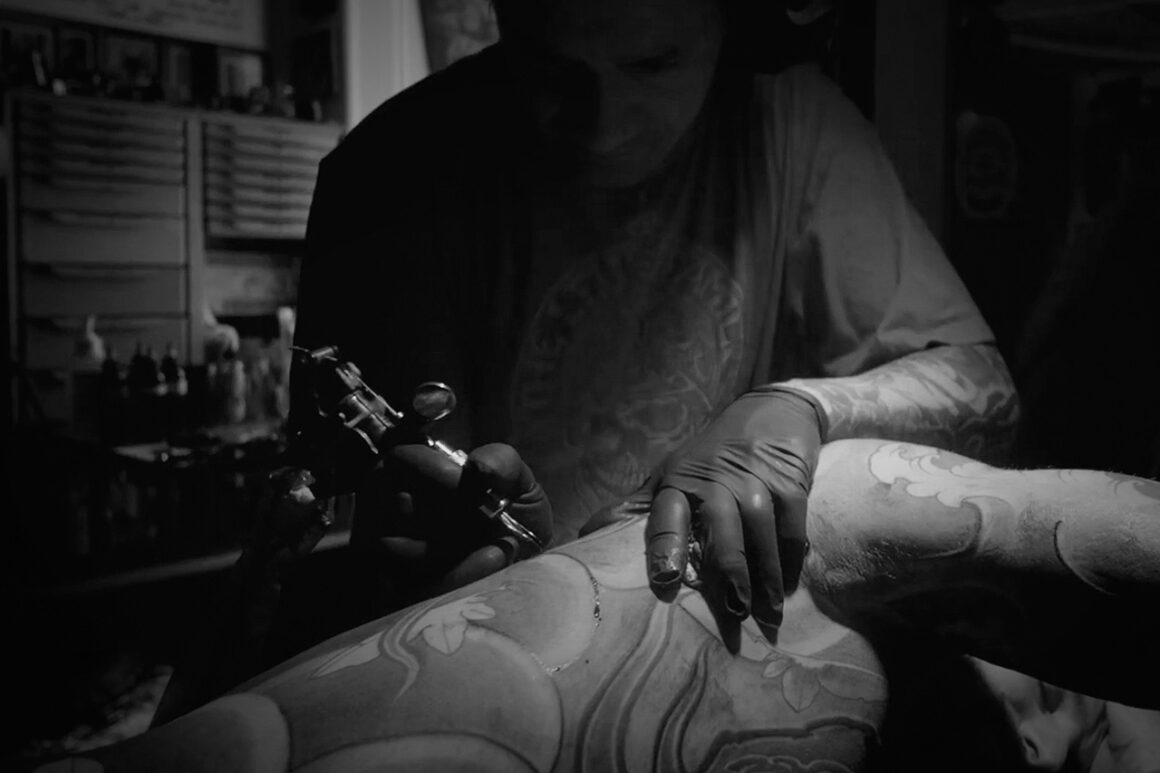




From Ukraine to the United States, passing through the European scene, Taras Dmytruk is an artist who has built his own visual language through technical discipline and a deep love for classical art.
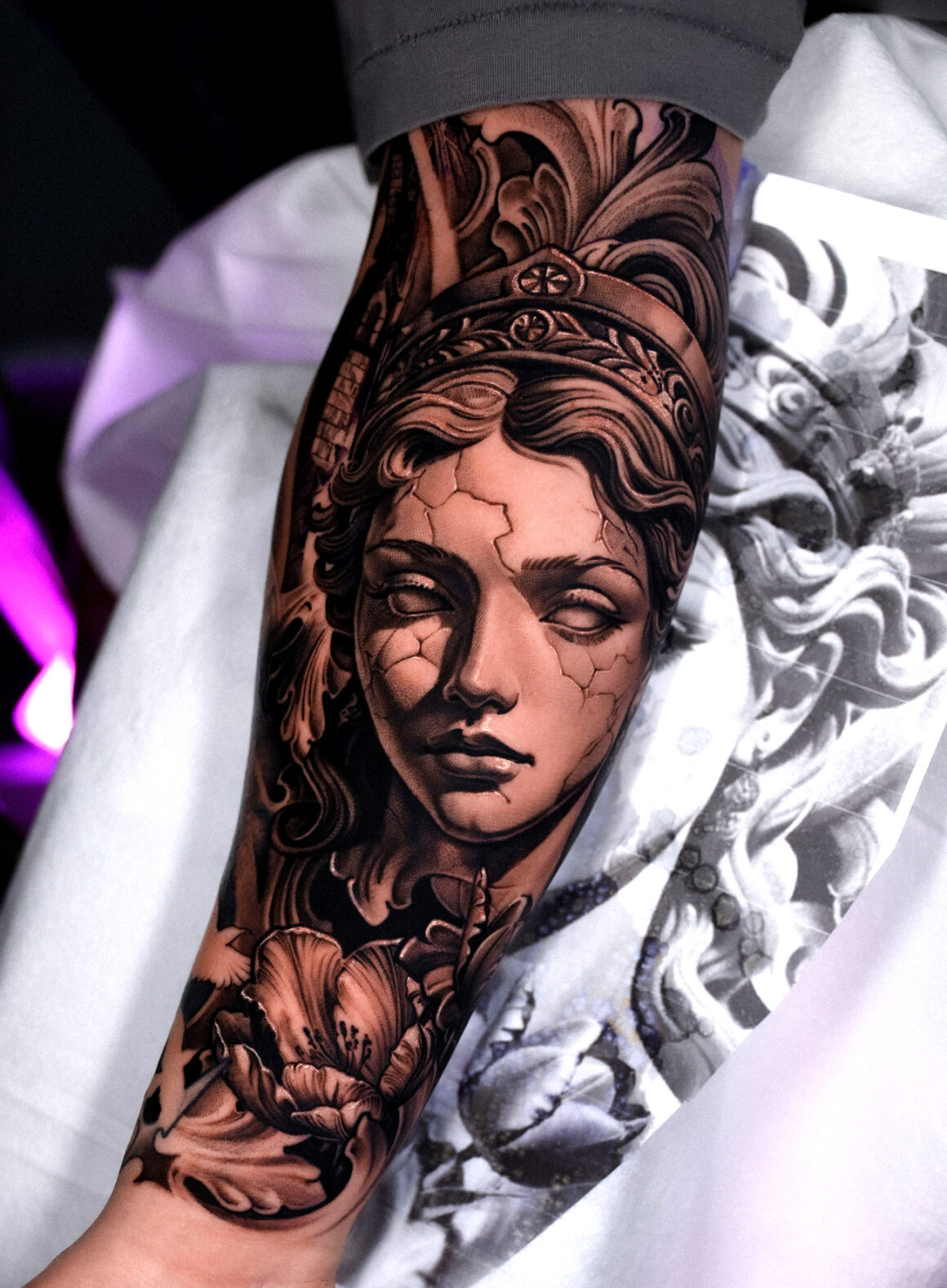
His black and grey realism draws from Renaissance and Baroque influences translating onto the skin the play of light and shadow, the tension of forms, and the dynamism of compositions typical of classical sculpture and painting. Now based in Miami, Taras works on large-scale projects built around the body’s anatomy, blending realism, religious elements, and classical references into tattoos that are complex, balanced, and built to last.
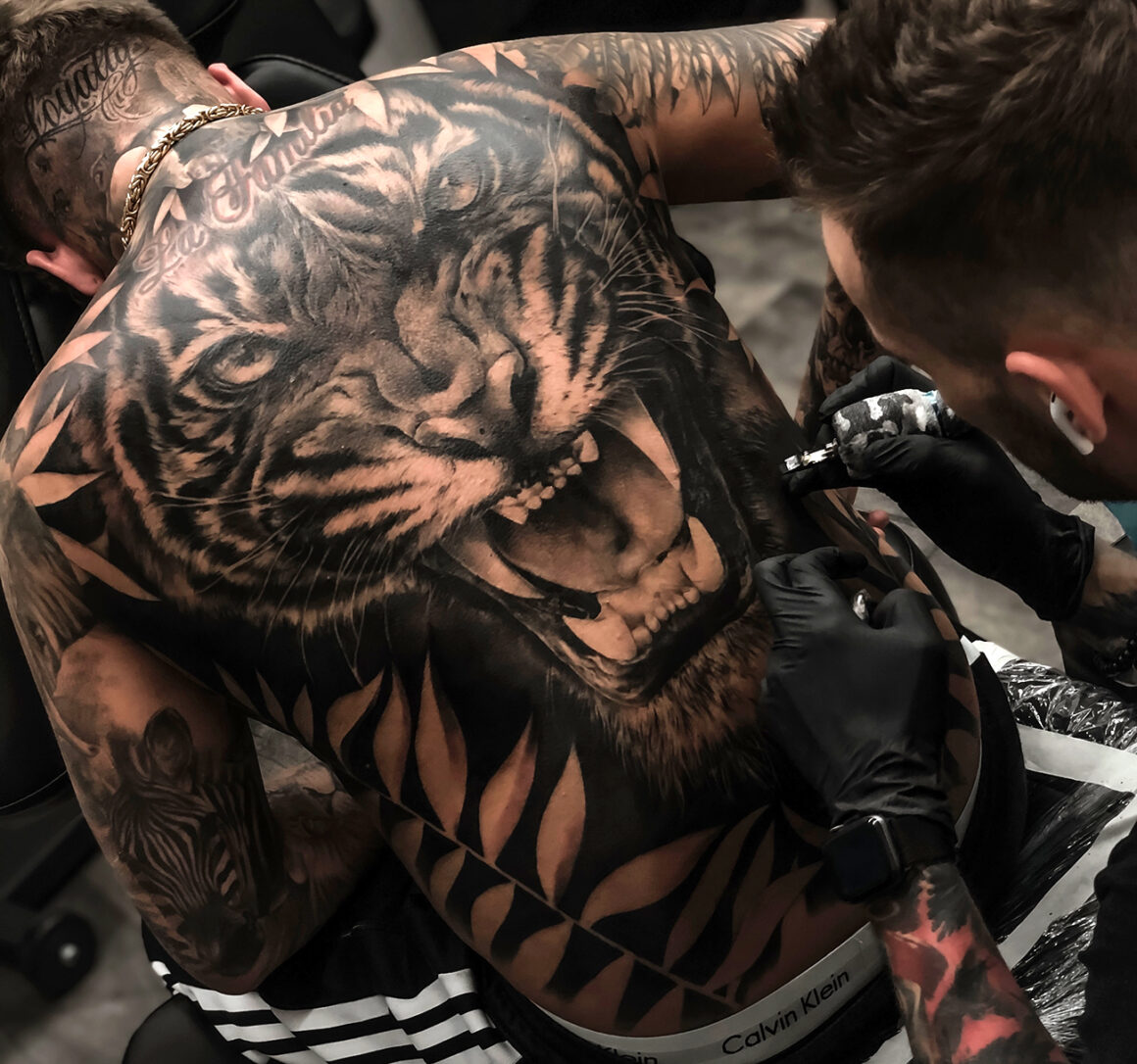
Hi Taras, welcome to Tattoo Life. Where are you from and where do you live?
Hey, thank you for having me. I’m originally from Ukraine, from the city of Lviv. I started tattooing when I was 17, and by 18 I had already opened my own studio in Lviv. After that I worked in Germany at Neon Tattoo Germany, which gave me solid experience in the European tattoo scene. Now I’m based in Miami, Florida. That journey from Lviv through Europe to the United States shaped me a lot, both as an artist and in how I understand different approaches to tattooing.
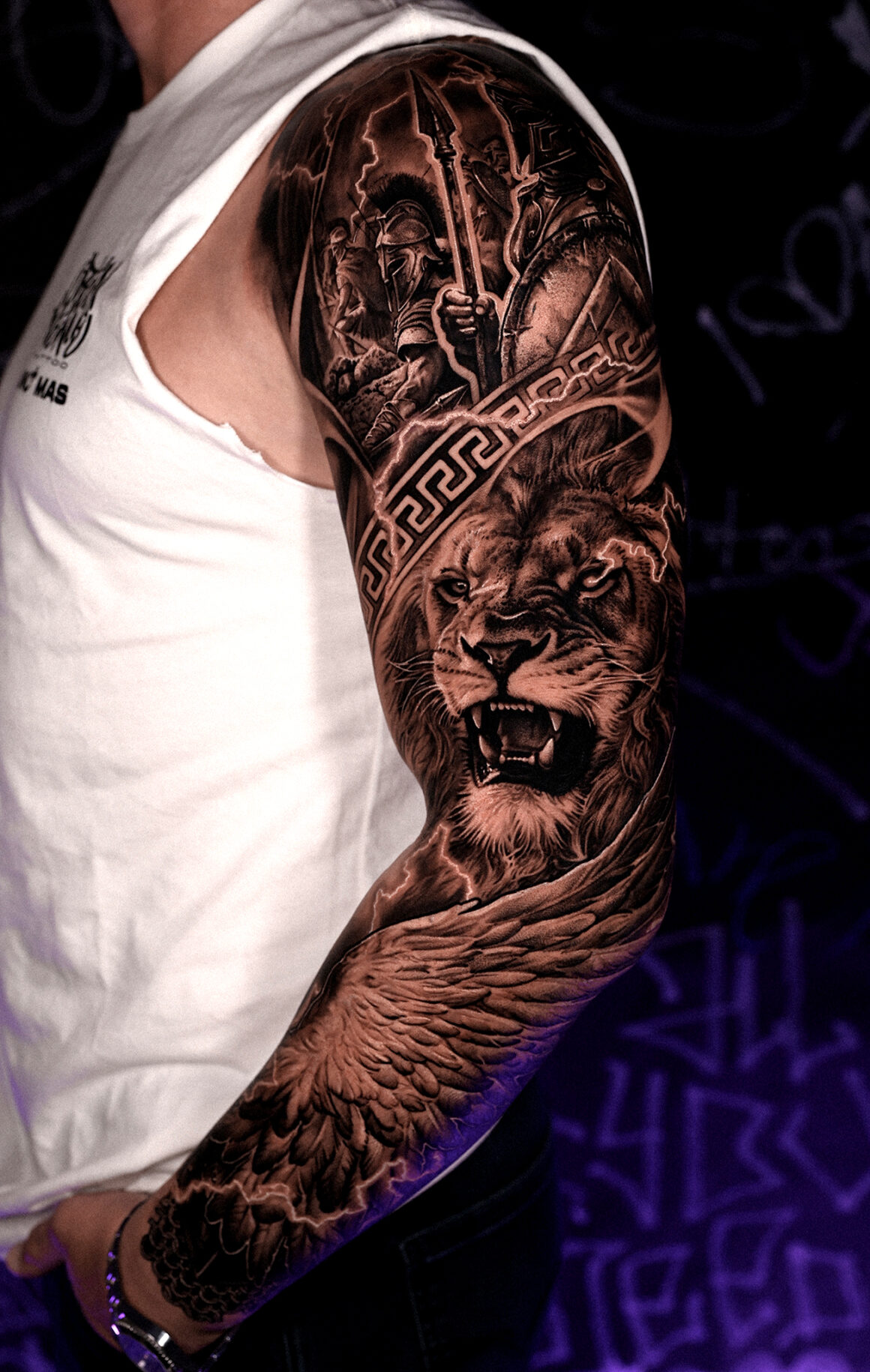
How did you get into tattooing and what drove you to specialize in Black and Grey realistic style?
I’ve been drawing for as long as I can remember, so getting into tattooing felt very natural. I did my first tattoo at 17, and I was immediately hooked by the process: putting an image on skin, working with the body as a canvas. Black and grey realism drew me in because it’s the closest thing to classical art: the depth, the tonal transitions, the play of light and shadow. I was never attracted to bright trends; I wanted something that would still look strong 20 years from now.
This style demands discipline and patience, and that’s exactly what I connect with.
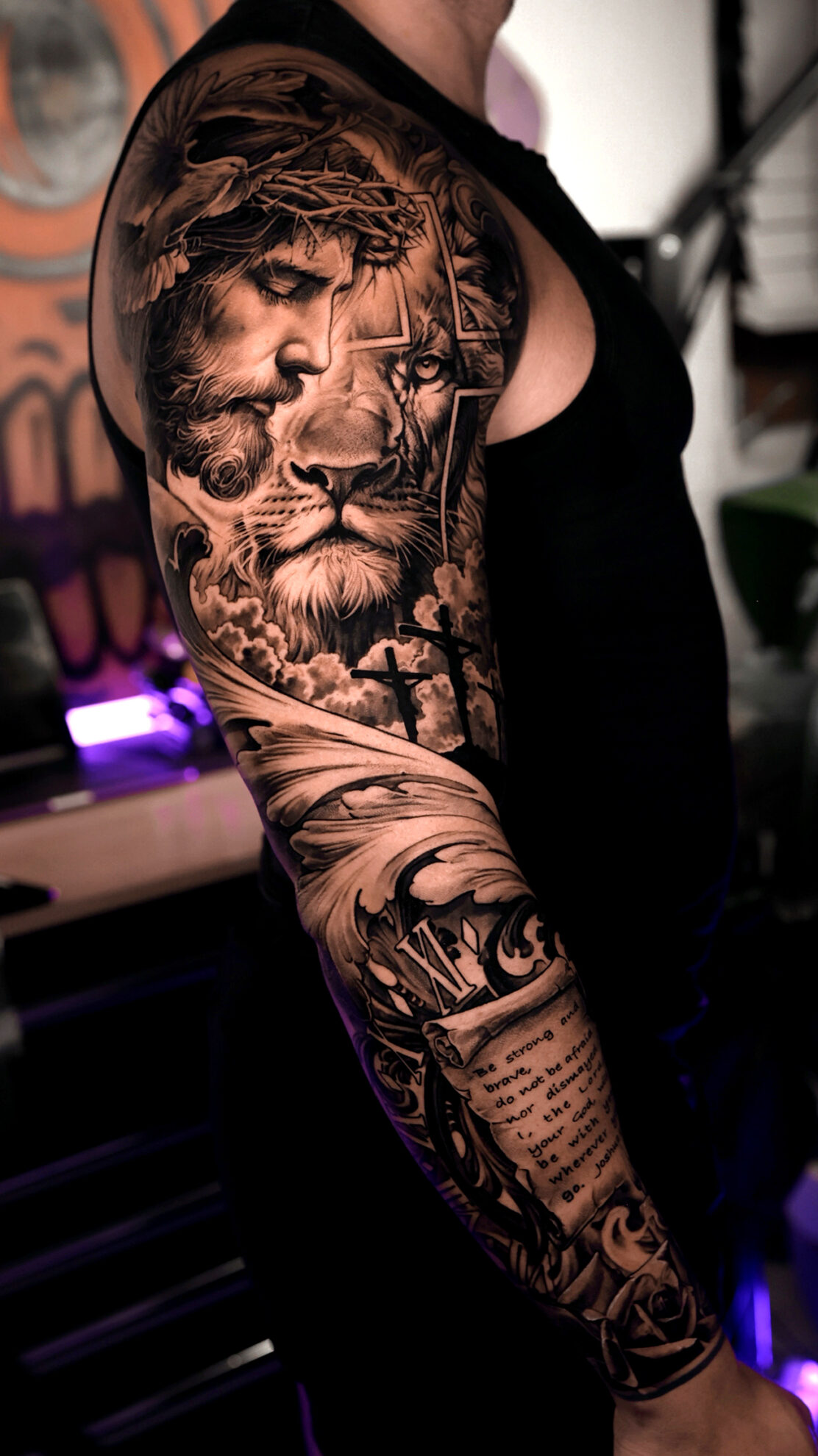
Your work has a strong reference to Renaissance Art. Are there any artists, movements or historical periods that particularly influence your style?
Yes, the Renaissance has always been my main reference point. I’ve studied a lot of Michelangelo, Caravaggio, Bernini, their understanding of anatomy, dramatic lighting, and composition. What fascinates me is how they conveyed emotion through form and contrast. I’m also drawn to Baroque art, especially sculpture, where you can feel the tension and movement in every detail. I try to bring those principles into my tattoos, so that each piece has not just an image but an internal structure and mood, like a classical painting.
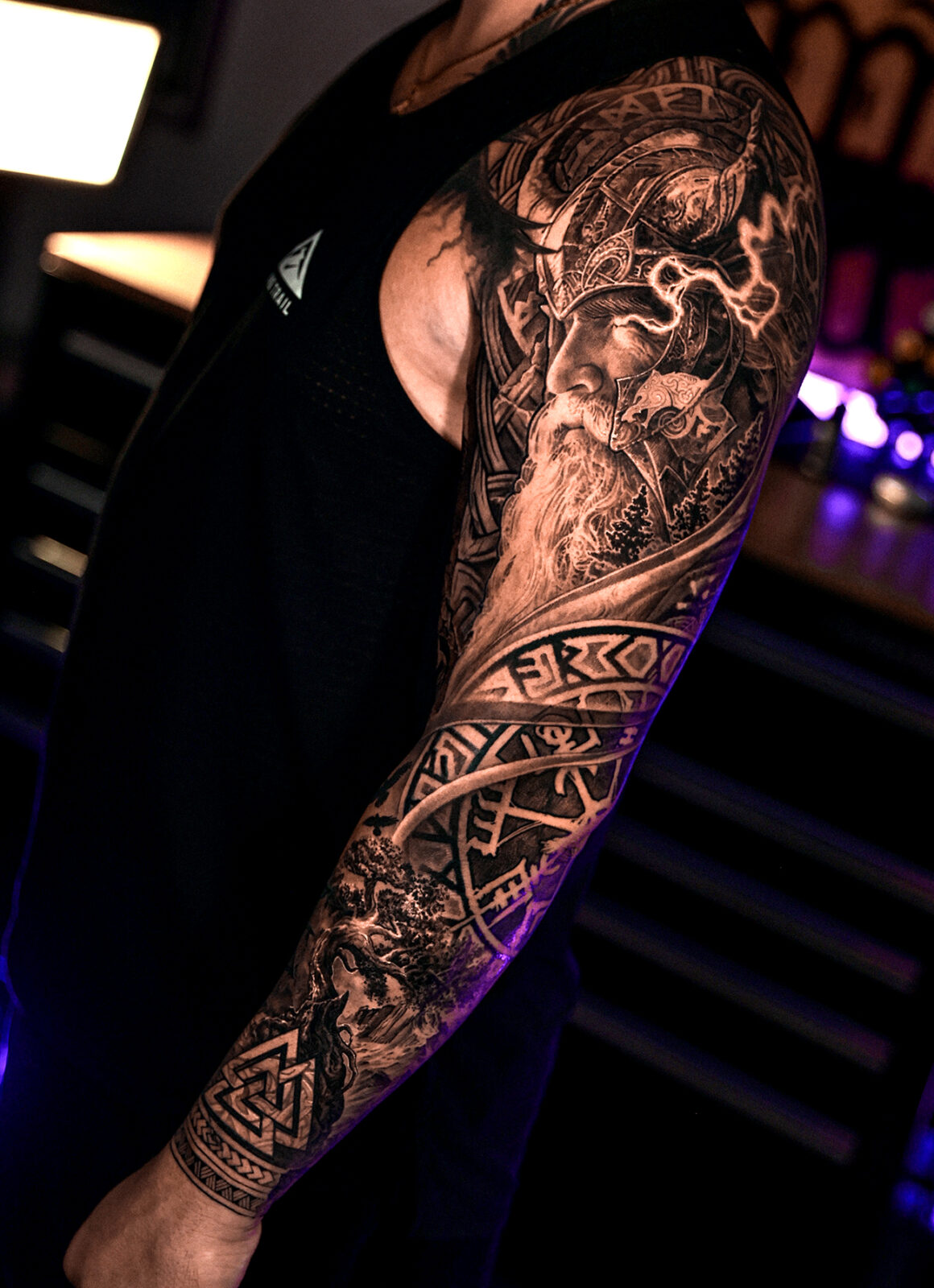
Is there a subject or theme you like to tattoo more than others? Which elements often recur in your compositions?
I enjoy working on large-scale compositions and multi-session projects. I like building a complete story on the body rather than just placing separate images. Elements that often appear in my work include classical sculpture, religious motifs, portraits, and architectural details. For me the most important thing is that the tattoo has meaning and fits the anatomy well, so I always think about how the composition works with the client’s body shape.
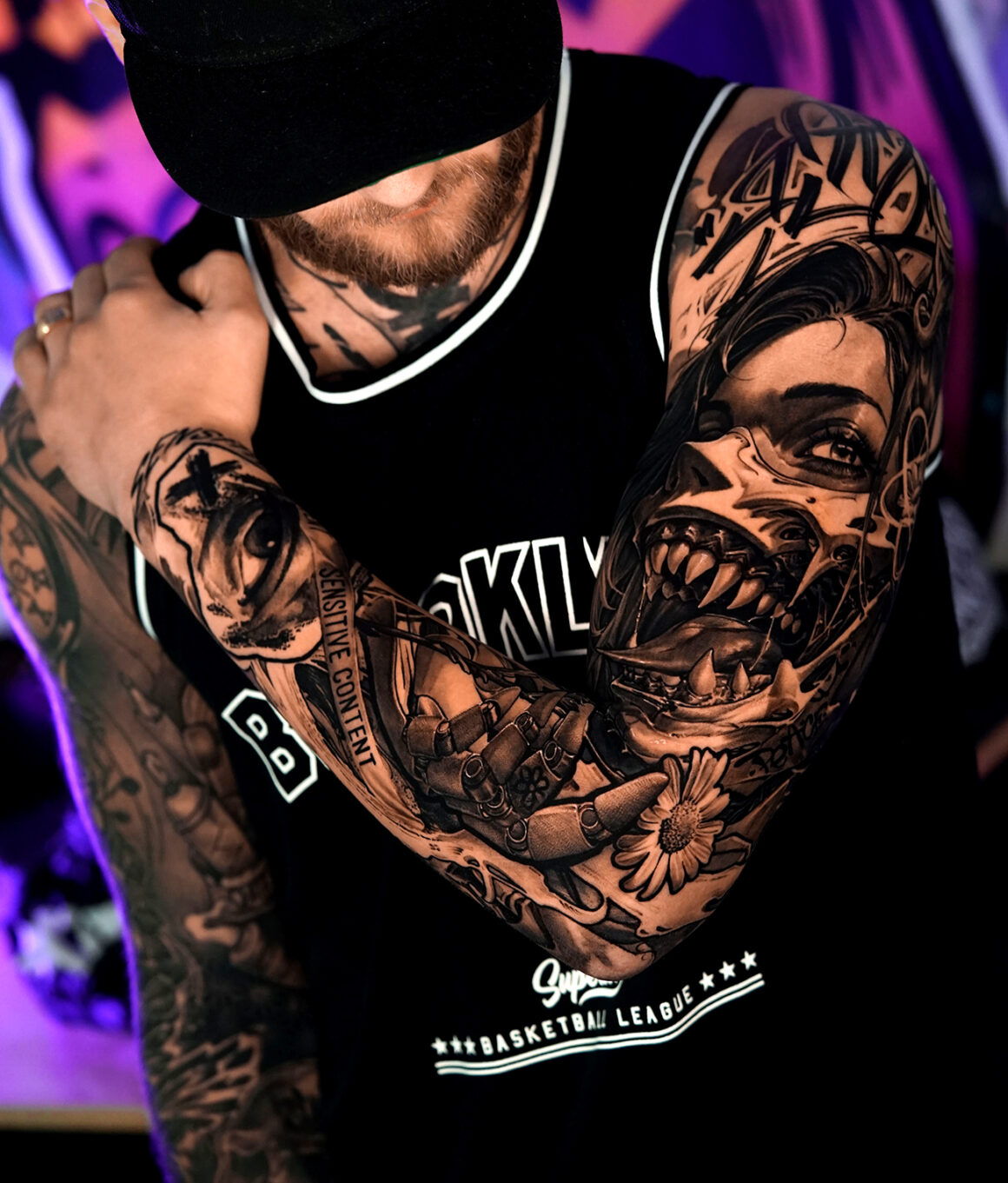
Technique in black and grey is fundamental: how do you work to give depth and realism to your tattoos?
It all starts with understanding how light works on skin, not on paper. I pay a lot of attention to tonal transitions, to the contrast between deep shadows and soft highlights. Skin changes over time, so I always build in enough contrast for the work to stay readable years later. Saturation matters too: I work in layers, gradually building depth. Understanding anatomy also plays a big role, because every part of the body receives pigment differently and shows details in its own way.
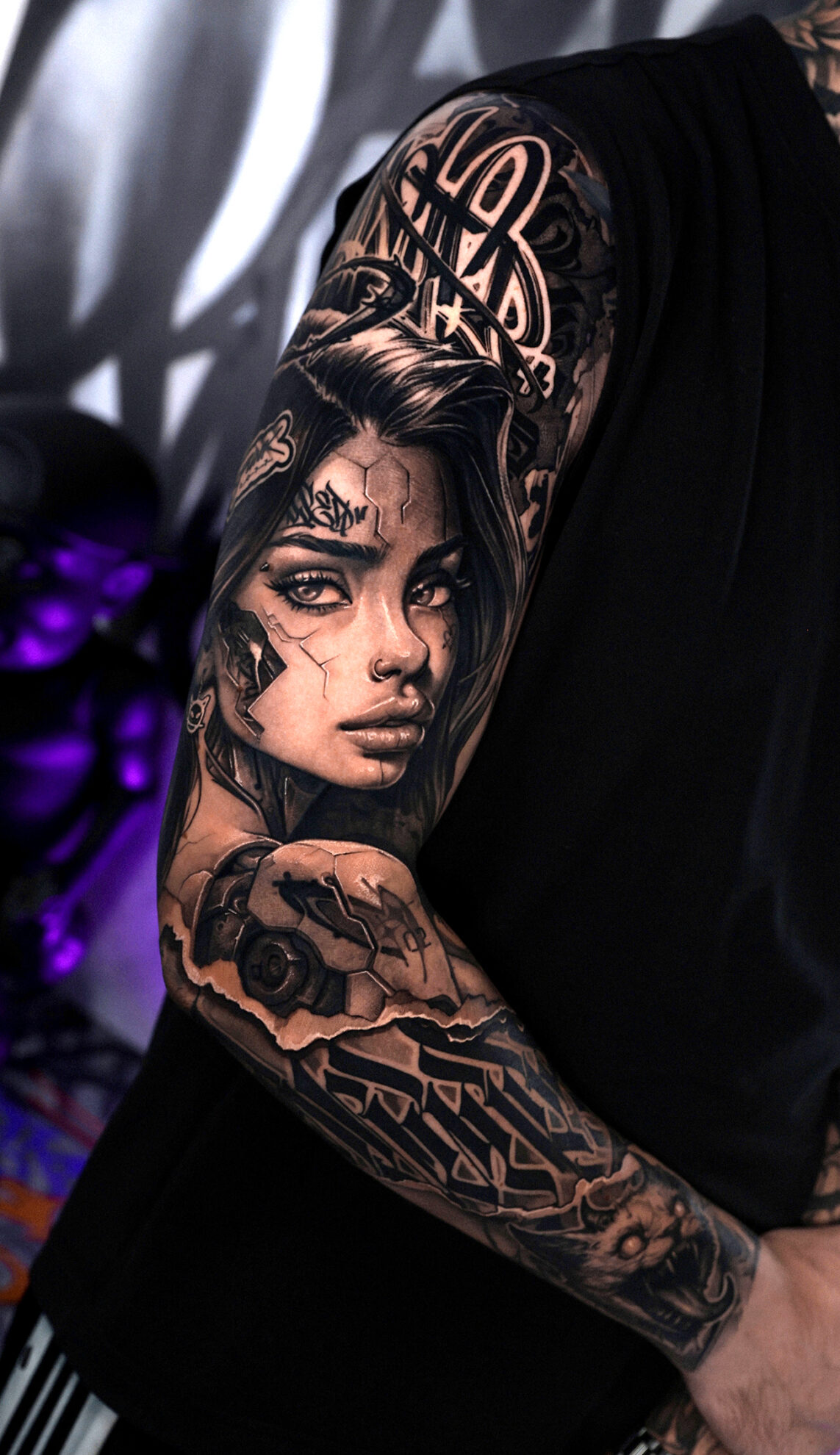
What is your creative process? Do you always start from an artistic reference, or do you prefer to build the design according to the person who will receive it?
I always start with the person. Before I draw anything, I need to understand what idea the client wants, what their anatomy looks like, how much space we have, and what the overall direction is. Then I look for references, but not to copy them: to understand the mood and structure. The final design is built for that specific body: where the focal points go, how elements flow into each other, where to leave breathing room. I want the tattoo to look like it was always part of that person, not just stuck on top.
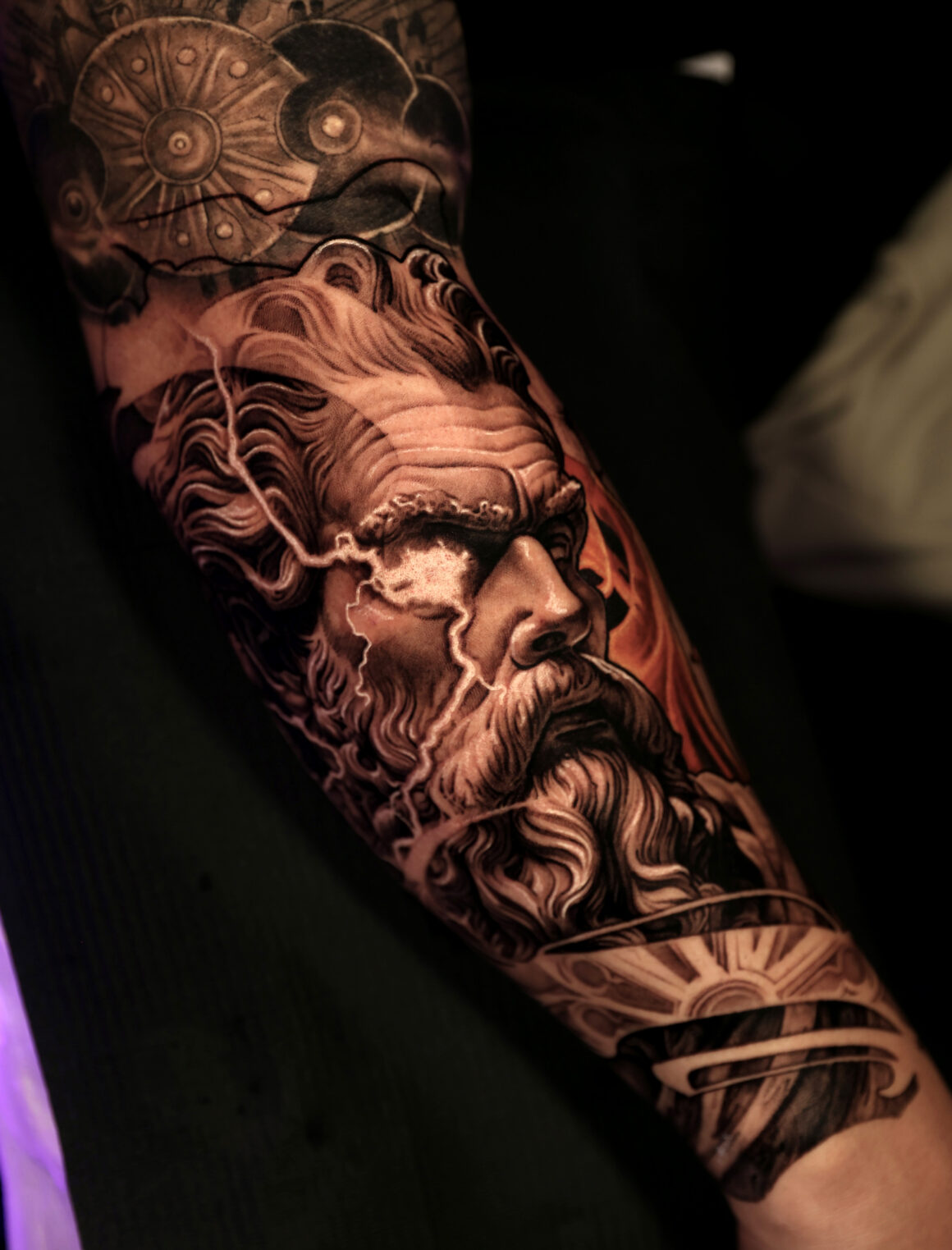
Where do you currently work? Do you have your own studio or do you collaborate with other artists?
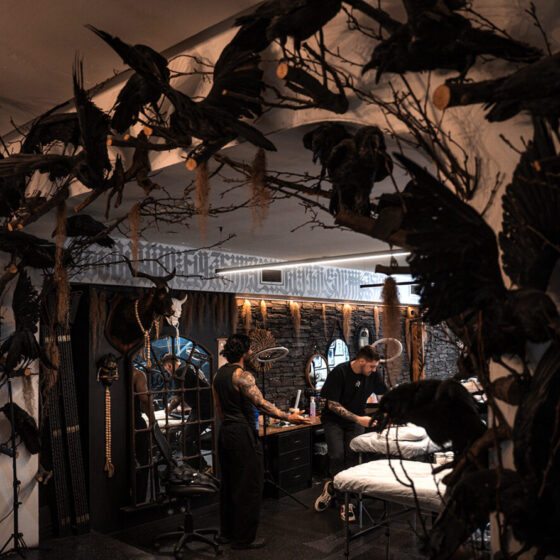
Right now I work at Green Avenue Tattoo in Miami. I enjoy working alongside other strong artists, it keeps you sharp and gives you the chance to exchange experience. Miami is a really interesting city for tattooing because so many cultures cross here from all over the world. Many of my clients travel specifically from other states or from abroad, which is a big motivation for me to keep growing.
Do you travel to guest spots or conventions? How important is it for you to connect with other international tattoo artists?
Yes, both guest spots and conventions are a big part of my development. For about two years I regularly traveled to Neon Tattoo Germany, where some of the strongest artists from around the world were working. That experience gave me an incredible amount. Now I regularly participate in tattoo conventions across the United States, particularly in Florida. At InkCon 2024 in California, Adrian Delgado and I won Best of Show award.
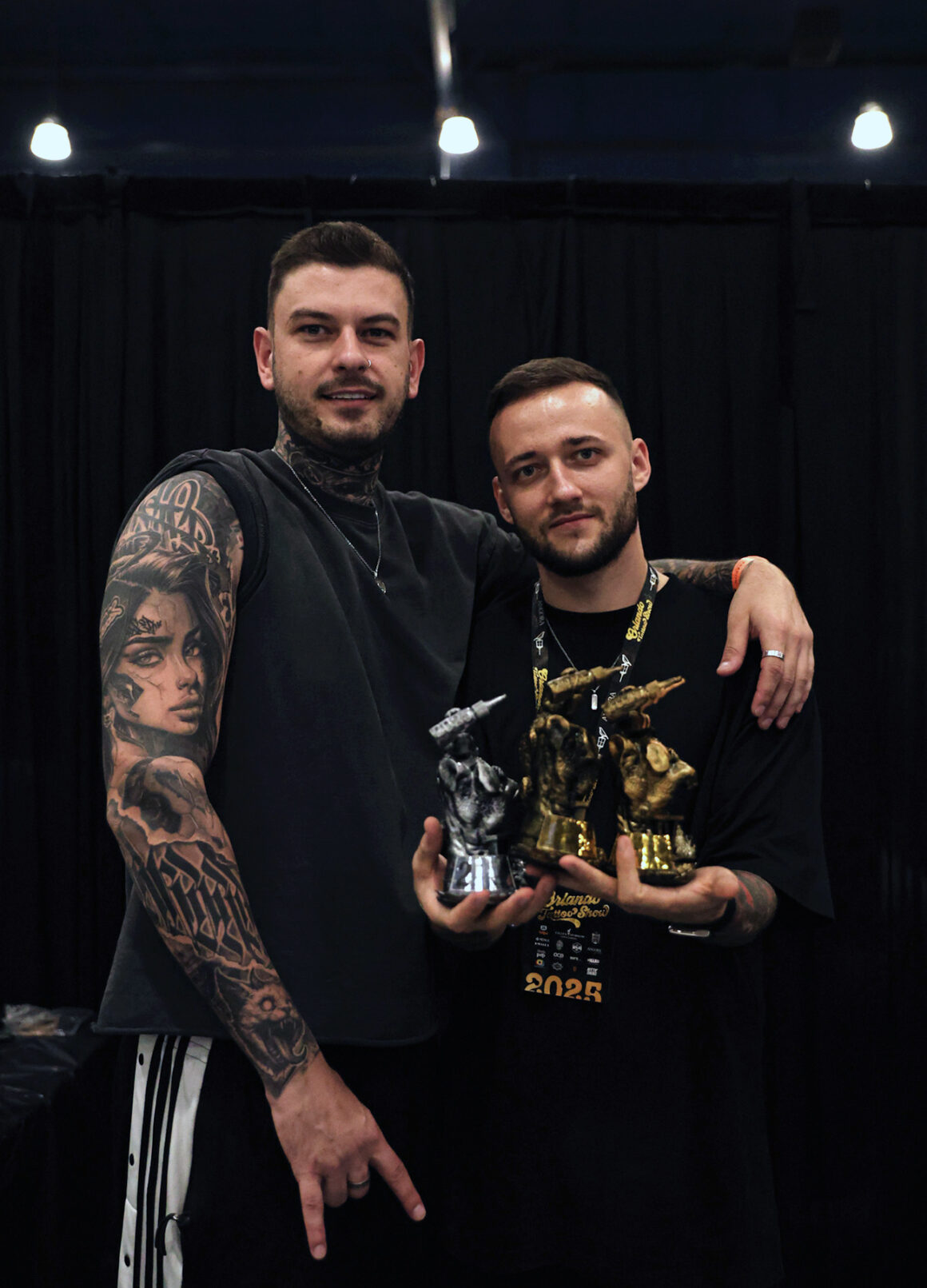
At the Orlando Tattoo Show 2025, I took first place in Best Portrait and Best Black & Grey, plus second in Two Days Tattoo. At the Florida Gulf Coast Tattoo Expo 2025, I received awards in Best Black & Grey. I’ve also been invited to judge at the Orlando Tattoo Arts Festival, Tampa Tattoo Arts Festival by Villain Arts, All Stars Tattoo Convention in Miami, and Orlando Tattoo Show 2025. Conventions are a chance to see the real level of the industry and honestly assess my own.
Are there any new explorations you are working on or new techniques you are exploring? Do you have a stylistic evolution you would like to follow?
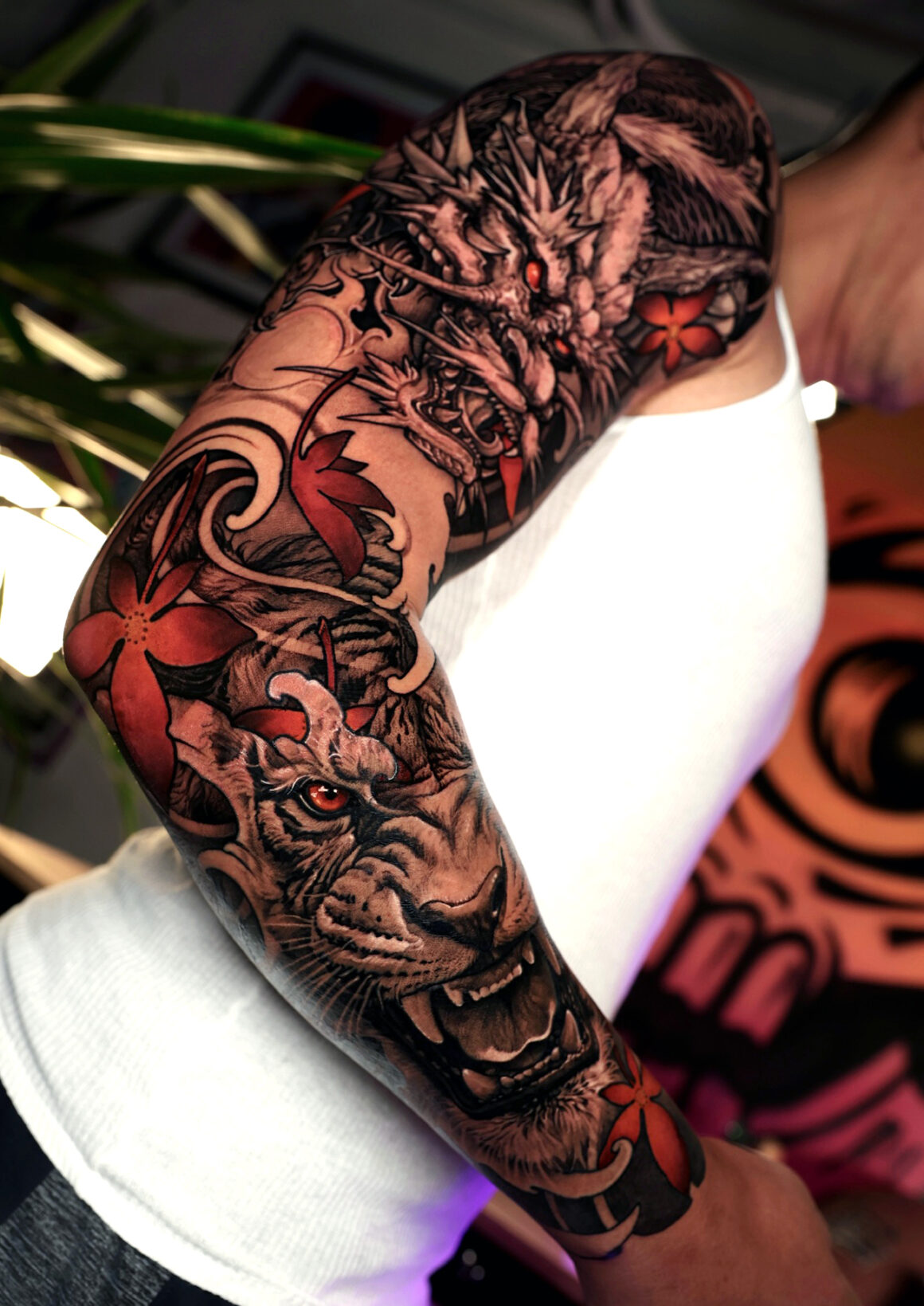
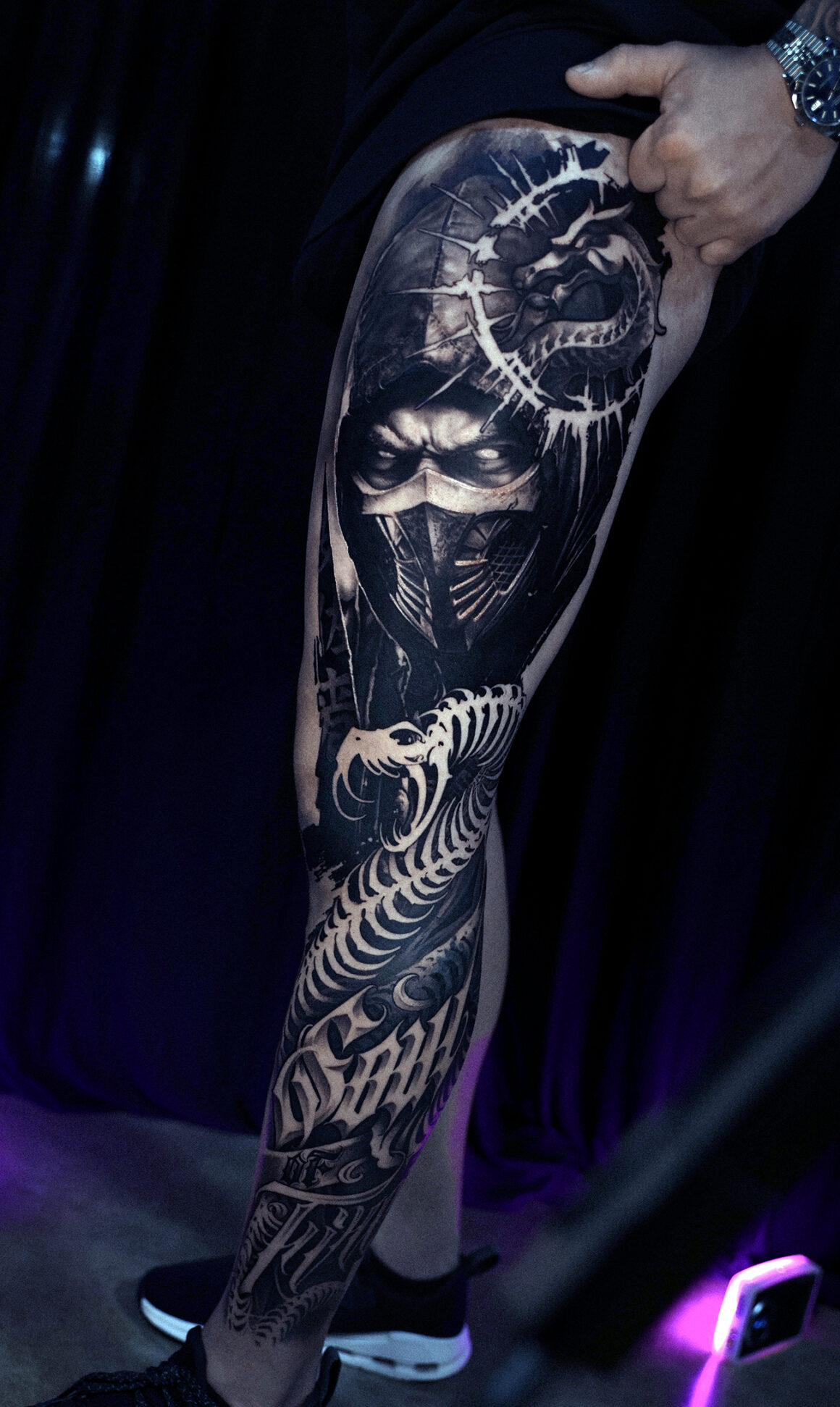
I’m constantly refining my tonal transitions and compositional work on large-scale projects. But lately I’ve found a direction that really excites me. I started adding color into my Black and Grey work, mostly reds and oranges, as accents that bring a different energy.
I’m also mixing black and grey realism with elements of traditional Japanese style, creating a kind of Neo-Japanese approach.
It’s still a relatively uncommon combination in tattooing, and the result looks unique. I want to develop this direction because it allows for more complex compositions where realism and tradition work together. It’s still important to me that every piece looks strong not just today, but 10-15 years from now.
What is your goal as an artist? Is there a future project you dream of realizing?
My goal is bigger than just making good tattoos. Of course, I want every next piece to be better than the last, that’s the foundation. But in the long term I want to continue developing professional studios and mentoring younger artists. I want to contribute to the development of this industry and help it move to a different level. I want tattooing to be seen purely as art and to lose the association with something marginal or outsider. That requires proper education, high standards, and spaces where young artists can learn the right way from the very beginning. I approach it the same way I approach a large-scale project on the body: step by step, with discipline and a clear vision of the result.