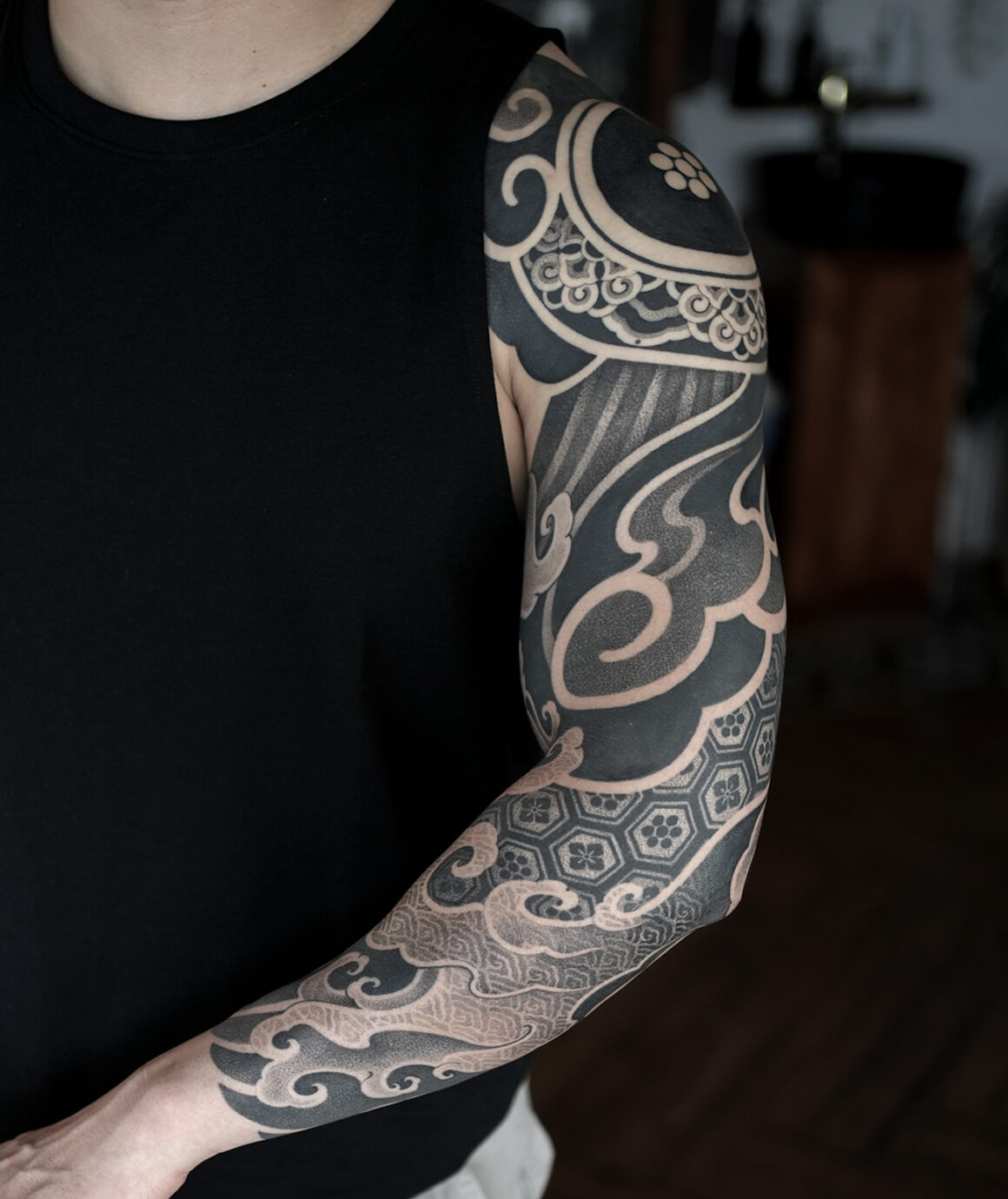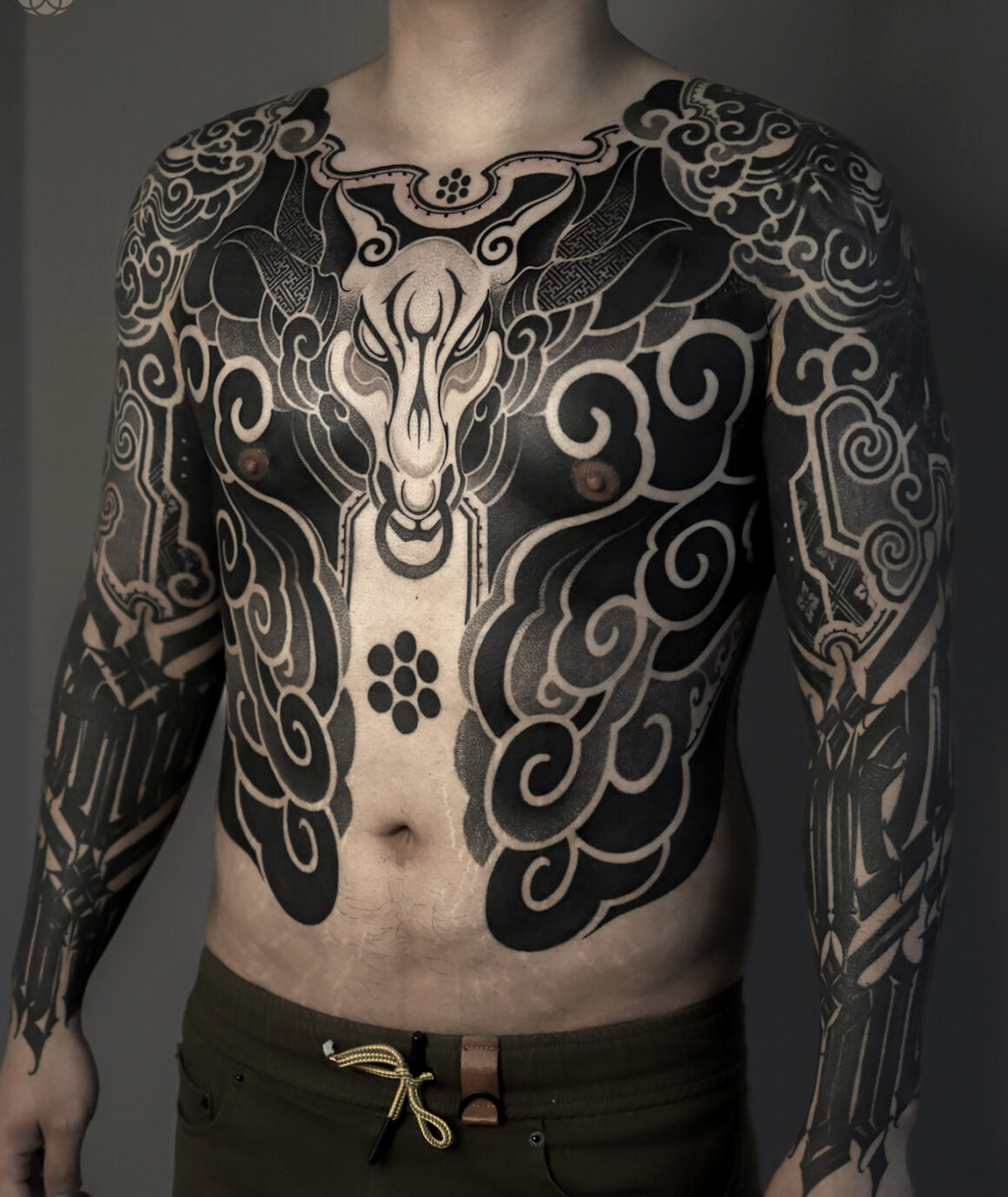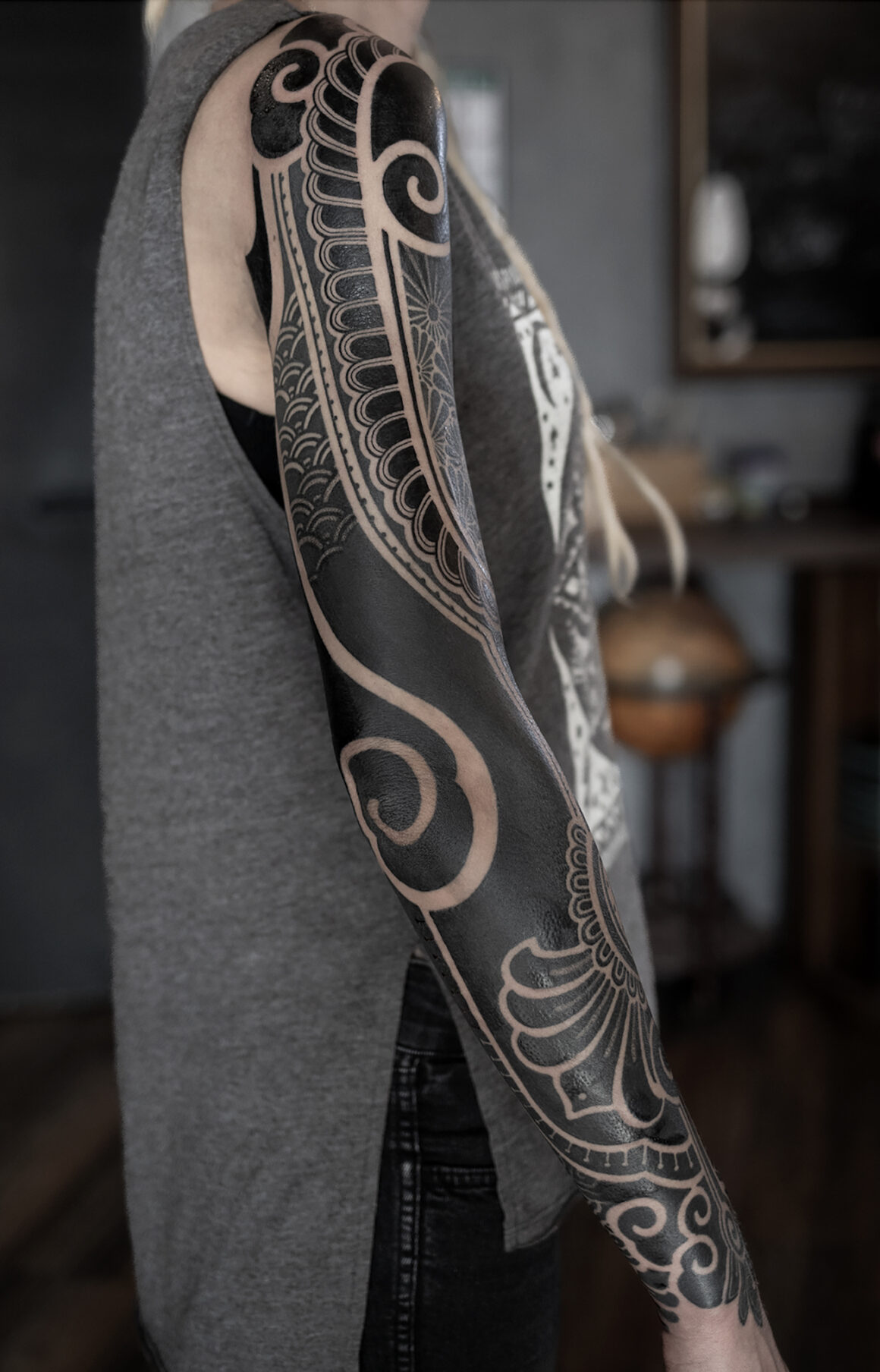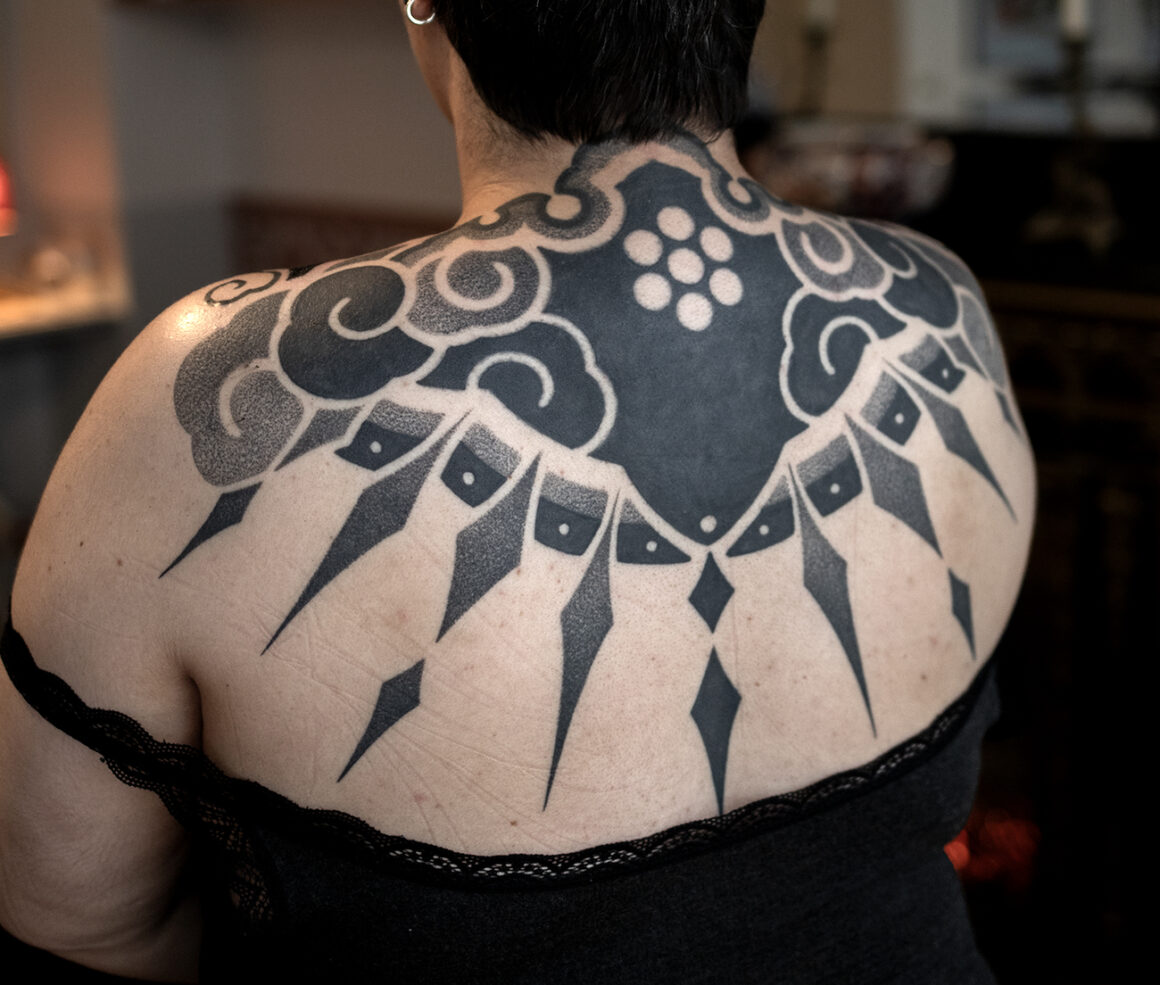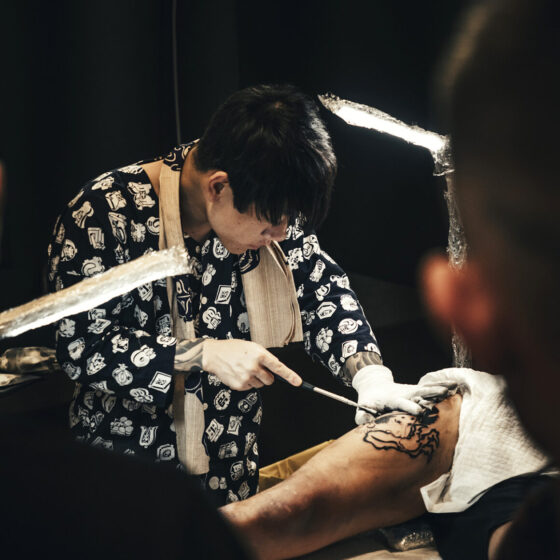

Based between Seoul and Germany, Korean artist Jihoon Choi, known as Undulmood, creates ornamental blackwork tattoos that flow with the rhythm of the body. His work explores balance, philosophy, and cultural identity — a dialogue between East and West, minimalism and intensity, tradition and the modern world.
Hi Undulmood, welcome to TattooLife.com. Could you introduce yourself to our readers and tell us where you’re currently based?
My name is Jihoon Choi. I’m from Busan, South Korea, and I started tattooing in Berlin in 2017. My work focuses on large-scale ornamental blackwork. I lived in Germany from 2017 to 2024, and I’m currently based in Korea. In 2026, I plan to return to Germany again.
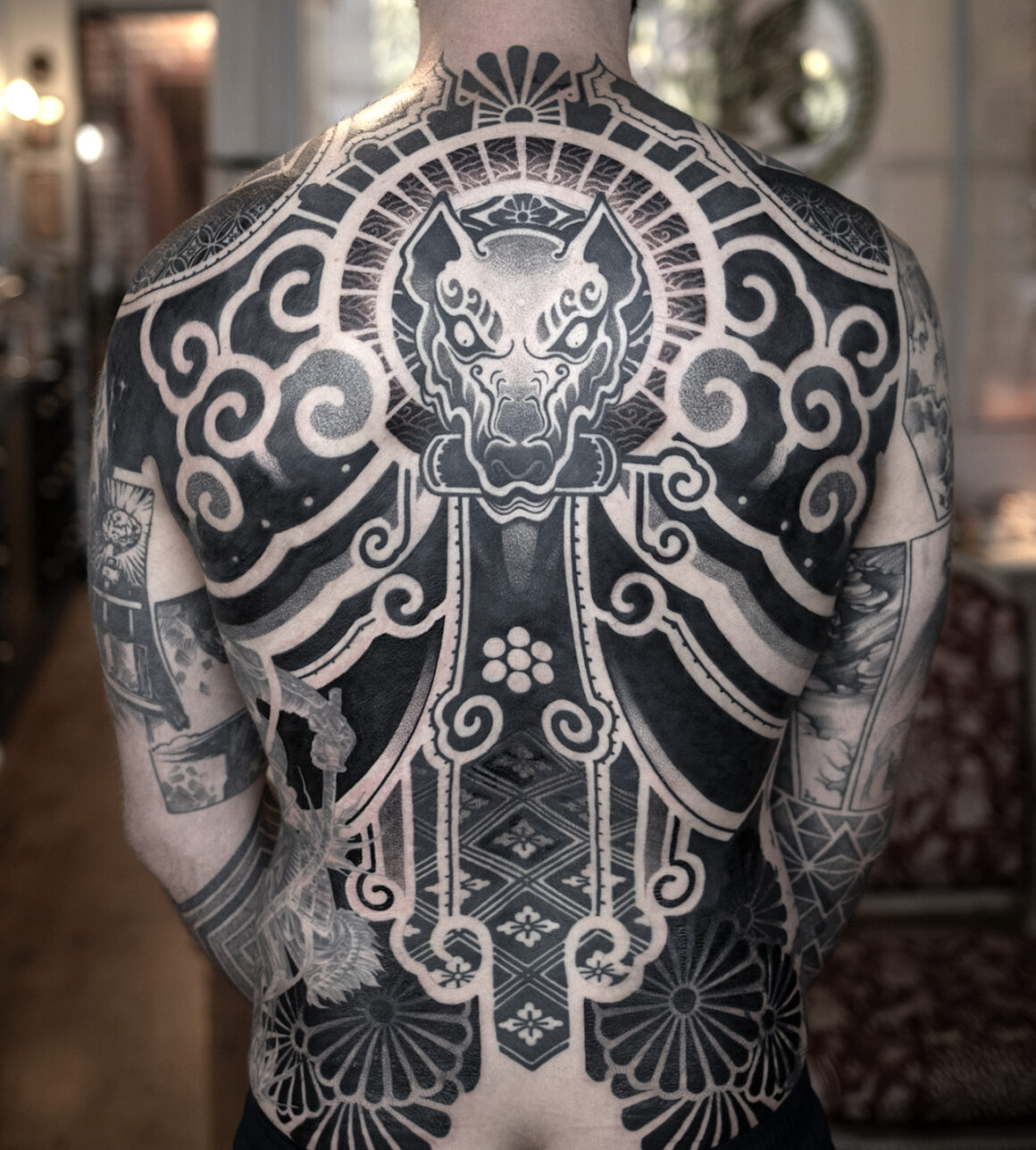
You divide your time between Der Grimm in Germany and Seoul — two studios with very distinct atmospheres. How do these environments influence your creativity and the way you approach tattooing?
The tattoo scenes in Korea and Germany have very different strengths and energies. In Germany, I was deeply influenced by large-scale, heavy blackwork styles, which helped me develop my technique in solid black packing and bold lining. In Korea, I’m inspired by artists who create extremely detailed and delicate works.
I try to incorporate those refined elements into my own approach.
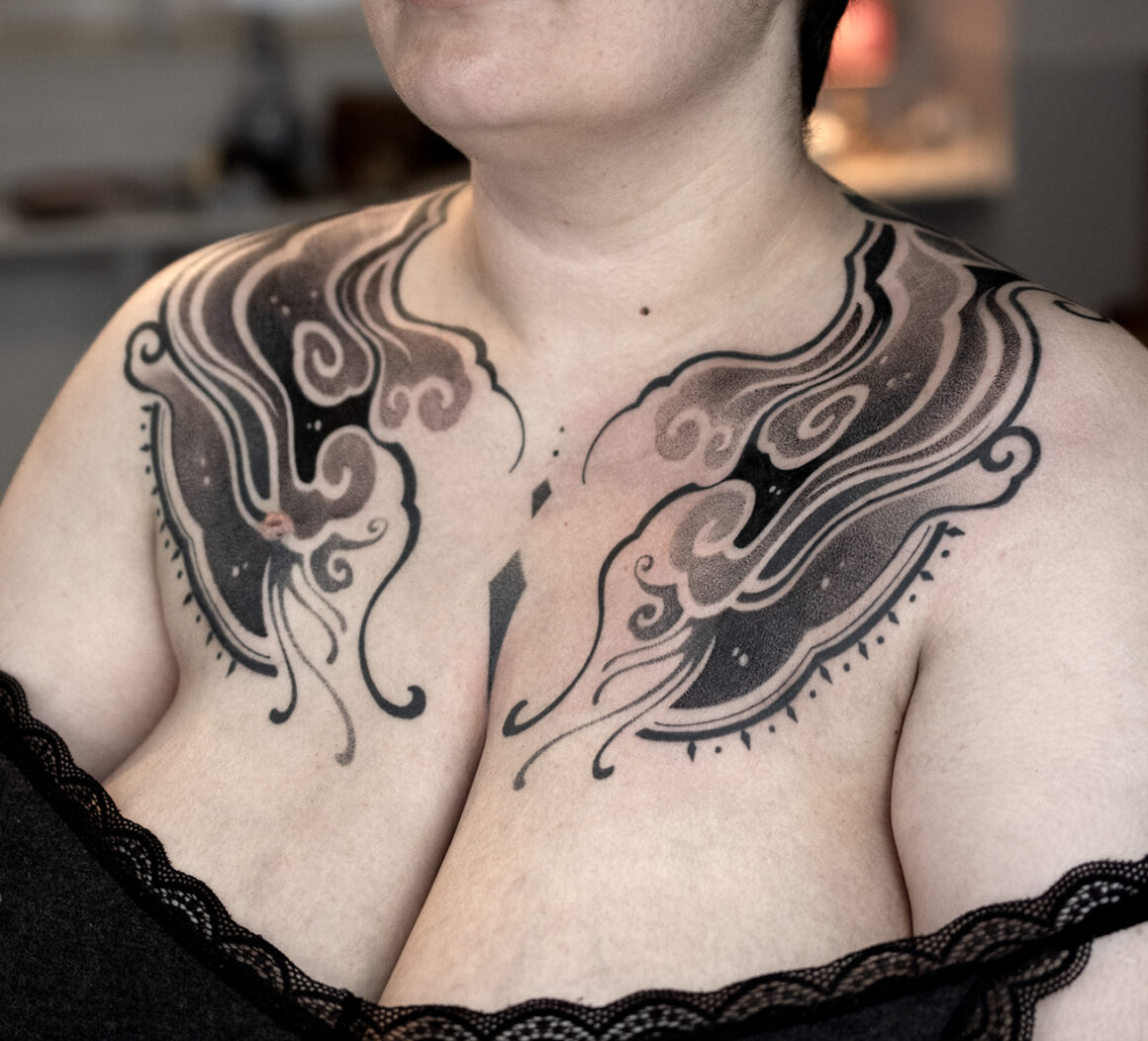
On your website, you talk about the harmony of the body as an essential part of your art. Could you explain what this concept means to you — and what you mean by the phrase: “Embodies the concept of what Asian cultural aesthetics might have been like if Asian countries had achieved cultural modernisation without Western influence”?
That idea came from my experience living in Europe. While in the West, I realised that almost everything familiar to me in Korea — from furniture design to architecture — had been influenced by Western aesthetics. Historically, Asian countries modernised by adopting Western technologies and ideas, but through that process, we lost many of the natural bridges that could have connected our traditional and modern cultures.
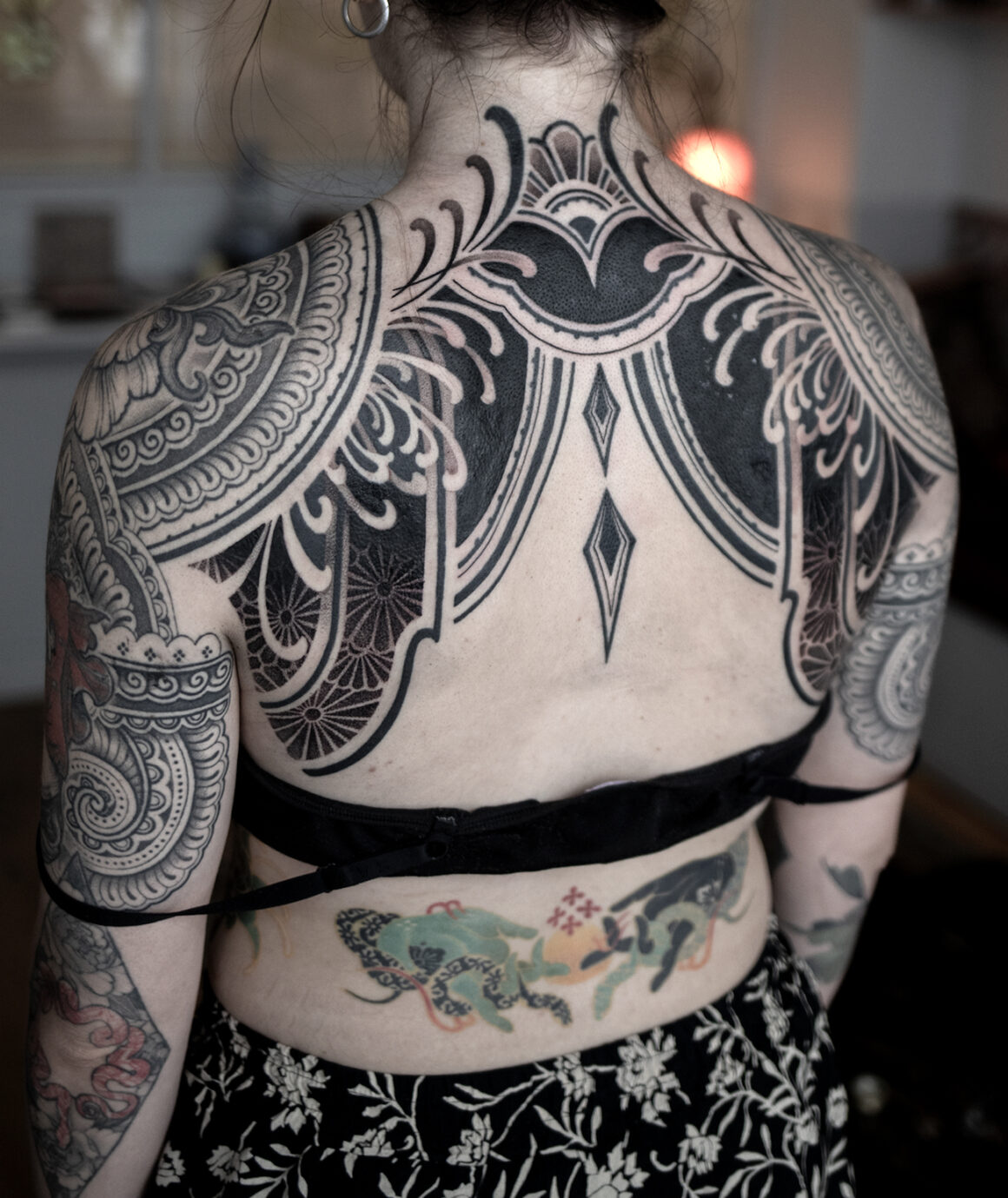
So I began to imagine: what if countries like Korea had modernised on their own, without external influence or pressure? What would our aesthetics look like today? Of course, in a globalised world, isolation is impossible — but that imagination itself has meaning. It serves as a philosophical foundation that guides the development of my designs.
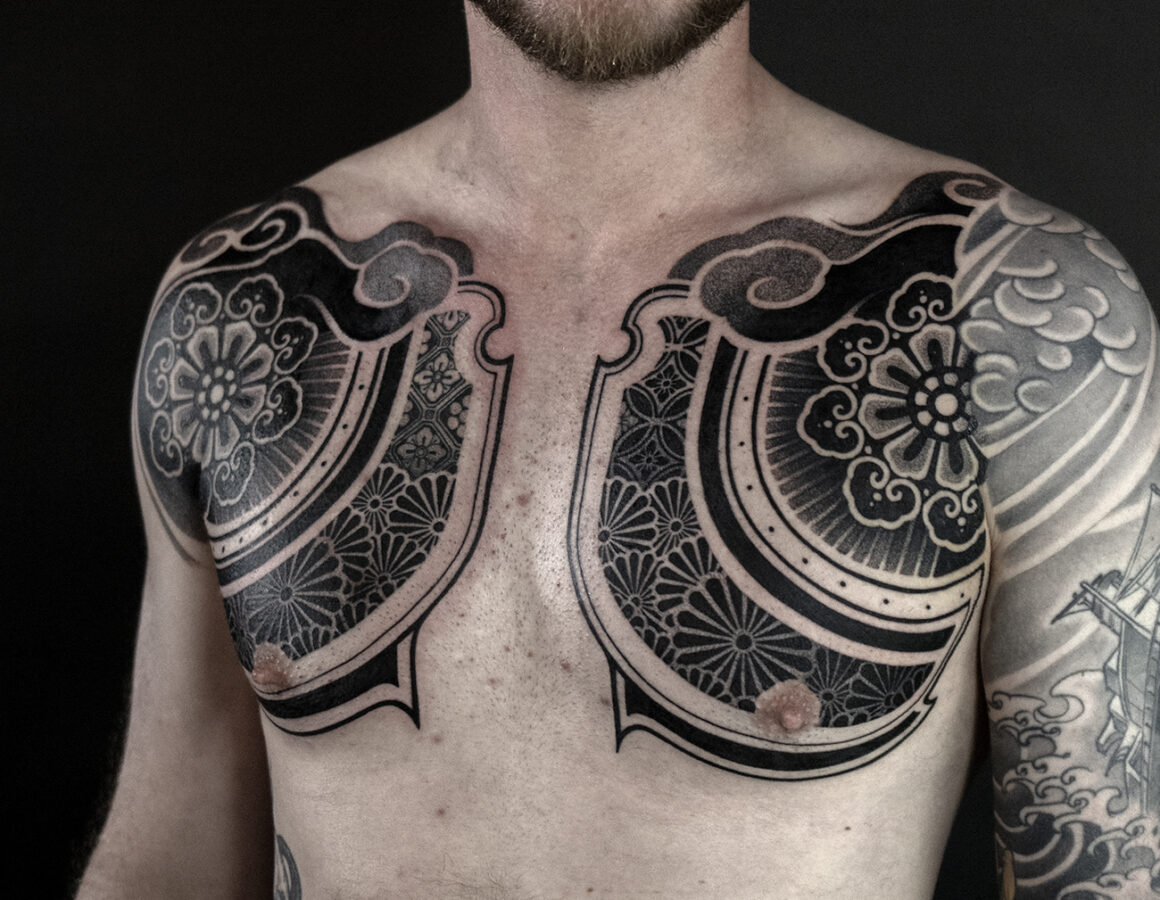
Your tattoos often feature delicate lines, balanced spaces, and a strong sense of composition. How do you achieve that subtle equilibrium between minimalism and expressive depth?
I would describe it as the harmony of yin and yang. When I reinterpret traditional elements in a flat, modern, and simplified way, I naturally create a rhythm between large and small spaces. That balance — the coexistence of opposites — feels to me like a visual form of yin-yang harmony.
The name “Undulmood” suggests movement, rhythm, and emotion. Does it reflect your artistic philosophy?
I came up with this name when I first moved to Germany, at a time when my English wasn’t very good. I was feeling quite emotionally unstable and wanted to express that fluctuation through my art. So I combined “undul”, from undulation, with “mood” — creating Undulmood. At one point, I thought of changing it, but I decided to keep it as it was.
I felt that, in time, people would recognise it as a unique name in itself.
What inspires your visual language — are there particular art forms, textures, or natural elements that you often return to?
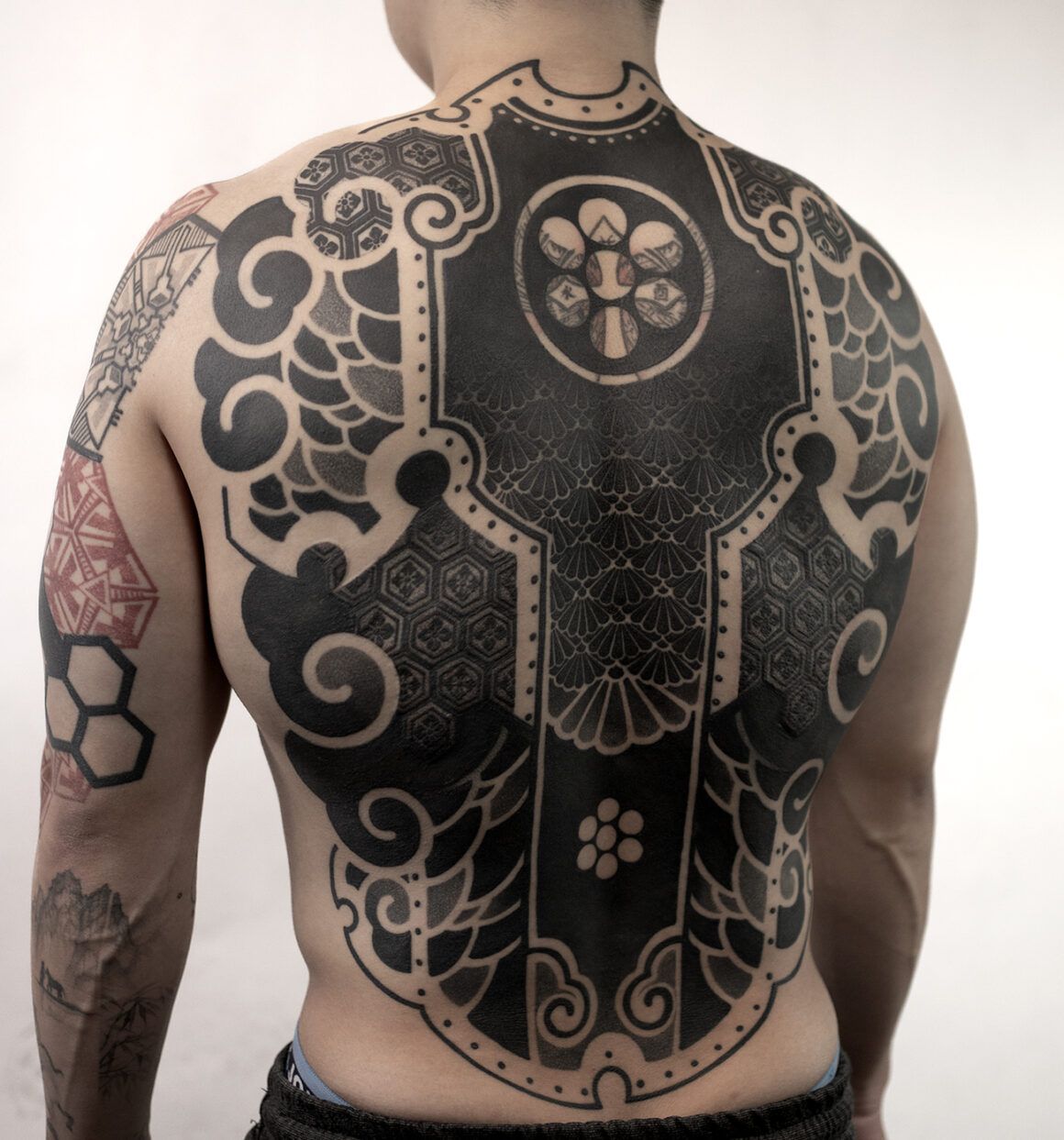
I’m often inspired by traditional architecture from Korea, Japan, and China. I also study historical armour for its structure and form. In nature, I’m drawn to mountains — I hike often, and observing the flow and shape of the landscape influences the curves and balance in my designs.

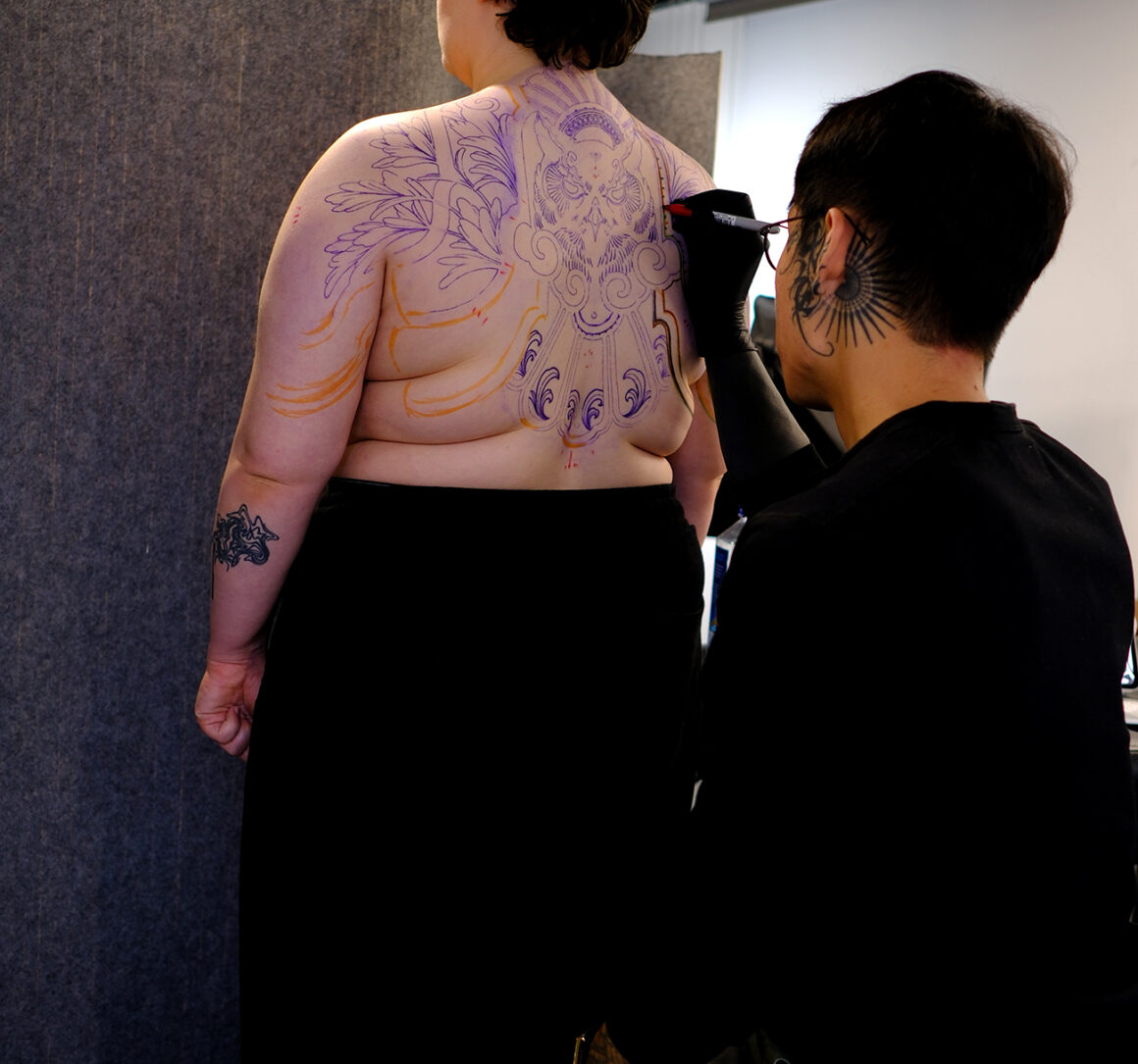
You seem to create tattoos that “breathe” with the body rather than sit on it. How do you design pieces that follow and enhance each person’s natural shape?
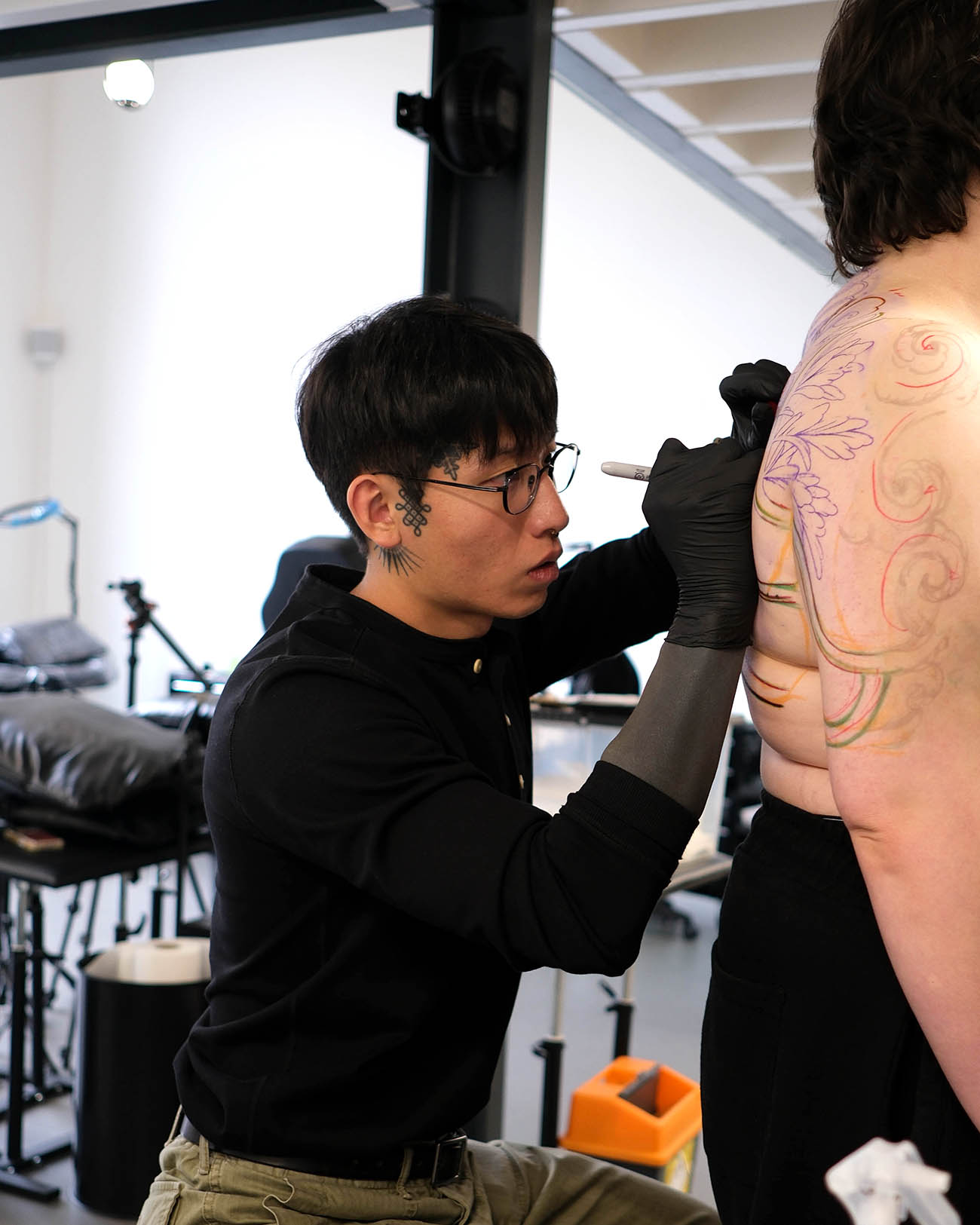
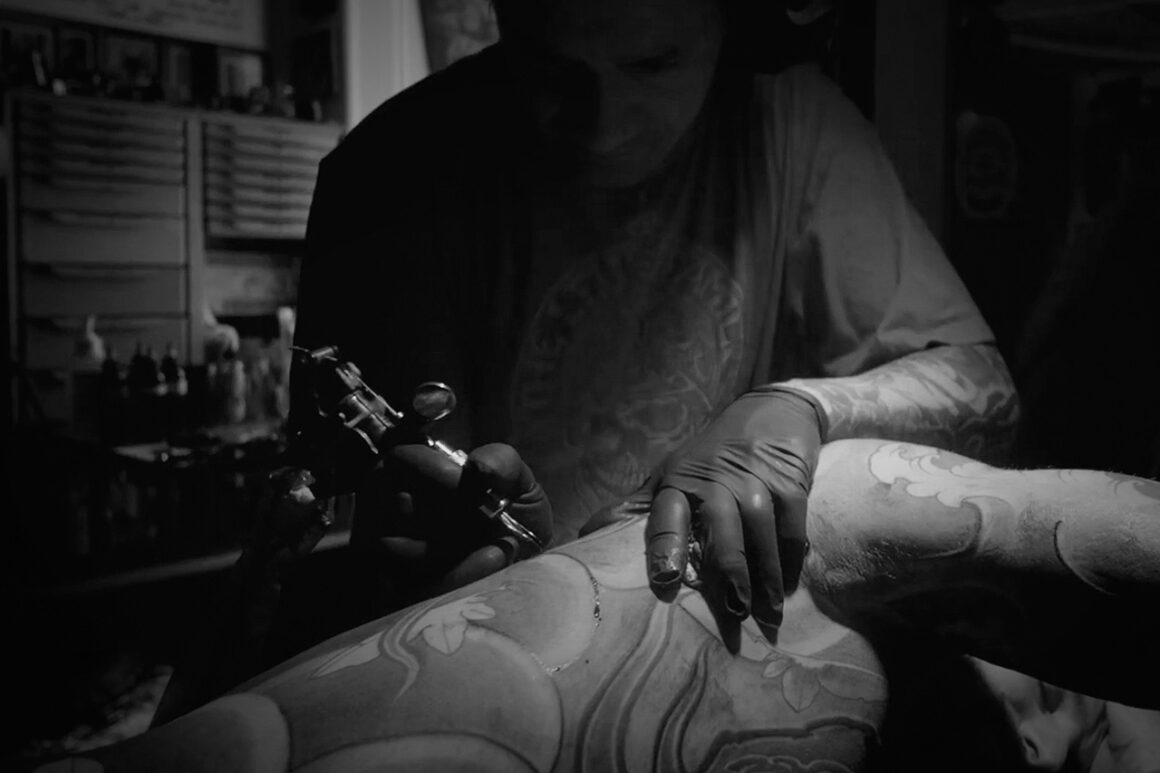
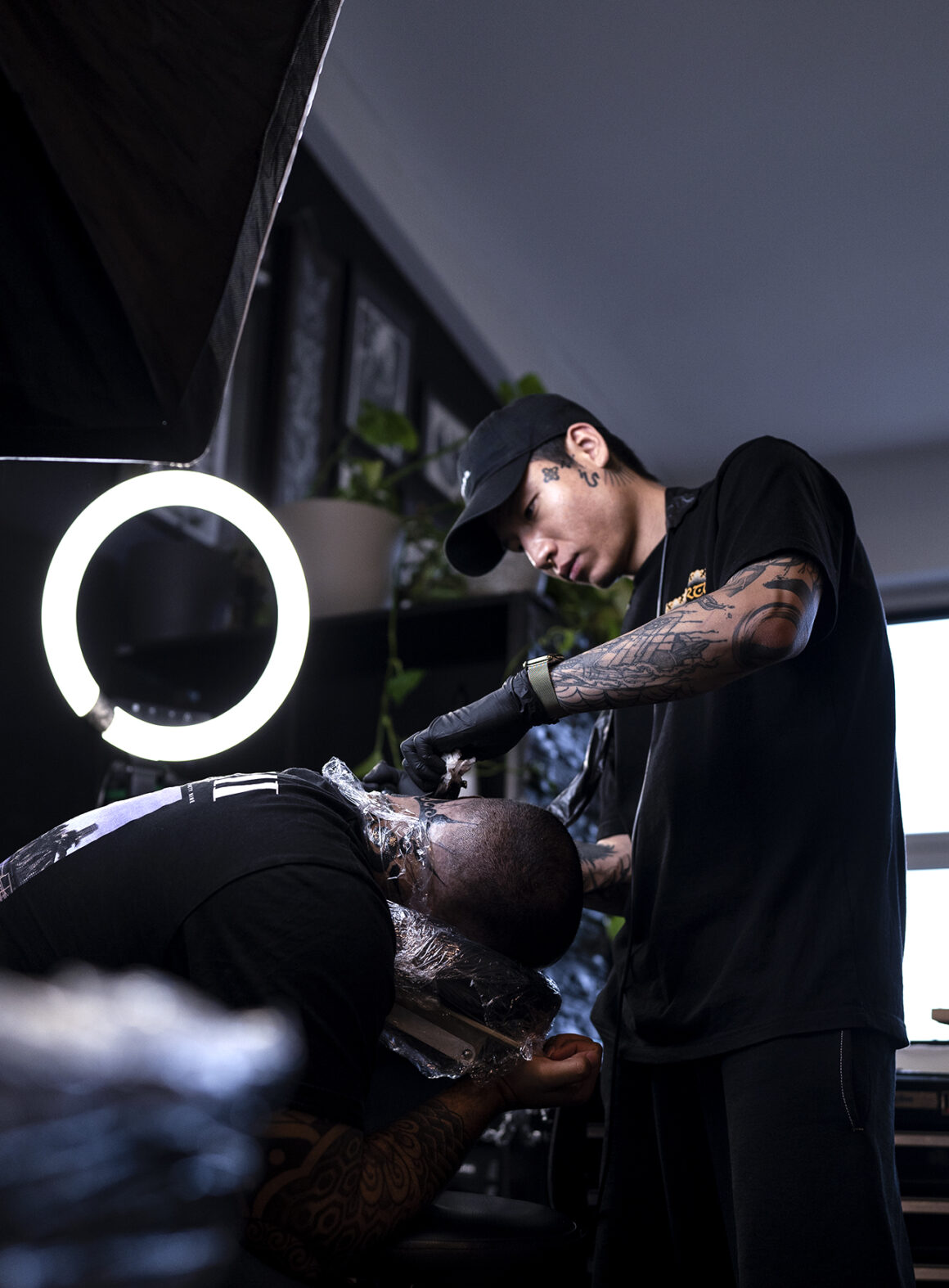
To create a natural flow that matches each client’s body, I usually draw directly on the skin — what we call freehand drawing. This process helps me understand the movement and structure of the body and build a design that truly belongs to that person.
Looking ahead, do you see your style evolving in new directions, or do you prefer to deepen and refine the aesthetic you’ve already built?
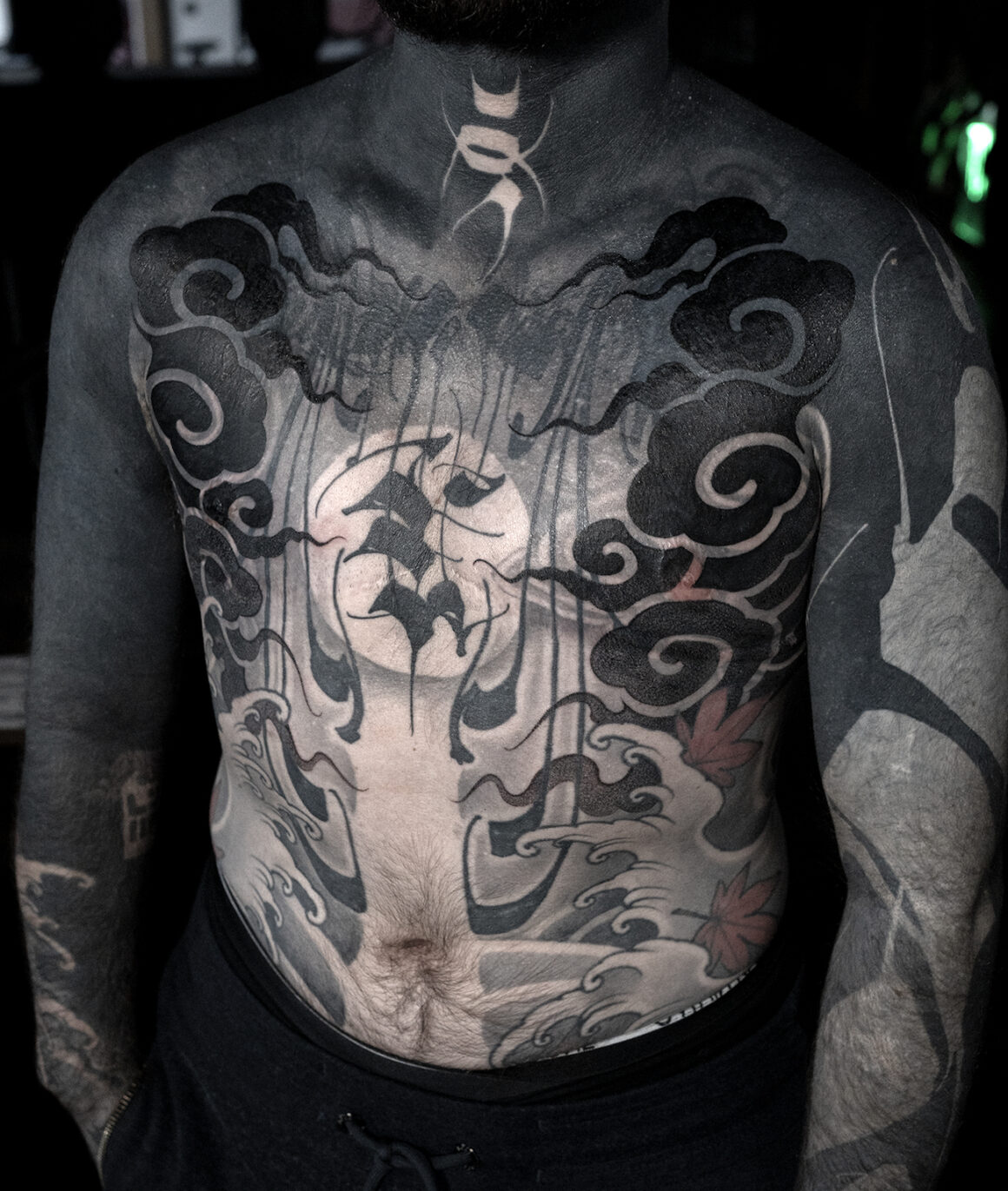
I plan to continue in the same direction, but my focus is on elevating quality — adding more detail, subtlety, and refinement to each piece. It’s less about changing course and more about evolving the depth and precision of my work.