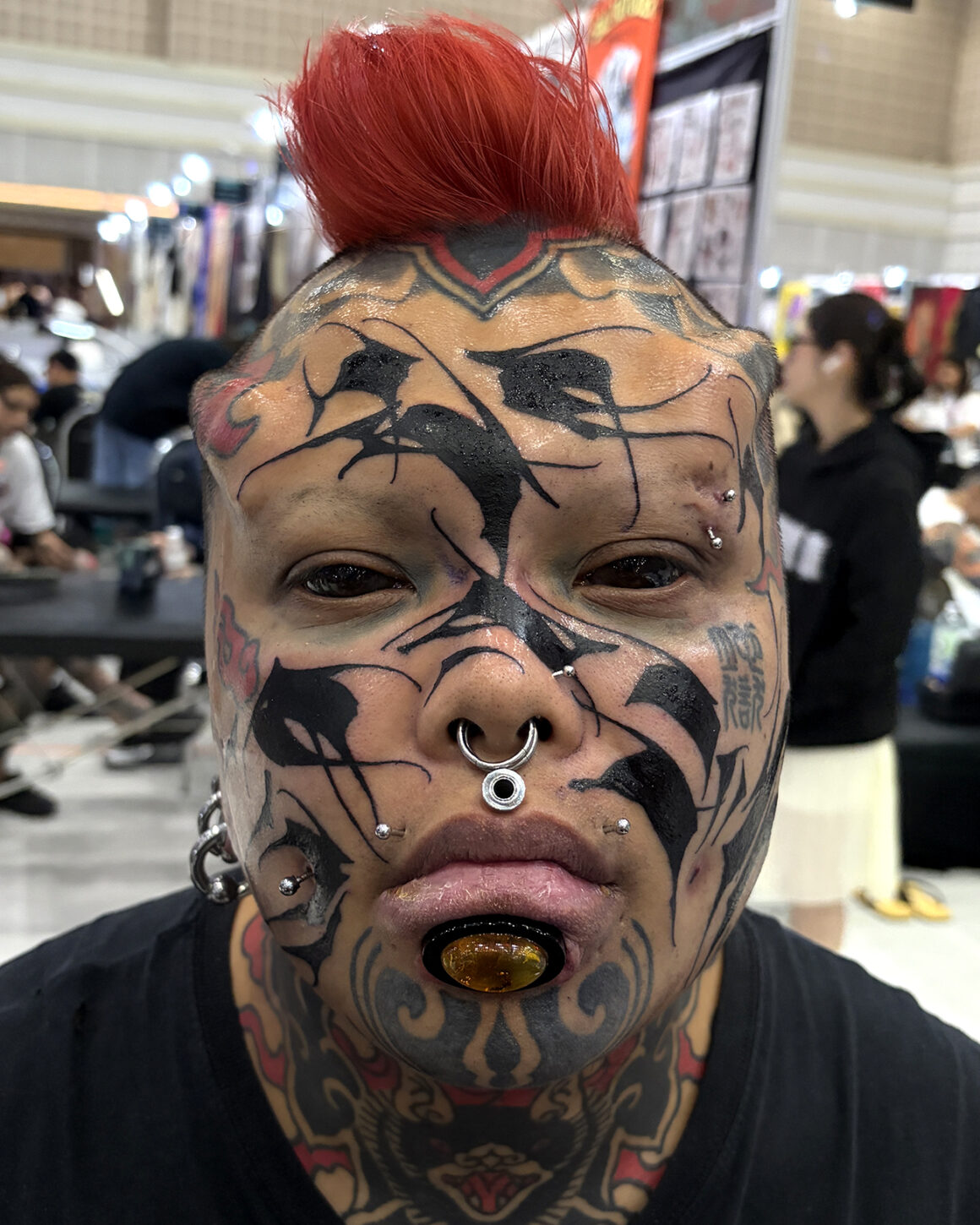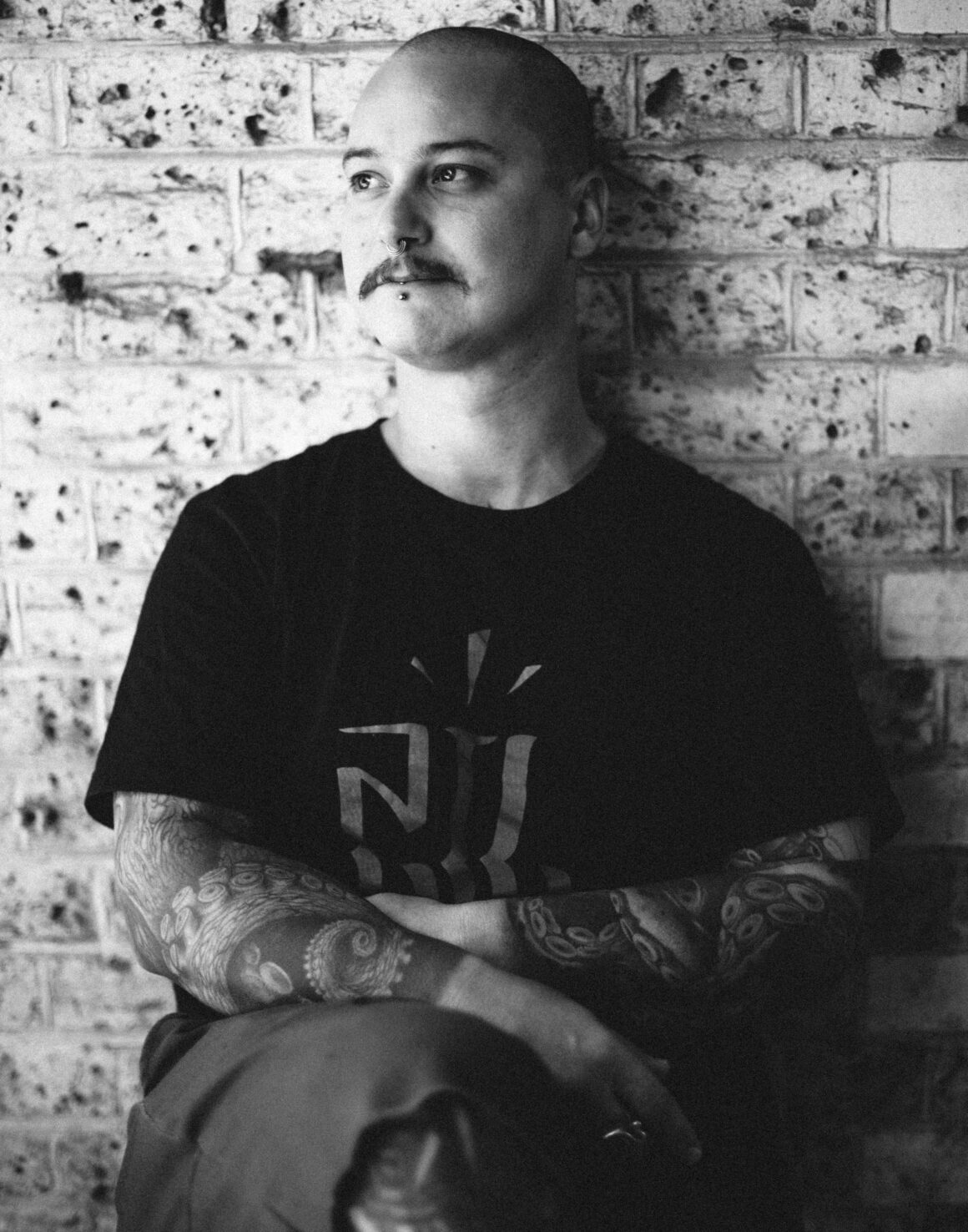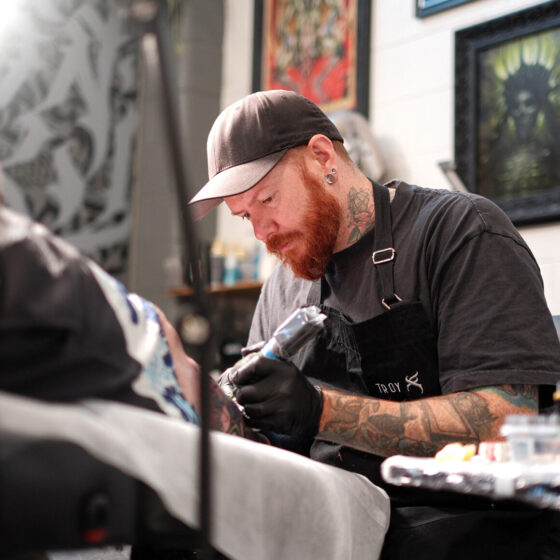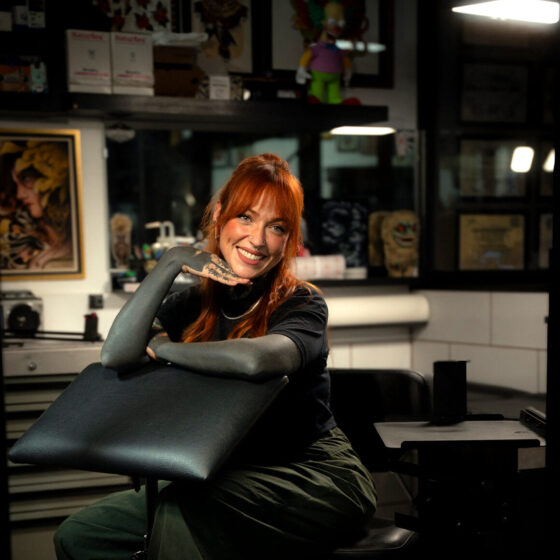






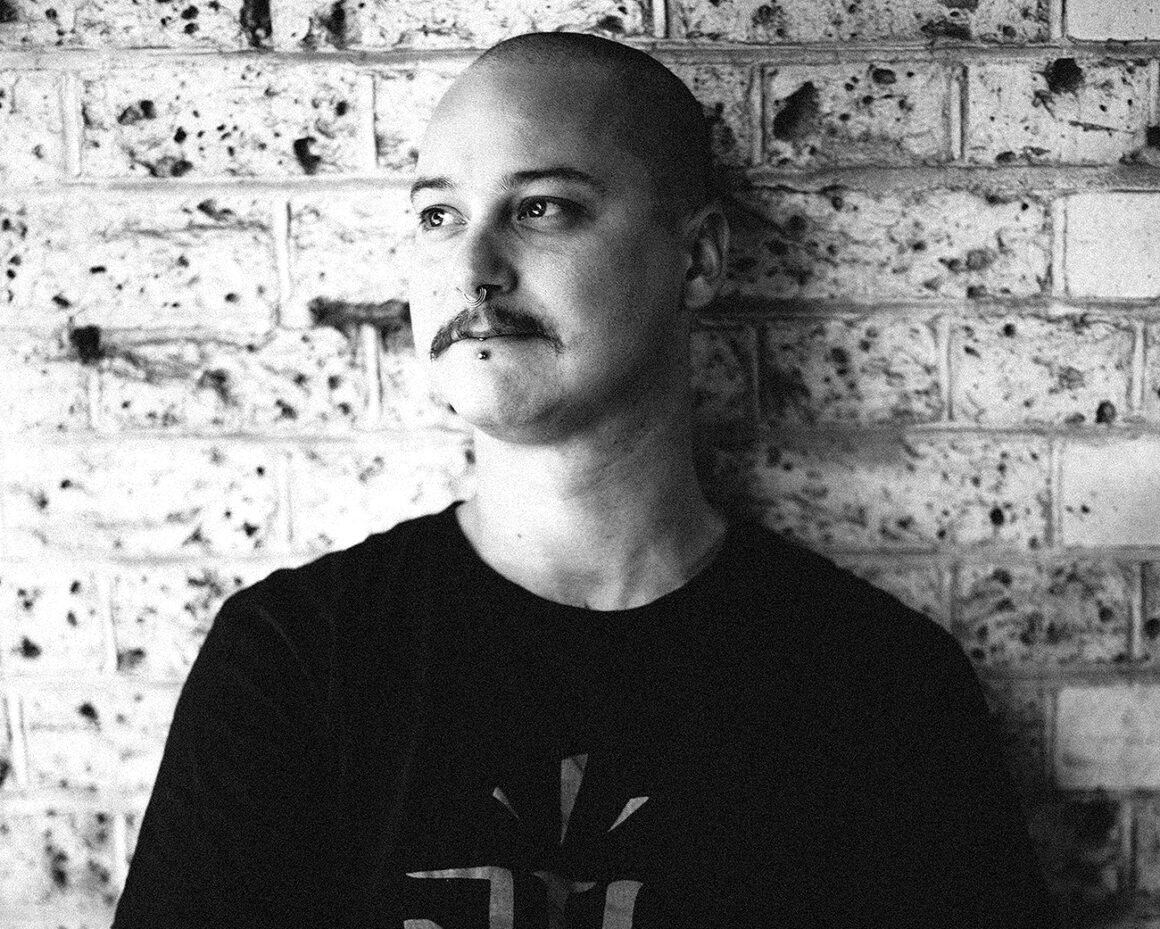
One sentence struck us during our interview with this talented Portuguese artist: «I’ve clocked up so many miles that I’ve traveled around the Earth 20 times». So let’s find out more about his lifestyle and tattooing on the road.
Let’s start with your nickname: does it come from the world of graffiti like you? And does it have a specific meaning related to your style?
Not at all. “Gordo” was my nickname as a teenager, meaning fat. Letters come from me trying to create a website or Facebook account that was supposed to read something like “Gordo’s letters”. Ended up Gordoletters (IG: @gordoletters).
You’ve been tattooing for nearly 20 years—what has your journey in tattoo art been like? Has it been a steady crescendo, with each year surpassing the last, or did you face significant challenges in establishing your artistic vision with the public?
It’s been a crescendo. I’ve never thought any of this would be possible. For me the goal was to tattoo, and getting better at tattooing. I had not expectations. Also, when and where I started, the goal was just to be good at tattooing and one day get to 50%. What happened next was just taking the opportunity and enjoying the ride.
“Do you like the term ‘abstract calligraphy’ for your tattoos, or do you feel it doesn’t fully capture what you’re trying to express?”
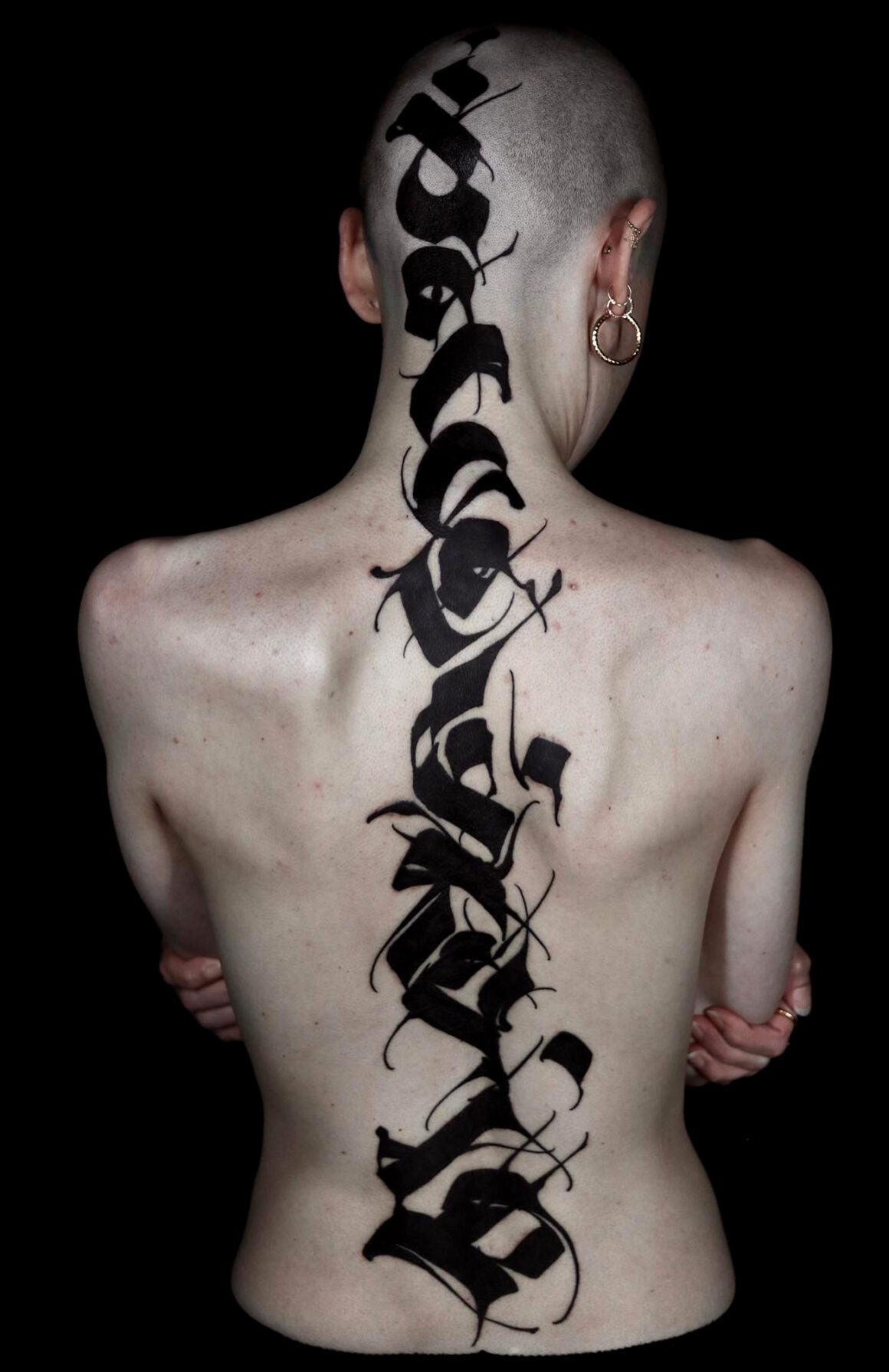
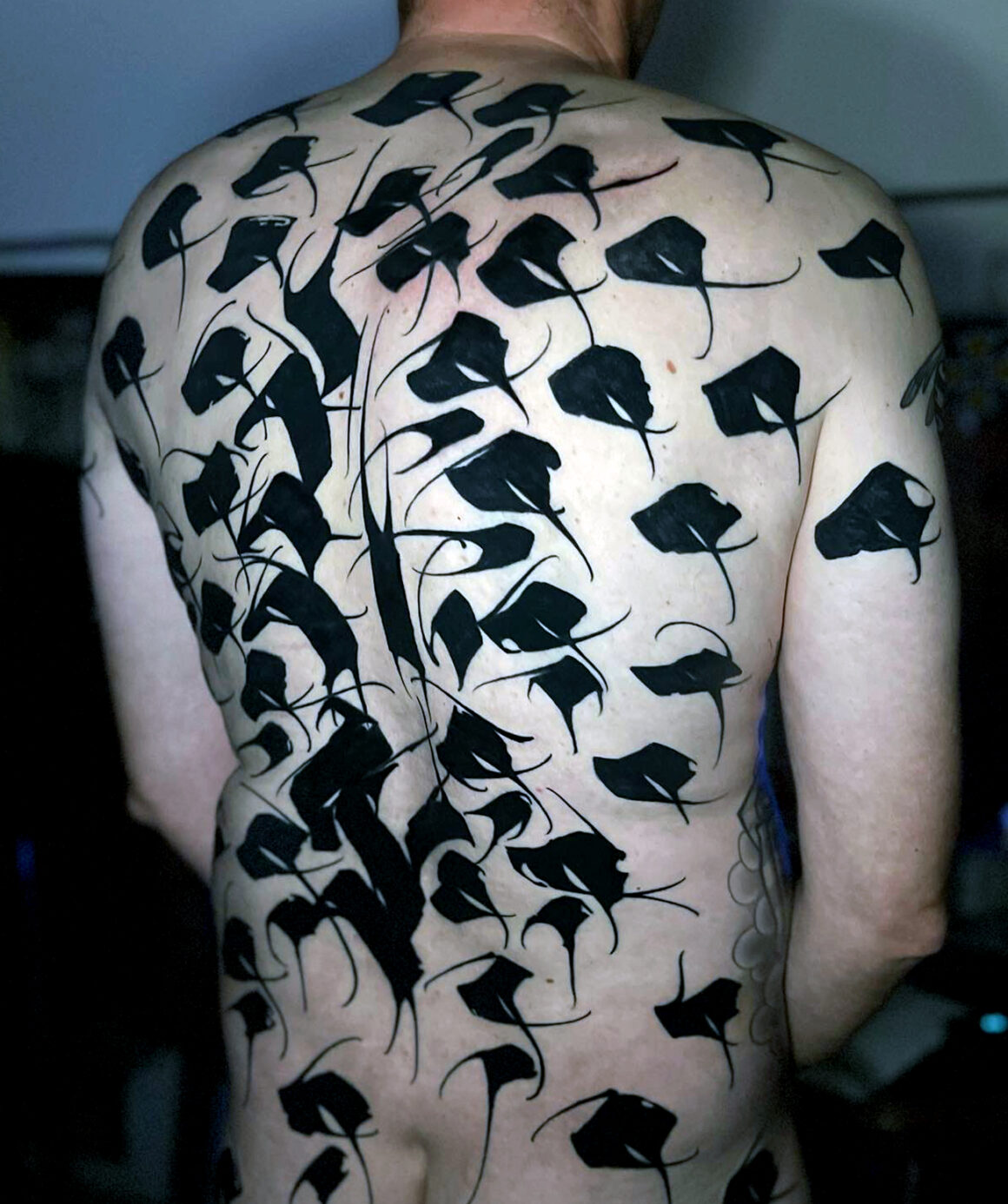
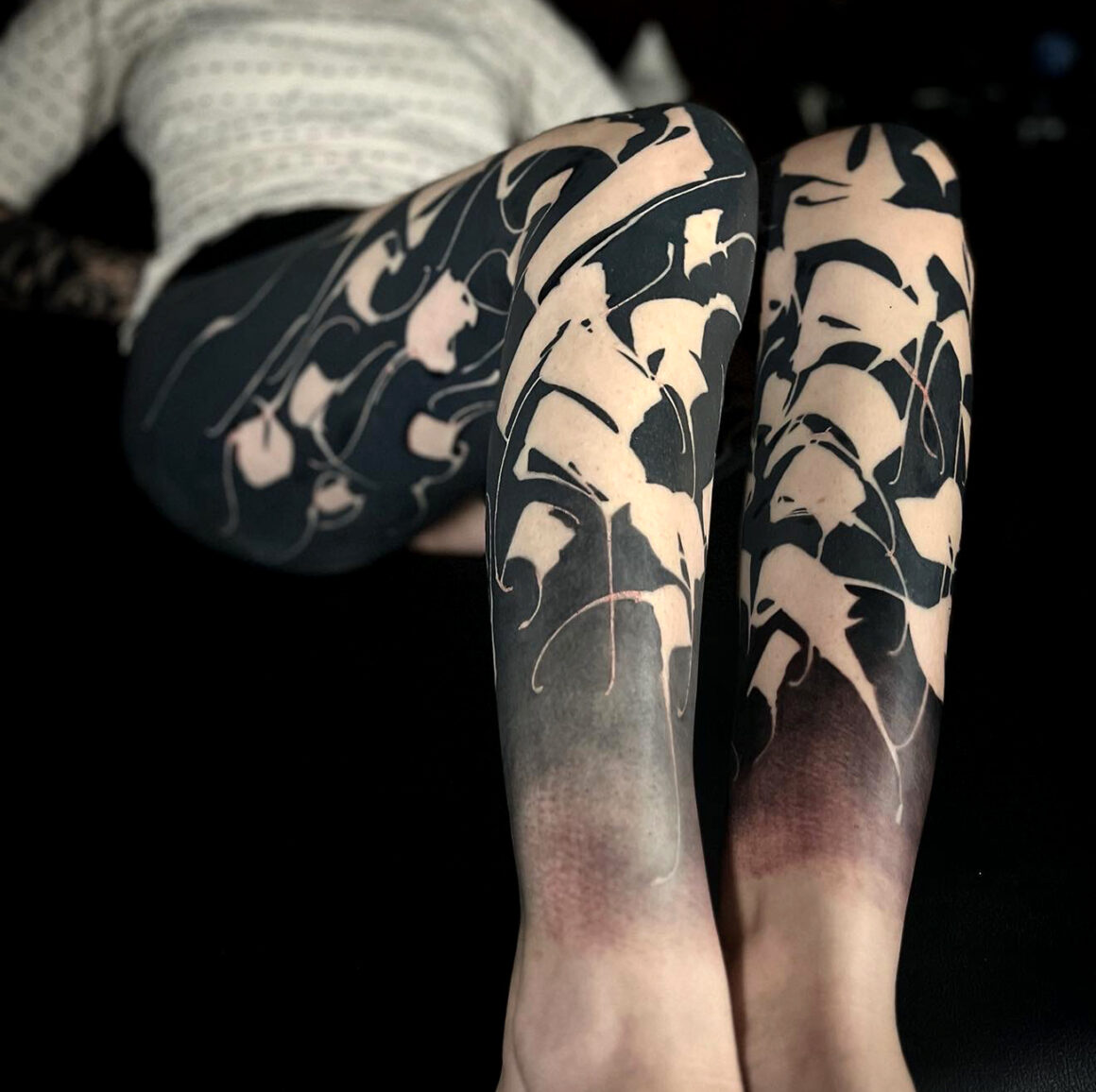
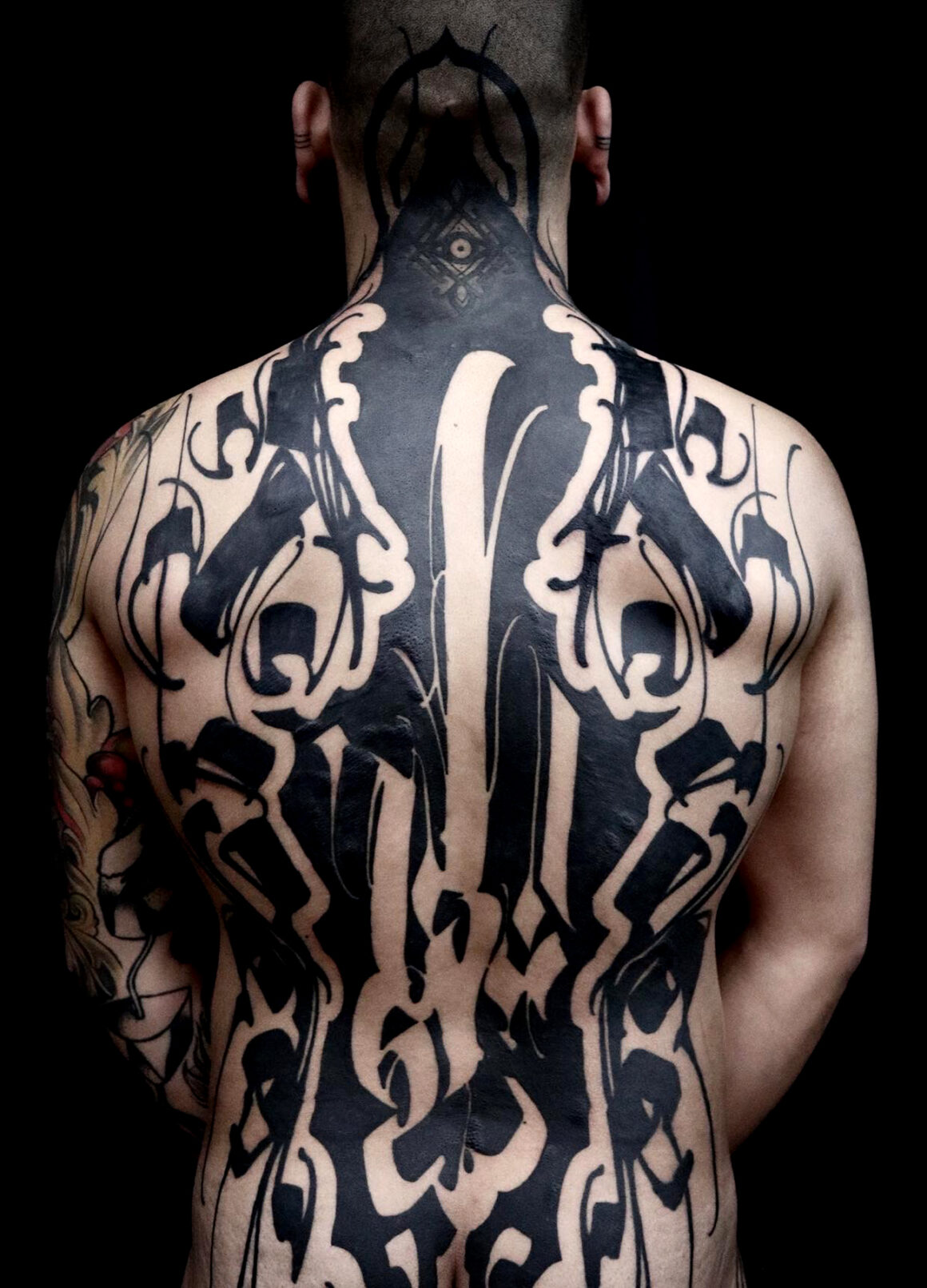
I started calling my work abstract calligraphy many years ago, before I saw anyone else using it. I’m not saying I was the first—just that I hadn’t seen it used before. At the time, I was in control of the boundaries of that definition.
Once I noticed more people adopting the term, I decided to drop it, because it could start to limit how others perceive my work.”
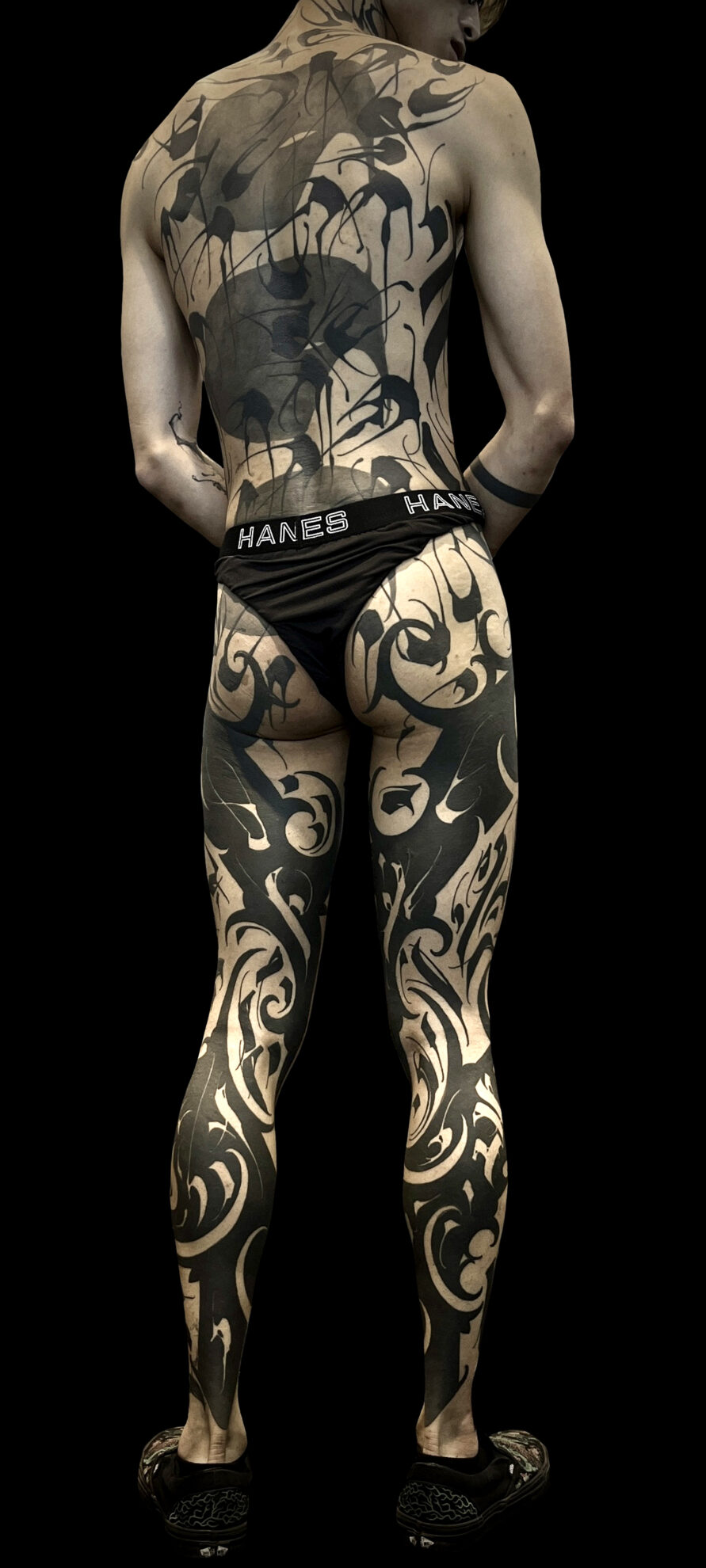
You’ve always made a clear distinction between your works on skin and those on paper. When you draw a certain symbol born from your imagination, do you immediately know which surface it should adhere to?
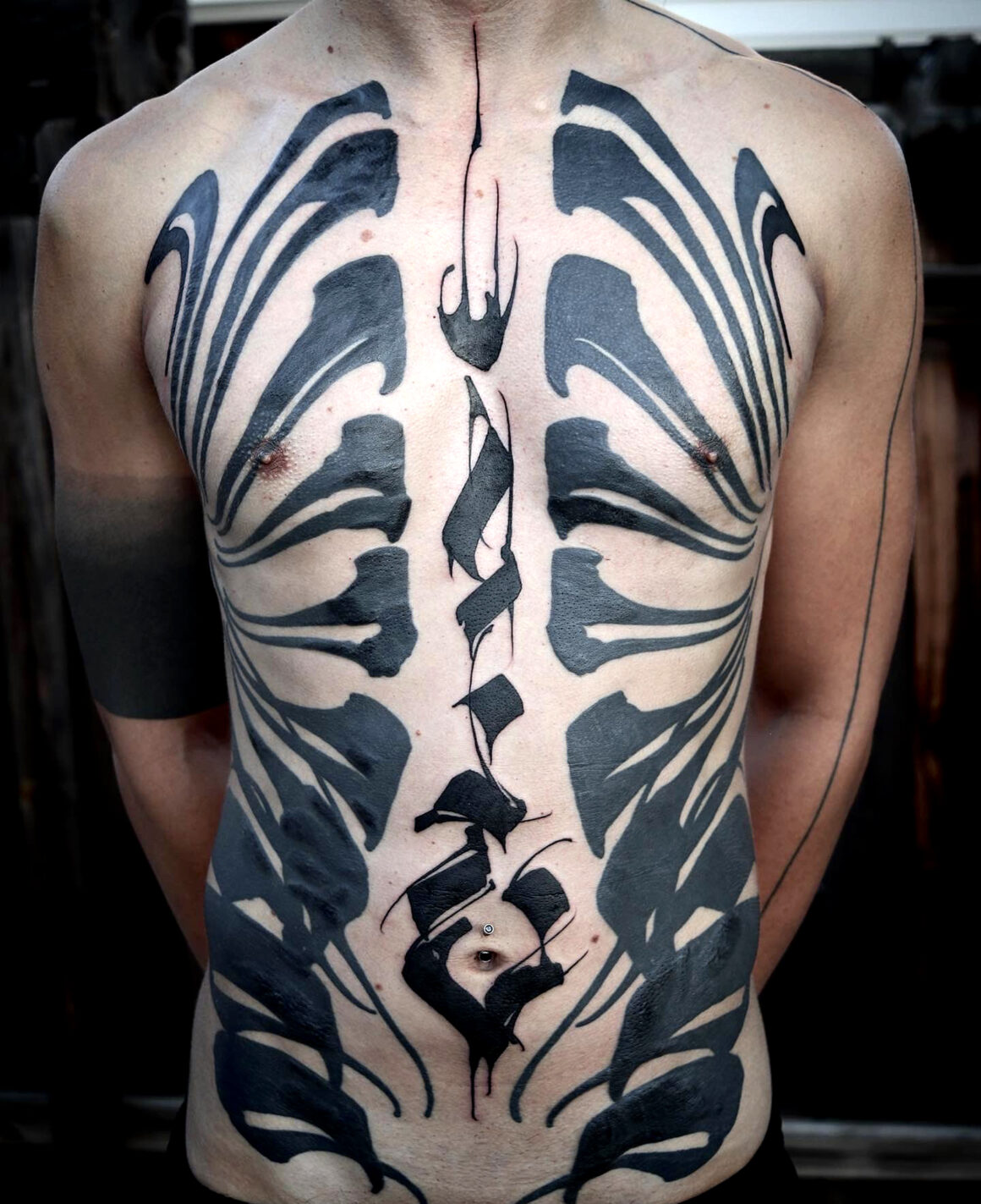
The difference between my artwork and tattoos is not on my symbols or shapes. My work comes from tattooing to canvas, not the other way around. I did graffiti from a very young age, and that made me love letters. But it was when I started tattooing that I found calligraphy.
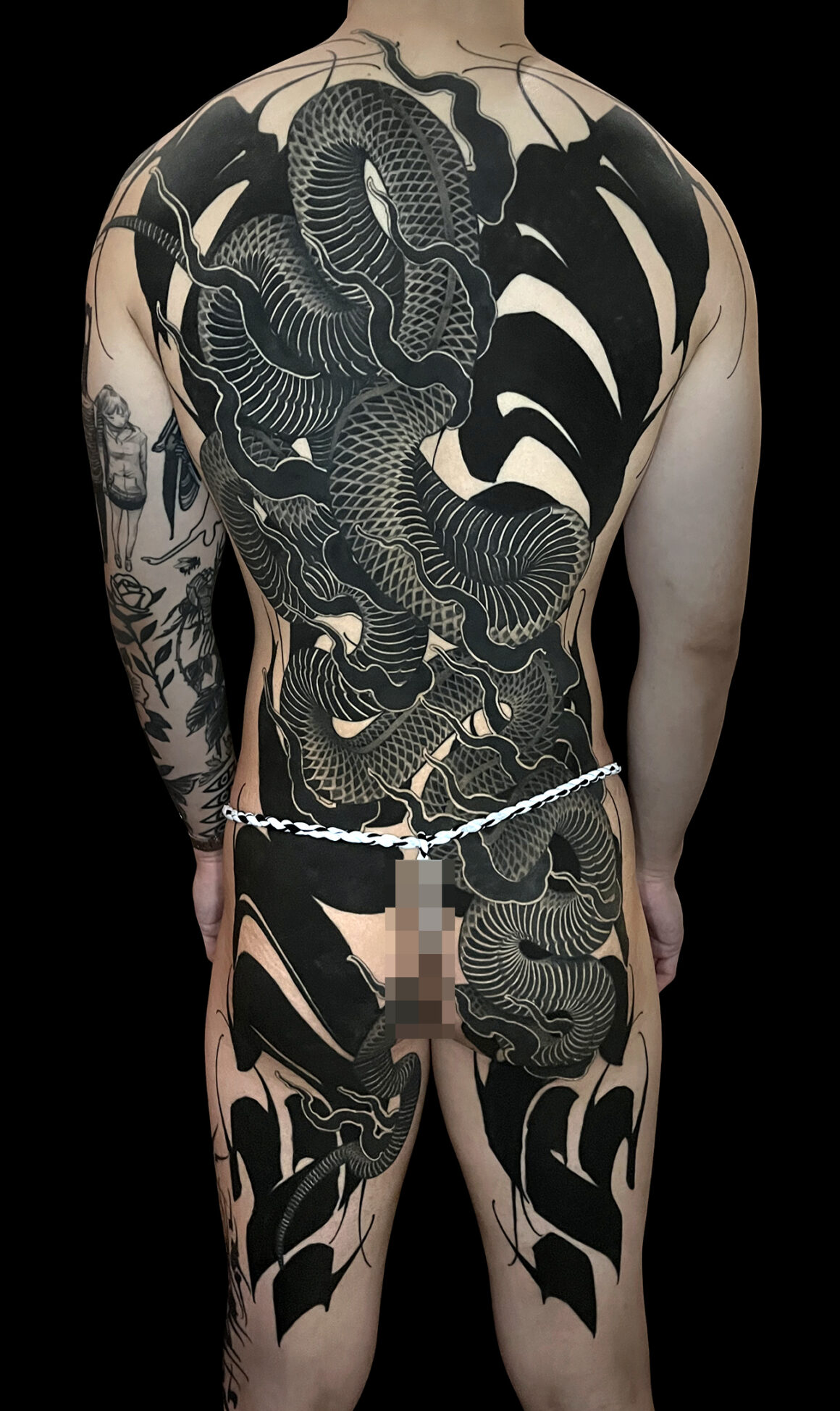
So how did you find the artistic expression you are known for?
It actually started by buying the wrong tool, which led me to experiment with blackletter. When I first drew those letters to tattoo them, everyone told me they didn’t look like tattoos.
And that became my goal, to make them look like tattoos. And that’s where the difference began….
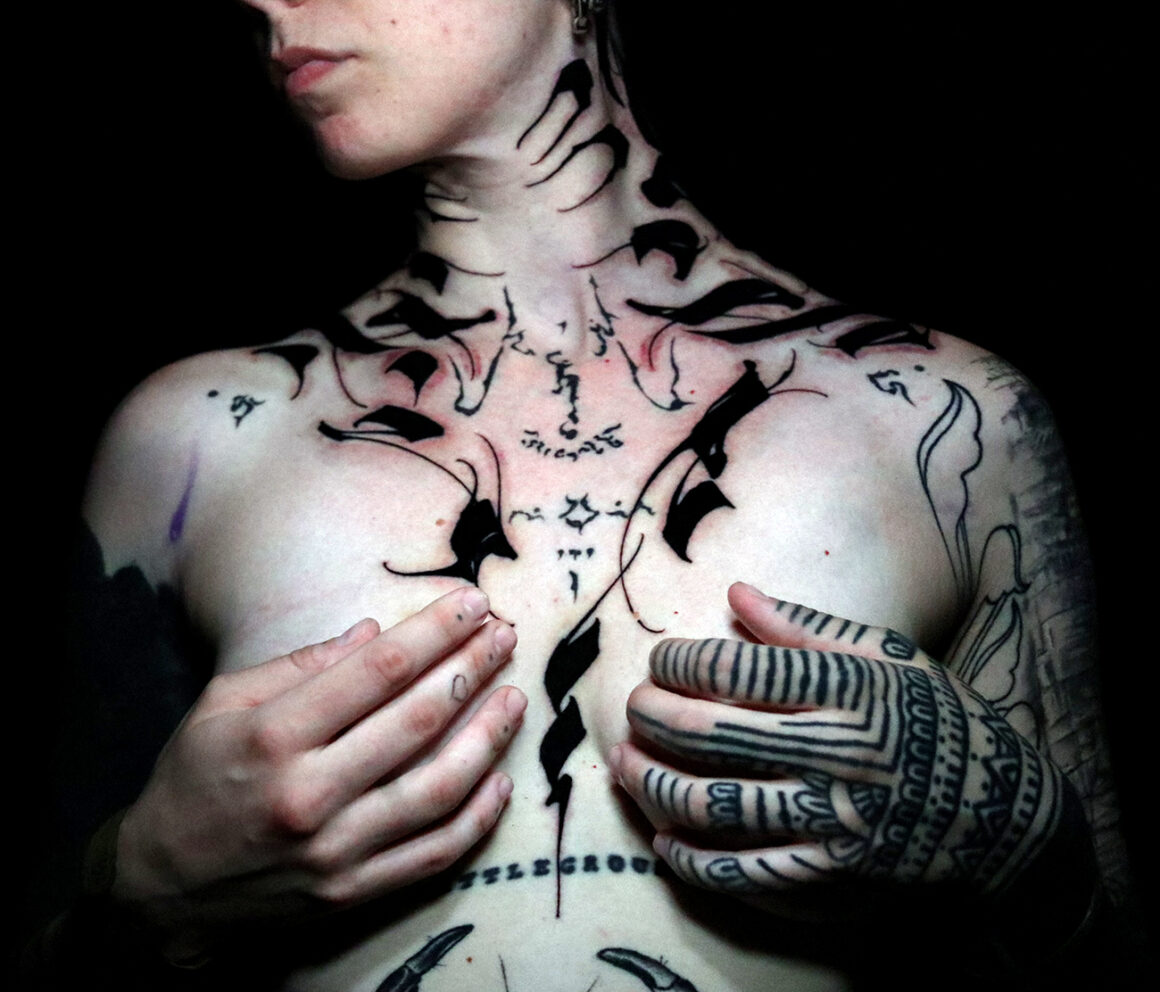
I read somewhere that you obviously love black ink, and more and more clients are asking you to use it in large quantities on their skin, almost as if it were an “involuntary cover-up”. Is that true?
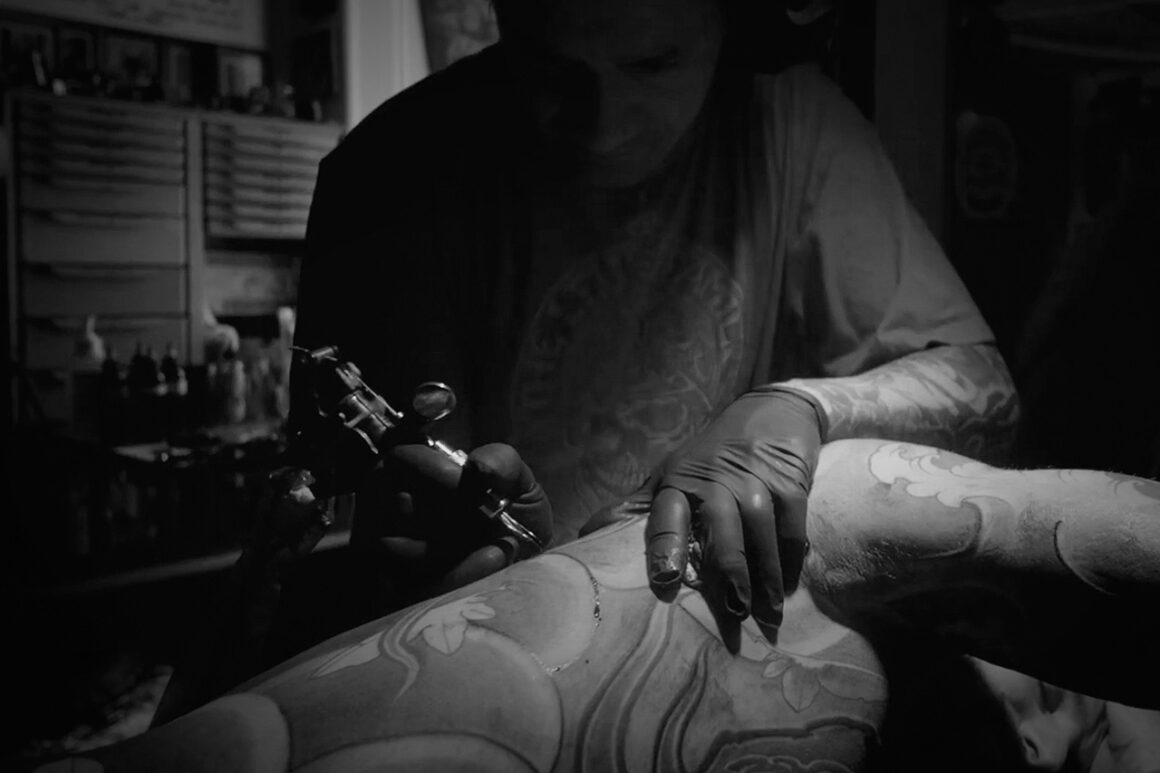
I think that black ink is now often used to cover large areas of skin without it necessarily being a cover-up. This comes from a stylistic decision. It reflects the times we live in. When I first started, large areas of solid black were used mainly for cover-ups. Now you see people with solid black sleeves with no cover ups.
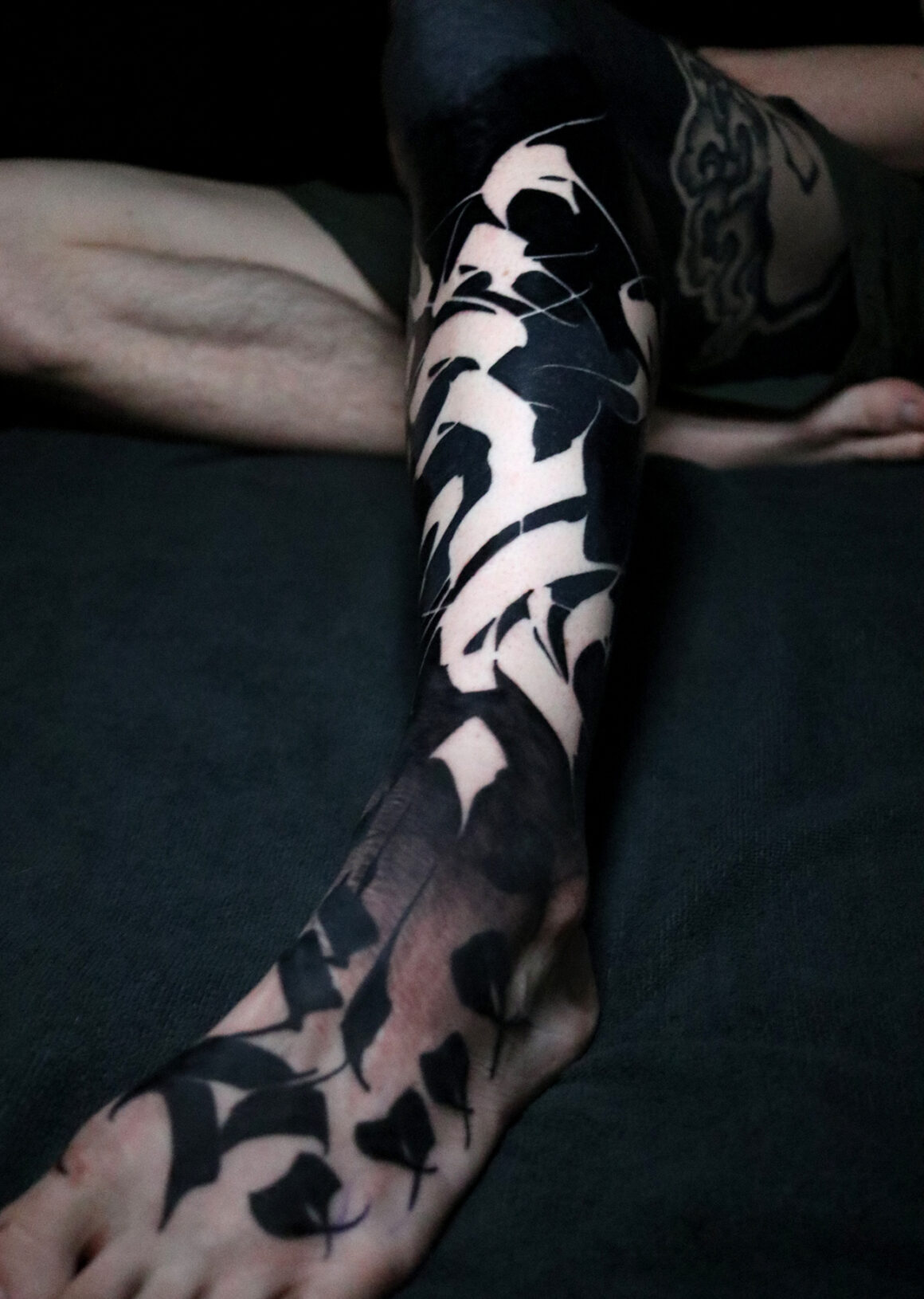
You’re often on the road in the US, stopping in New York, Pittsburgh, Chicago, Denver, Portland, Los Angeles, and Oakland. I assume America is your home now, and you return to Portugal occasionally…
I’ve been on the road since 2012, and I traveled worldwide, not just in the United States. Over the past 14 years the longest I’ve stayed in one place, was 3 months. That was due to Covid. I have enough miles under my belt to travel the earth 20 times. If that sounds like bragging, it’s only because I am proud of it. This is my life, and the road is my home.
And your last famous words are… ?
They are actually not mine. As Bill Hicks once said – “It’s just a ride” .